
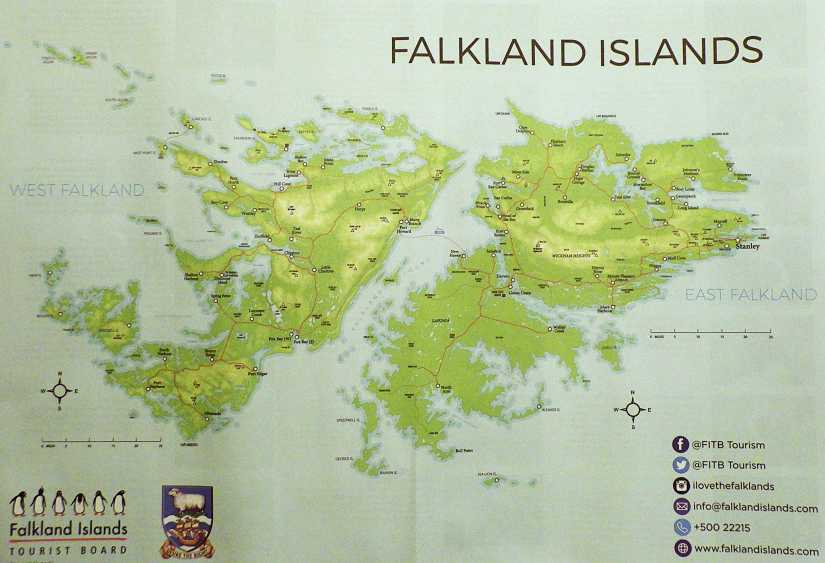
Leaving Uruguay, Volendam set her course for the Falkland Islands, a 2-day passage. The archipelago is made up of over 700 islands, with West and East Falkland being the largest. Our destination is Port Stanley, the capital and major town on East Falkland.
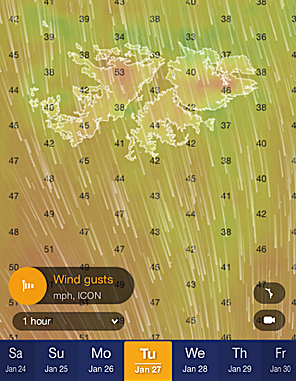
The human population of roughly 3,500 is easily outnumbered by the cows, sheep and penguins that call this place home. We have a small weather window that will allow us to visit for the day before strong winds will make the harbor untenable by evening.
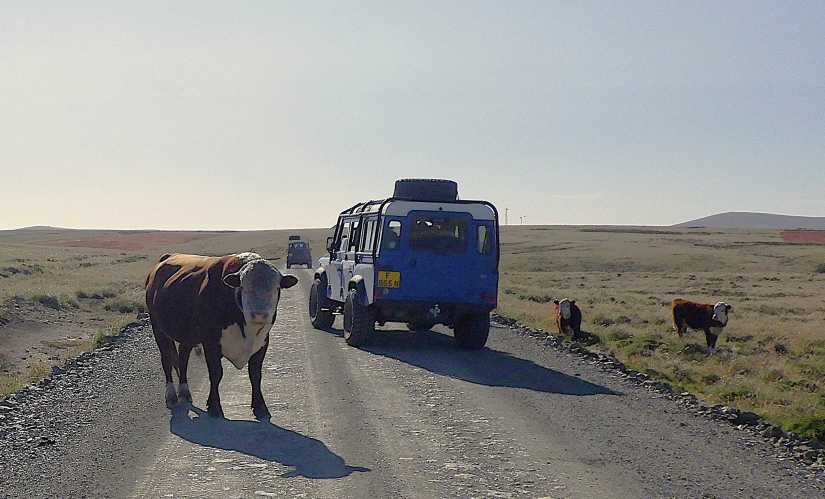
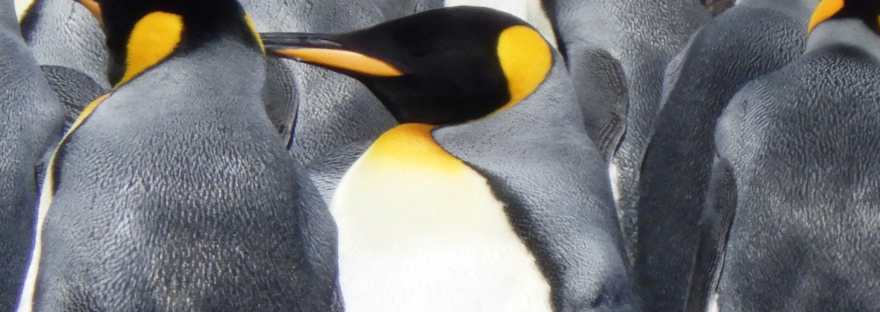
Our tour begins in Port Stanley with a 2.5 hour drive aboard 4×4 Land Rovers across the rugged terrain to Volunteer Point and its inhabitants….King, Gentoo and Magellanic penguins! Rockhopper and Marconi Penguins can be found elsewhere in the Falklands as well.
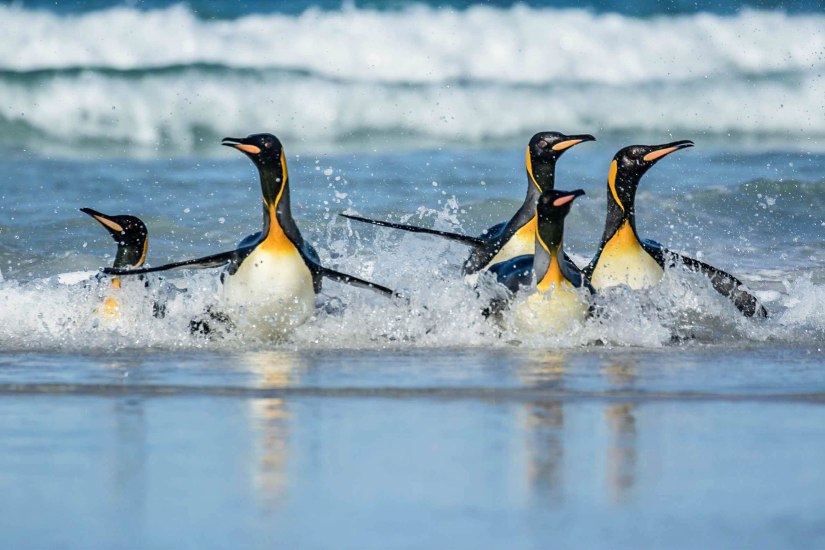
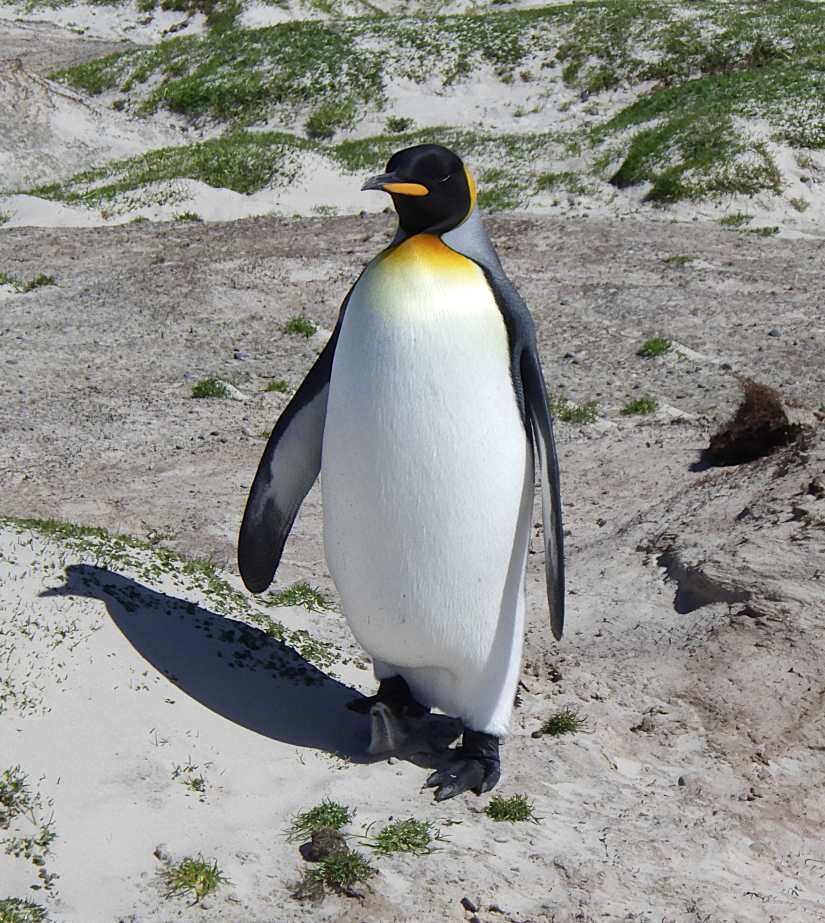
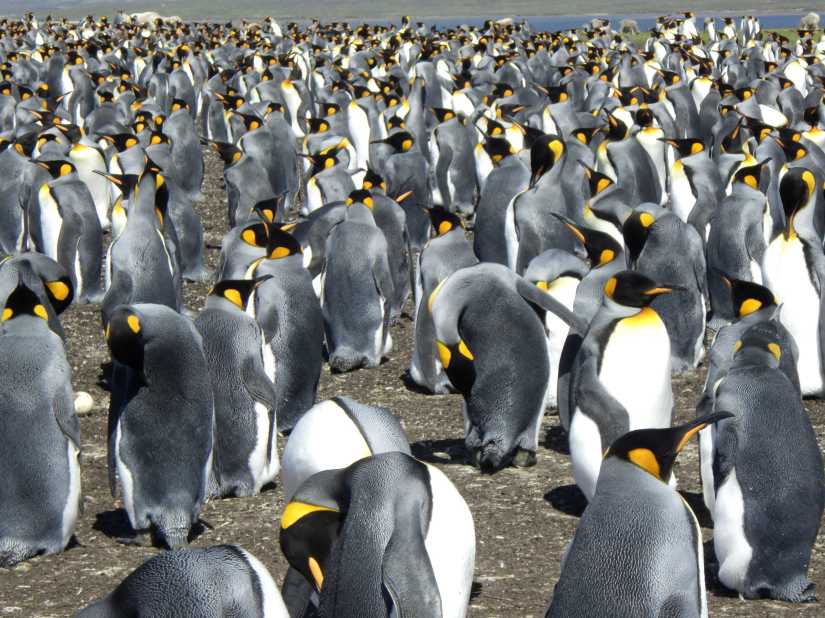
As we arrived, a small group of King penguins had just come ashore. We walked freely with them as they waddled inland 100 yards to join their colony of a thousand or more.
Numerous Magellanic and Gentoo Penguin parents and their babies were also on hand, keeping close to their burrows, as sheep grazed in the neighborhood.
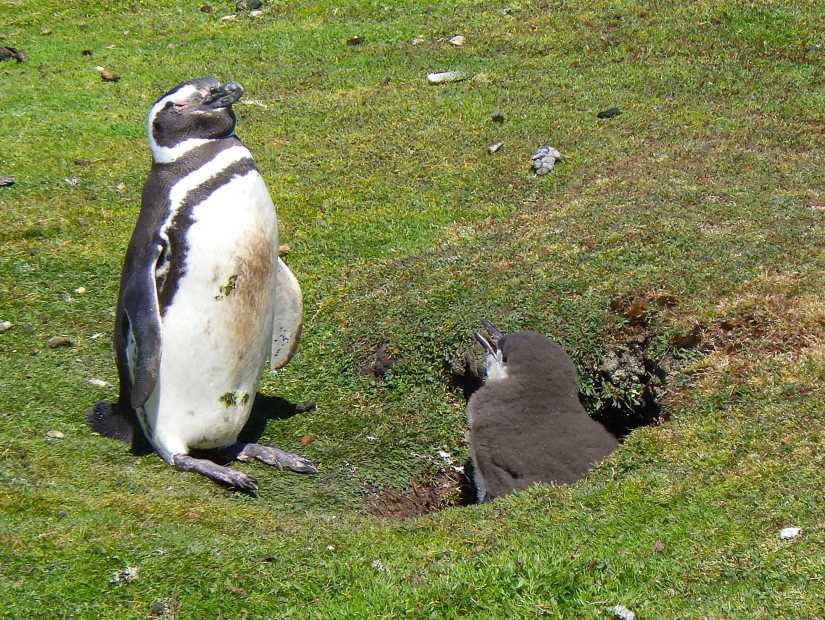
At this time of year, parents are either tending to their recently hatched and mostly naked babies or teaching young fledglings who are in the process of losing their downy feathers.
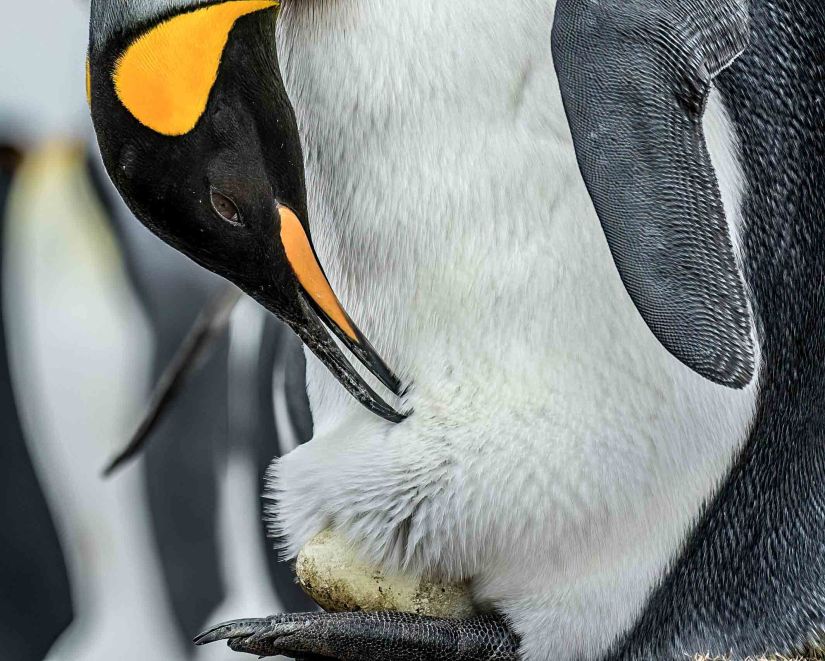
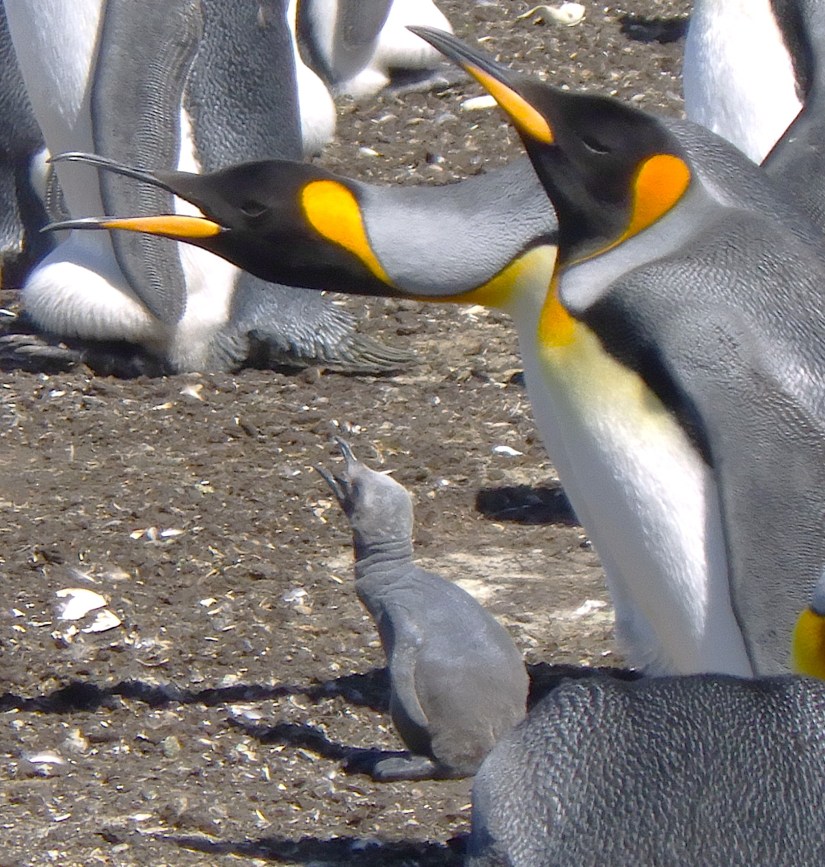
The cooing, honking and whistling of this entire colony was quite a symphony! It was an extraordinary experience to be among these incredible creatures in their natural habitat.
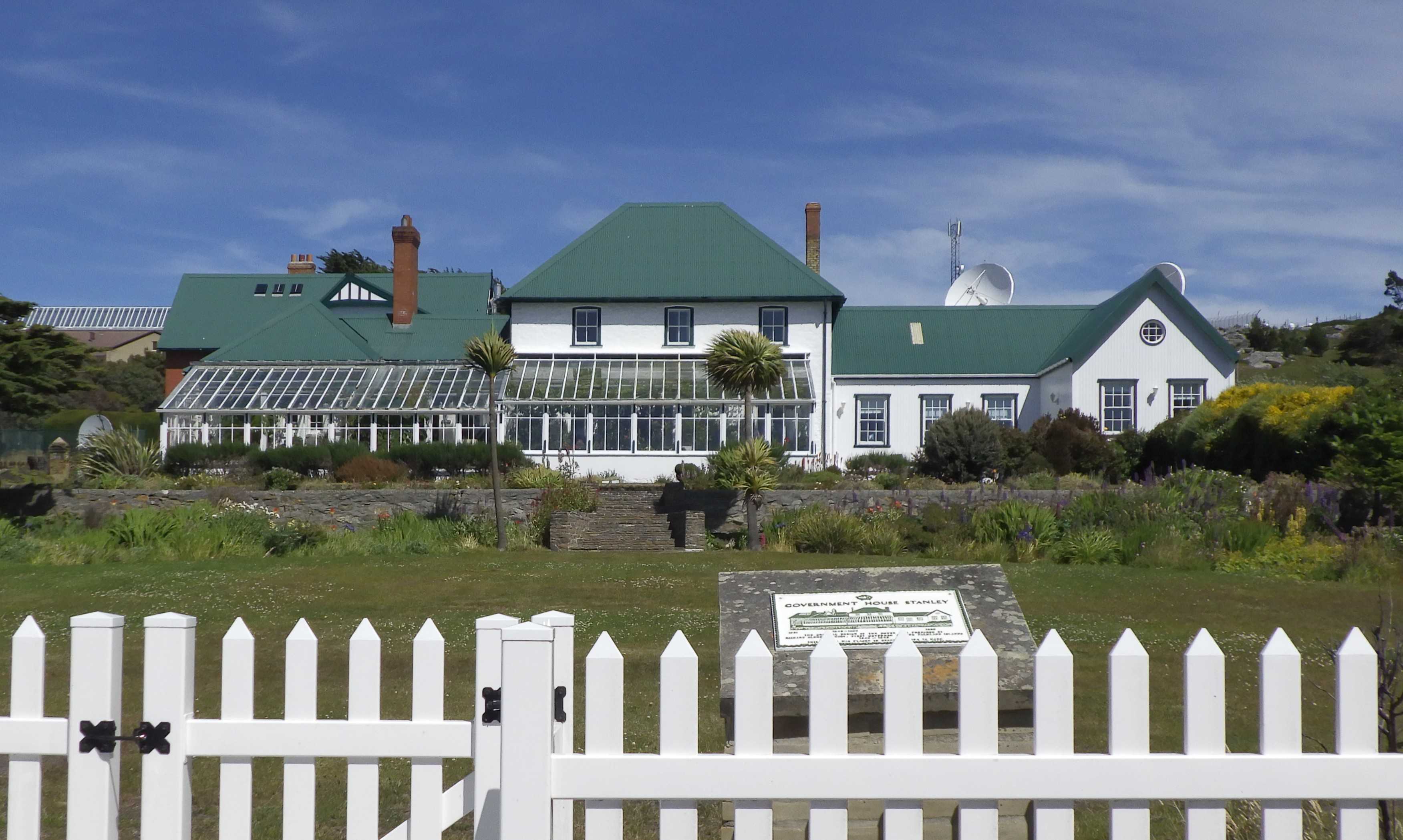
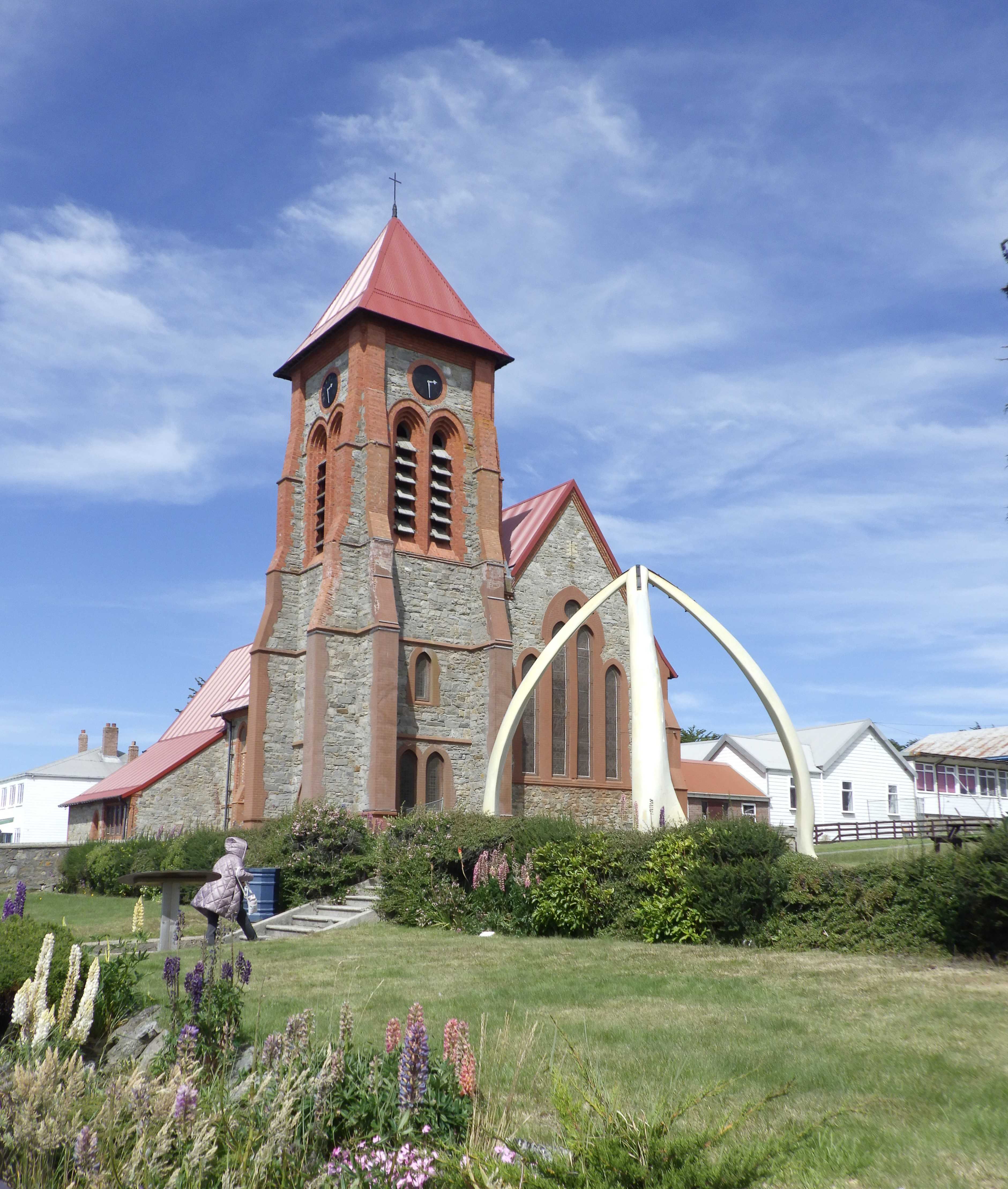
Back in Port Stanely, we had a couple hours to wander the small town. Its few highlights included the Government House, Falklands War Memorial, Museum and Christ Church, the southernmost Anglican cathedral with notable Whalebone Arch.
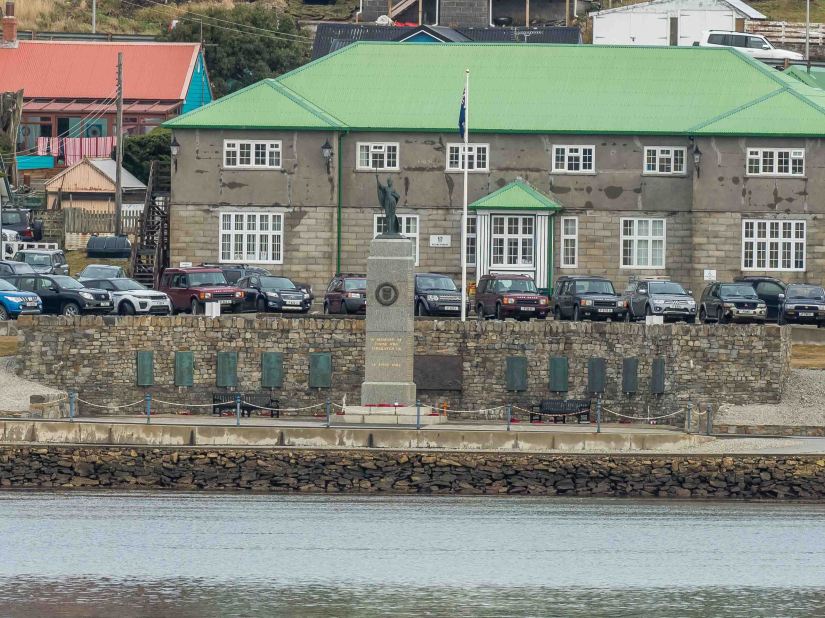
By the time we bought tee shirts and enjoyed a locally crafted pint, the winds had churned the harbor waves into a spumy froth.
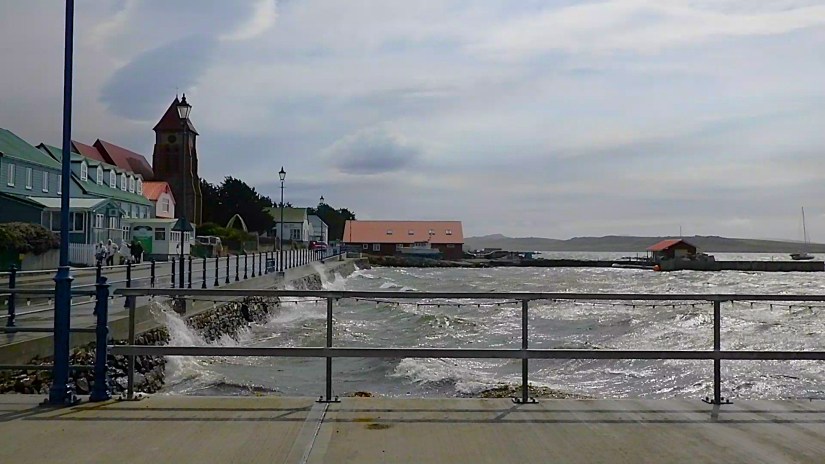
Volendam’s tenders struggled against 30-35 knot winds, causing a temporary pause in service. Those standing in tender queue were nearly taken off their feet by the wind. Coach buses (and hot chocolate!) had been brought in to shelter those still ashore, until winds subsided a tad and service resumed. Eventually, all were aboard and the Captain was happy to weigh anchor and head for open ocean again.
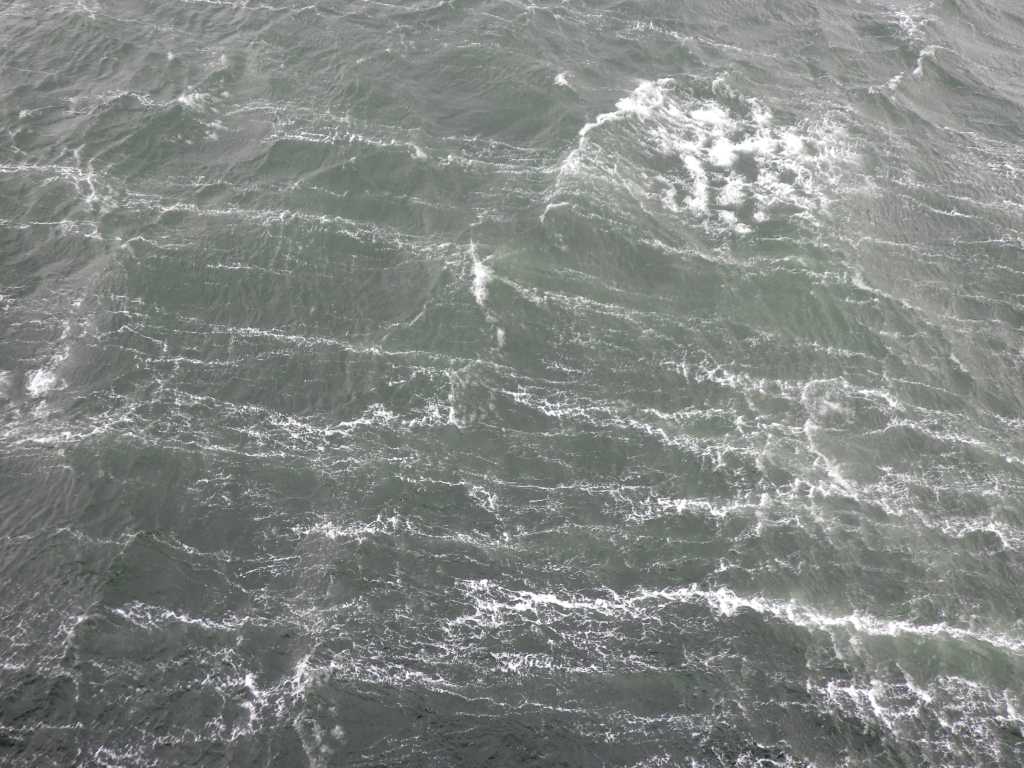
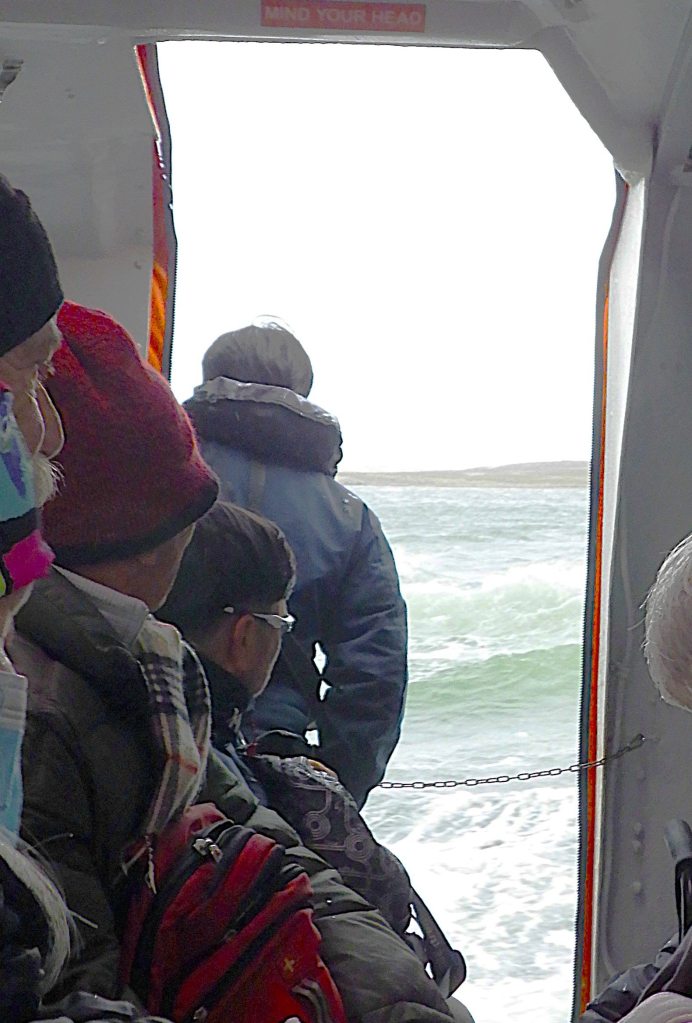
But the winds were just getting started as Volendam headed into the nighttime hours (which incidentally are daylight at this latitude). Crossing the 60 degrees south latitude, we officially enter Antarctic waters. Volendam cuts through the 12 to15-foot seas riddled with white caps whipped up from nearly 40 knot winds. Nevertheless, movement on the ship is quite tolerable, as her deep keel and stabilizers maintain a fairly steady and level ride. The evening and all through the next day, however, fog and rain kept us from viewing too much scenery other than wind-streaked waves.
An Ice Pilot and an Expedition Team joined the ship in Port Stanley and would be delivering presentations on a wide variety of topics of Antarctica; science, history, inhabitants (animal and human), as well as pointing out wildlife along the way. This is Ian’s 25th expedition trip to Antarctica and Vonda’s 16th. They will remain aboard 8 days until we reach Ushuaia, Argentina.
We didn’t have to wait long until Ian announced the first sighting of a humpback whale off the starboard bow! Over the next few days of scenic cruising, our eyes would also be peeled for potential sightings of minke and killer whales, fur and leopard seals, as well as gentoo, chinstrap and adelie penguins.
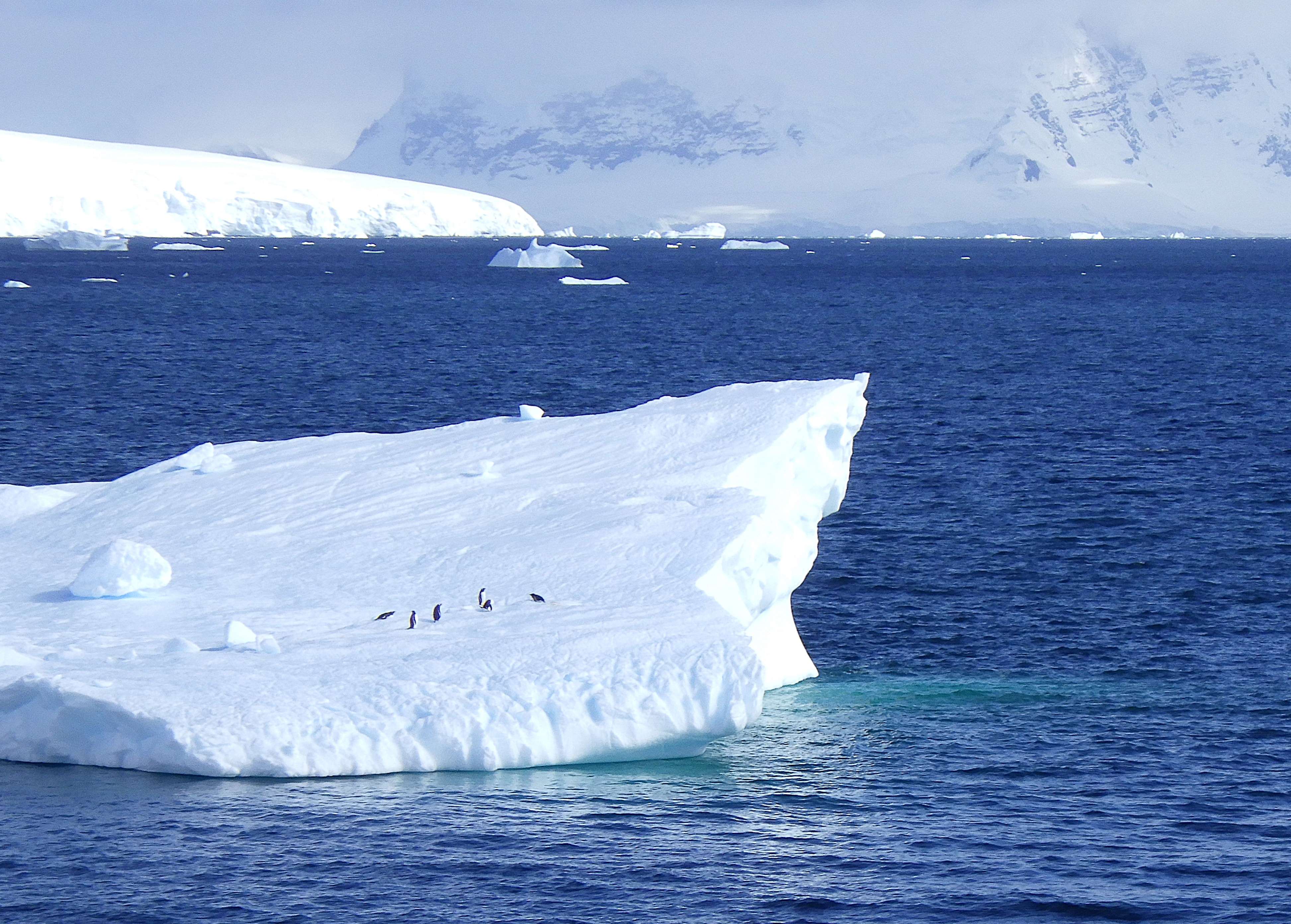
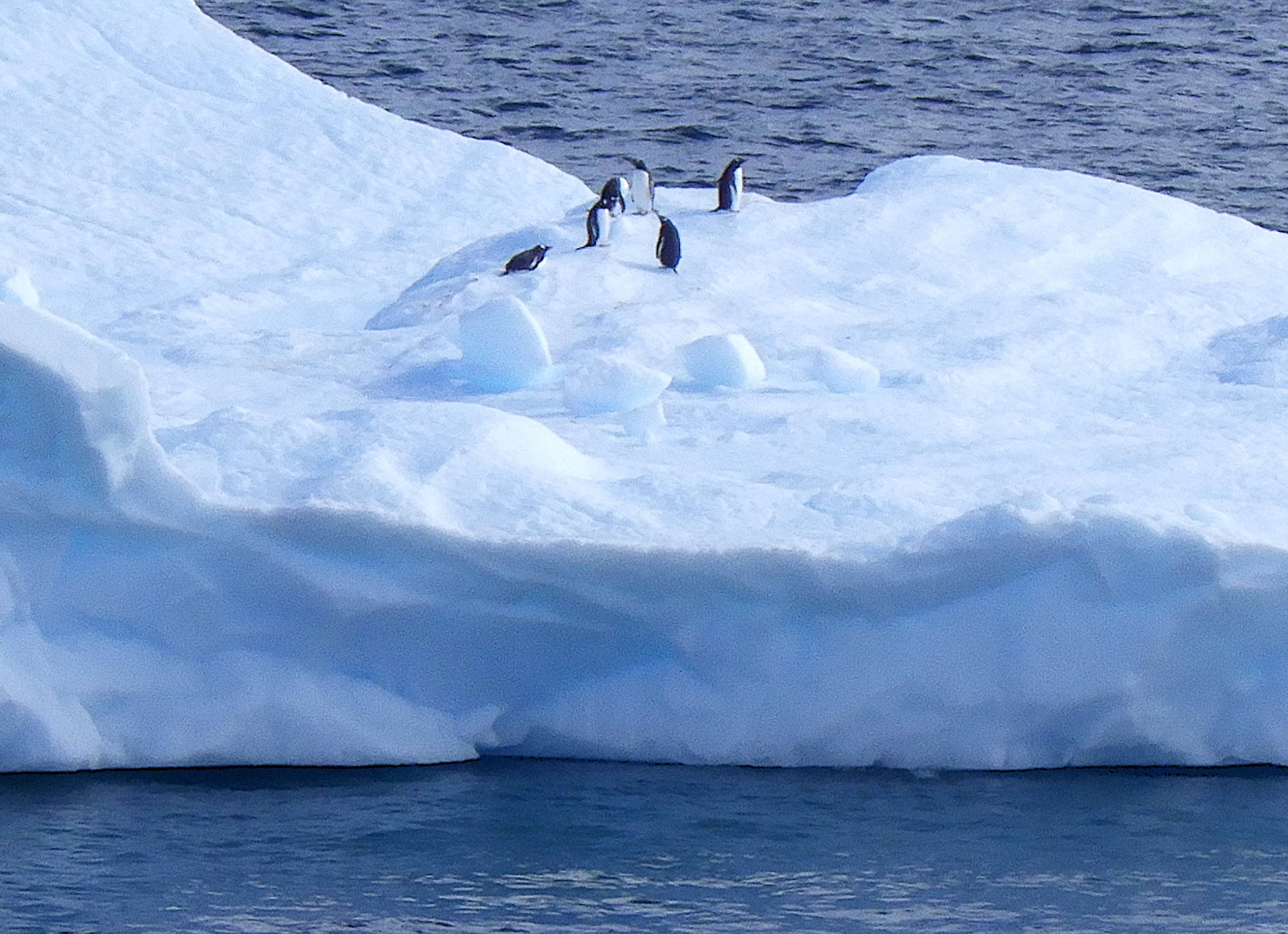
Captain Van Eerten, Ice Pilot Joan and the entire team on the Navigation Bridge remained on high alert, navigating these polar waters, dodging ice bergs and watching for brash ice and or fog closing in on us.
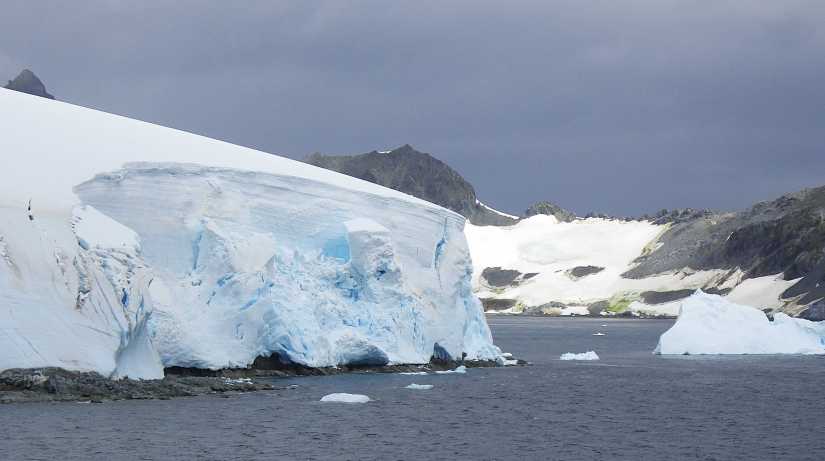
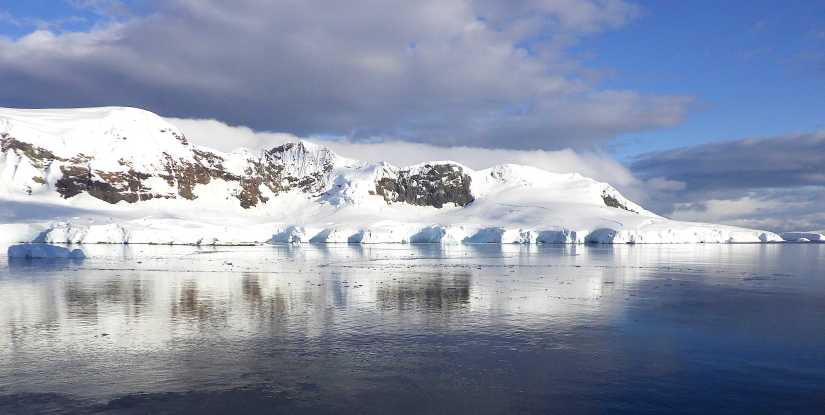
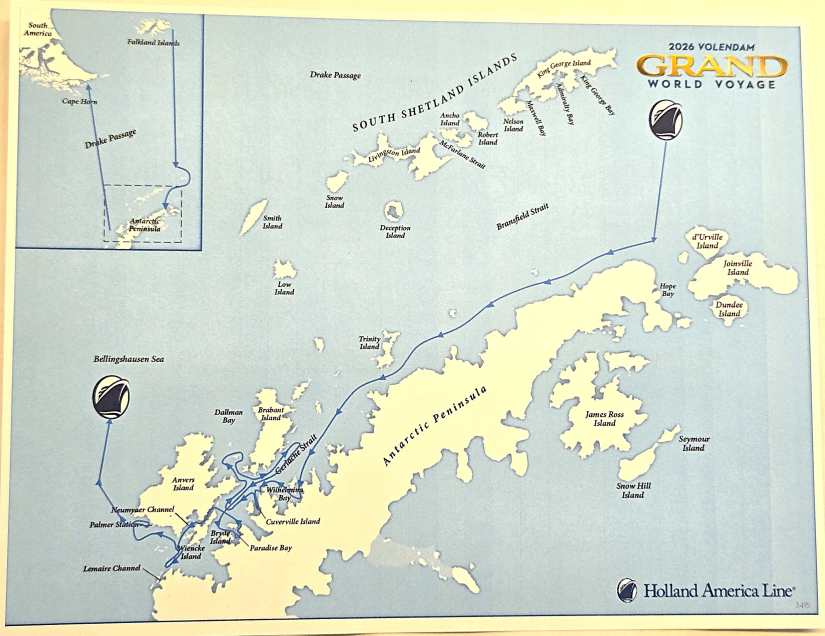
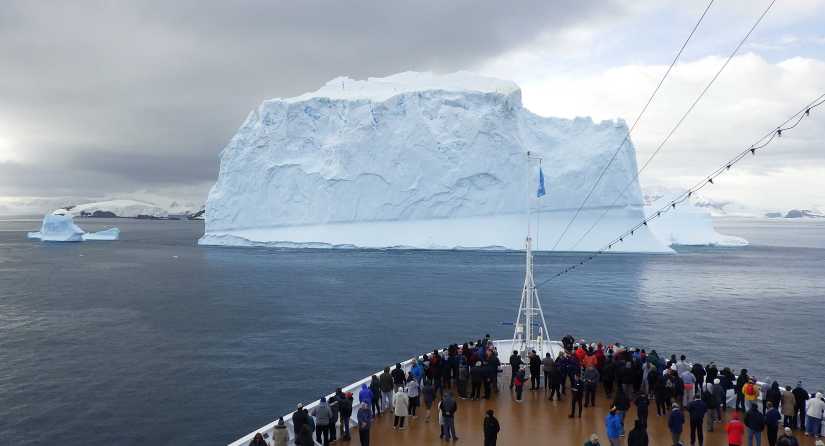
They routed Volendam deftly through tricky fiords, disappearing harbors, ice-riddled sounds and shifting channels, all the while seeking blue skies. And boy, did they deliver! The conditions were nearly perfect for the next three days as we plied the waters of the Gerlache Strait, Wilhelmina Bay, Cuverville Iland, Paradise Bay, Bryde Island, Wiencke Island, Neumyaer Channel and finally, Palmer Station.
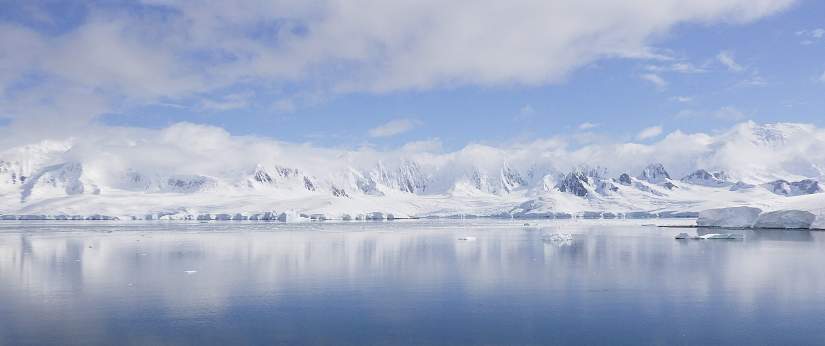
Majestic. Radiant. Breath-taking. Awe-inspiring. Actually, none one of these words seem adequate enough to describe this extraordinary environment. Words truly fail to describe, and photos simply do not do justice. I think it’s more about the inner emotion that evokes when you’re standing in the presence of Antarctica. The feeling of absolute joy over the immense – and intense – purity of what you’re seeing, in a quiet world that speaks more loudly than words ever could.
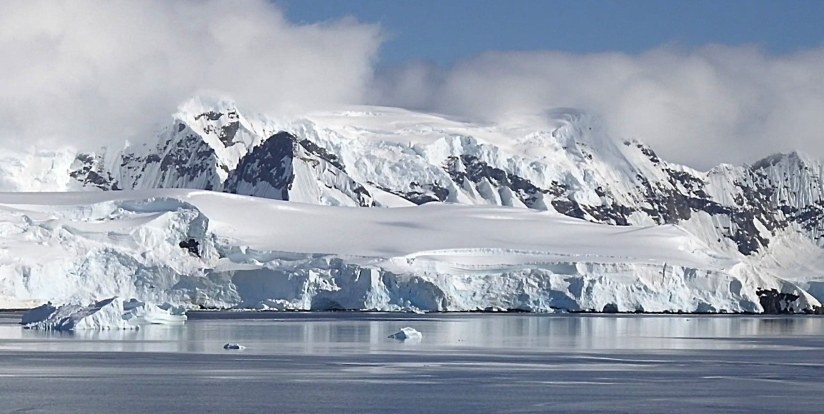
The emotional imprint of Antarctica will last forever, as will images in the mind’s eye. As far as our “mere mortal” photos go, I’ve included just a sampling of what we took. We will also be sorting through the rest, deleting hundreds of when the camera (or its operator) were a split second too late to capture any whales or penguins!
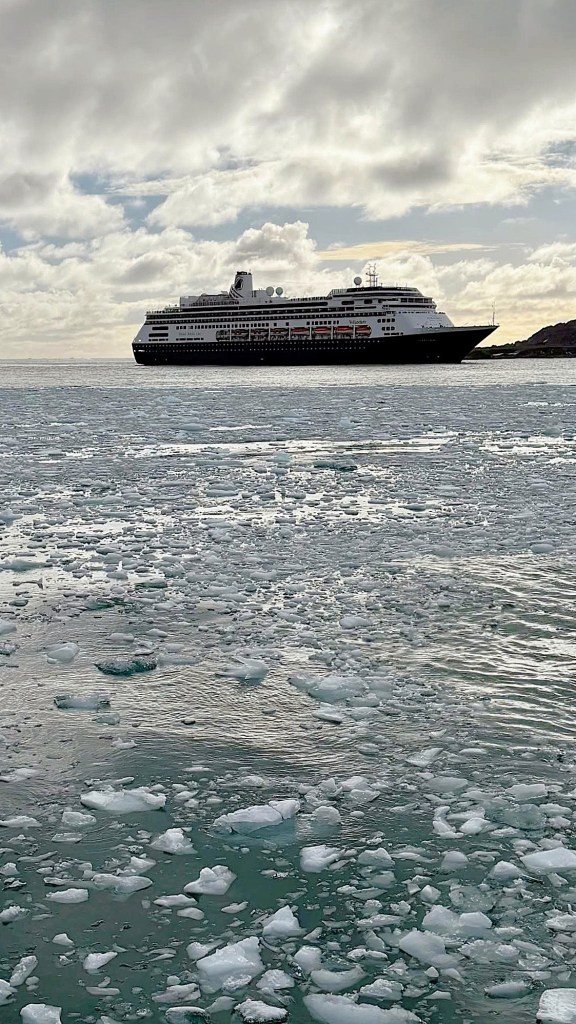
Our shipmate friend Patrick, 360-degree videoed a unique waterline view of the Volendam in Antarctica waters. Check it out here: https://www.facebook.com/share/r/1DXn4urqKL/
After 37 days on a southerly heading from Florida, Volendam has arrived at the bottom of the world and now begins a northerly course. We will cross the notorious Drake Passage, heading for Cape Horn and Patagonia. Stay tuned!
Discover more from Life in Nautical Miles
Subscribe to get the latest posts sent to your email.
 Life in Nautical Miles
Wow! Thanks for sharing.
Lynne
LikeLike
Awesome report…It looks like you guys are having a real treat.
Dick & Jeanne
LikeLike
Hello Dick and Jeanne! Thanks for your note. Yes, we are incredibly blessed to be exploring this great big beautiful planet! Our best to you guys. Maybe we’ll see you this summer in LSE?
LikeLike
Hi Monika and Tom, I absolutely love these updates. Thank you for sharing your adventures. Life has finally settled into a rhythm for us. Aspen swims 5 days a week for his Olympic training, and I’m loving my Afro Caribbean, modern and jazz classes each week. They are much harder than I thought and are kicking my ass but I’m loving every minute of it! P
LikeLike
Hi Amy! Glad to get your update…you guys wear STX well, and it looks good on you!! Hello to the boys –
LikeLike
Hello and thanks for the wonderful and well curated travelogue. The photos are stunning. Your writing is so descriptive I feel I was there.
LikeLike
Hello John! Thanks for your kind words…I really appreciate it. This blog is our own labor of love to remember these extraordinary places we are so blessed to travel. Hope all is well and you’re painting some nice winter scenes. Stay warm!
LikeLike
When you went through the “Roaring Forties” were you sliding around your bathroom floor clutching a waste basket while you waited for an IV injection of Phenergan?!! Maybe our boat wasn’t quite as stable?
>
LikeLike
Hi Randy & Sandy! Fortunately, our mighty ship handled the roaring forties with grace! LOL
LikeLike