2025 World Cruise, Cruising, Travelogues

Leg 10: Sardinia, Spain, Portugal, Morocco and USA

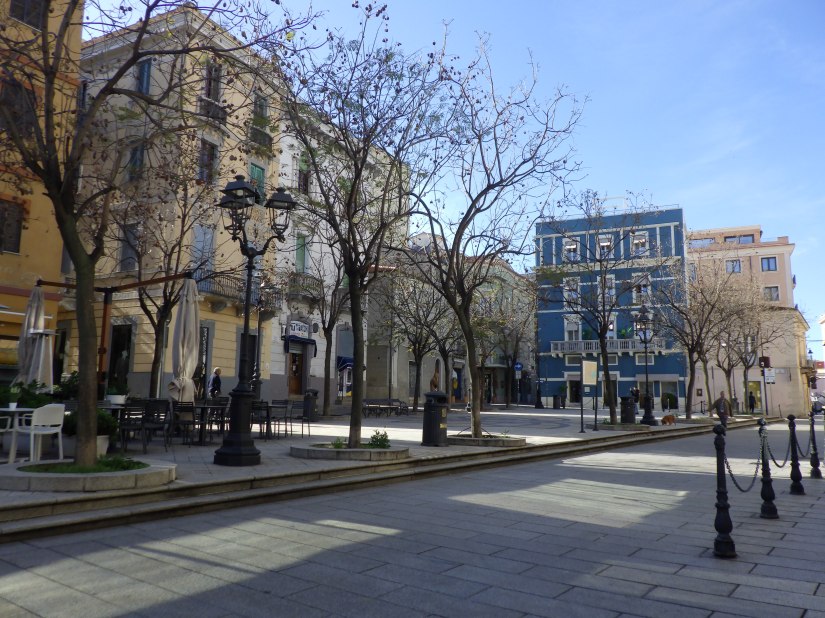
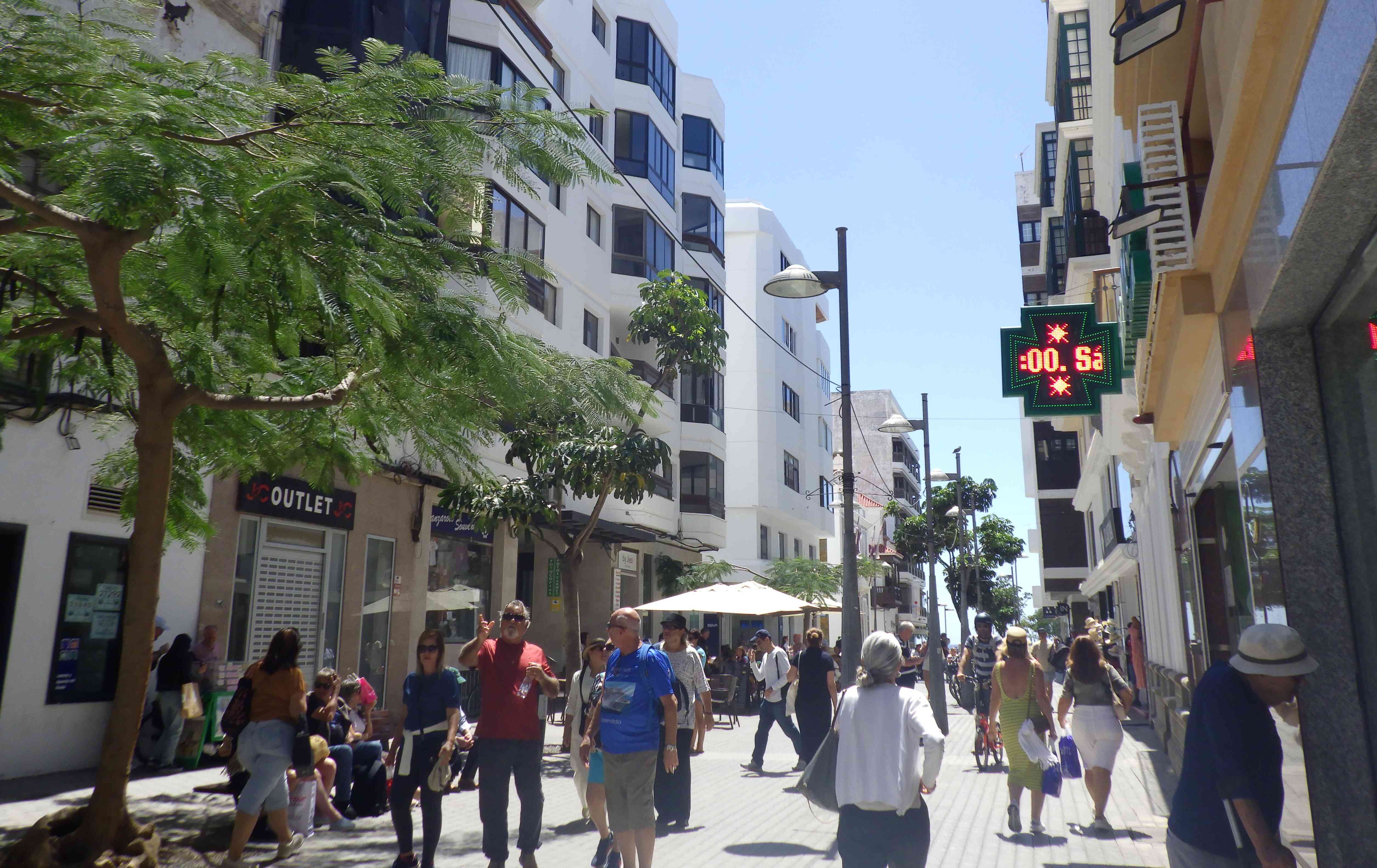
Olbia, Sardinia is a charming island town in Italy with friendly locals and a relaxed vibe. Our visit today was brief, just from 7:00 am to 1:30 pm, but Olbia is compact and easily walkable, especially on a crisp, cloudless morning of 57 degrees.

Olbia Town Hall, where flags fly at half-mast in respect of the Pope’s passing

By 8:00 am, the old town was still quiet when we reached the city center, home to about 60,000 residents. We found one open café, ordered two cappuccinos, and mapped out a walking route to hit the town’s highlights.

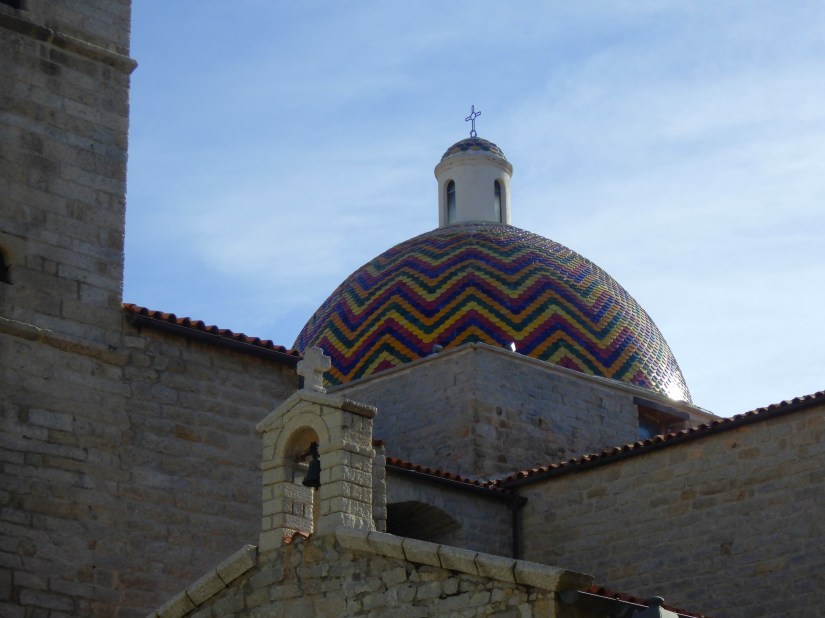
We began with Corso Umberto, an inviting pedestrian street lined with boutiques, cafés, and handsome old buildings. Just a block away, the Church of San Paolo caught the morning light, its colorful tiled dome vivid against the sky.

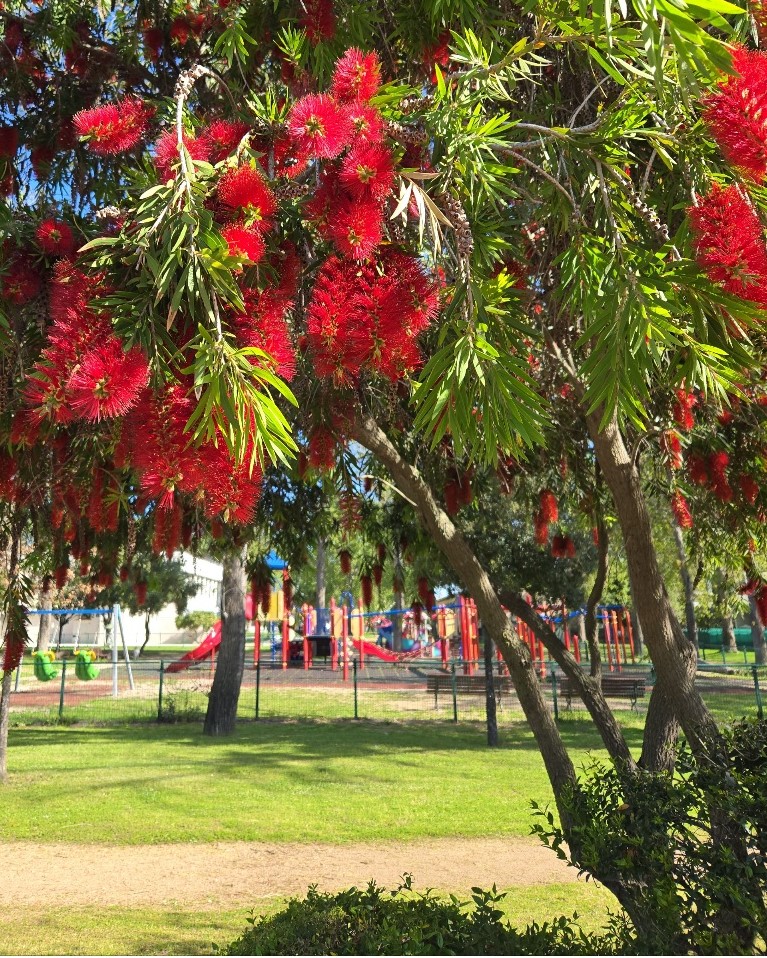
From there, we wandered through narrow alleyways, quiet neighborhoods, and sunlit piazzas until we reached the expansive, recently developed Parco Fausto Noce. The park featured an amphitheater, fitness stations, a fountain, and striking bottlebrush trees in bloom.

Town mural

Olbia also revealed its playful side, with a brightly painted carousel and Ferris wheel in their coastal park, along with a quirky, themed laundromat inspired by the TV series “The Jeffersons.”

Barcelona, Spain: A memorable two-day stop in Barcelona awaited passengers aboard the Zuiderdam and her sister ship, Volendam, who was also in port. The Volendam was midway through her ambitious 133-day Pole-to-Pole itinerary, and the two ships docked stern-to-stern in close proximity. In fact, Staff Captain Karl shared with us that the ships had to request a special deviation from the port authority to reduce the standard 200-foot clearance between docked vessels. The harbor masters approved, and just 100 feet separated the ships, making for an unusually cozy and photogenic tie-up.

Volendam (L) and Zuiderdam (R)

Event planning had been in the works for months on the “Grand Meet Up”, including a nighttime drone show visible from either ship’s aft deck. While crews busied themselves with preparations for the evening’s festivities, we went ashore to do some sightseeing. Having visited Barcelona before, we decided to explore the Gothic Quarter, an area that was new to us.

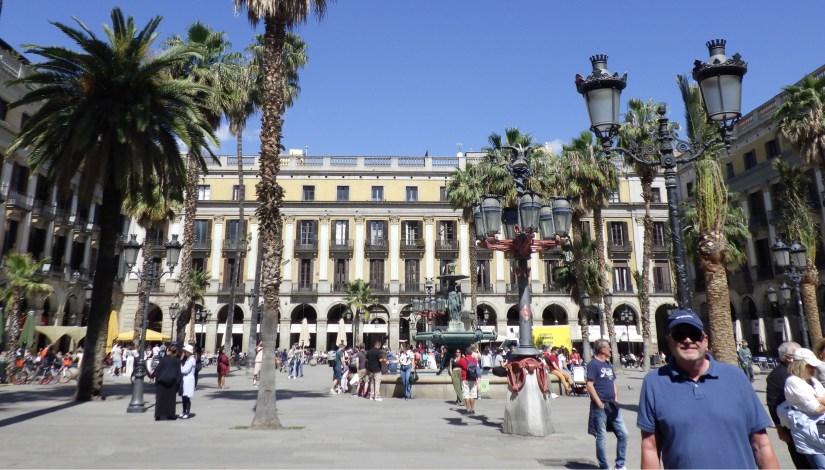
We strolled along the lively Rambla, taking in the familiar sights: the Columbus Monument, rich architecture, street performers, and bustling cafés. Veering off to the right, we wandered into Plaza Reial, where we sipped cappuccinos and enjoyed some relaxed people-watching. From there, the labyrinthine alleyways of the Gothic Quarter drew us in with their medieval charm. The aromas from a tiny pâtisserie filled with locals drew us in and we ordered a rustic toasted ham and brie sandwich. No tourists in sight, just authentic, delicious simplicity.

We returned to the pier early, eager to tour the Volendam, which recently underwent a multi-million dollar refurbishment and looked pristine. It will be our ship for next year’s cruise, so getting a sneak peek was a treat.

As late afternoon arrived, passengers from both ships gathered for the two-ship gala; a festive food and wine reception filled with laughter, music, and reunions. Many travelers on board Zuiderdam and Volendam knew one another from past voyages, so it felt like a floating reunion.

Once darkness settled over the harbor, the much-anticipated drone show was introduced by Holland America Line’s President and CEO. It was a dazzling display of each ship’s journey illustrated in the night sky and commemorated this special rendezvous in Barcelona. It was a magical night, filled with friendship and celebration. Many thanks to our friend, Brad, who shared his video of the drone show:

The Holland America “Grand Meet-Up” in Barcelona was an unforgettable highlight of our cruise!

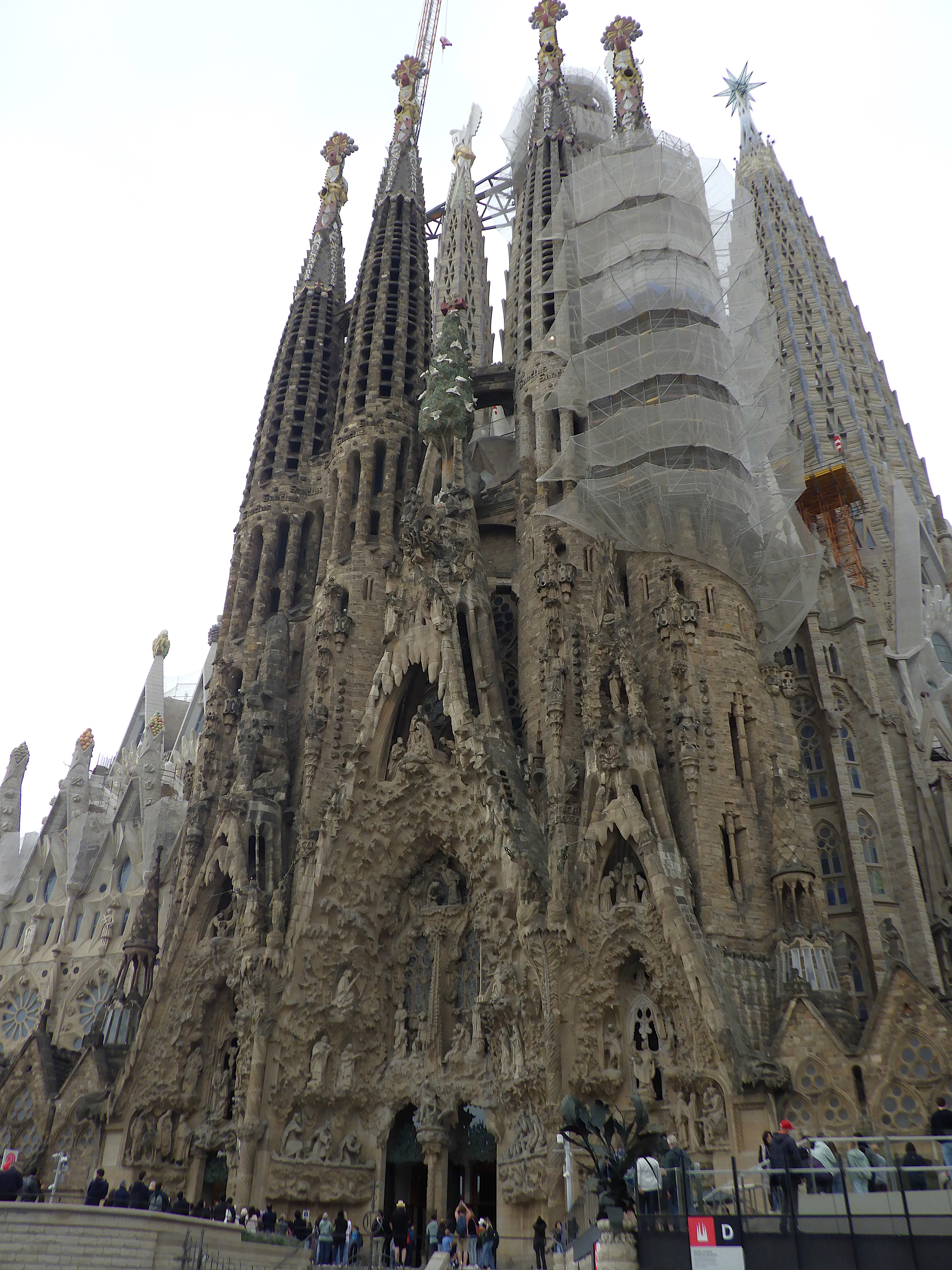
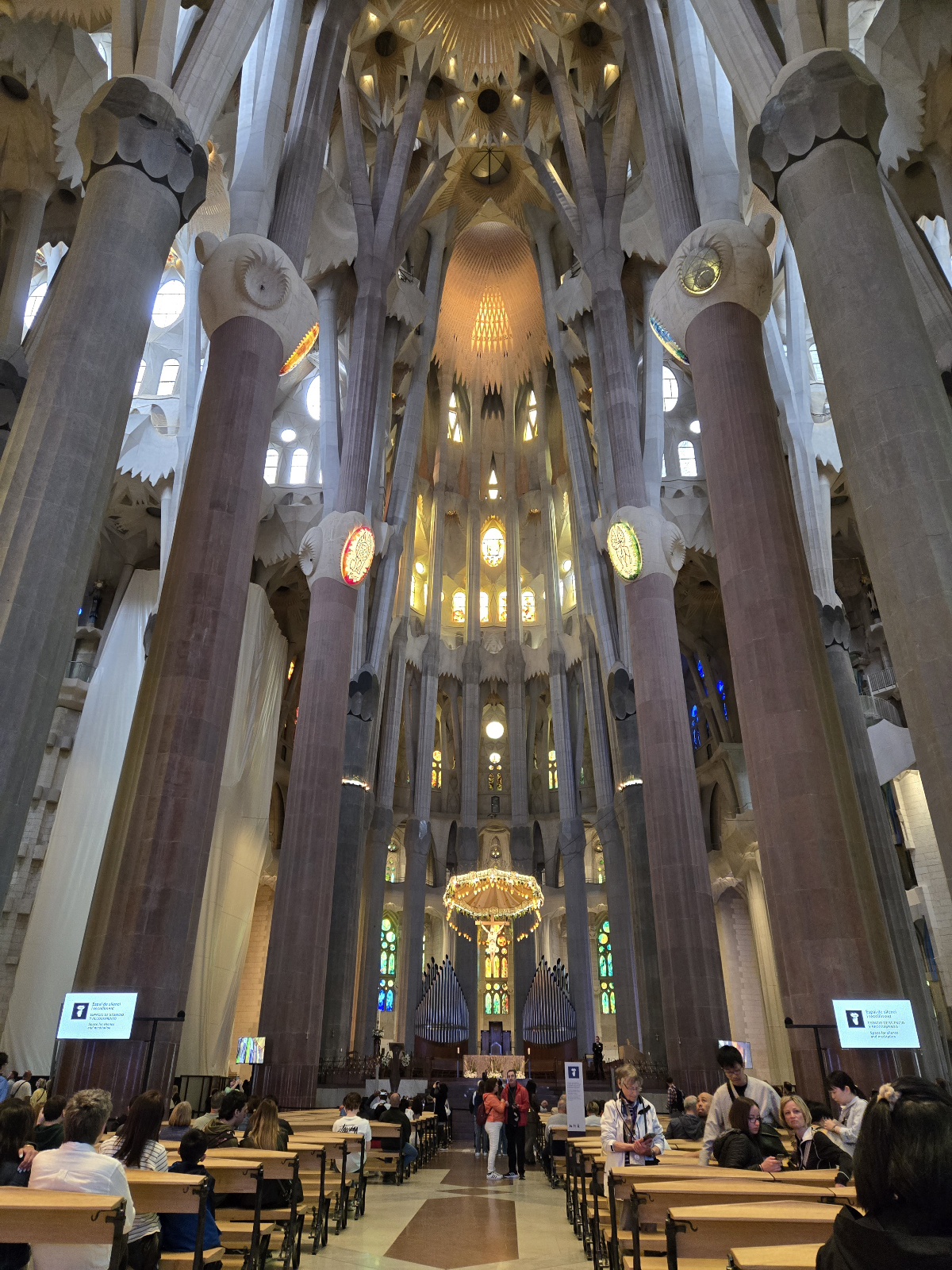
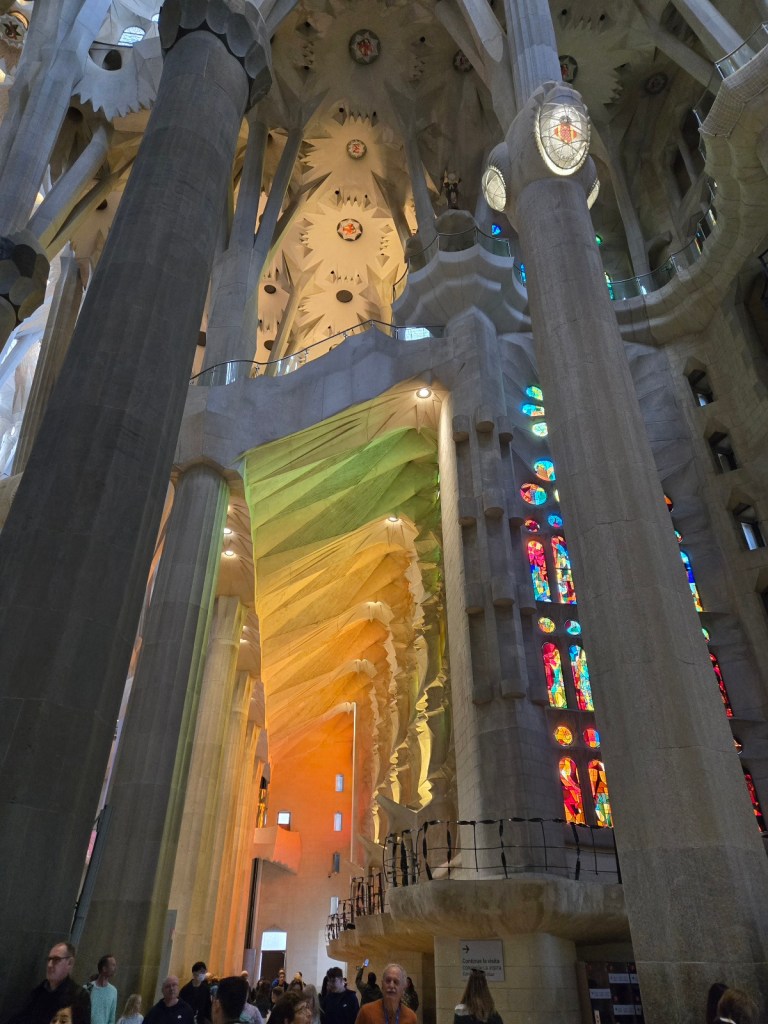
The following morning, we were part of a group of ten friends—five from each ship—for a six-hour guided tour of Gaudí’s strange and beautiful masterpieces. First, the towering spectacle of Sagrada Família:

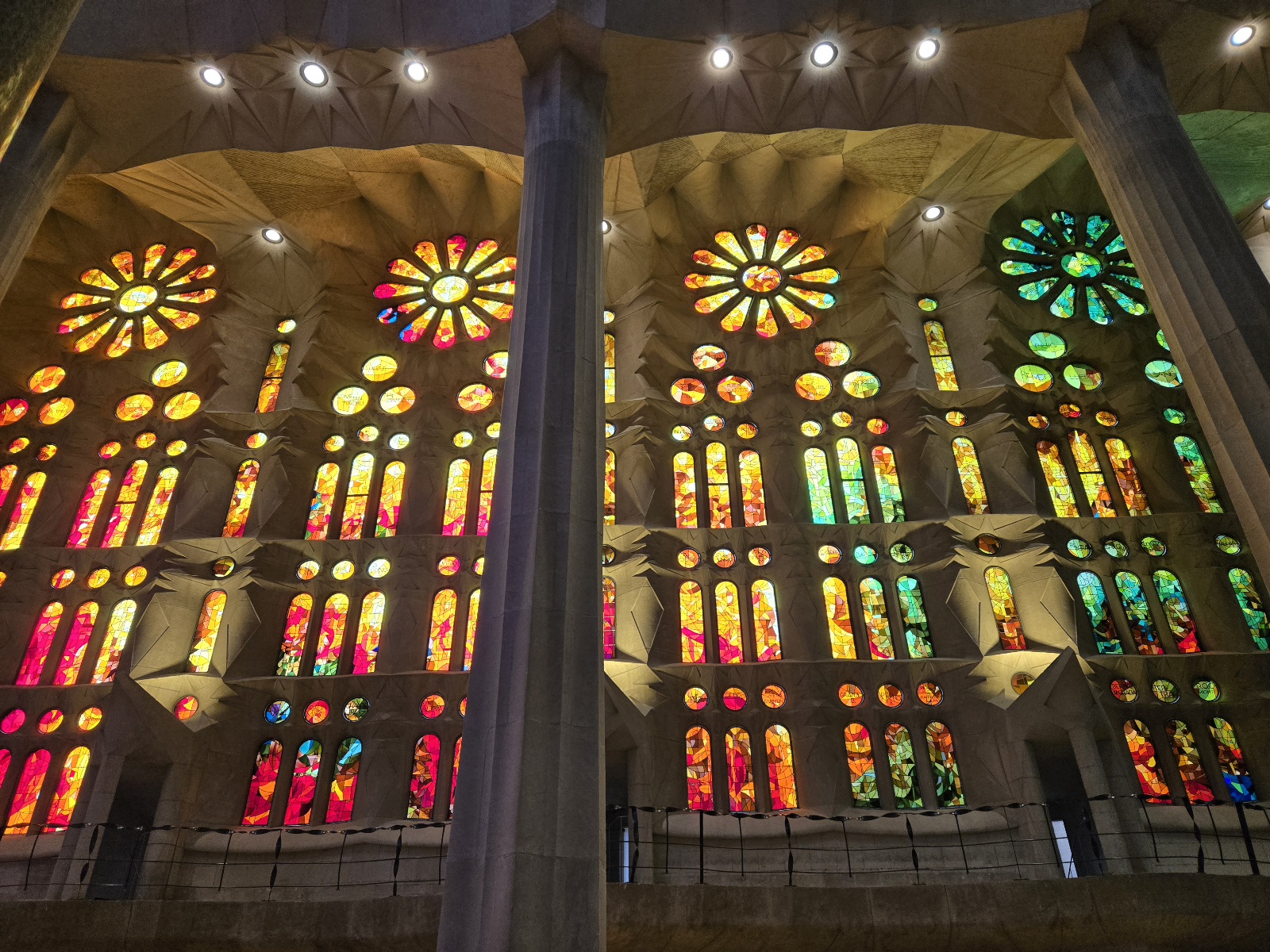
The morning light streaming in through the stained-glass windows created such an ethereal glow!

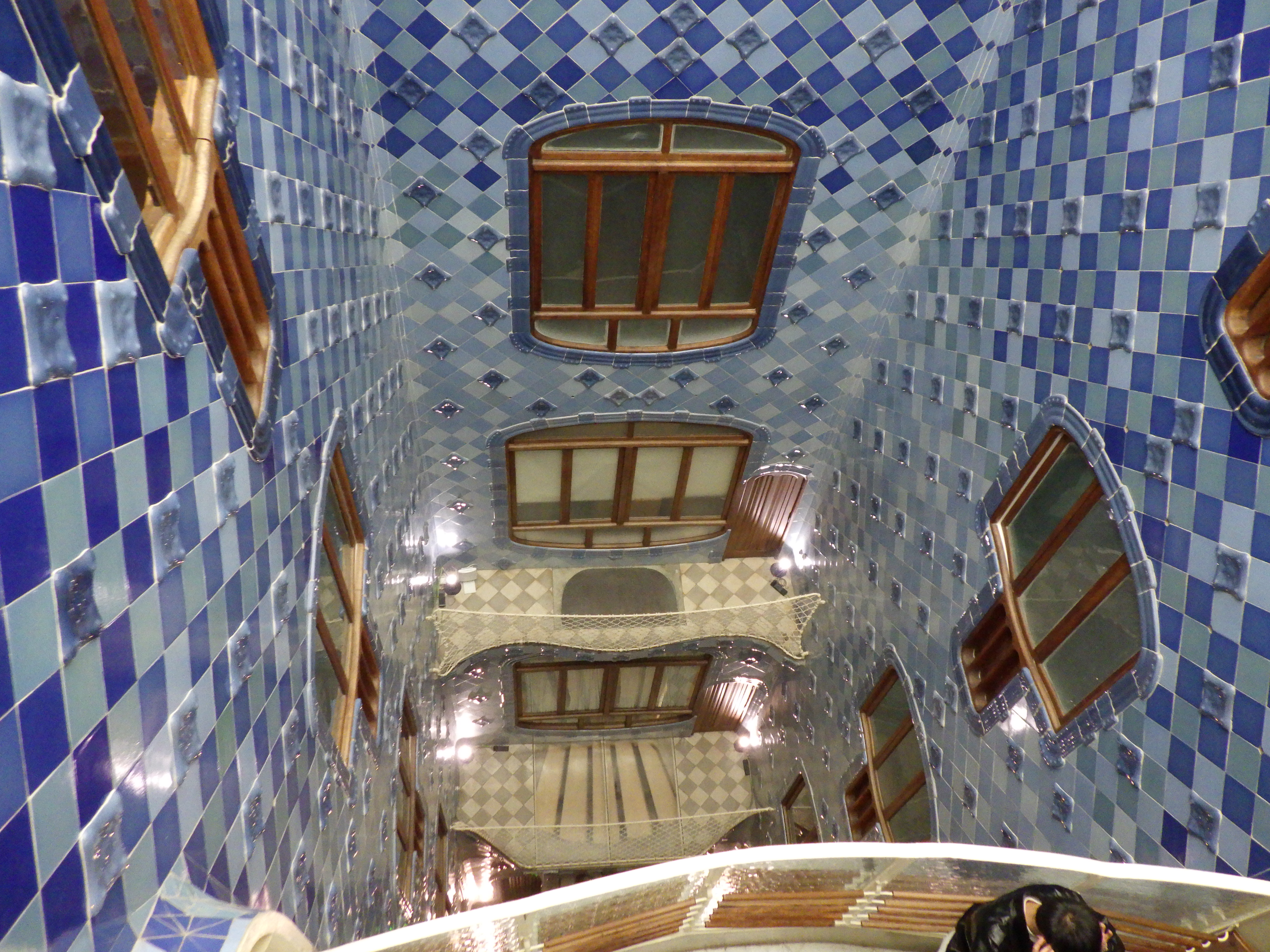
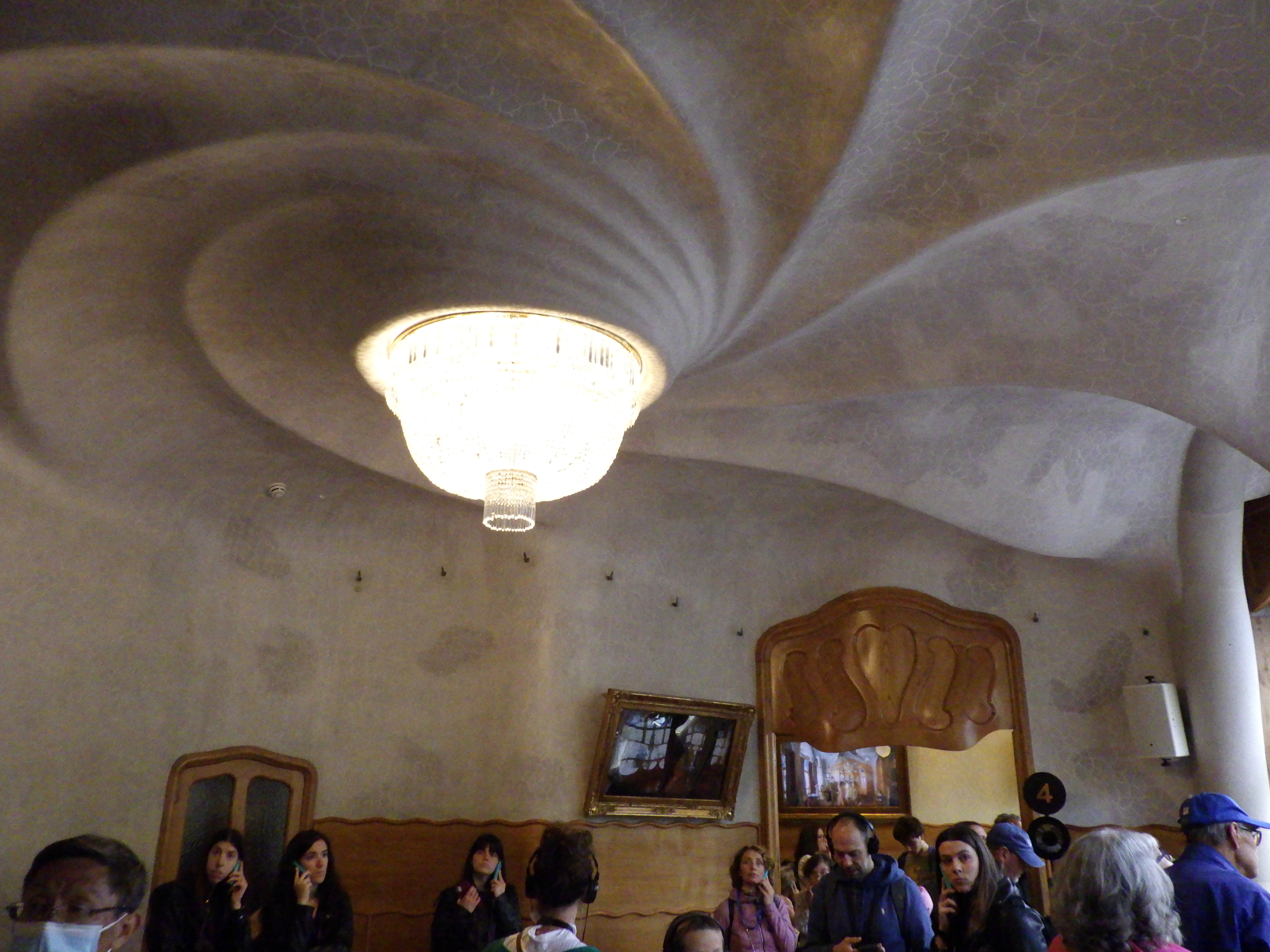
Next, was the whimsical and bizarre Casa Batlló (The “Bone House”), where hardly a flat surface exists:

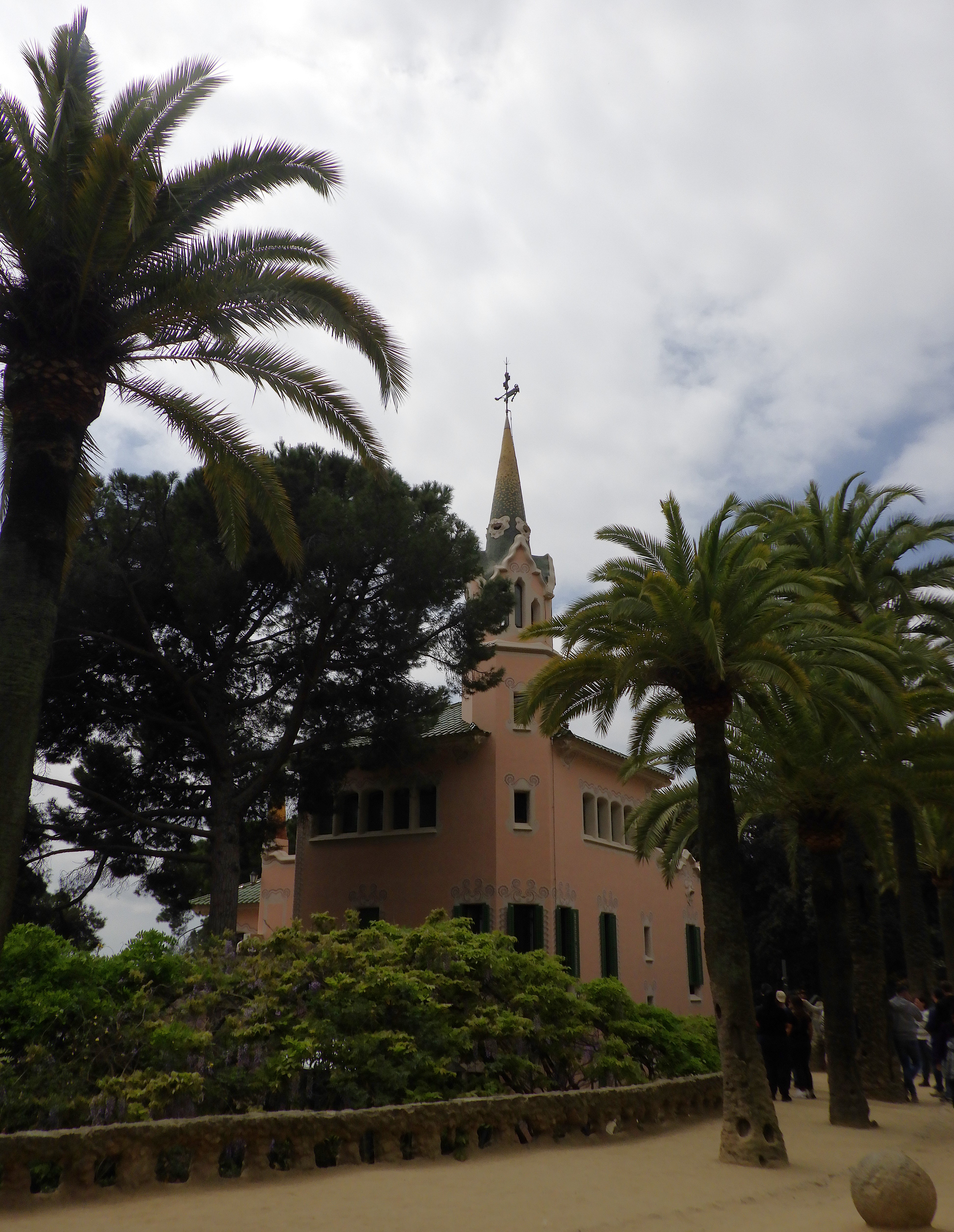
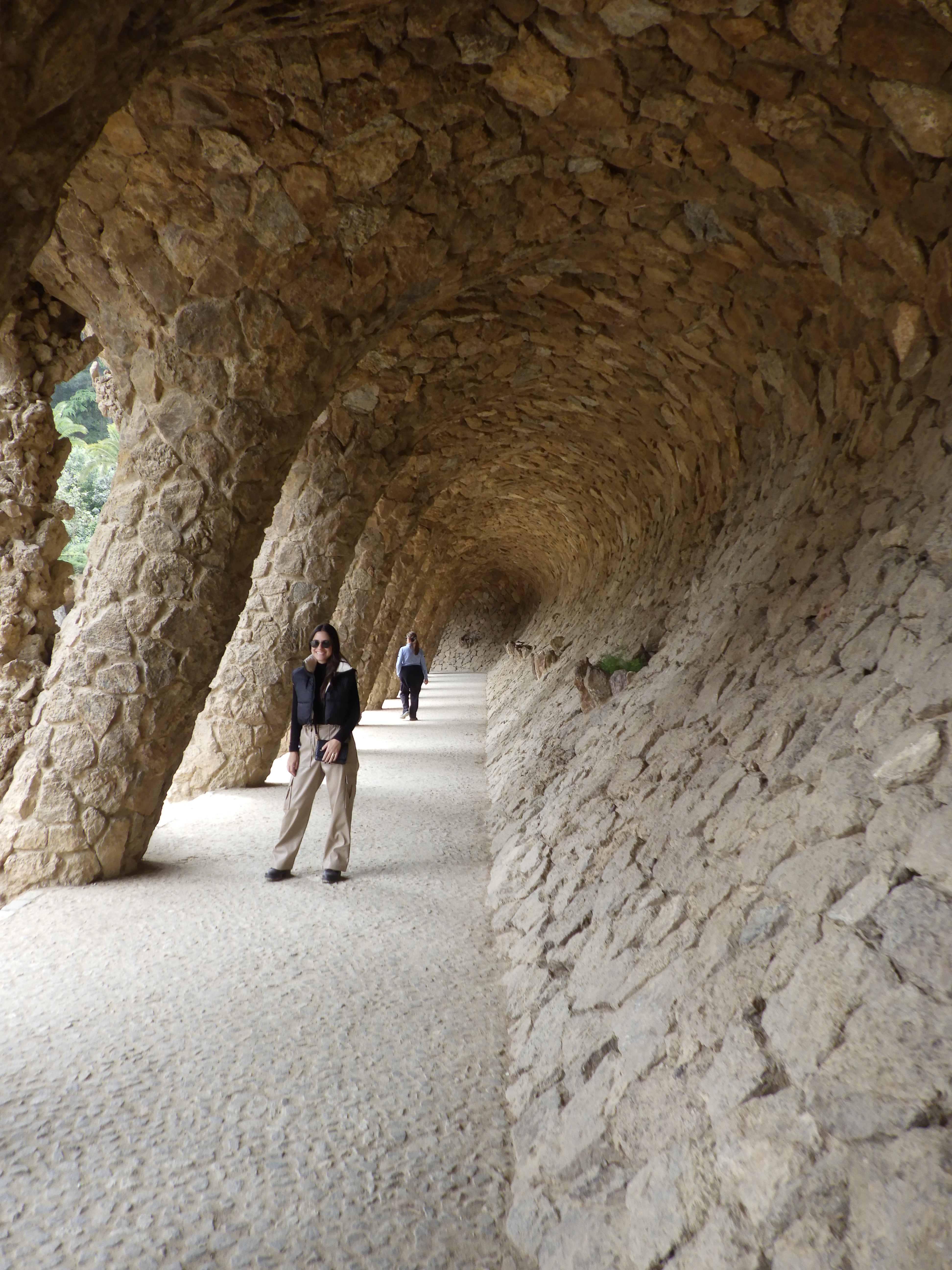
And lastly, the sprawling Park Güell, with impressive stonework and vibrant mosaics:

Gaudí’s visionary designs felt like stepping into a dream. He was an architectural genius, far ahead of his time. Thanks to our friend, Jo, for planning such a fun day!

Just 220 nautical miles down the Spanish coast, we arrived in the harbor of Alicante. After the bustling energy of Barcelona and the gala festivities of the Grand Meet-Up, this medium-sized coastal city offered a welcome change of pace.

The Castle of Santa Barbara stands watch over Alicante, Spain

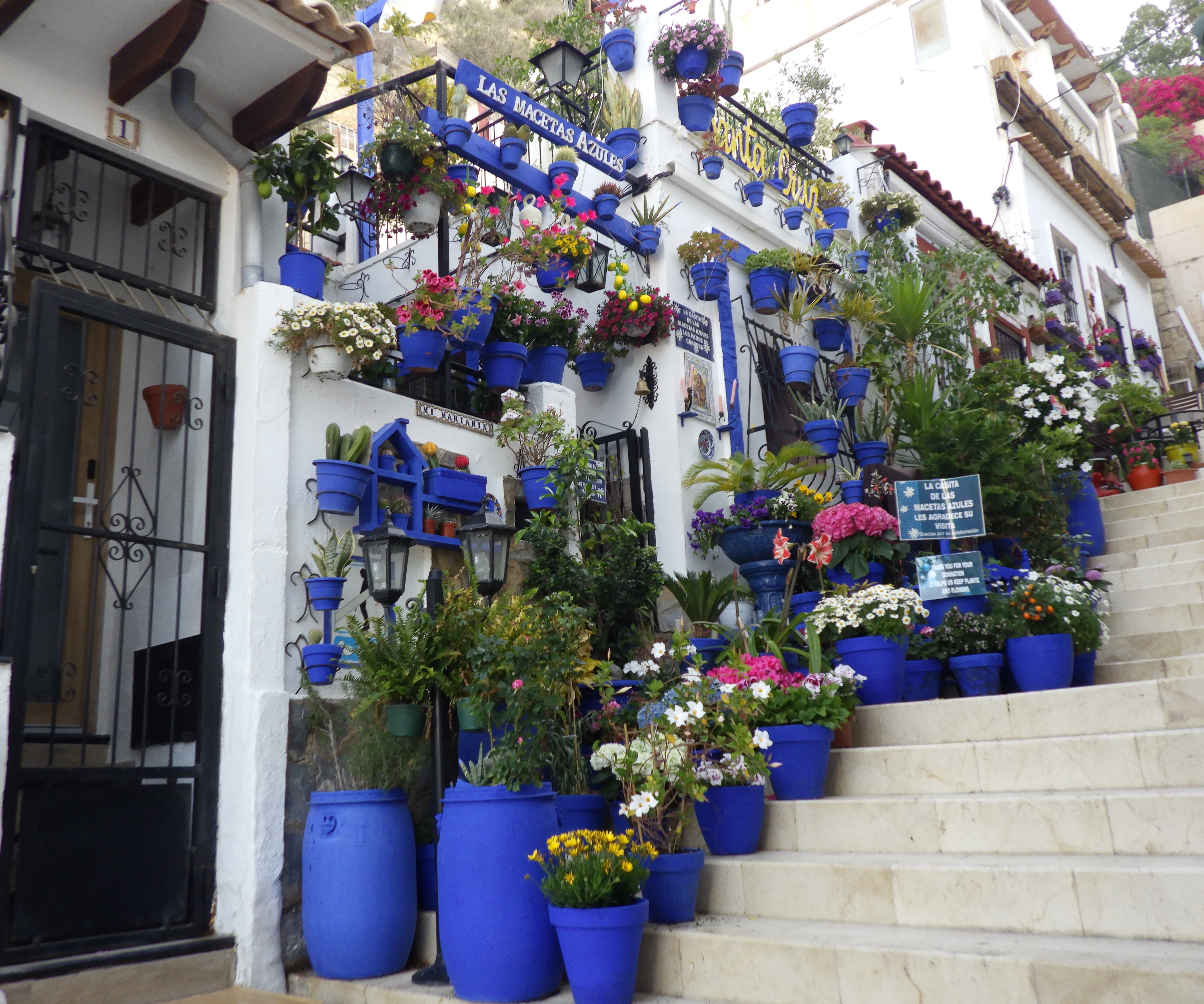
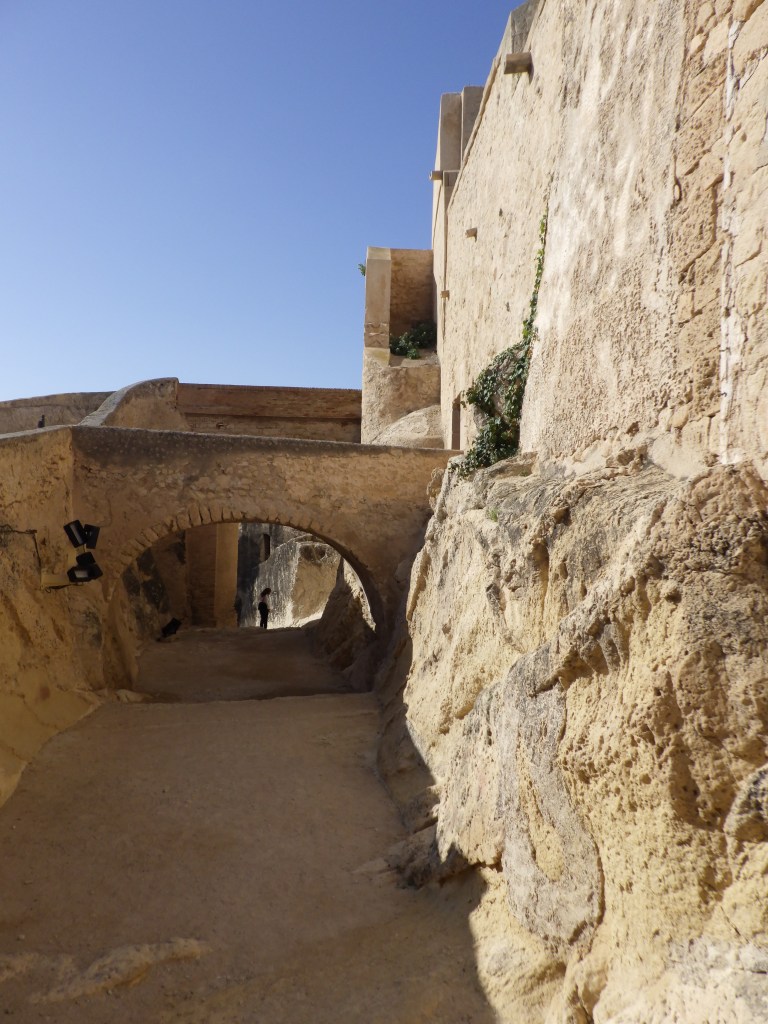
We set out to explore the Old Town, climbing its many winding staircases lined with colorful doorways and vibrant flower pots, making our way up to the Castle of Santa Barbara.

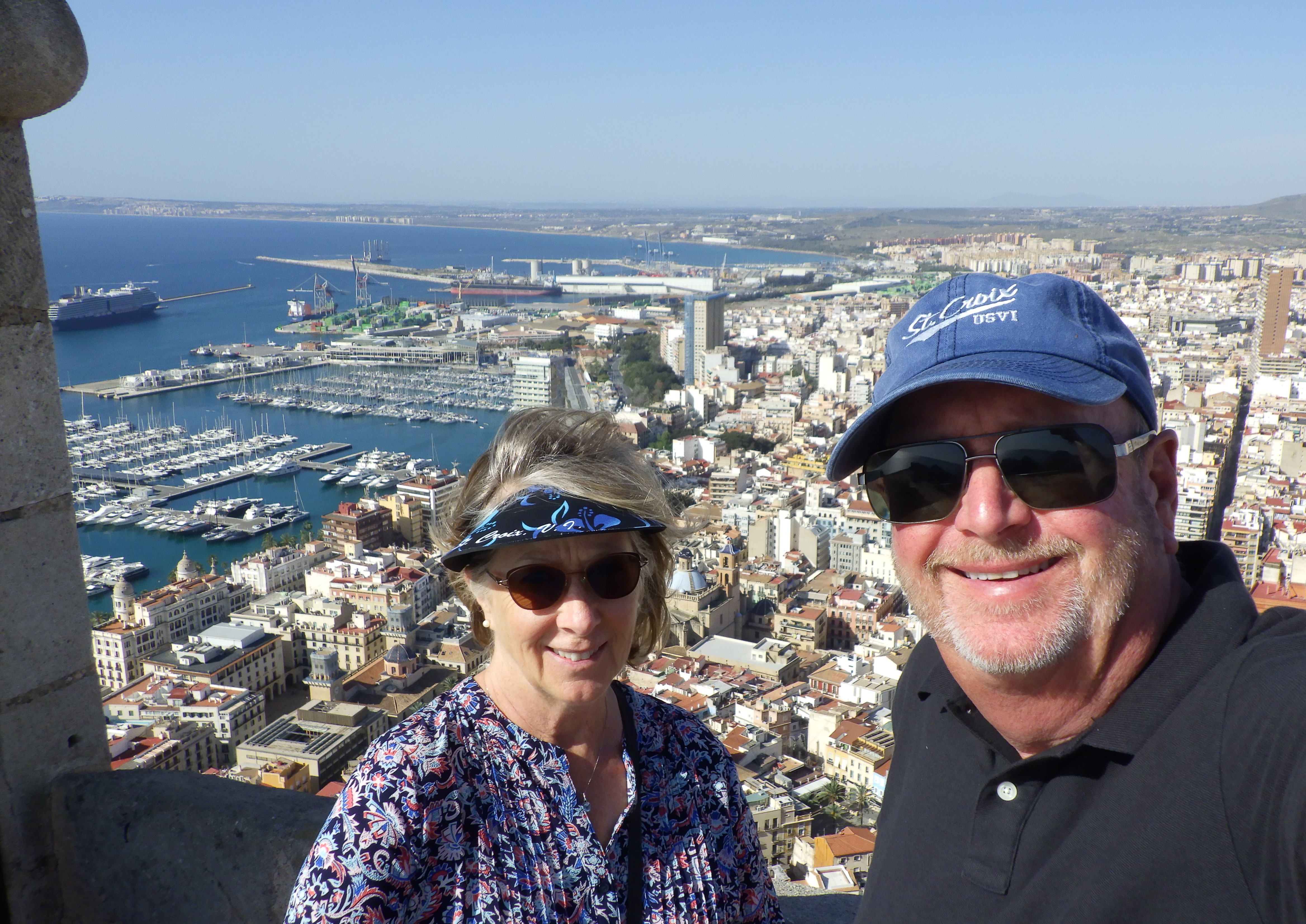
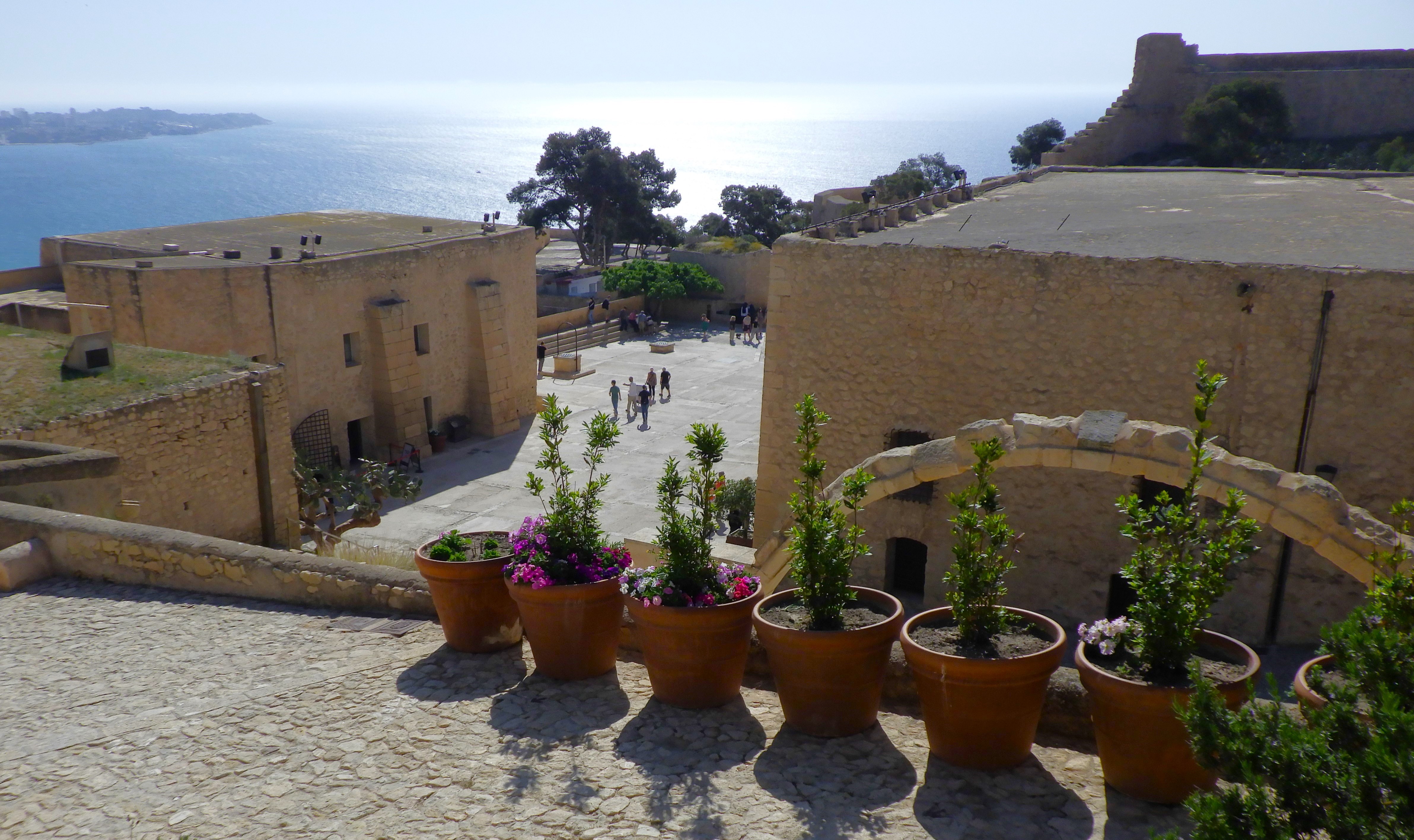
Perched high above the city at an elevation of 545 feet, this 9th-century fortress offers panoramic views of the coastline and surrounding landscape.

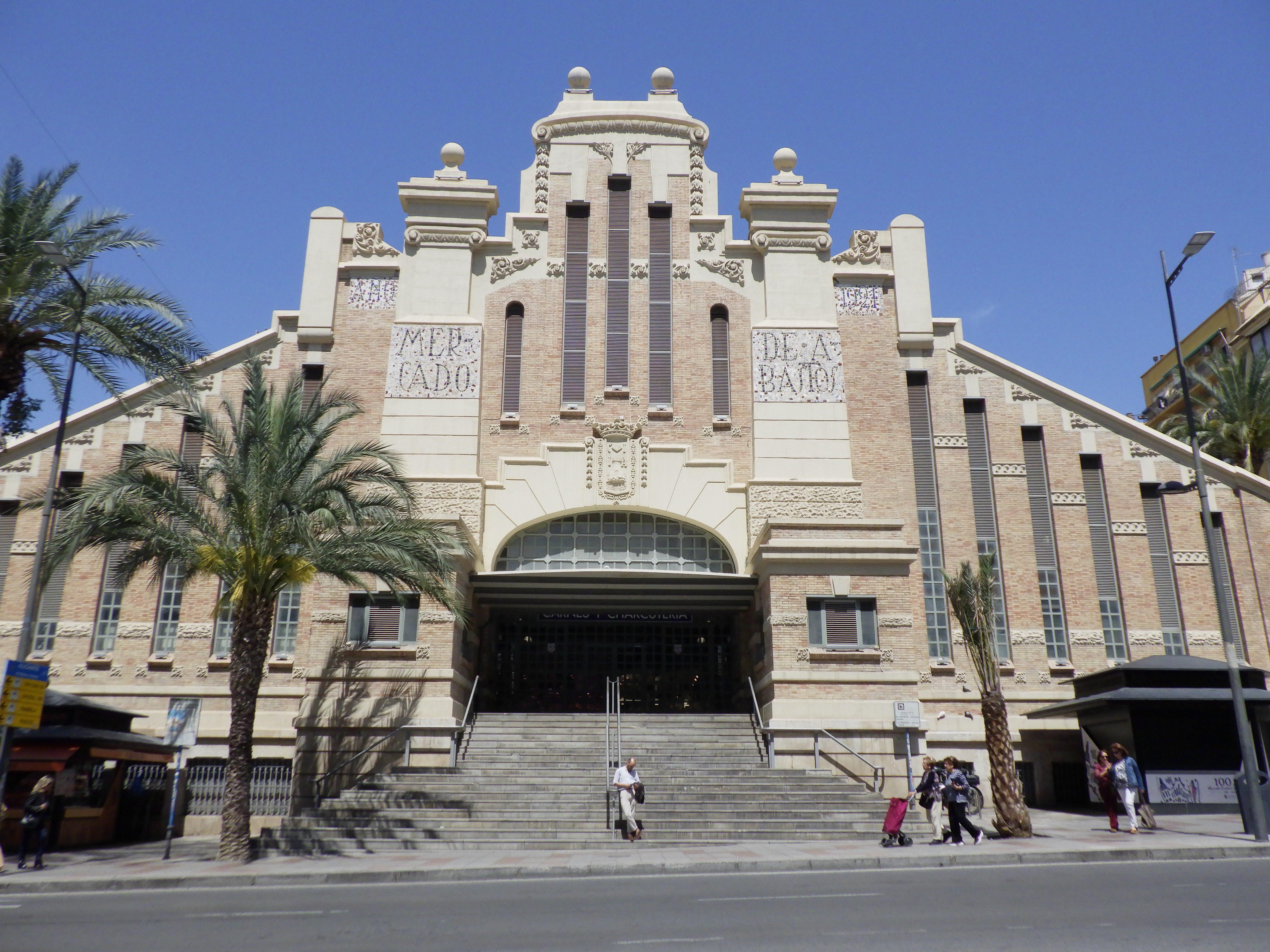
Back in the town center, we wandered through the lively mercado, past traffic circles, sunny plazas, and charming cafés, where we paused to share a juicy steak sandwich, recommended by the owner.

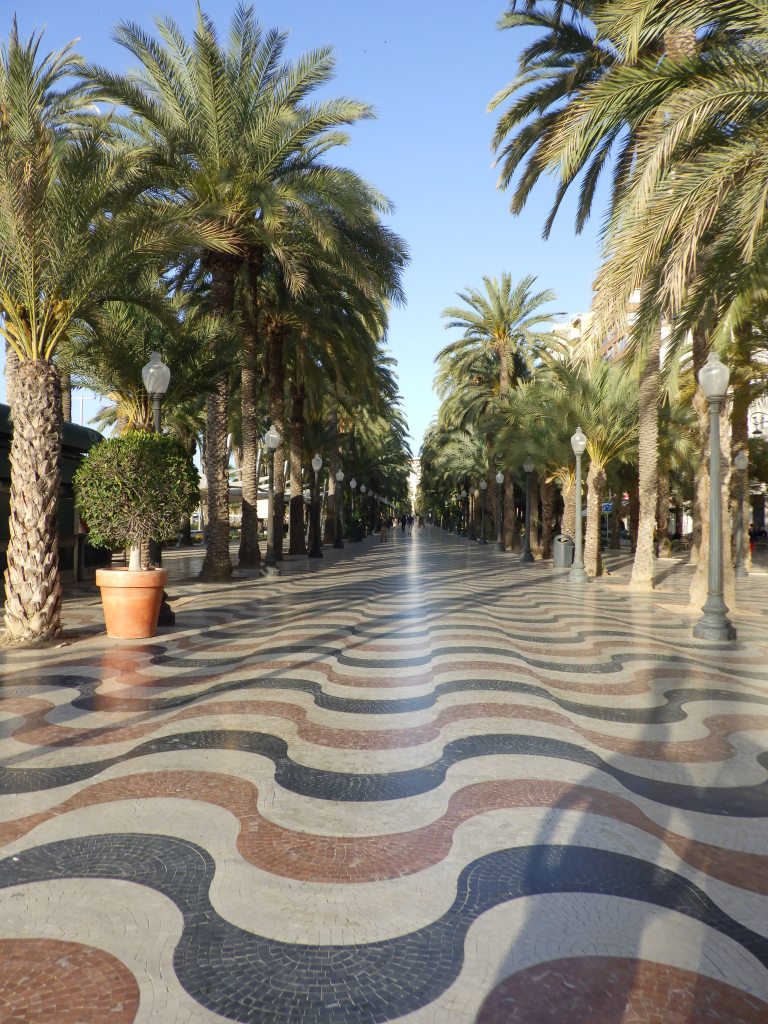
As the day wound down, we made our way back toward the harbor along their iconic palm-lined Esplanade, said to be paved with more than six million mosaic tiles.

And the adjacent beach was perfect finish to a relaxed and scenic day in Alicante!

Alicante, Spain has it all!

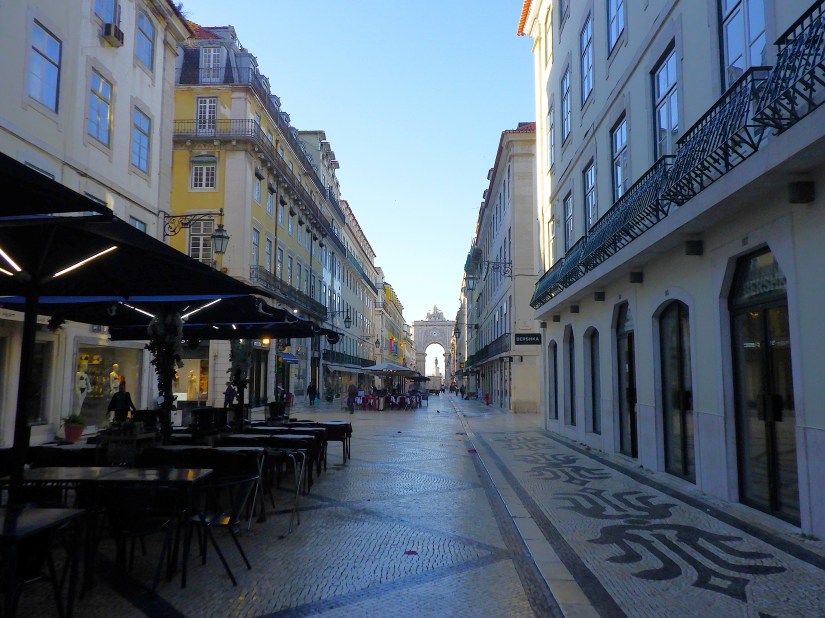
Lisbon, Portugal Early morning sun reflected off the yellow buildings surrounding the expansive Commerce Square as we walked inland beneath the Rua Augusta Arch. Completed in 1873, the magnificent arch celebrated the reconstruction of Lisbon after their devastating 1755 earthquake. 

The magnificent Rua Augusta Arch with the Statue of King Jose I in the background

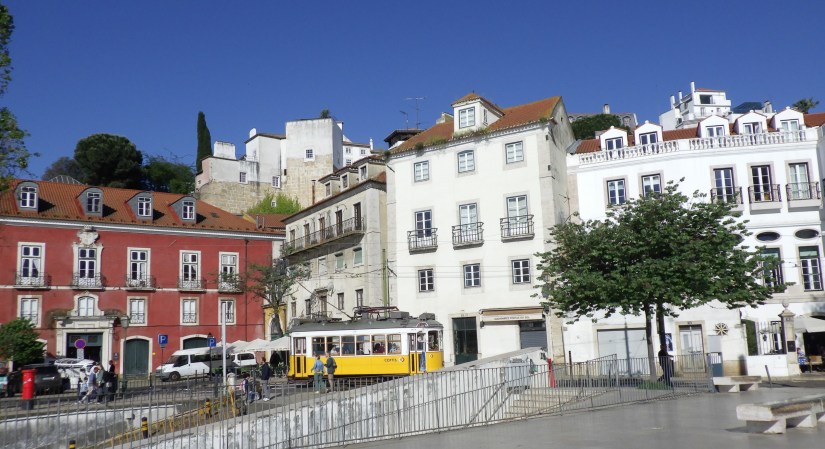
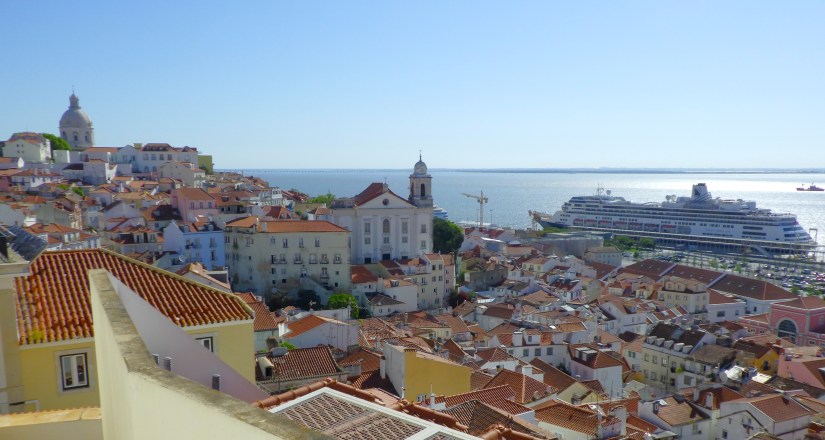
Our day in Lisbon started with a ride on the legendary Tram 28, winding its way uphill to the charming neighborhoods of Graca and Alfama. We enjoyed cappuccinos with sweeping views of the city and another rare double sighting of our ships, Volendam and Zuiderdam, docked together once again.

Vintage Tram 28 has been running since 1914

Of course, no visit to Lisbon is complete without sampling the local flavors. We indulged in the famous pastel de nata (a rich egg custard tart), a savory Iberian ham and sheep cheese sandwich, and a Banfi hot pork sandwich—hot, juicy, messy, and totally worth it.

Pastel de Nata…yummy!

Things took a turn just as we headed toward another cobblestone plaza. Suddenly, the power went out. We stopped at a café for a drink and were told: no food, no cards, no bathroom—drinks only. At first, we figured it was a local outage. But while people-watching from our café table, we overheard a nearby patron mention the power failure extended across Portugal, into Spain, and even parts of northern France. At that point, it was clear this wasn’t just a local glitch, and we weren’t sure what might come next.

We decided it was prudent to head back toward the port, just in case. Just outside the cruise terminal we bumped into Captain Frank, who was waiting for his wife, Alexandra, to return from an excursion. We chatted about the breaking news, while trams sat frozen in the middle of intersections, traffic lights were out, and vehicles were at a standstill. And the subway? We could only imagine.

Naturally, our ship is its own independent power plant, so Zuiderdam was not being affected in the least. Since Captain Frank felt that there was no immediate cause for alarm, Alexandra joined us to rendezvous with our friends from the Volendam. The café where we waited near the ship became a hub of speculation. People were abuzz about the blackout. We were still limited to drinks only, so we made the most of it with white sangria, water, and sodas.

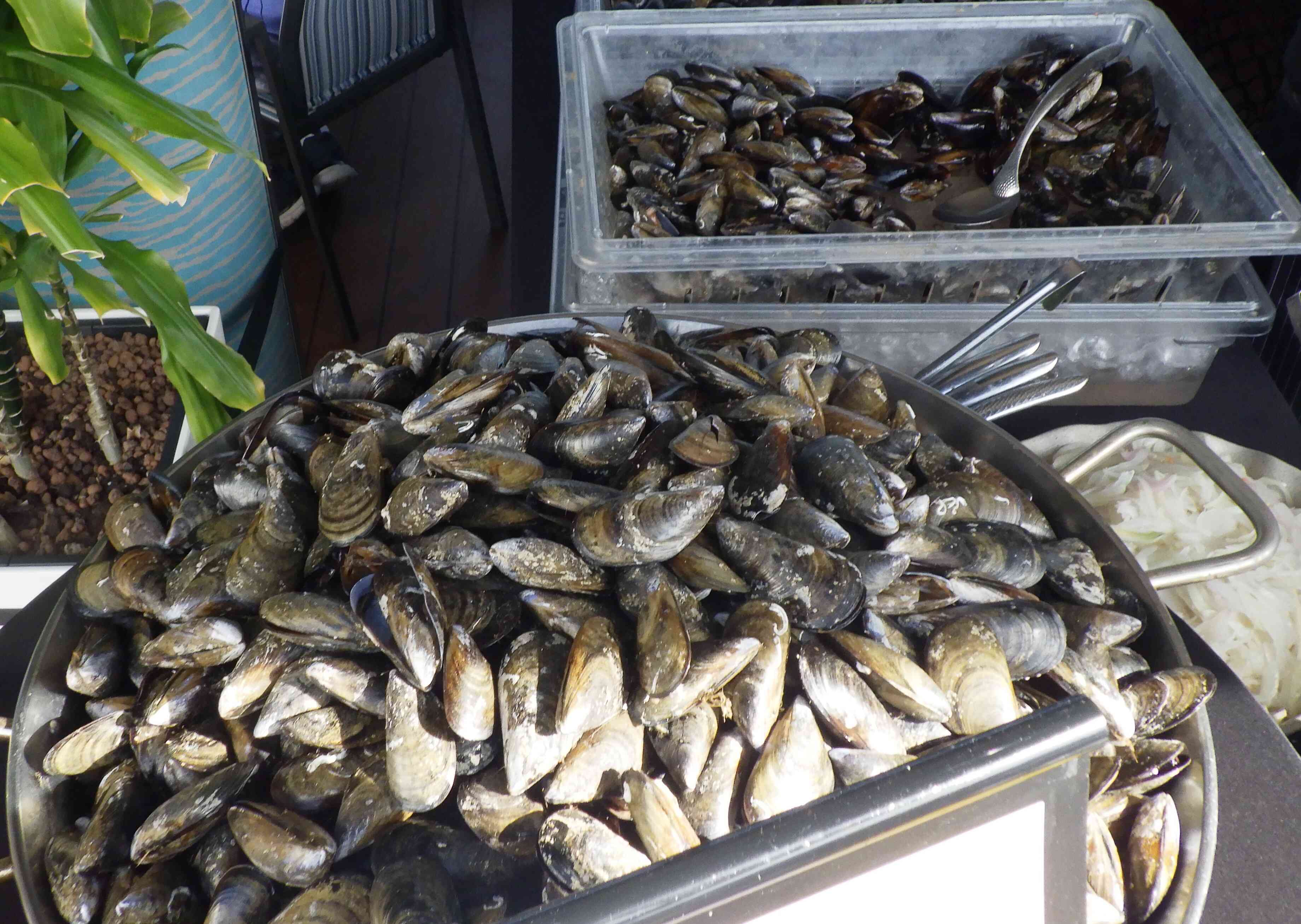
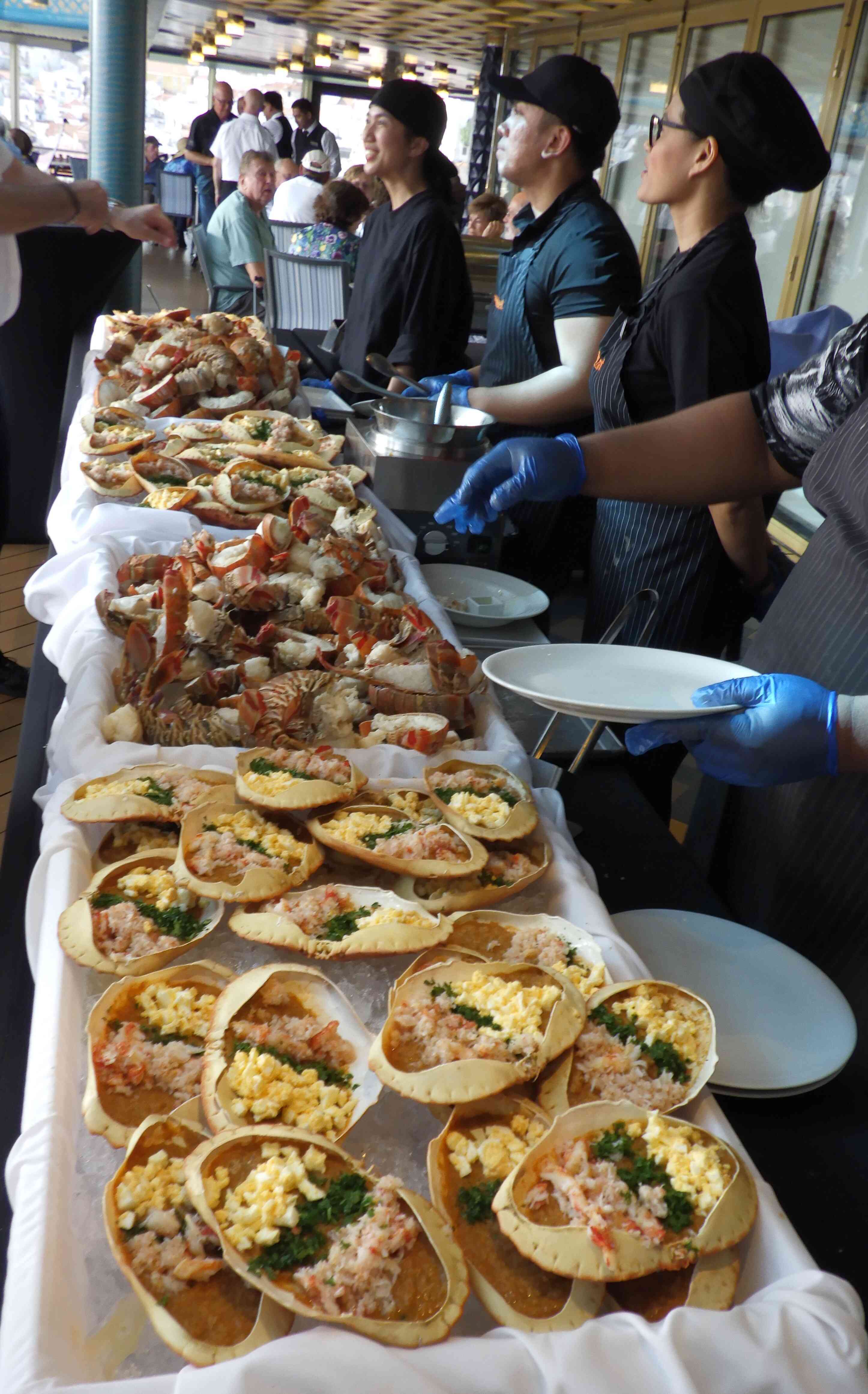
By 2:45 pm, we returned to the ship for the 3:30 all-aboard, but things weren’t quite wrapping up. Ten passengers were still missing, reportedly caught somewhere in the city amid the outage. The Zuiderdam crew rose to the occasion with a gluttonous seafood feast: oysters on the half shell, snow crab, lobster tails, mussels, sides galore, and complimentary wine while we waited and listened to regular updates from the captain.

He kept us informed not only about the missing guests, but also about the pilot’s delayed arrival, tide concerns, and building winds in Tangier, our next port.

Hours later with all guests aboard, Zuiderdam turned south into the rising swells, making her way 308 nautical miles south to Morocco—our final stop in the Mediterranean region.

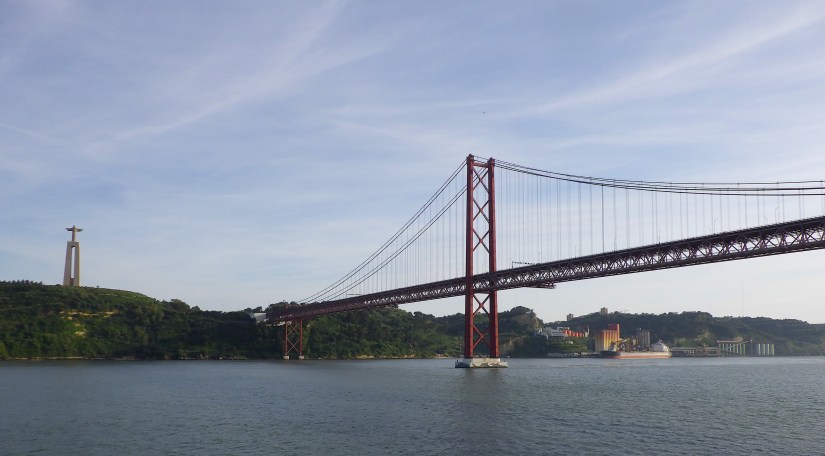
Departing Lisbon, the iconic Cristo Rei Statue bids us farewell as we sail out the Tagus River.

A cool, cloudy, and breezy day greeted us in the Port of Tangier. Just two days ago, strong winds threatened to cancel our arrival altogether, so we were grateful for an improved forecast. A three-hour late departure from Lisbon meant a matching delay into Tangier, leaving us shore time from noon to 5:30 PM…plenty of time to retrace our steps from our 2023 visit, with a few welcome deviations.

The Port of Tangier, Morocco

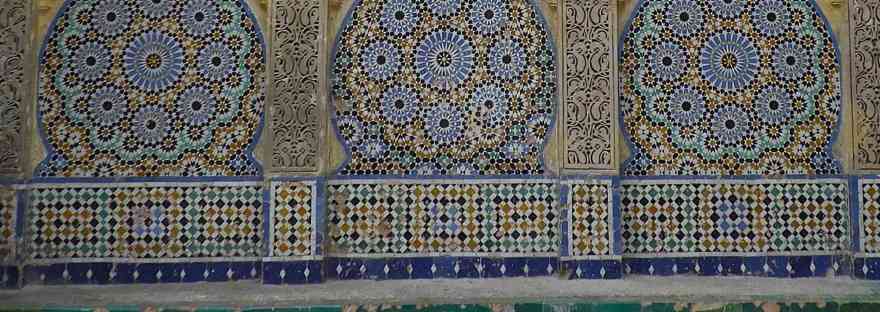
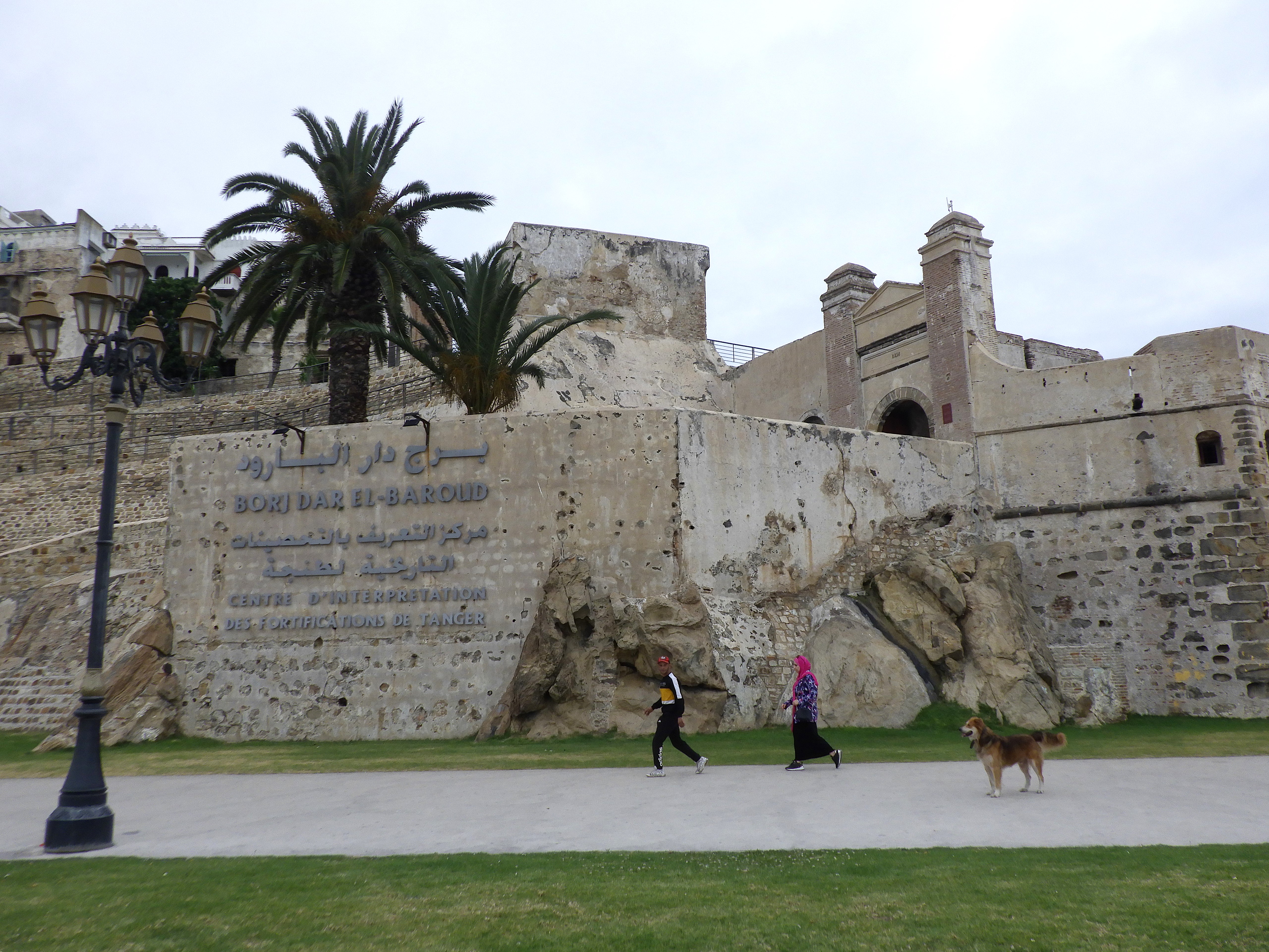
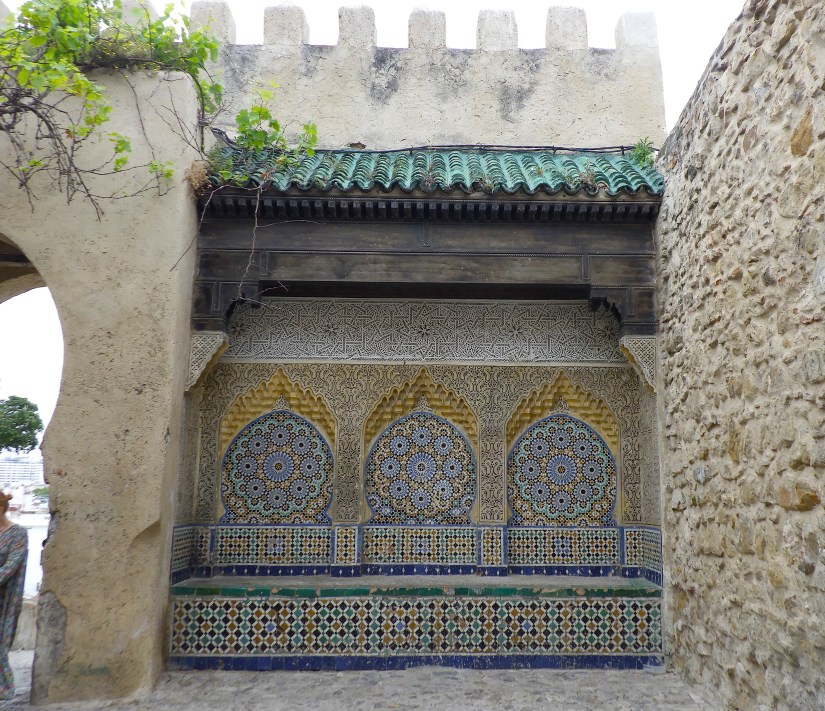
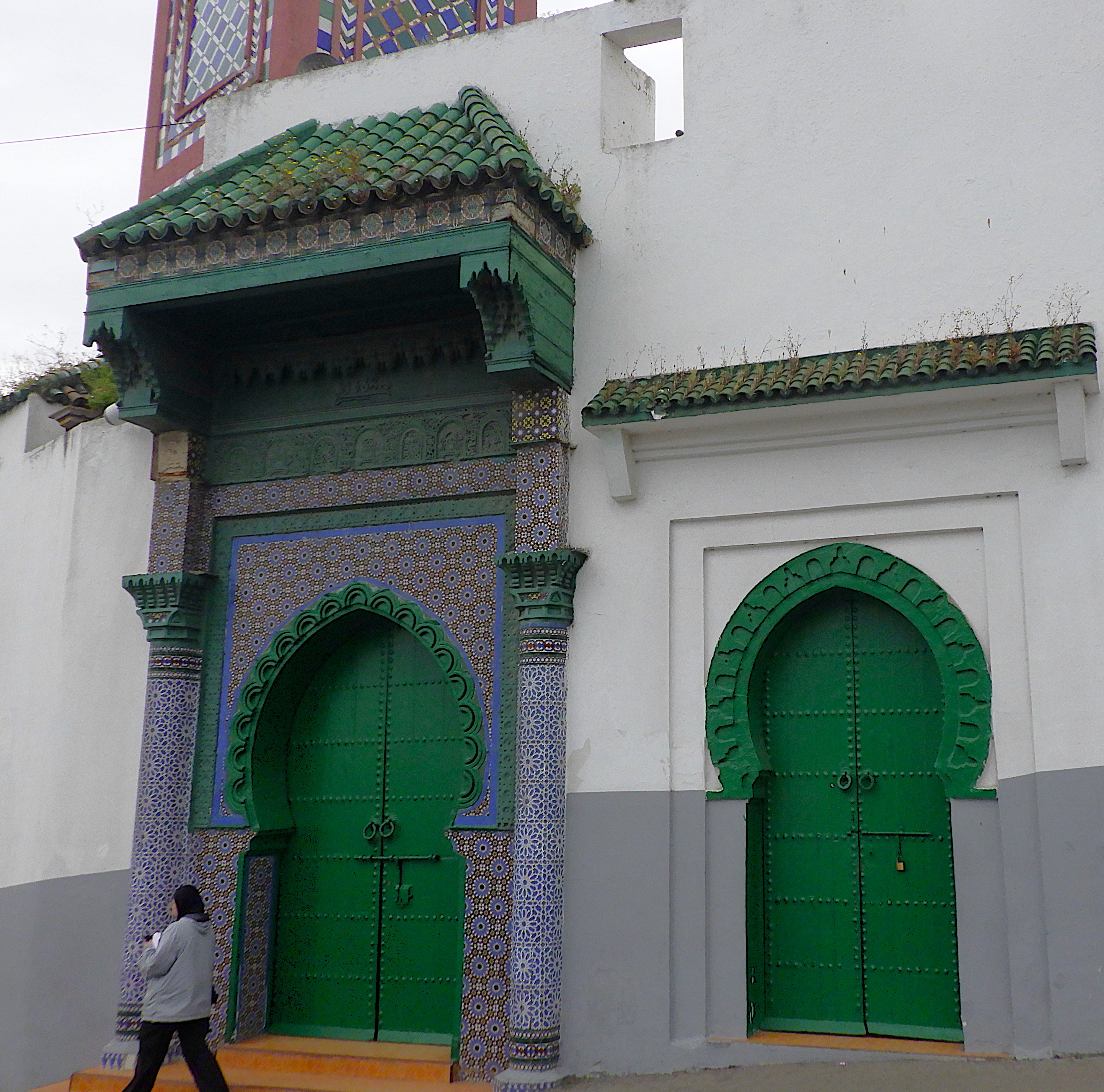
Tangier is a highly walkable city, with its must-see landmarks clustered within the Medina, including the Kasbah Terrace and the bustling souks. But here, it’s not so much about the “sights” as it is about the sightings. Intricate mosaic tiles embellish walls, entryways, and walkways, reflecting Tangier’s rich Islamic heritage.

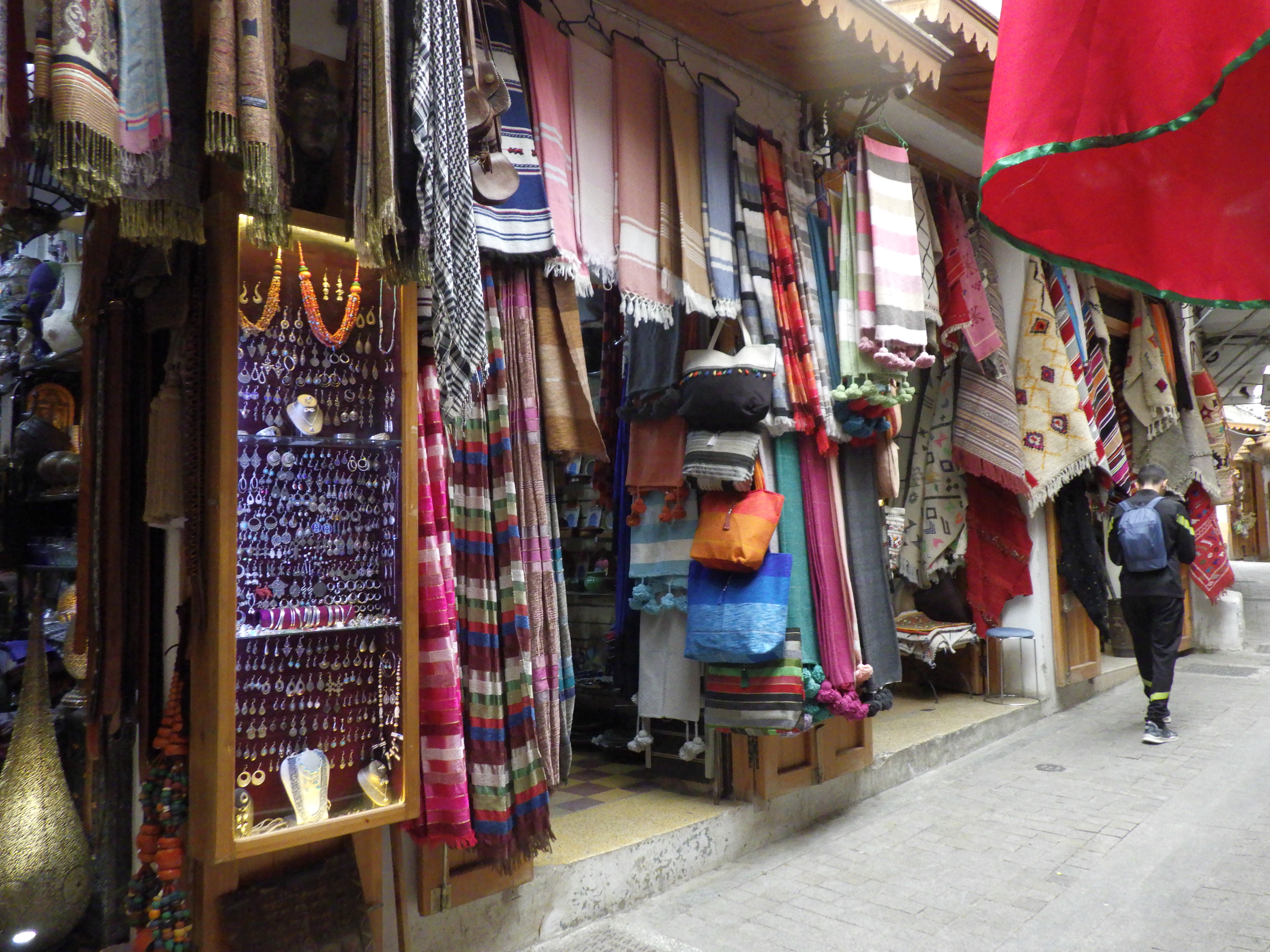
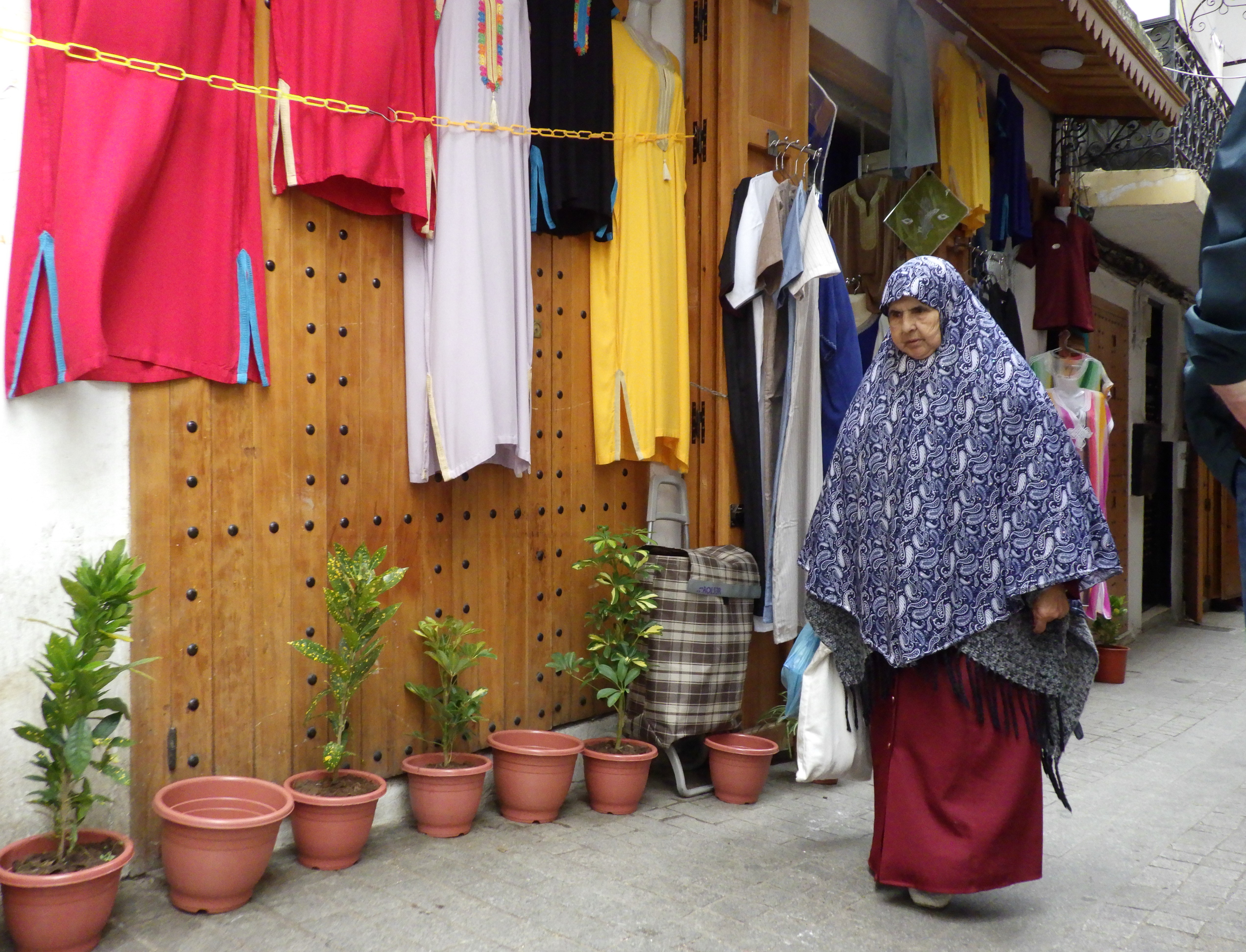
Shopping in Tangier is a colorful barrage of tightly packed stalls, each offering its own unique collections: scarves and shawls, shoes, spices, jellabas, and kaftans (robes/dresses).

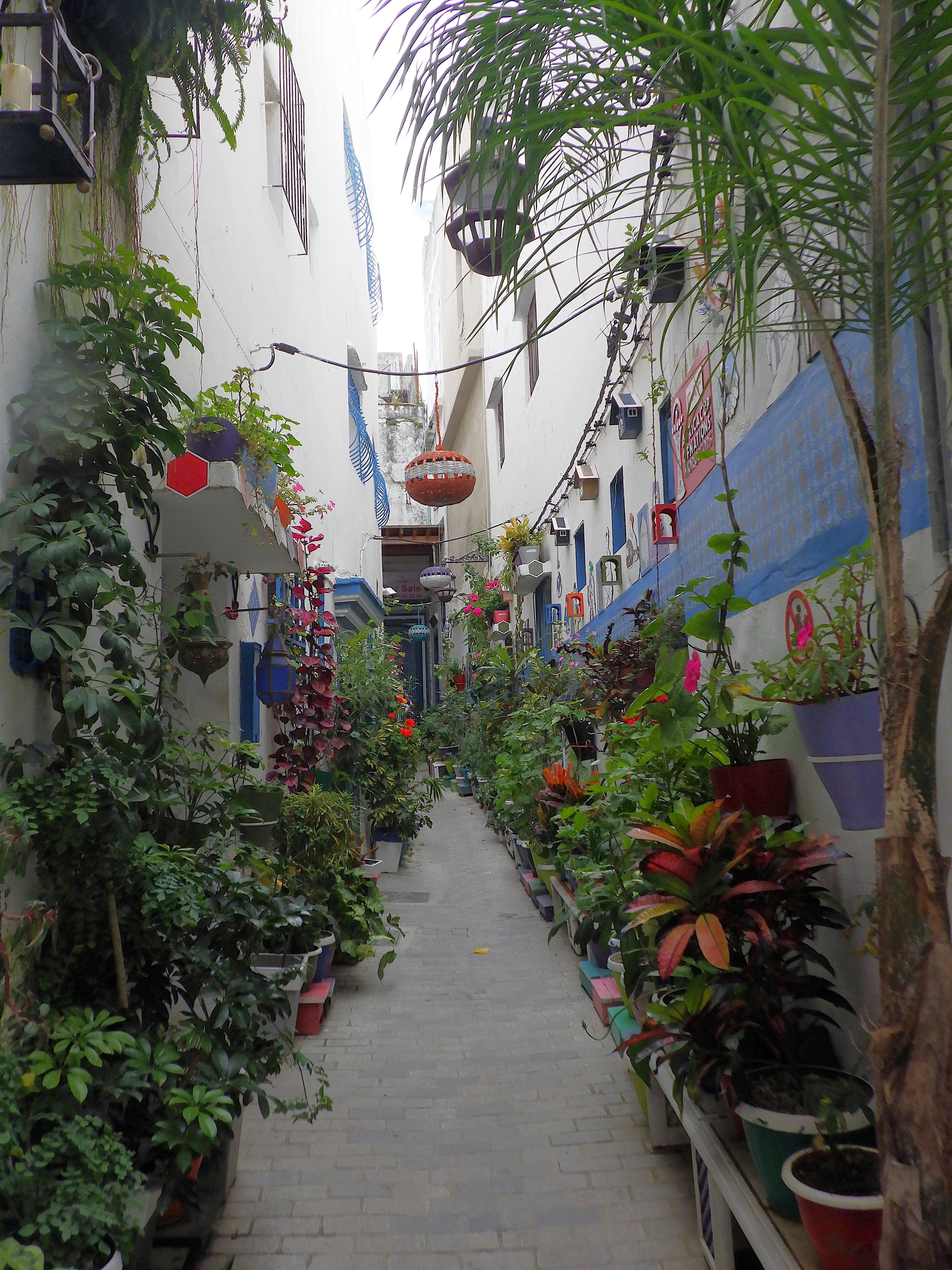
The city’s tight, winding alleyways always seem to lead to unexpected corners—even if you’ve visited before. This time, we discovered a couple of rooftop restaurants offering spectacular views of the city, home to 1.2 million people.

Mint tea is popular here, steeped with fresh mint leaves and a touch of sugar. 

Morocco never disappoints, and Tangier delivered with its coastal beauty and old-world intrigue. It was a bittersweet feeling amongst our shipboard community, knowing we were leaving our last foreign port of this voyage.  

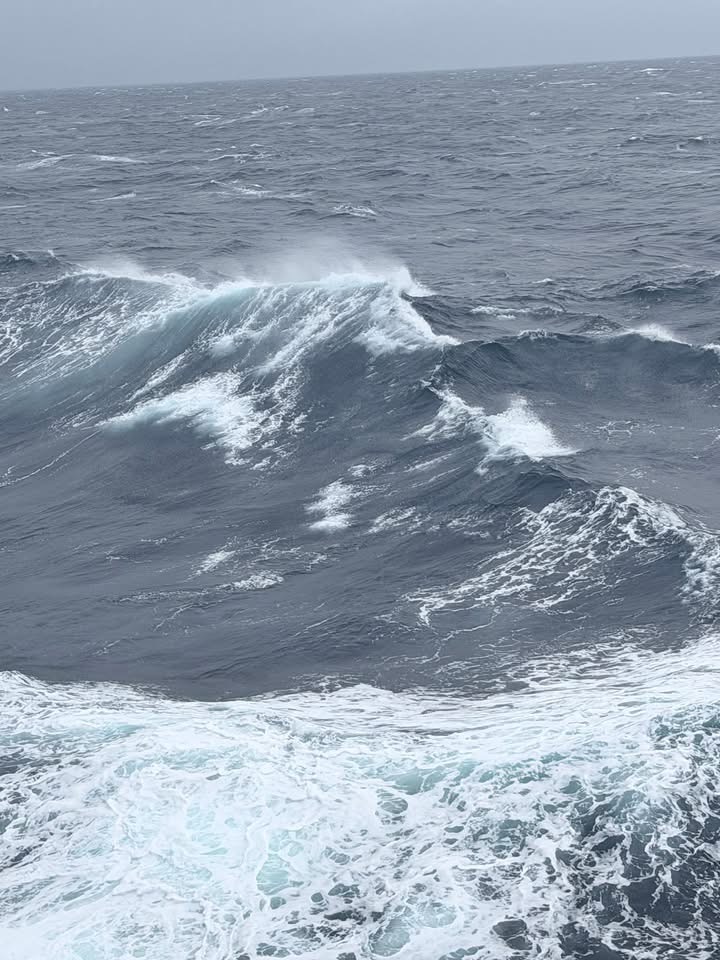
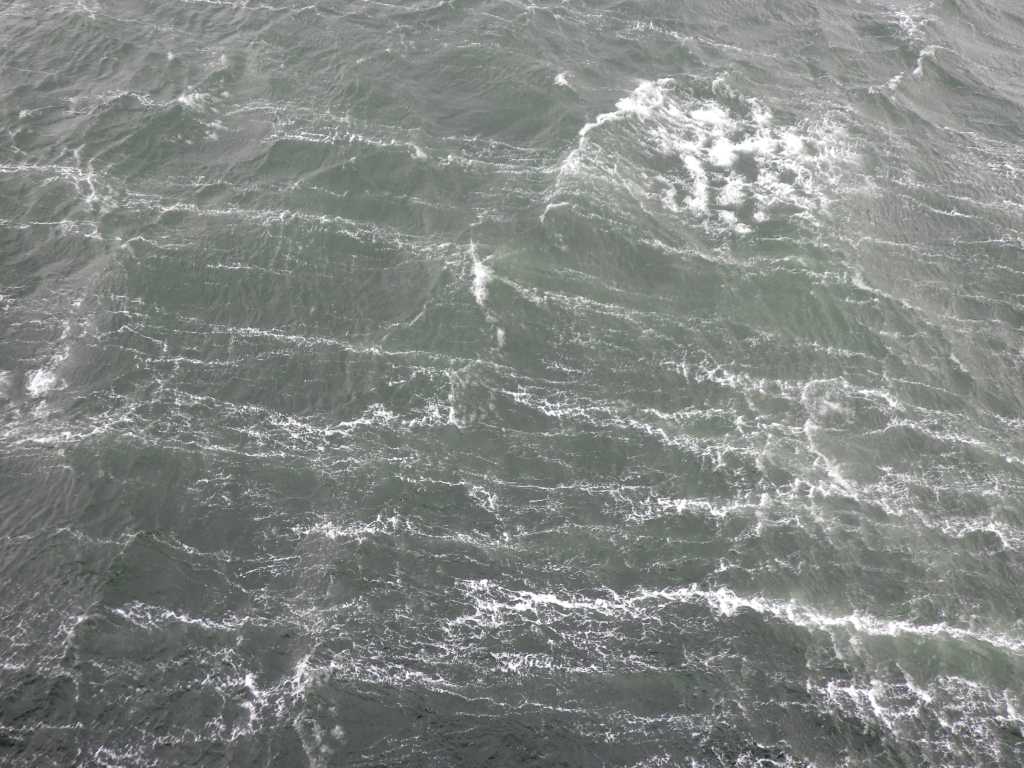
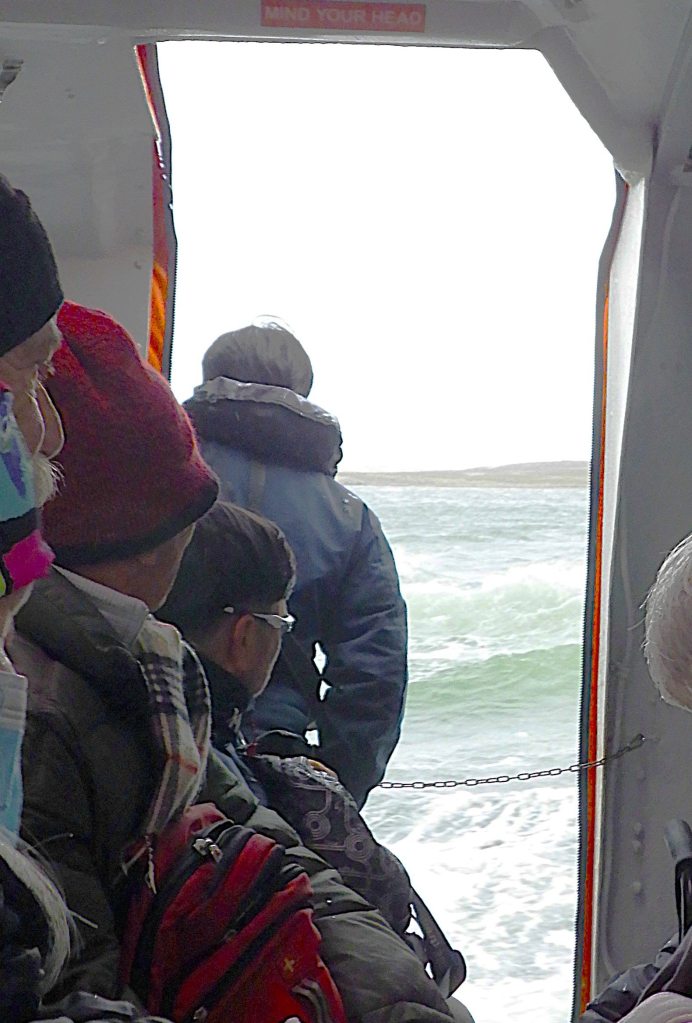
As we headed into the Atlantic, the Captain altered course to avoid the brunt of a large low-pressure system that would cross ahead of us.  While this minimized some motion of the ship, we still experienced the outer bands of storm circulation that fed us with strong winds and lumpy seas.  Pools were drained, outer doors were closed off and Zuiderdam shuddered and shook for 36 hours. Overall, we can’t complain. There were really only about 5 or 6 sea days on this entire 124-day circumnavigation when the ship had any significant motion. Zuiderdam has taken good care of us!

Six sea days later, we arrived in San Juan, Puerto Rico, a warm, tropical finale to our whirlwind itinerary. Not only is San Juan a vibrant and welcoming destination, but it’s also an efficient port for clearing us back through U.S. Customs and Immigration, which means our final disembarkation in Fort Lauderdale will be quick and hassle-free.

Once cleared, our group of ten made our way to Old San Juan, where we had appointments at Anam Spa & Lounge for much needed mani/pedis and foot massages. According to Tom’s iPhone, we have walked 581 miles during this journey, so those massages were well-deserved…and the accompanying margaritas, very well-received!

Happy feet, happy man!

Old San Juan is looking revitalized with fresh paint and renovations made since the damage caused by the 2017 hurricanes.

It felt really good to be back on U.S. soil and see the American flag waving once again. Traveling abroad offers plenty of reminders to be grateful for the freedoms we enjoy.

What a journey it’s been! 39,319 nautical miles, 32 countries, and 49 ports later, we’re still trying to wrap our heads around it all. This world is even more beautiful and surprising than we ever imagined, and we feel incredibly lucky to have experienced so many different places, people, and cultures. There were moments of awe, fleeting perplexity, and plenty of joy along the way.  We’ve returned home with full hearts, way too many photos, and a deep appreciation for just how big…and small…our world can feel.  What a gift it is to explore this world, and what a privilege it was to do so on this unforgettable voyage.

“Travel isn’t always about finding new landscapes but seeing with new eyes.” –  Marcel Proust

2025 World Cruise, Cruising, Travelogues

Leg 9: Egypt, Turkey, Greece & Italy

The Zuiderdam had cast off from the docks of Malta at 10:30 PM, setting course for Alexandria, Egypt. Over the next two sea days, she covered 810 nautical miles across the Mediterranean. Anticipation built as we neared the port—we were eager to stand before the legendary symbols of ancient Egypt.

Our 5:30am alarm got us going for a full-day excursion that would take us to Cairo and Giza, visiting the Museum of Antiquities, the Pyramids of Giza and The Sphinx.  Excitement buzzes throughout the ship during breakfast, because not only are more than 800 passengers going, but also almost 300 of our beloved crew.  Over 25 buses with police escorts will make the 3-hour commute, then split off into the various excursions offered.  Each bus has its own itinerary and tour guide.

Leaving the port area, we drove through very poor neighborhoods with crumbling buildings and piles of rubble everywhere. 

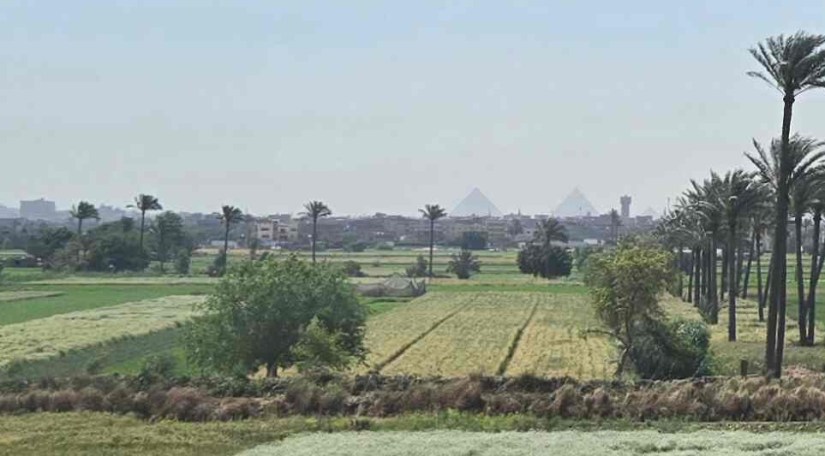
Within a half hour, the terrain became more rural, and we viewed the green agricultural acreage being nurtured between the two fertile arms of the Nile River.  Orchards of citrus trees and date palms dominated the landscape. 

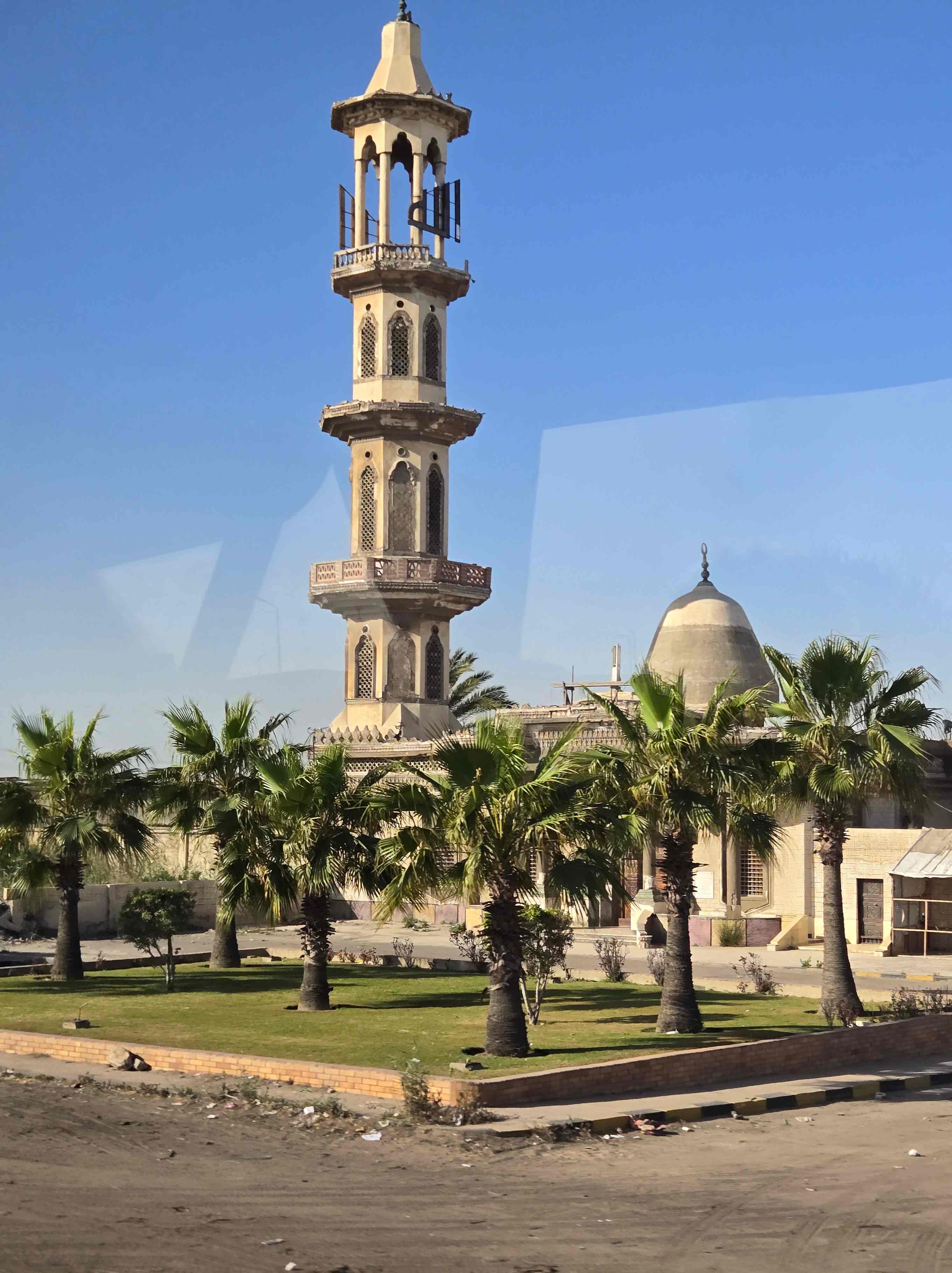
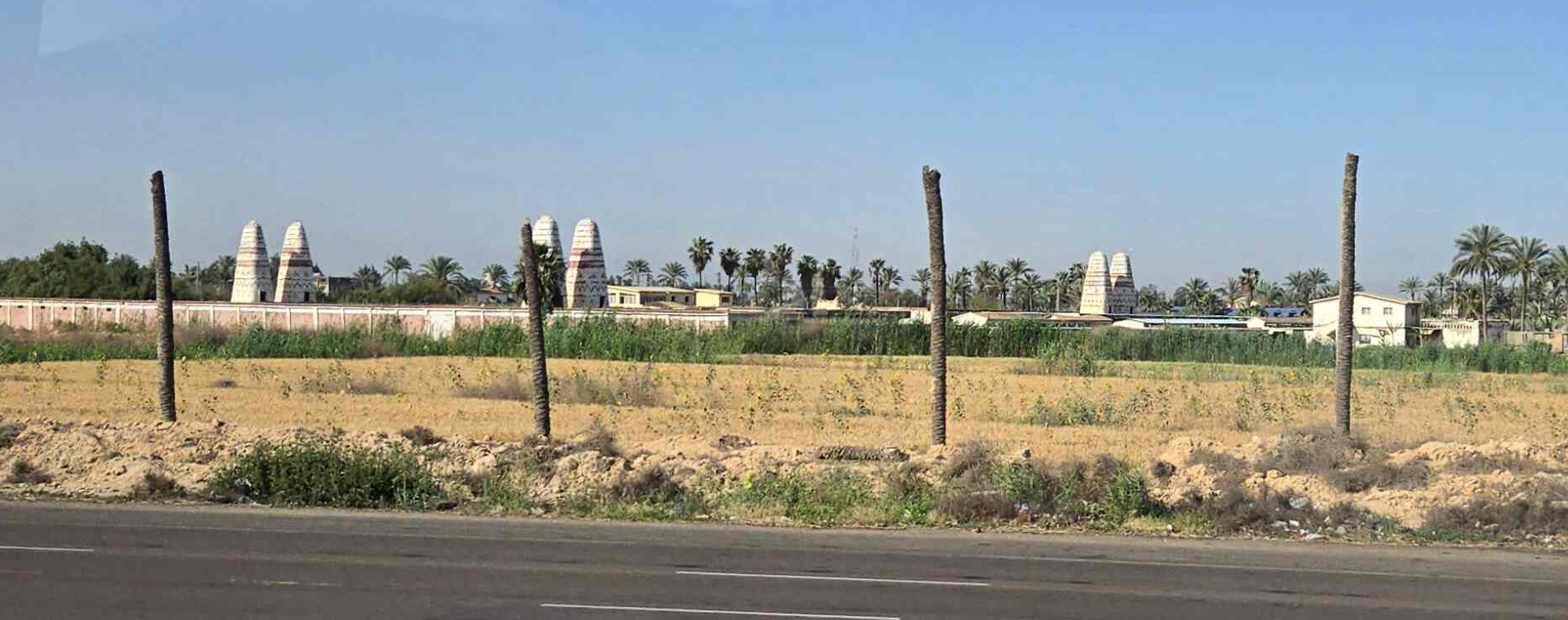
Every 2 or 3 miles we passed a mosque; some small, some larger, predicated on the size of the nearby settlement (left, below).  Also numerous near some homes were pigeon towers (right, below).  Not only do the 15-20 foot vertical cone structures encourage pigeon population into the fields for pest control but also serve as a “pigeon coop”. Considered a delicacy in Egypt, pigeons are stuffed with rice and roasted for special occasions.

Entering the outskirts of Giza and Cairo, new roads have been laid, and long city blocks of new high-rises sit empty.  Locals tell us that while the government attempts to improve its infrastructure and quality of life for its citizens, no one can afford the rent, nor have the means of transportation necessary to get there.

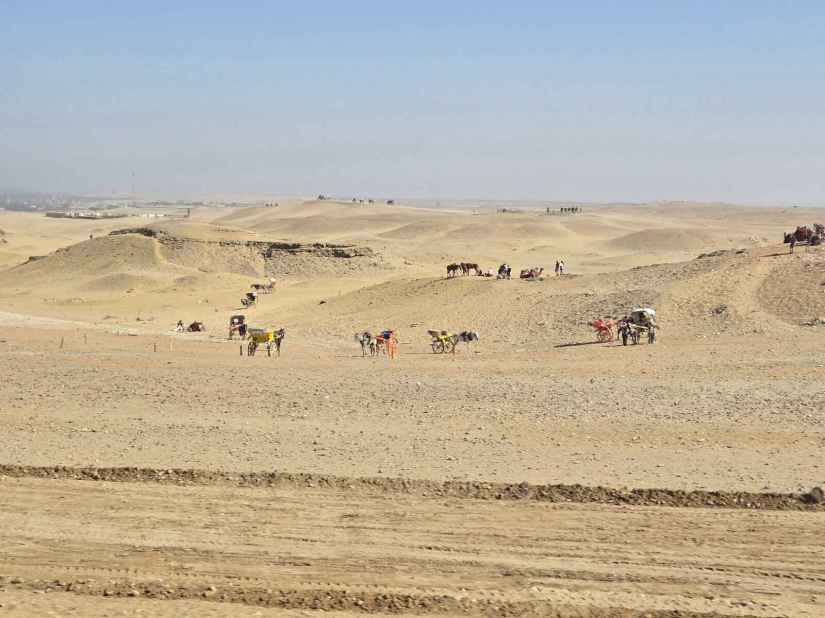
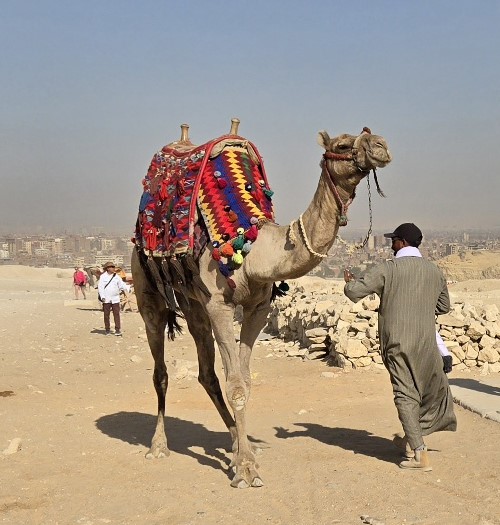
Downtown Cairo is just as frenetic and exotic as you can imagine.  Streets are jammed and horns are blaring.  Camels, mules and horse drawn carts intermix in traffic beside Mercedes sedans and lorry trucks.  Piles of trash and more rubble can be seen everywhere.

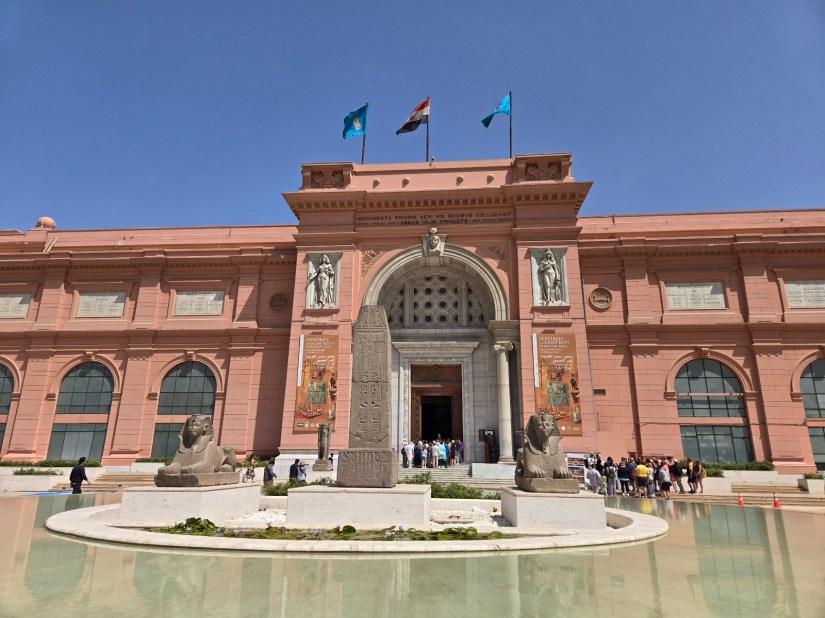
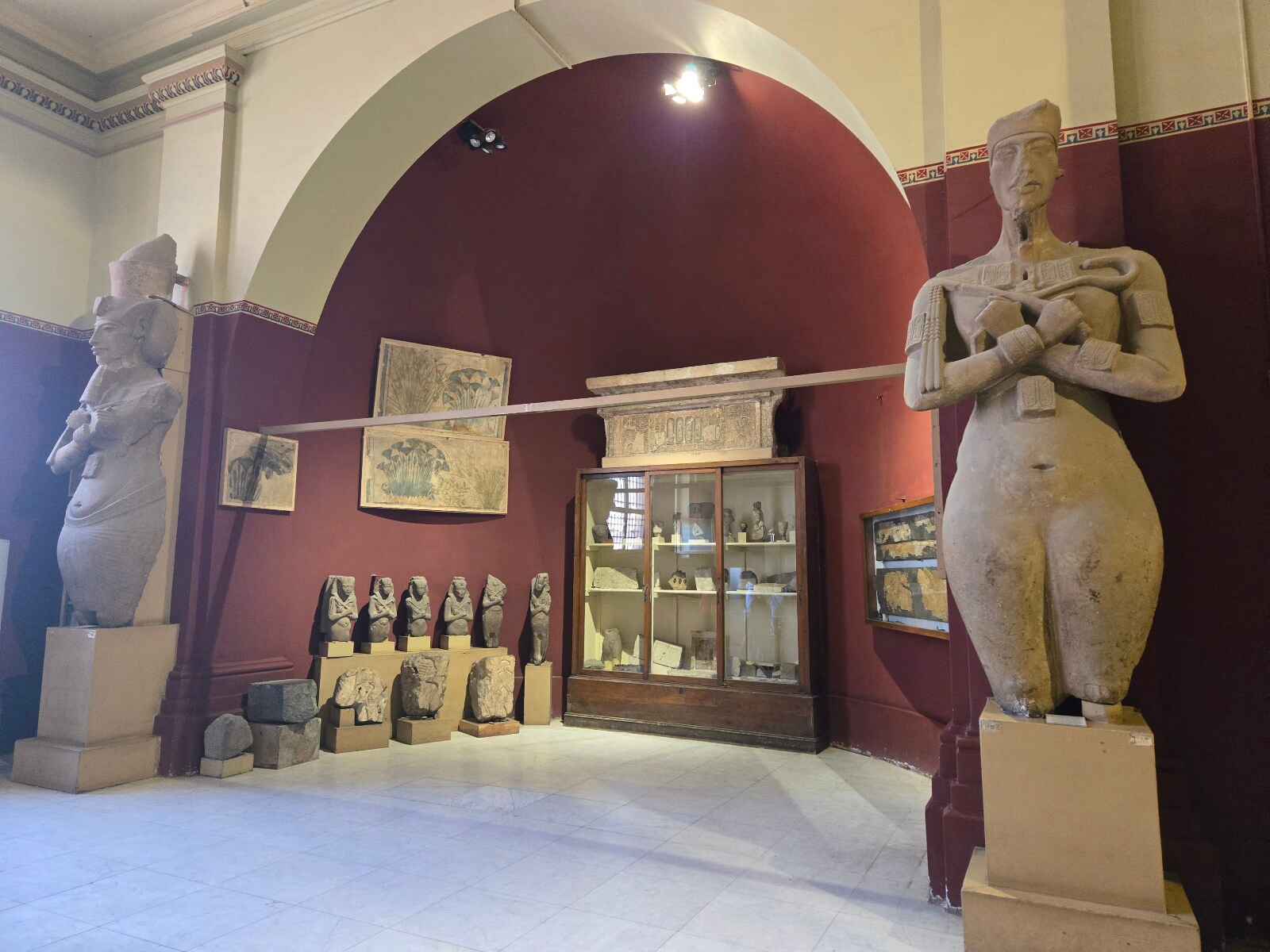
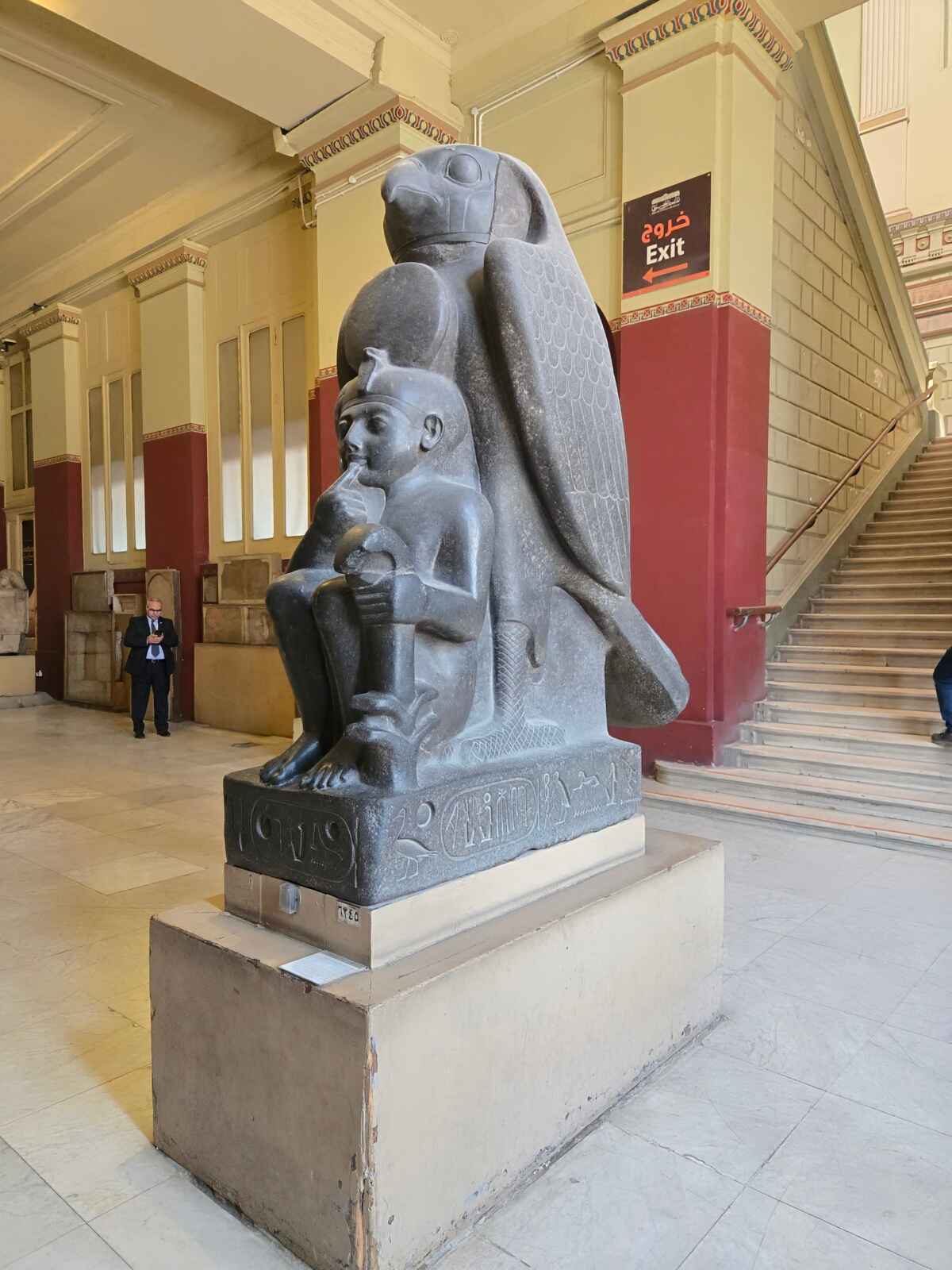
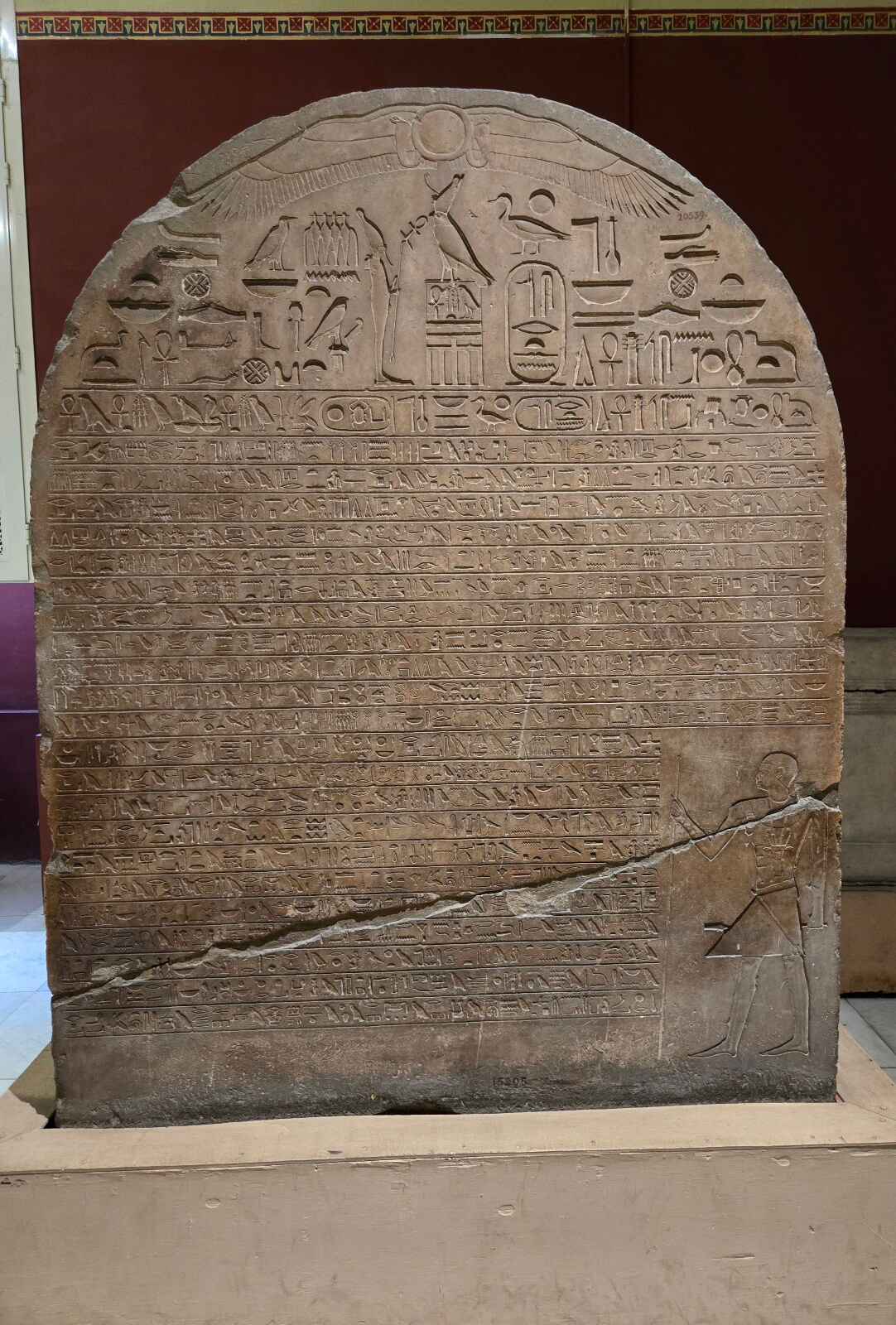
The Museum of Antiquities was our first stop, with its extraordinary collection of some of the world’s most valuable artifacts, including King Tut’s funeral mask.

But of the twelve great halls of exhibits normally available for viewing, we had access to one, as contents are already being relocated to the new, larger Grand Egyptian Museum, opening this June in Giza.  One hall contained plenty for us to see!

Our one-hour stroll provided only a brief glimpse into the depth of its collections, so here’s a link for more, if interested: https://egyptianmuseumcairo.eg/

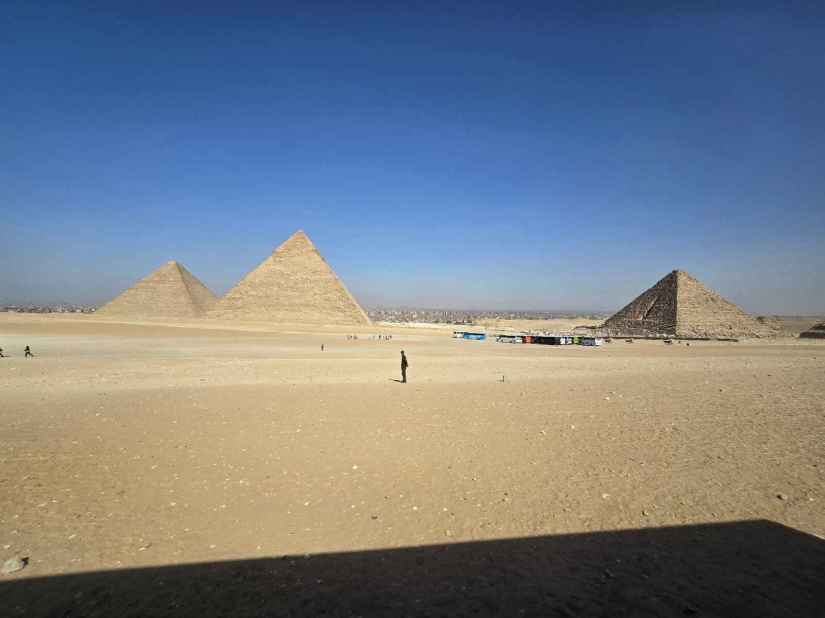
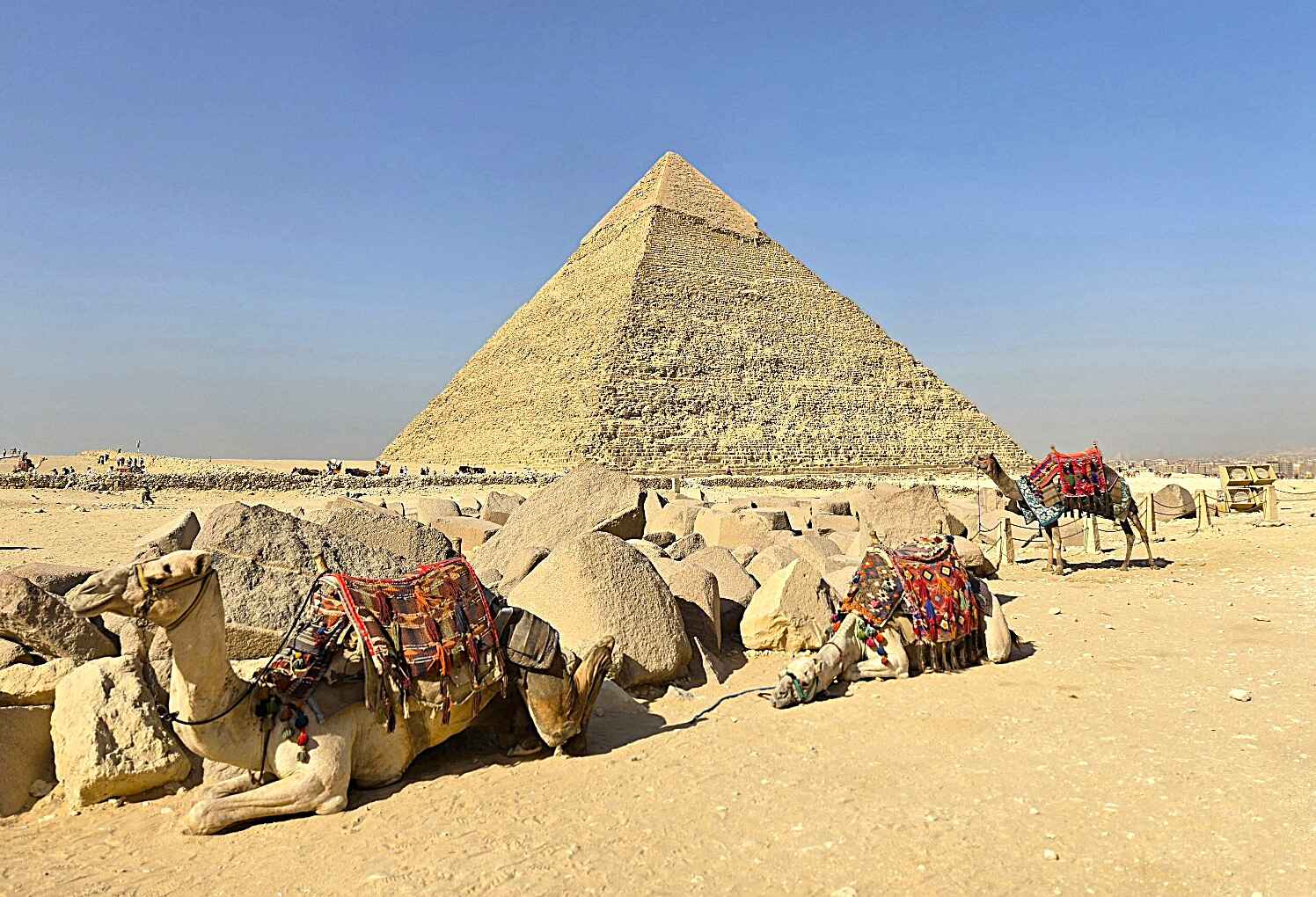
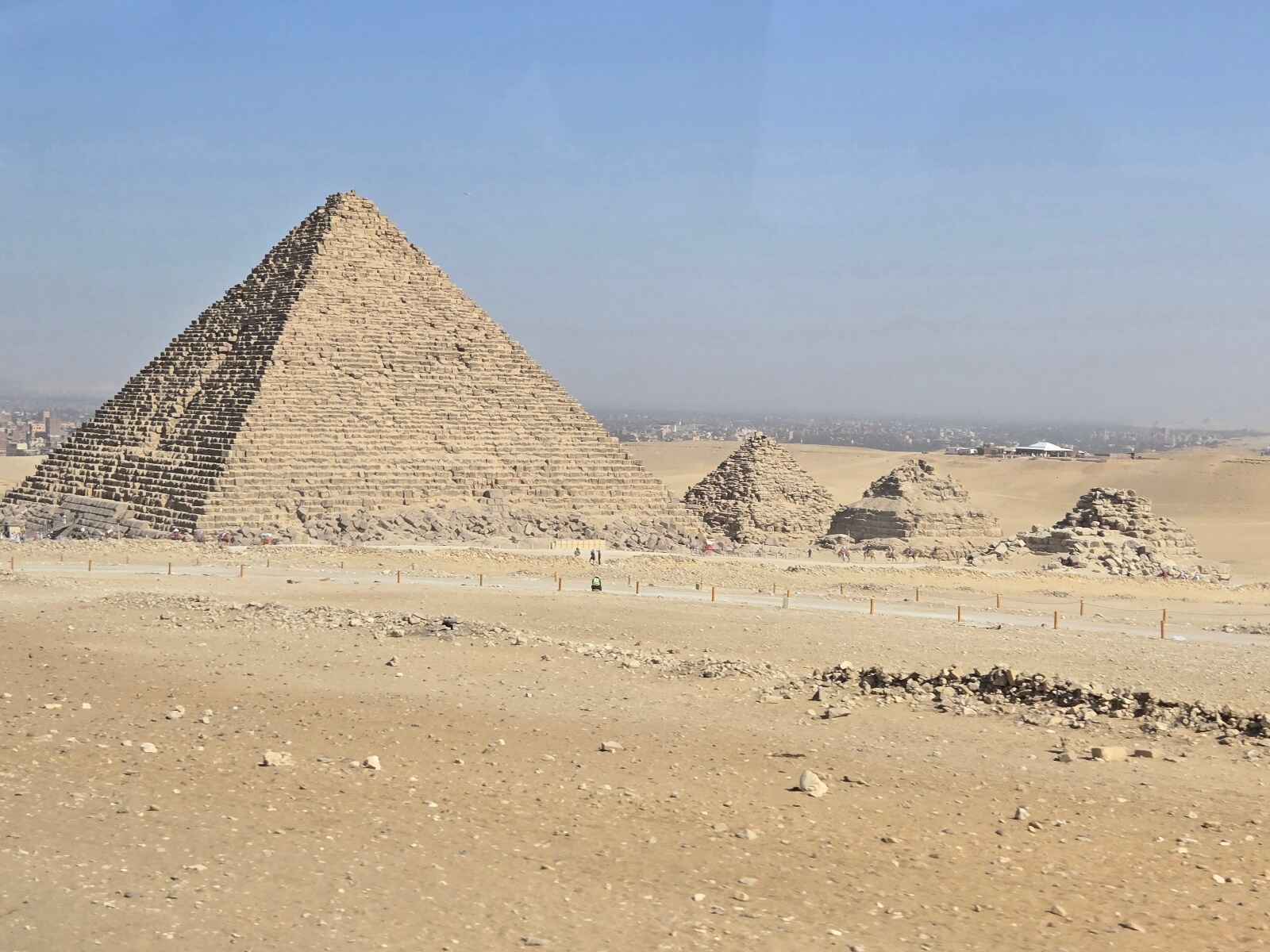
The Pyramids of Giza stand out in the distance nearly anywhere you are in Cairo.  Three triangles loom in the hazy horizon, the same color as the sand.  But no matter how far or near, I will say emphatically that nothing prepares you for how utterly massive they are seeing them in person.

And once you’re standing at the pyramids base gazing upward, you’re astonished at the absolute precision that each stone block is laid. They form fit together so tightly (grout was never used), that not even a razor blade could be slid between them.  Never mind how they even got the blocks here in the first place, or how they hefted them in place. Truly bewildering!

The Great Sphinx commands quite a presence.  Believed to be approximately 4,500 years old, it faces East and is said to inhale the sunrise every day. 

Back on the ship, I shared an elevator ride with another passenger. Though we were both exhausted after a 14-hour excursion, we smiled and agreed: “Today was unforgettable.”

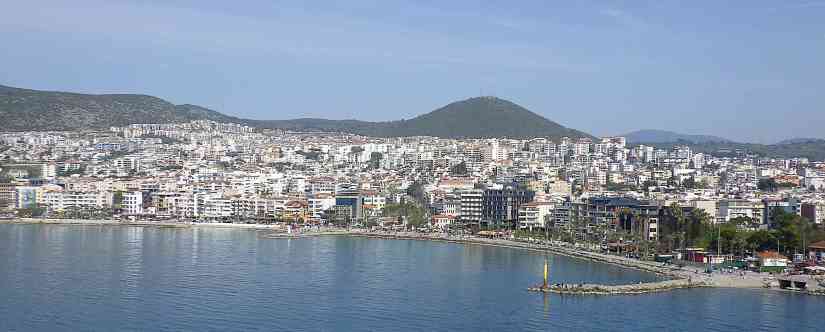
Kusadasi, Turkey is a charming seaside town of 200,000 residents, that swells to over a million with Europeans who love to summer here.  It is also the gateway to the ancient ruins of Ephesus, only 12 miles away. 

Kusadasi, Turkey

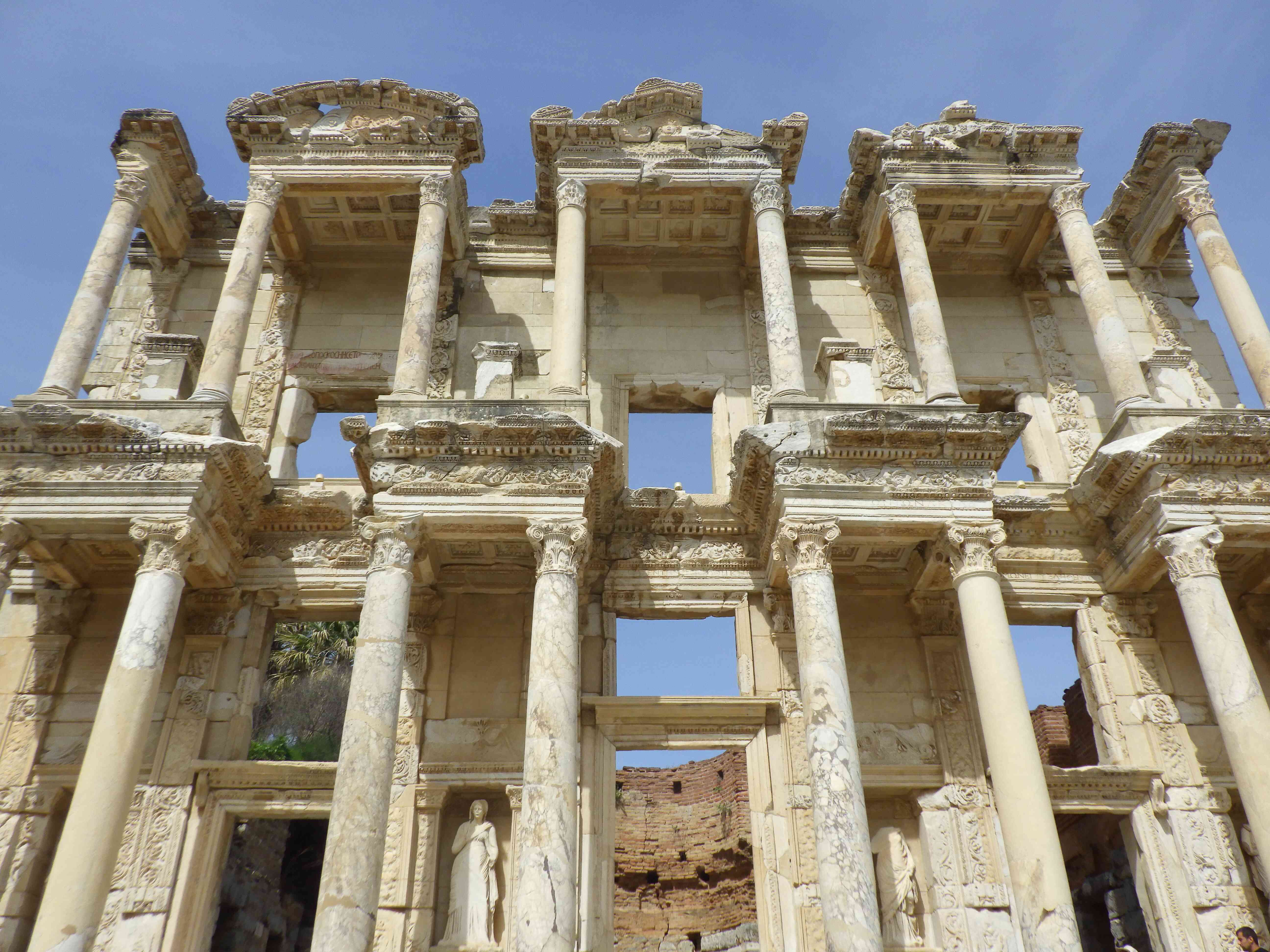
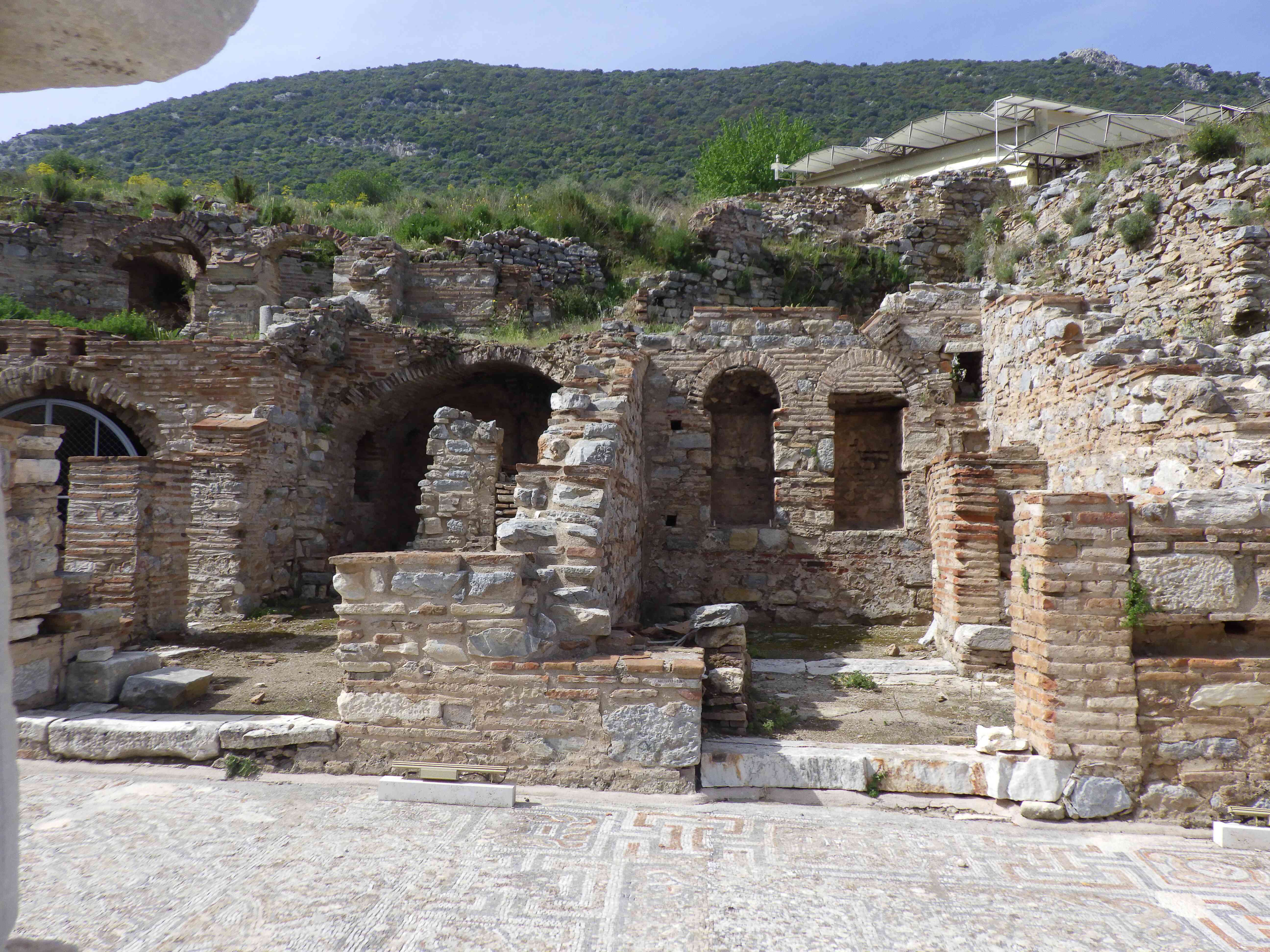
Exploring the Ephesus ruins was like stepping into a time machine that transported us to an ancient civilization that lived in grandeur.  We wandered through the marbled Curetes Street, marveled at the towering Library of Celsus, Terrace Houses, the Rhodian Peristyle, Prytaneum, Basilica Stoa, Stage Agora and the impressive Great Theater.

The Theater could seat as many as 25,000 people

The intricate carvings and architectural details left us in awe, and we could almost imagine the bustling life of this once-thriving city. The ruins are incredibly well-preserved, making it easy to visualize the history that unfolded here.

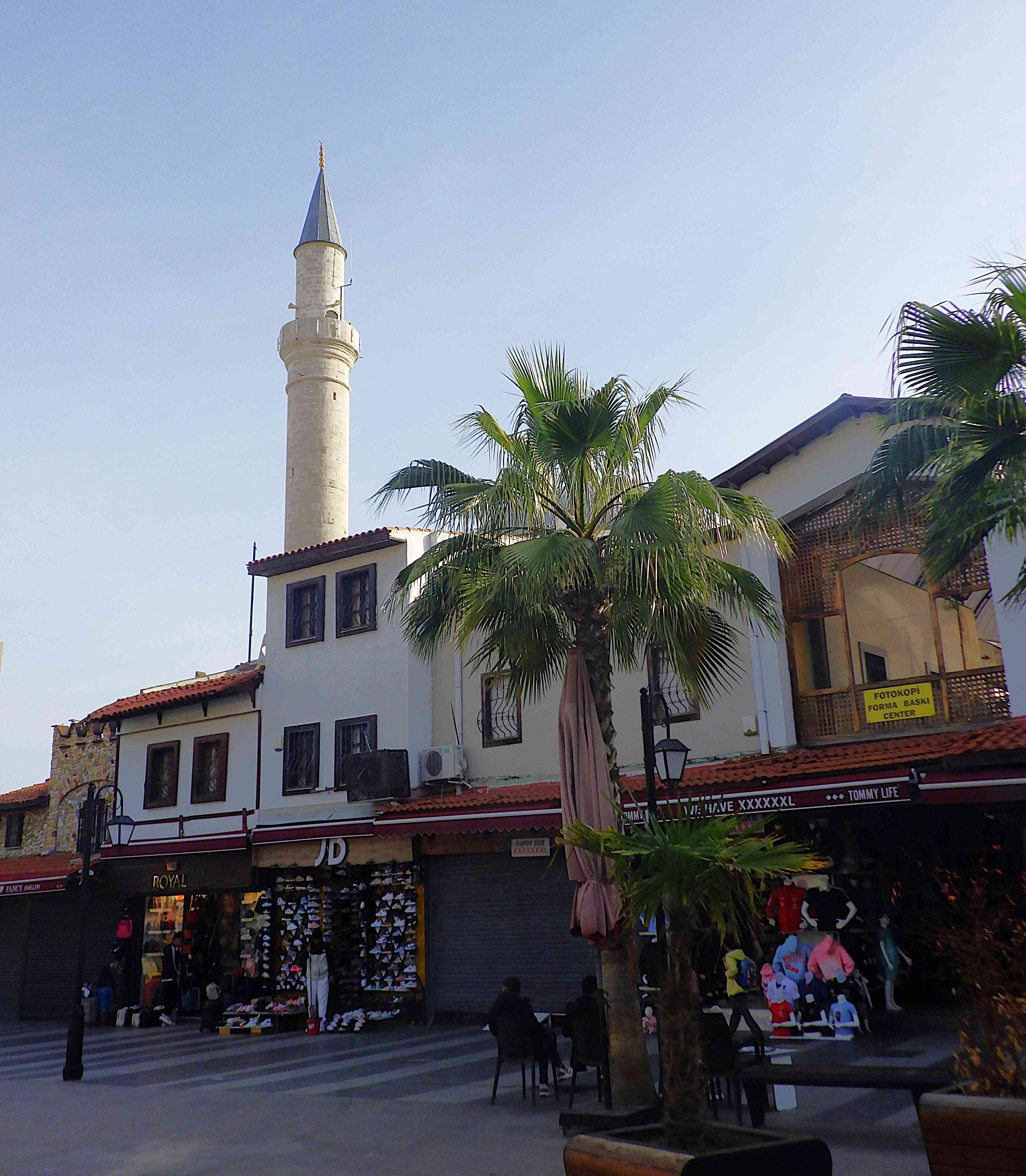
Returning to the town of Kusadasi, we had time to stroll the streets and marketplace.

Though our visit was brief, the experience was unforgettable…a perfect blend of history, culture, and beauty.

Piraeus, Greece: With four cruise ships in port and most passengers likely heading to Athens to visit the Acropolis, we decided to take a different path. Perhaps we were a bit worn out from the crowds and historical sites, so instead, we chose to explore the coastal city of Piraeus.

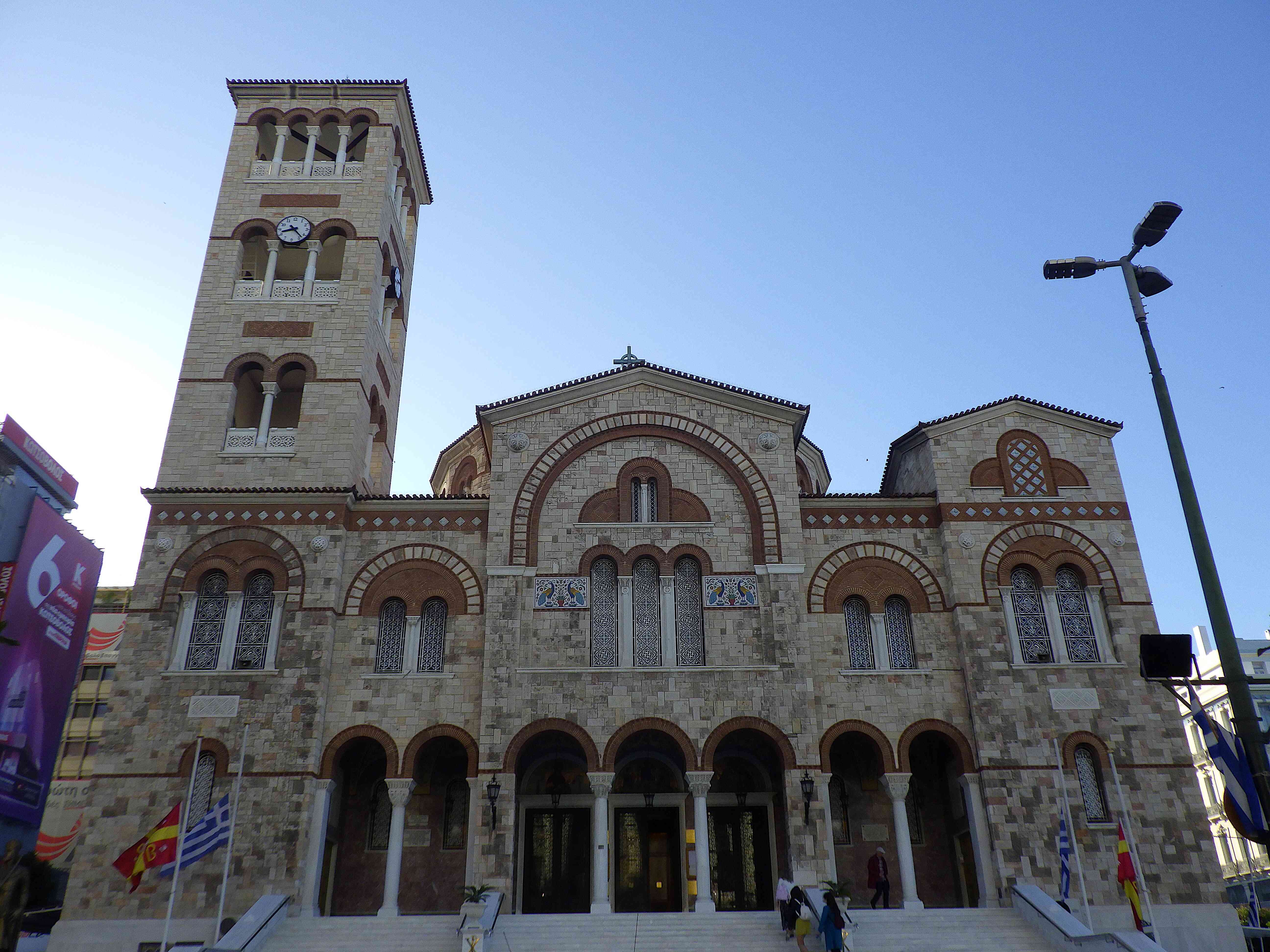
Piraeus is a gem in its own right—especially on this Holy Saturday, the day before Easter. As we disembarked the ship at 8 a.m., the joyful pealing of church bells rang out from the 31 Greek Orthodox churches scattered throughout this municipality of 168,000.

Soon after, singing sermons echoed from loudspeakers into the open air, creating a moving, spiritual atmosphere on a clear, cloudless morning. (Turn up your volume for audio video below.)

Those sacred sounds followed us for the next few morning hours as we wandered from one neighborhood to another. The scent of orange blossoms and honeysuckle filled the empty streets, which were deserted during the city’s time of worship.

Eventually, we climbed a steep hill and were rewarded with a sweeping view over Mikrolimano Harbor. From there, we made our way down to the promenade for a cappuccino. By now, café owners were beginning to open their doors and set up for lunch, while families gathered for after-church celebrations. The mood was peaceful, relaxed, and joyful.

Our sailing friends may recognize the familiar Sun Sail fleet lined up above

Easter Sunday was a sea day aboard Zuiderdam, filled with sunrise sermons on the aft deck, egg hunts, brunch, and a festive dinner shared at a table of ten. Just days before, Mount Etna had begun to stir, and that evening, as the Zuiderdam glided through the narrow Strait of Messina—only 1.5 miles wide—we caught a glimpse of nature’s own light show. Stromboli continued its latest eruption, casting a fiery glow into the night as we passed. It’s a shame our camera couldn’t capture the evening show, but I was on deck early for the morning show as we were coming into Naples….

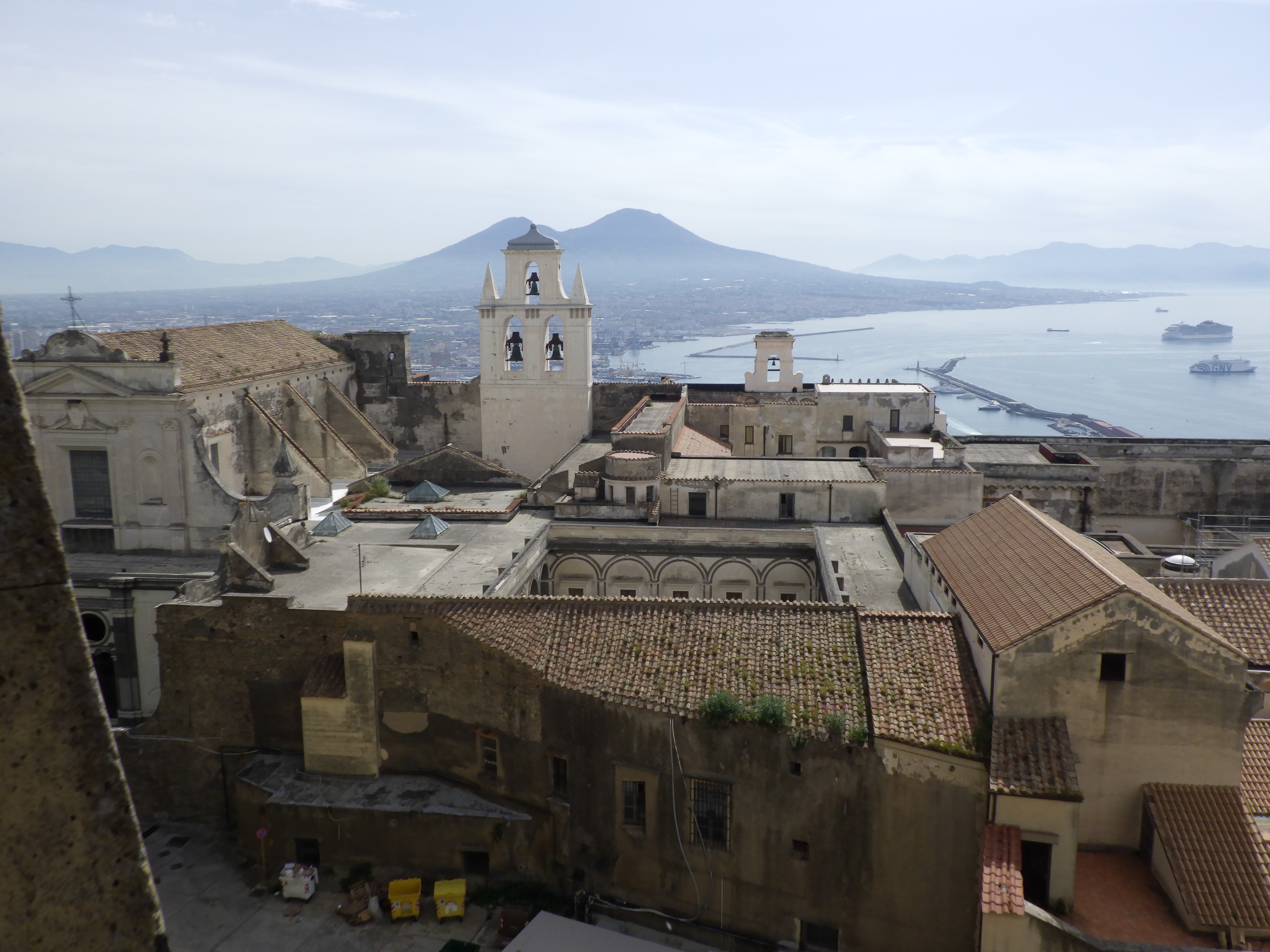
Entering Naples: Sunrise over Mount Vesuvius with Pompeii in the morning shadow beneath. 

We awoke to a quiet Easter Monday in Naples. The plazas and streets were still hushed, the city seemingly catching its breath after the holiday weekend. Our morning began with a visit to the Galleria Umberto, Piazza del Plebiscito and its Royal Palace and Basilica, followed by Naples special hazelnut coffee and pastries.

From there, we stumbled upon a sign for the funicular. For just 1.50 Euro, it carried us to the top of the hill, where we followed signs to Castle Sant’Elmo. The castle soon came into view—its massive stone walls commanding attention. With no line at the ticket booth, we thought, “Why not?”

From 780 feet elevation, we were rewarded with sweeping, panoramic views of Naples below, the bay stretching out to the horizon.

An added surprise was strolling through a modern art museum located in one of the central stone halls.  

Afterwards, we began the long walk down, following a pedestrian stairway that wound through narrow alleys and between homes seemingly suspended on the hillside. It was a quiet, intimate descent, with glimpses into everyday life tucked between ancient walls.

But at the bottom, the city was wide awake. Every street was packed with pedestrians—mostly locals. Families with strollers, groups of friends, children darting between legs. Naples had come alive for the Easter holiday.

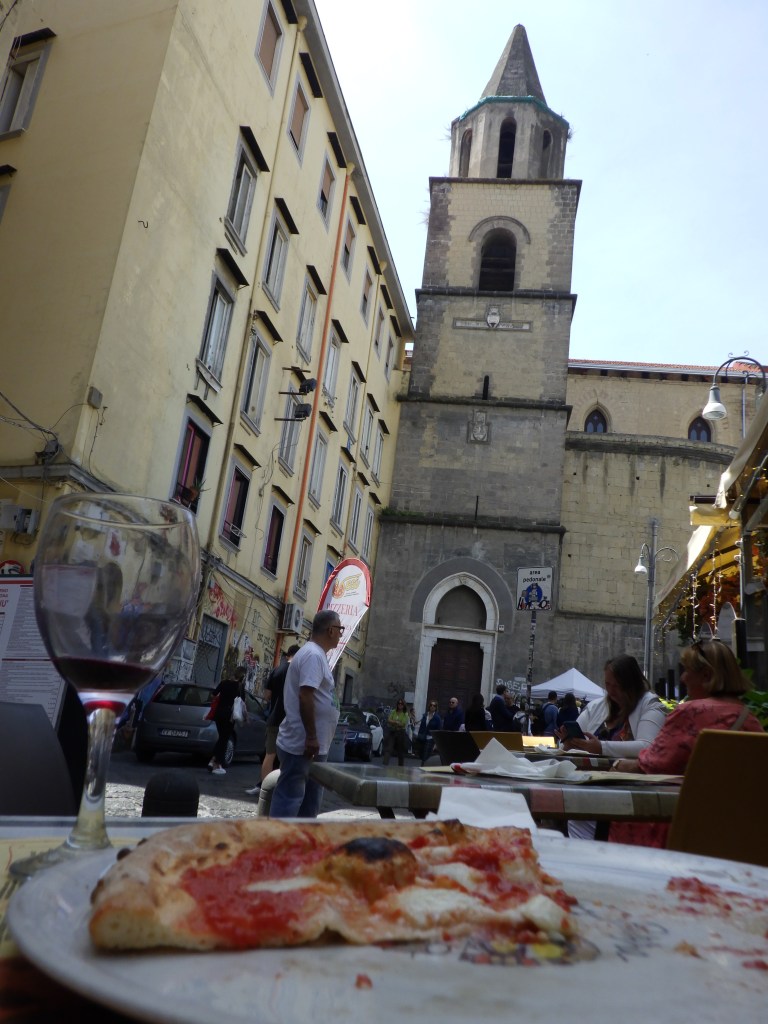
We found an inviting outdoor table in the shadow of a bell tower and ordered pizzas. In the birthplace of pizza, it’s no surprise the Italians deliver perfection: wood-fired, thin-crust masterpieces made with ultra-fine “00” flour for the lightest, crispiest base. The tomato sauce is delicate—lightly seasoned, never overwhelming—and the toppings are meant to enhance, not smother.

From there, we meandered slowly through the thickening crowds, the energy of the city buzzing around us.

That afternoon however, somber news filtered through the streets. Word had spread: the Pope had died. Locals read the notices being pasted to the walls around the city. Their faces were quiet and reflective, mirroring the shift in atmosphere as the weight of the news settled in.

An overnight sail brought us to the Port of Civitavecchia, a coastal Italian town just north of Rome. With the Pope’s passing the day before, the ship’s excursion team had been working diligently to confirm that tours into Rome would still proceed as planned. Understandably, there were concerns about heavy traffic, already intense during Easter weekend, and now further compounded by those arriving to pay pilgrimage.

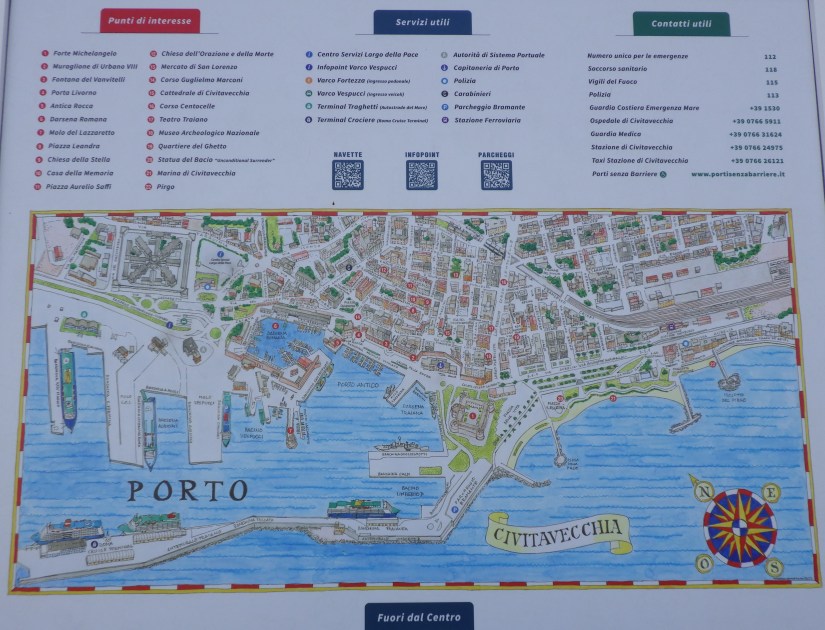
But our plans were more relaxed. Having never explored Civitavecchia itself, we opted to spend the day discovering this charming seaside town of 52,000 residents.

Tom had thoughtfully crafted a self-guided walking and nibbling tour. We began at Pasticceria La Fontana, a cozy local café tucked along a narrow residential alley. Over cappuccino and fresh pastries, we sat outside and watched as residents walked their dogs through the quiet morning streets. Flags hung at half-mast in honor of the Pope, lending a solemn note to the calm atmosphere.

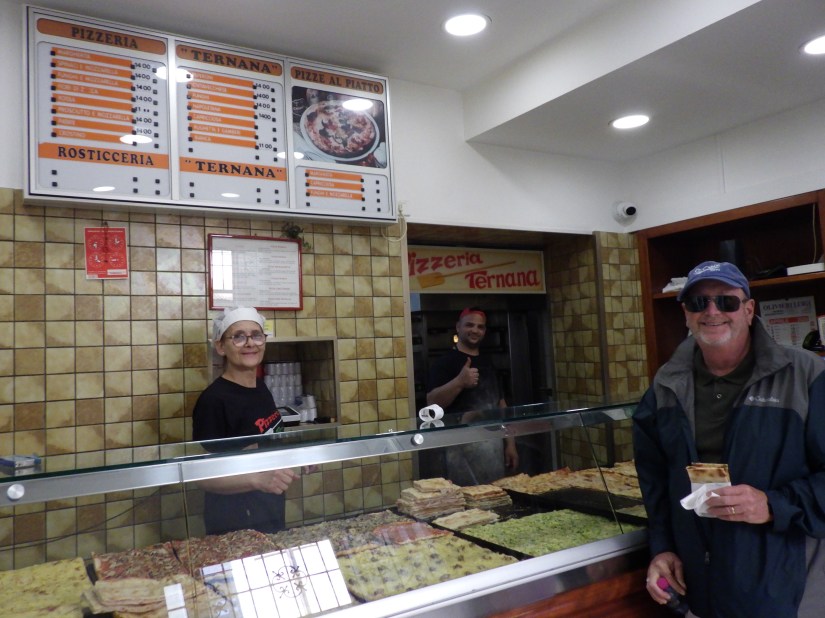
Next, we stopped at Pizzeria La Ternana, the oldest pizzeria in town, where a colorful selection of pizzas was on display. We opted for a traditional slice with a subtle hint of anchovy—salty, simple, and satisfying.

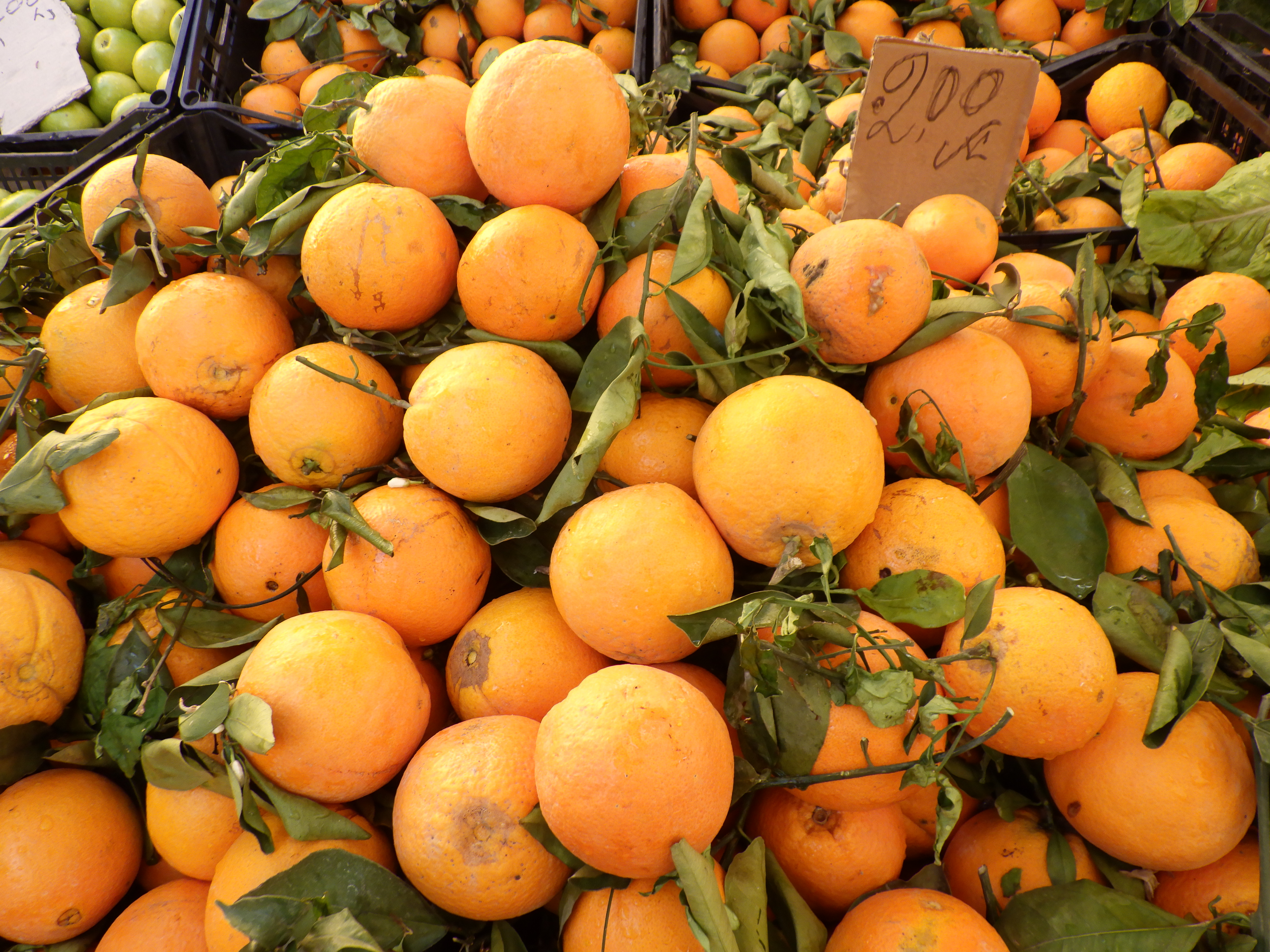
Just around the corner was the Mercato di Civitavecchia, a bustling local market offering everything from fresh fish and meats to produce and clothing. It was lively and authentic, full of the sounds and smells of everyday life.

Later, we wandered down to the waterfront promenade. As the sun climbed higher and warmed the air, the shoreline grew livelier, with more locals emerging to enjoy the brightening day.

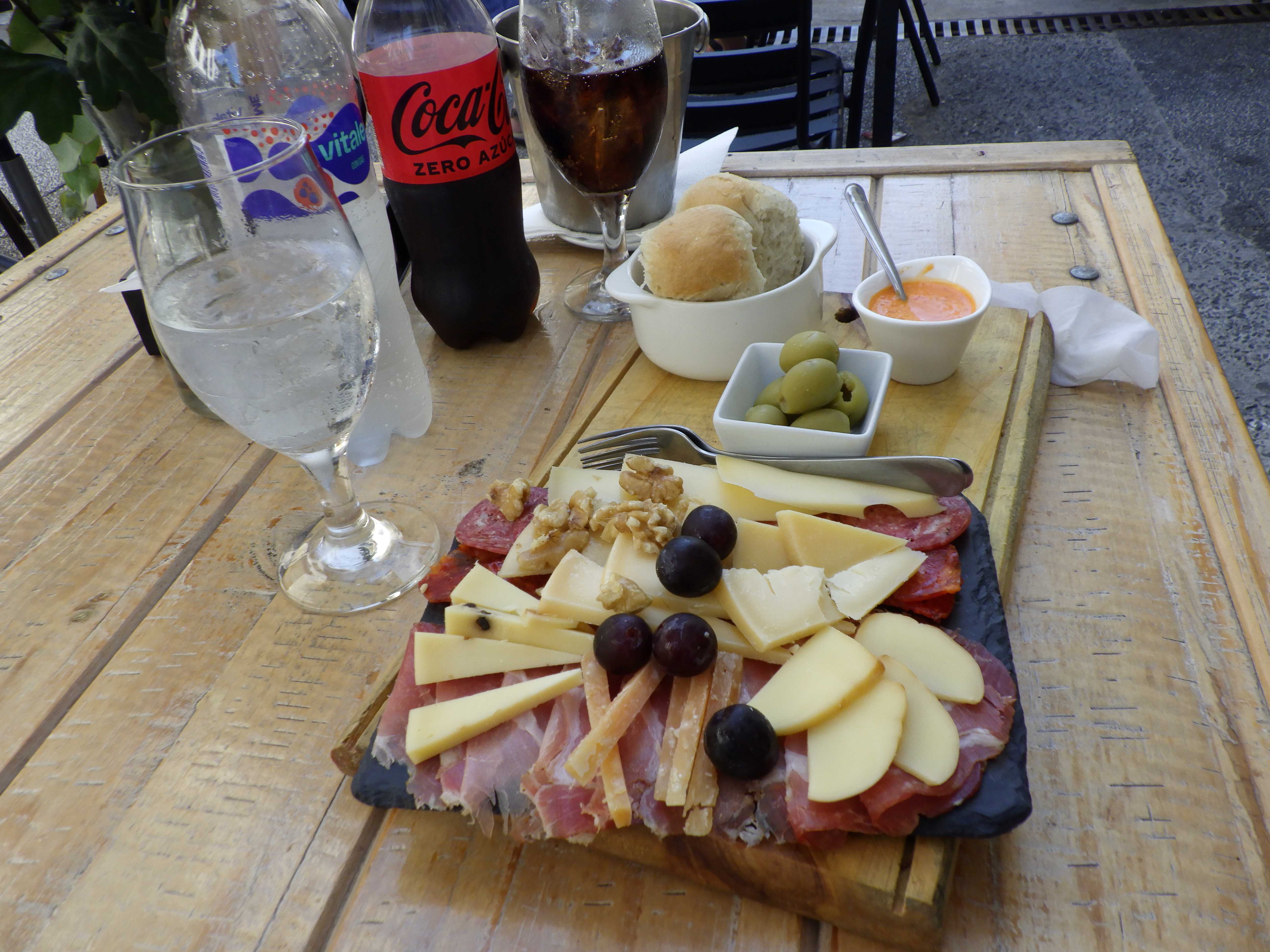
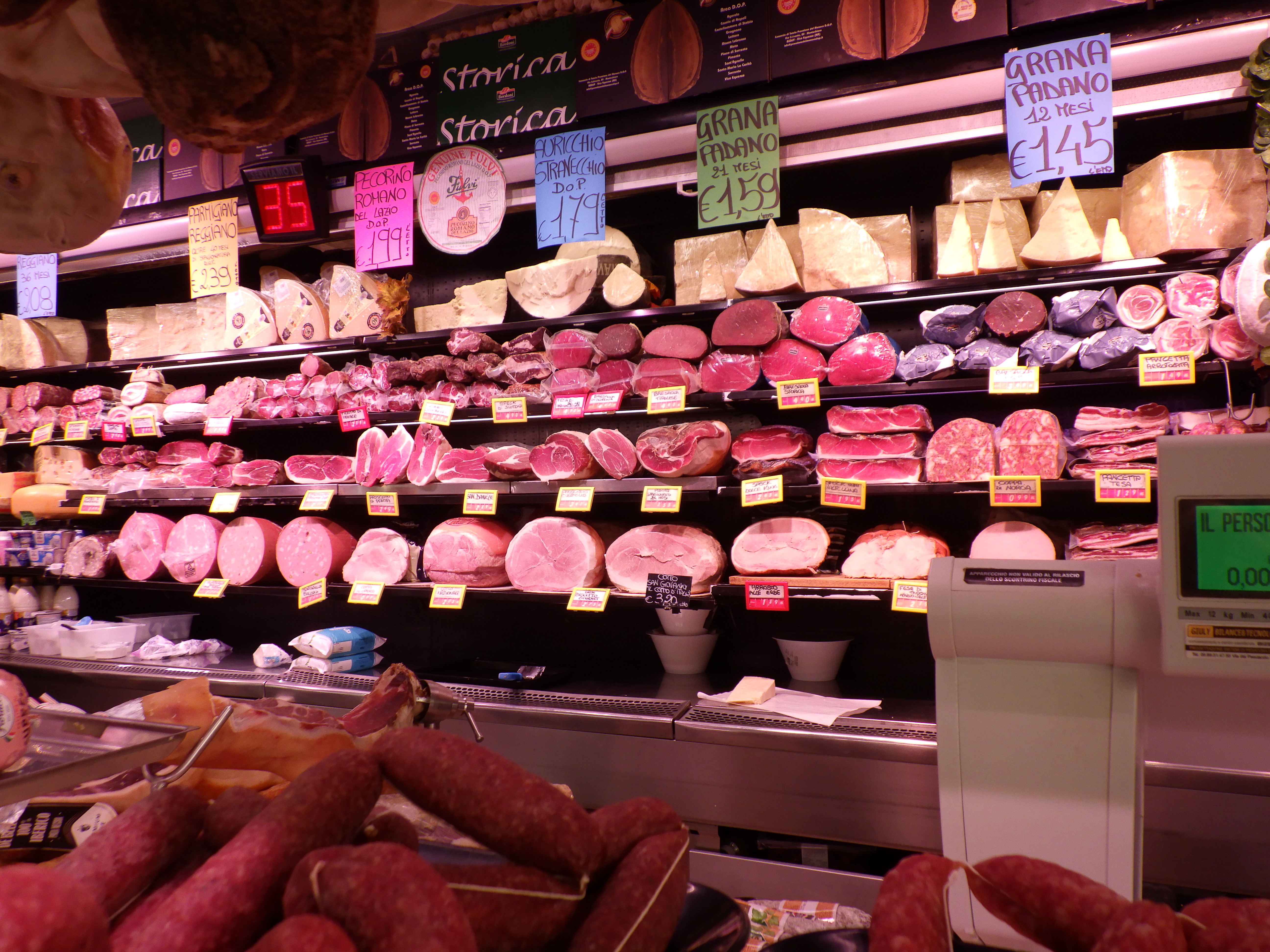
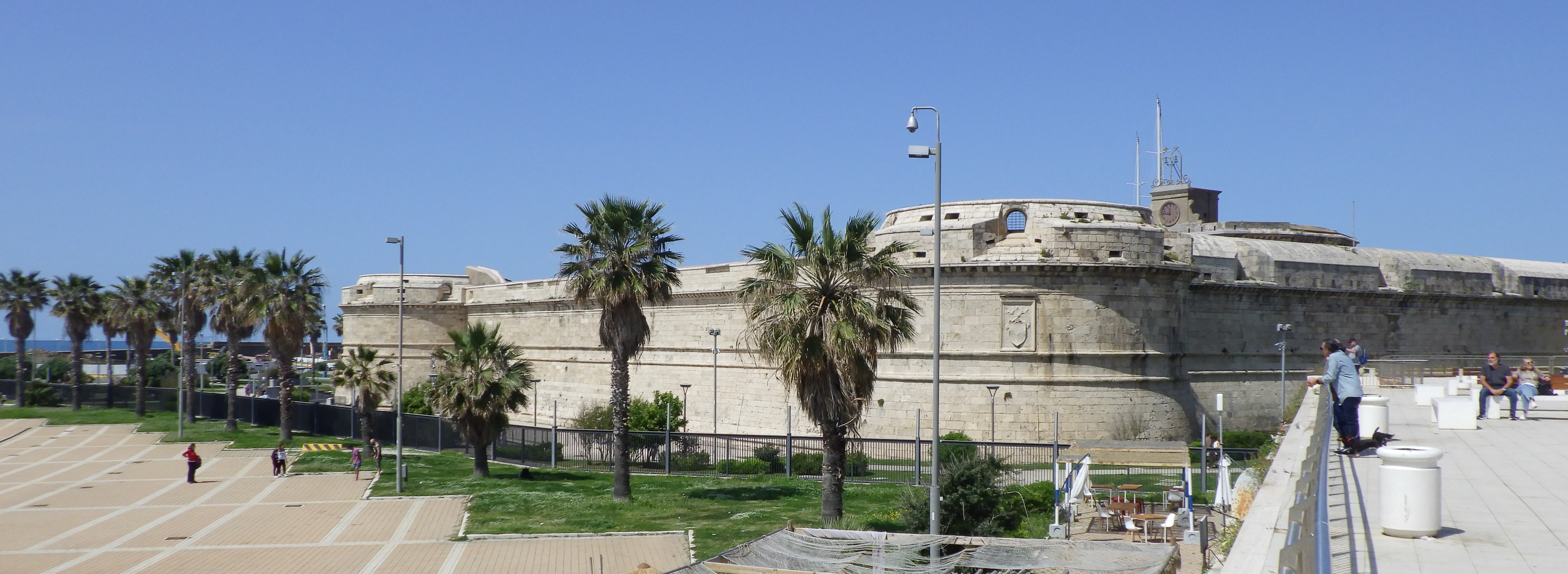
For our afternoon treat, we found Le delizie di zio bibi along the main strand and shared a charcuterie board featuring regional cured meats and cheeses—flavors that perfectly matched the town’s rustic charm. Fort Michelangelo bid us farewell as we walked back to the ship.

Civitavecchia surprised us. It offered a friendly, unhurried feel and delightful streets to explore—an ideal pause amid the grander stops of our journey.

As the sun sets over Italy, the Zuiderdam charts her course toward Sardinia and Spain—our next ports of call. More adventures await… stay tuned!

2025 World Cruise, Cruising, Travelogues

Leg 8: Cape Verde & Canary Islands, Gibraltar, Cartegena & Malta

Port of Praia on Santiago, part of the Cape Verde Islands

Priai, Ilha de Santiago – Cape Verde Islands

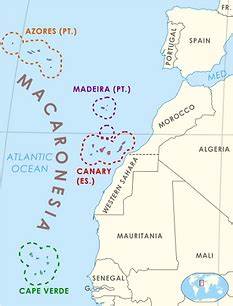
Lying just 350 miles west of Senegal are the Cape Verde archipelago consisting of 10 islands.  Praia is the capital and largest city located on the island of Santiago and offers a blend of Portuguese and West African cultures and colonial architecture.   

Street art and murals are popular and can be found throughout the city.

Translation: “The fight for liberation is not only an act of culture, but also a factor of culture.”
Paying homage to renowned Cape Verdeans 

The ship provided a shuttle from the pier to Alexandre Albuquerque Square where we began our exploration on foot. The adjacent pedestrian street was lined with small shops that were just beginning to open for the day. 

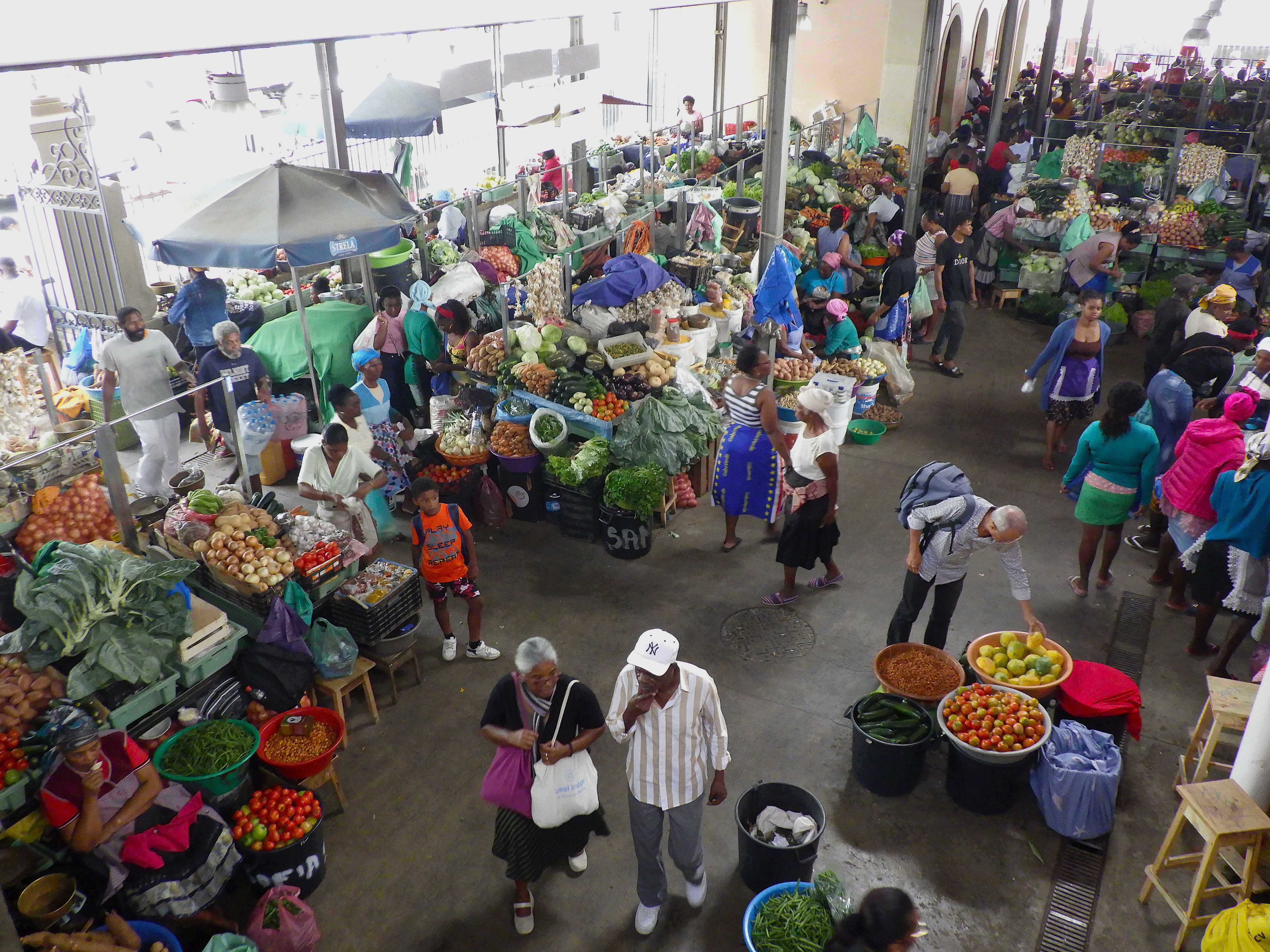
It seems that no matter where you might be in the world, nothing says “Saturday” more than a central market.  Praia’s Sucupira Market was in full force for our morning visit.  Hawkers shouting in their native Creole, countless vendors transporting nearly everything on their heads, and the aromas of street cooking provided stimuli overload for our senses as we walked through. 

Along the coast, Prainha Beach was lined with small hotels and condos.  We indulged in a massage at the Hotel Barcelo before finding some lunch in a lovely café. 

The grilled grouper with rice and sauteed vegetables, a generous platter of Portuguese sausages and cheeses, and 2 glasses of wine cost less than $30. Praia was a relaxing and delicious visit!

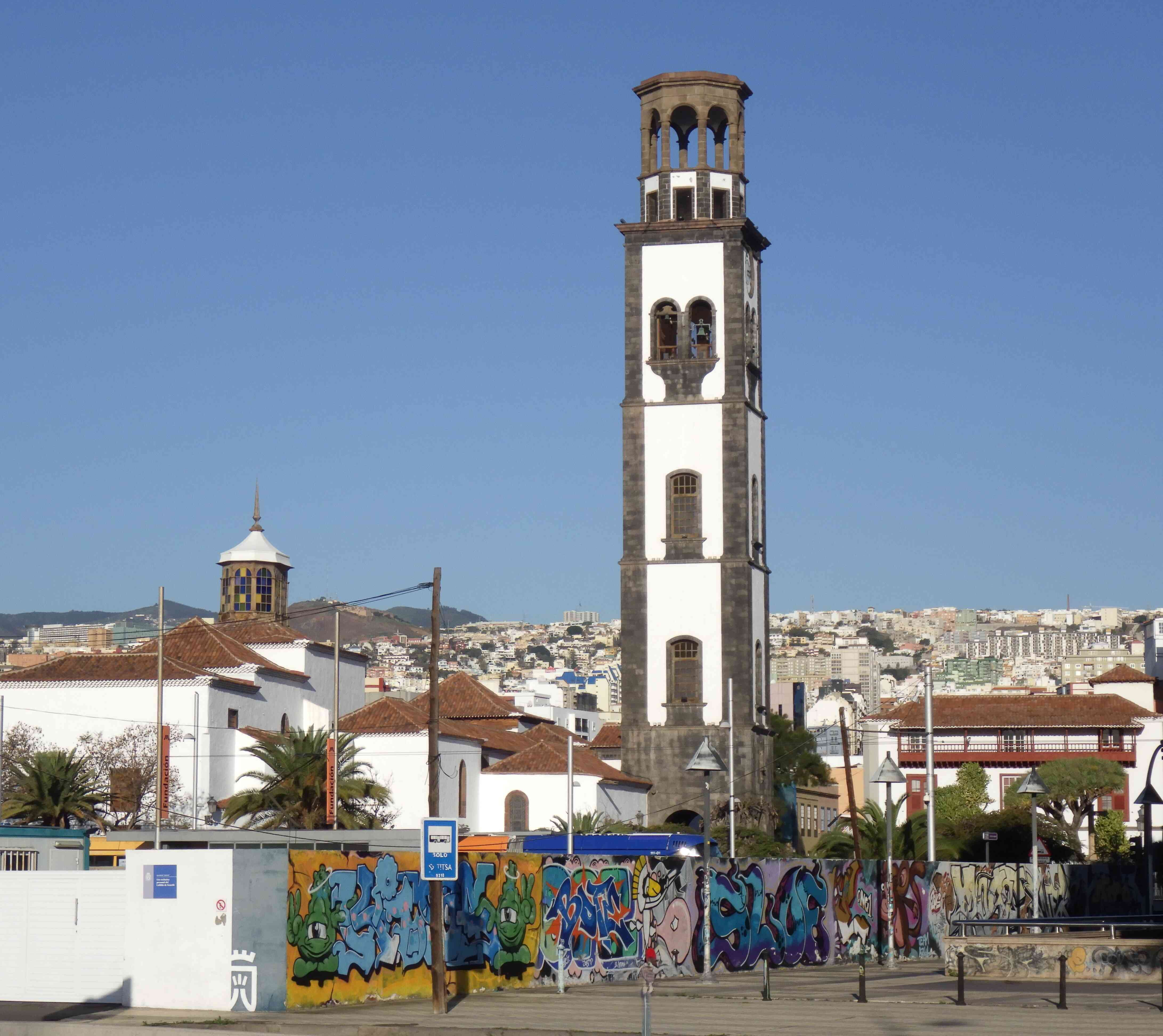
Santa Cruz, Tenerife – Canary Islands After two days at sea, covering 937 nautical miles, we arrived at Santa Cruz de Tenerife, the largest of the seven Canary Islands. This friendly port city is home to approximately 200,000 residents and combines history, modern architecture, old world charm, and natural beauty.

Sunrise in Santa Cruz de Tenerife, Canary Islands

Despite the volcanic terrain, landscapers were trimming the grassy areas adjacent to the ship’s pier.  The smell of fresh cut grass was something we didn’t even know we longed for. It smelled so good! 

Opera House and mountainous, volcanic terrain

Our 9-mile walkabout in town included all the sights, starting with the shoreline promenade to the Opera House, a swimming club and an oceanfront botanical garden called Palmetum, featuring palms from around the world.  

Onward through plazas, residential neighborhoods, pedestrian shopping streets, parks and an artsy Central market complete with florists, handicraft artisans, gourmet cheeses, meats and the usual produce.

Plaza de Espana is the largest plaza in the Canary Islands

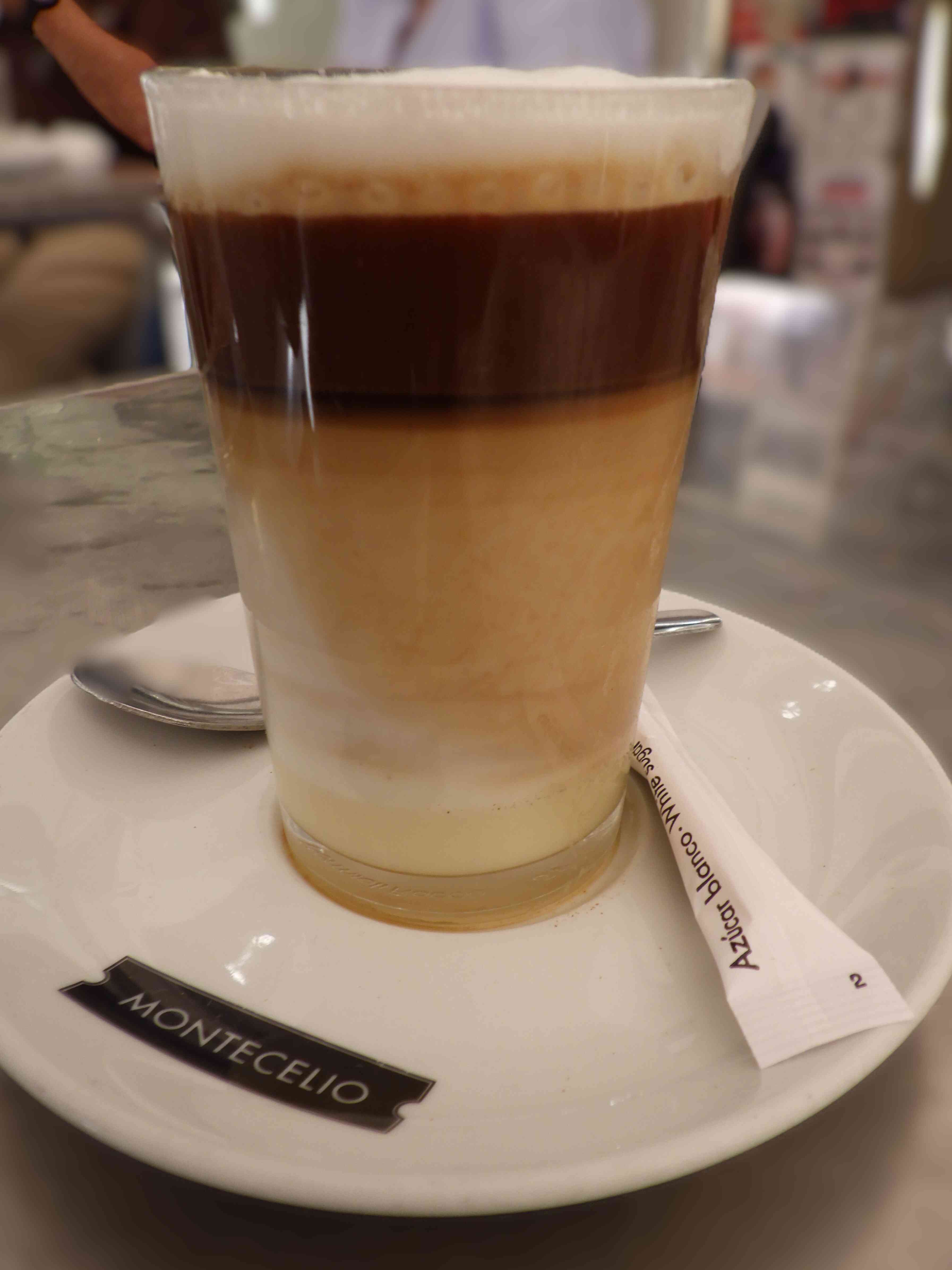
Beyond the sights, it’s always important to get to know a place by its local cuisine!  Like the deliciously indulgent Tenerife ‘barraquito’, a multi-layered coffee liqueur drink, and some hearty Iberian Ham Tartare.

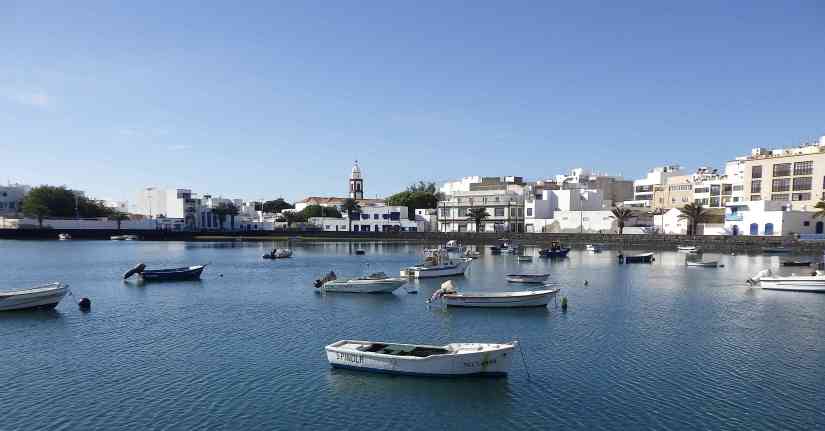
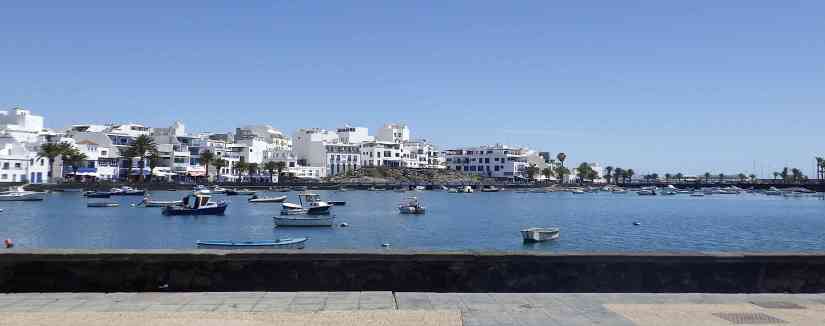
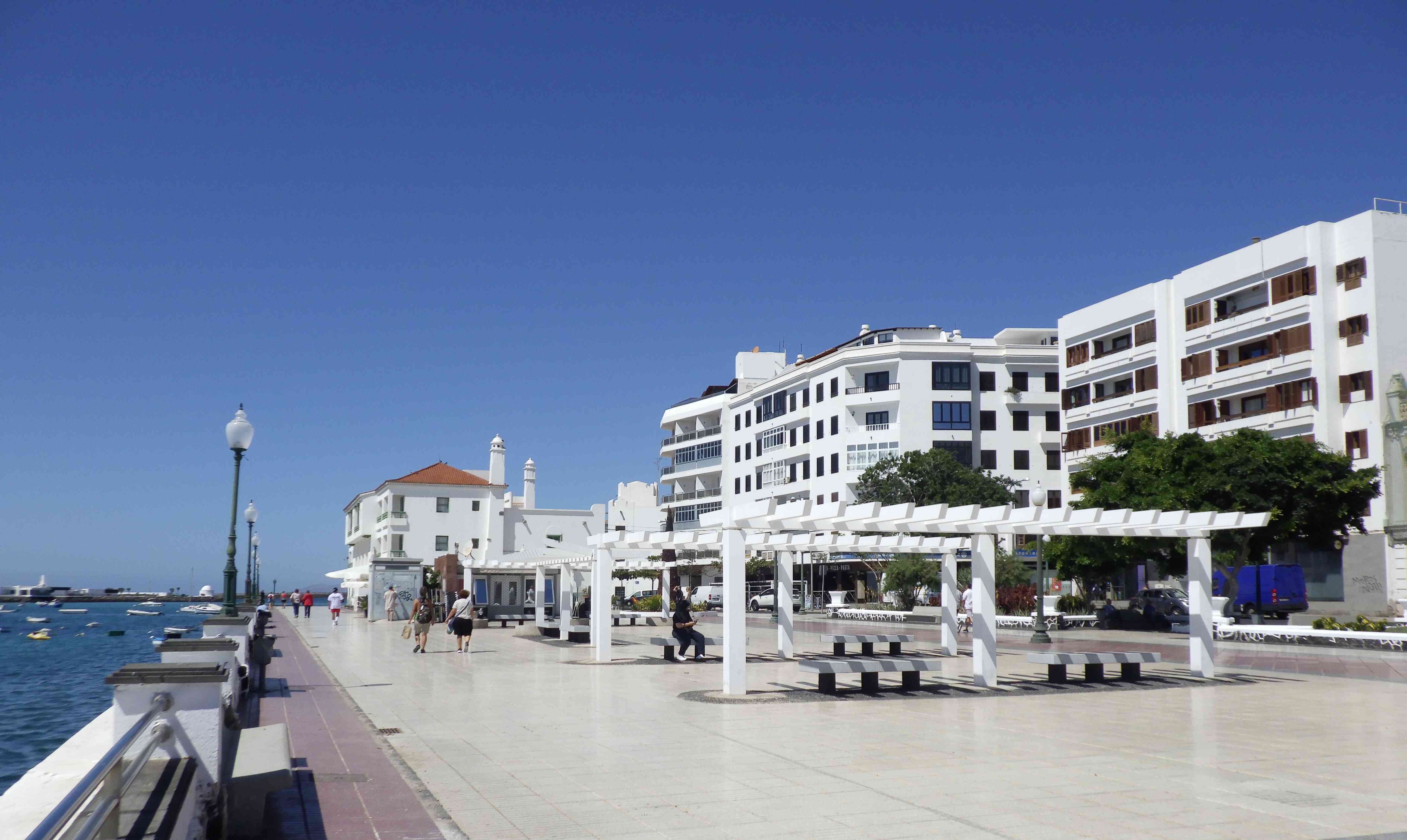
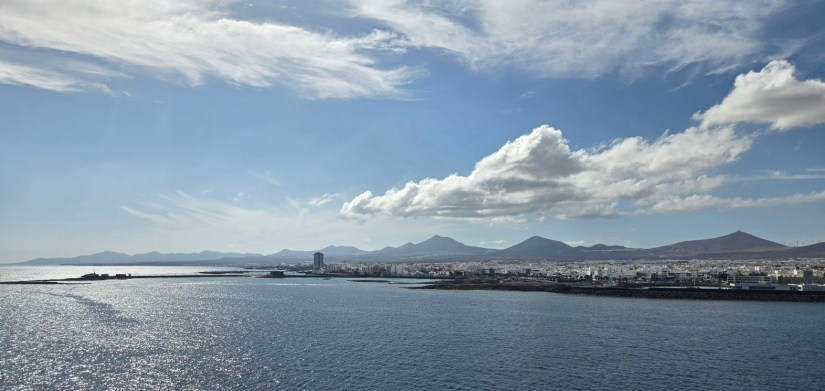
Arrecife, Lanzarote – Canary Islands The second Canary Island we visit is northeast by 158 miles. Lanzarote’s landscape is dotted with hundreds of volcanic cones and looks like it could be the surface of the moon.  But the coastal town of Arrecife is an oasis, with a decidedly Mediterranean feel to it; from the El Charco tidal lagoon, to its seafront promenade lined with palms, and the golden sands of El Reducto beach.  We enjoyed a lovely day here, walking around in the mid 70-degree sunshine!

El Charco tidal lagoon with San Gines Church, rebuilt in 1667
The opposite side of the lagoon is lined with eateries, boutiques and hotels

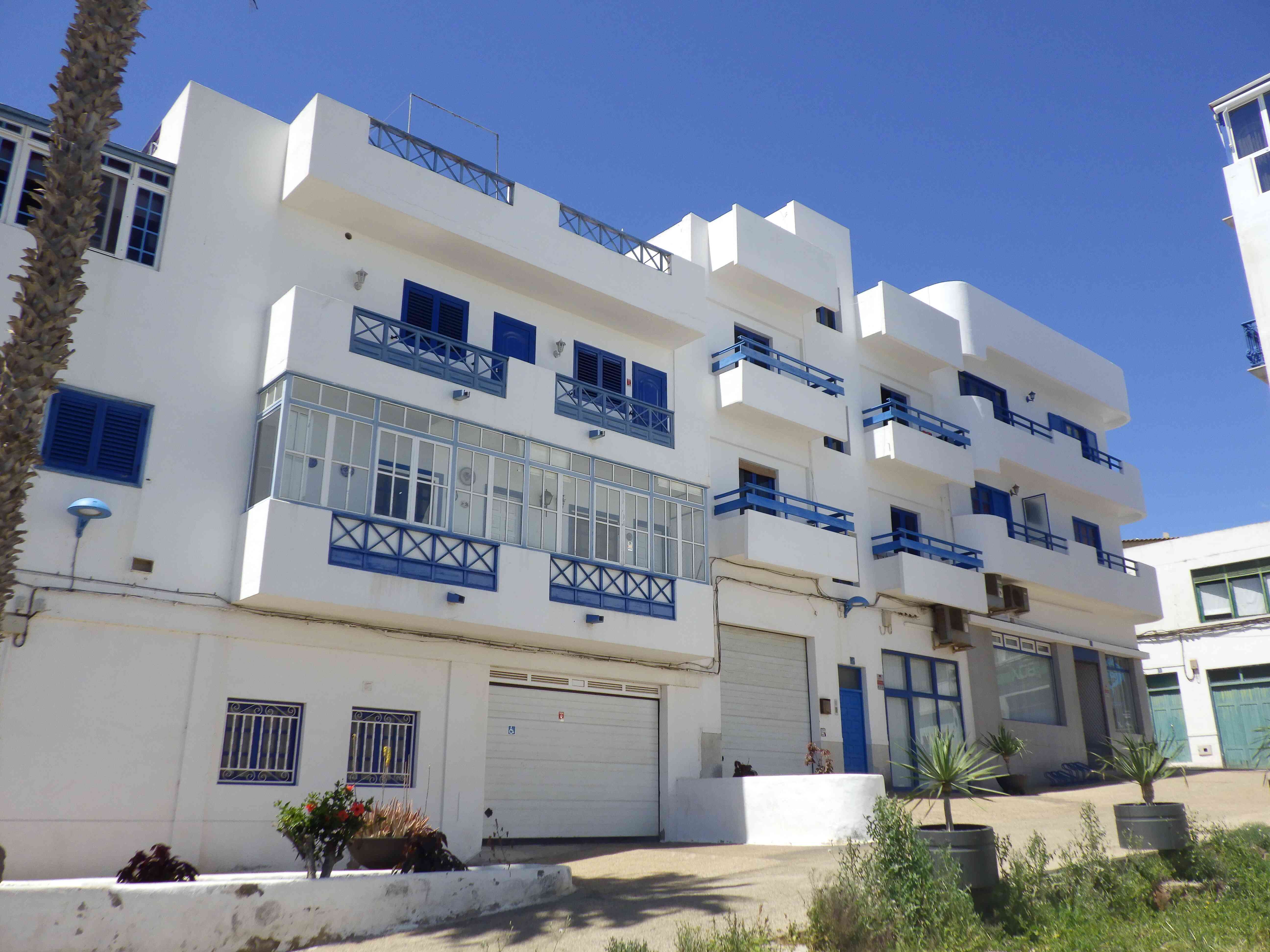
The crisp-looking blue and white painted buildings, a modern promenade and lively pedestrian streets make Arrecife a delightful place to visit!

The Fisherman with Marlin by artist Jorge Isaac Medina stands 21 feet tall
Arrecife Farewell

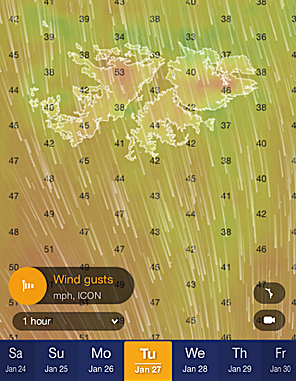
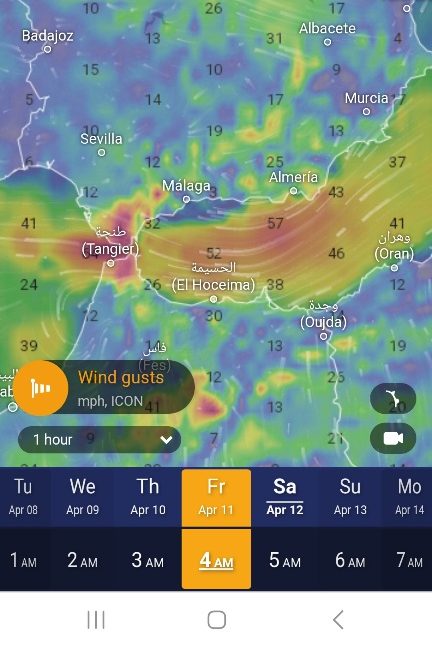
From the Canary Islands, we follow the Moroccan coast 609 nautical miles to the entrance of the Mediterranean and the Strait of Gibraltar. Winds often funnel through the Strait at gale force strength or greater. Here’s a screen shot of wind gusts for our transit’s date and time. Fortunately, the wind was on our bow and there wasn’t too much fetch on the surface conditions. We felt some gyrations, but fortunately at 4am, most everyone was still in bed.

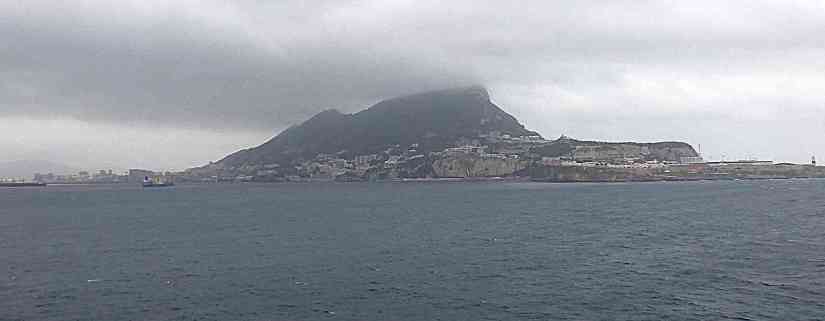
Gibraltar, Overseas British Territory At 6:30am, Zuiderdam makes an impressive maneuver of backing into the narrow entrance of the Gibraltar breakwater and is secured to the pier just before dawn. We are on deck to watch “The Rock” reveal itself to a new day.

The Rock of Gibraltar glows in the dawning light of our early morning arrival

Located at the southern tip of Europe, this tiny 2.6 square mile British Overseas Territory is known for its giant limestone rock formation, as well as for its strategic part in wartime and maritime histories.  It is home to 34,000 people and about 300 Barbary Macaque monkeys, their unofficial mascot. 

With an all-aboard time of 3:30pm, we hurried to secure a tour guide from the pier parking lot. Joseph was born on Gibraltar and shared history, facts and figures as we sped along winding one-lane roads from south to north and of course, UP!

Above, the Europa Point Lighthouse, stands 66 feet tall on the southernmost point and was built in1800’s. The island photo gives you an idea of its urban density.

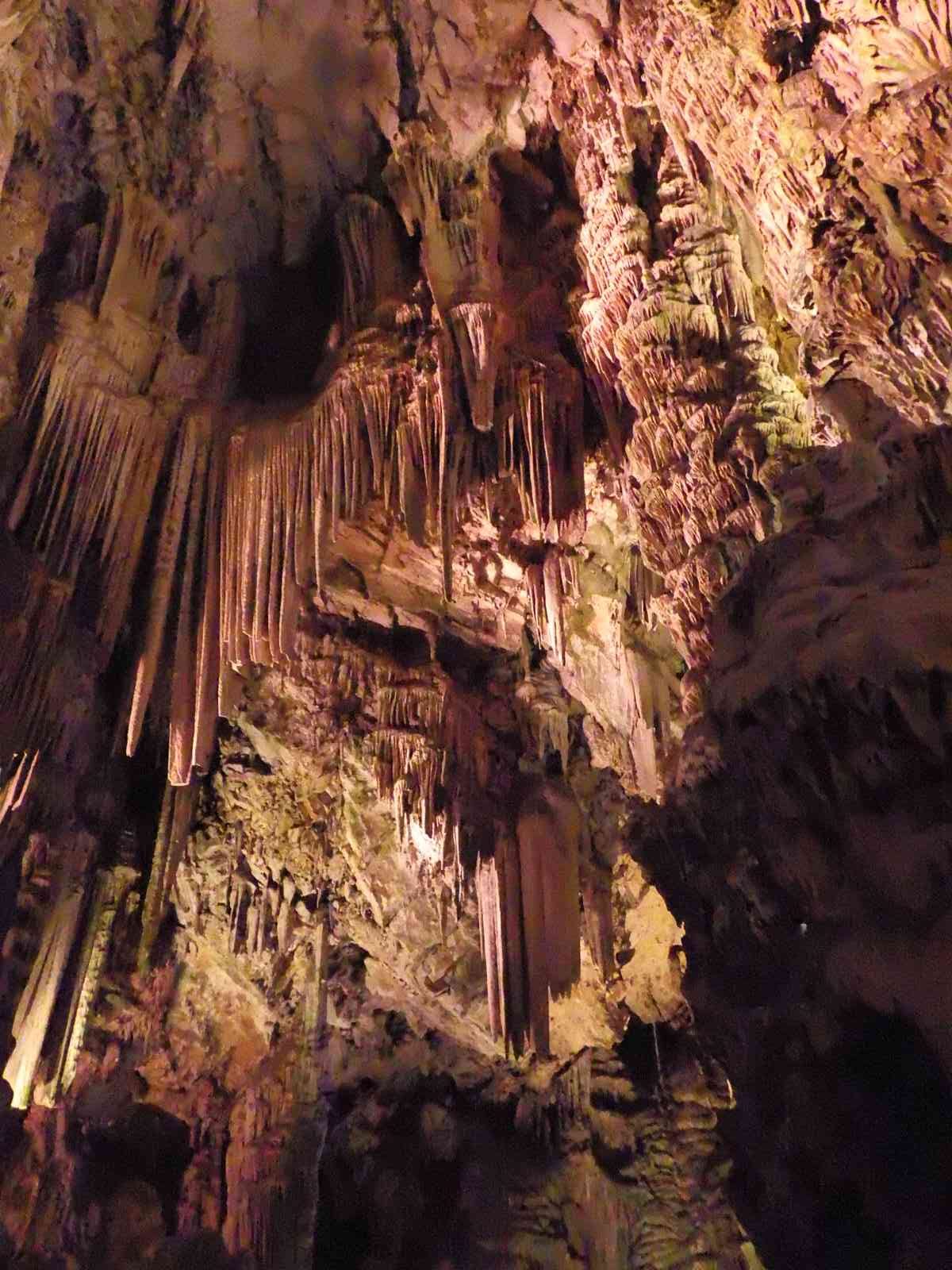
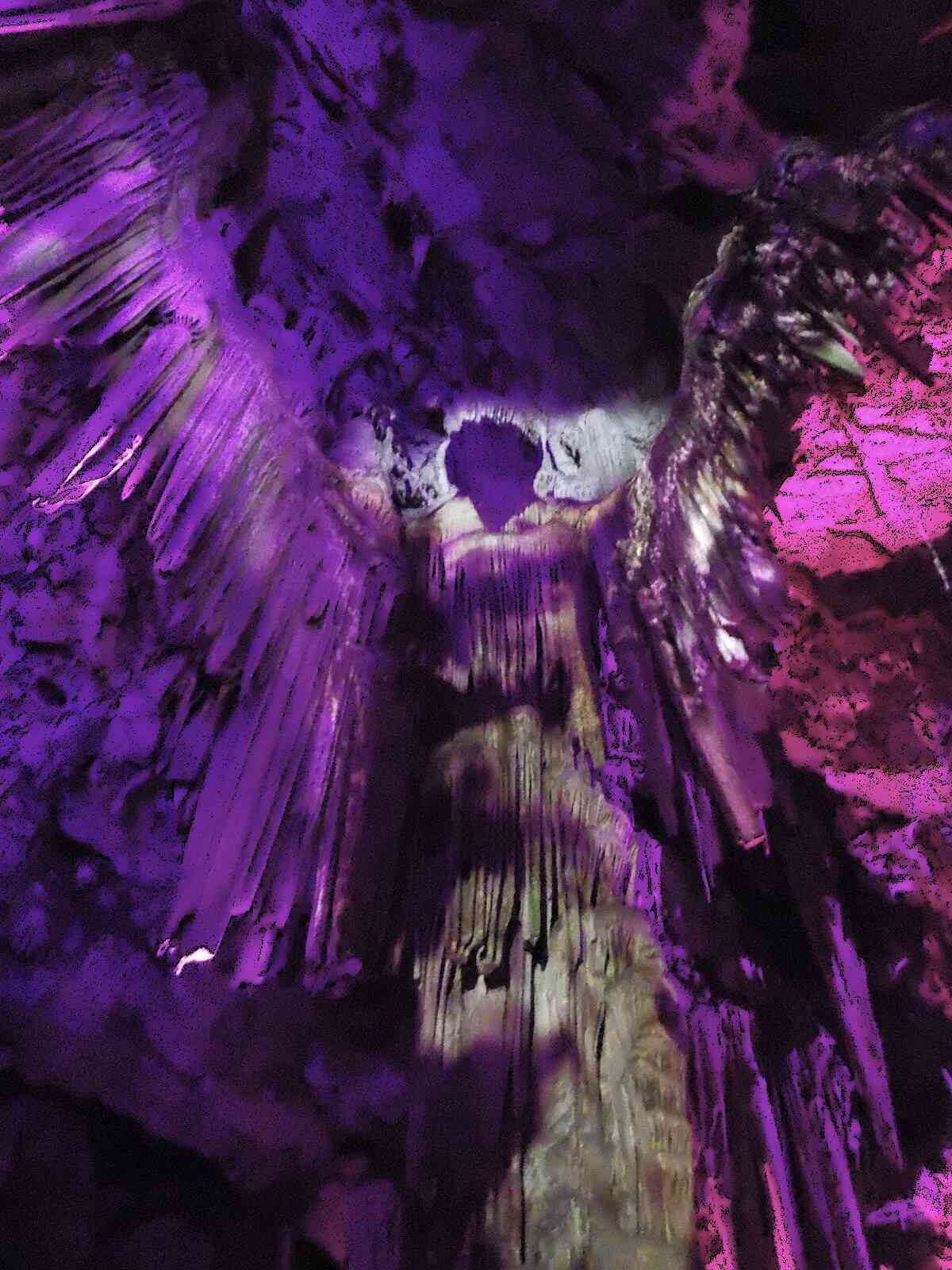
St Michael’s Cave contains the magnificent beauty of stalactites/mites, and various limestone chambers.  The especially cavernous Cathedral Cave is used as an auditorium, with seating for 400 in front of a concrete stage.  With natural acoustics, this venue hosts operas, concerts and other events.  For tourists, a fantastic light show is shown every 7 minutes. 

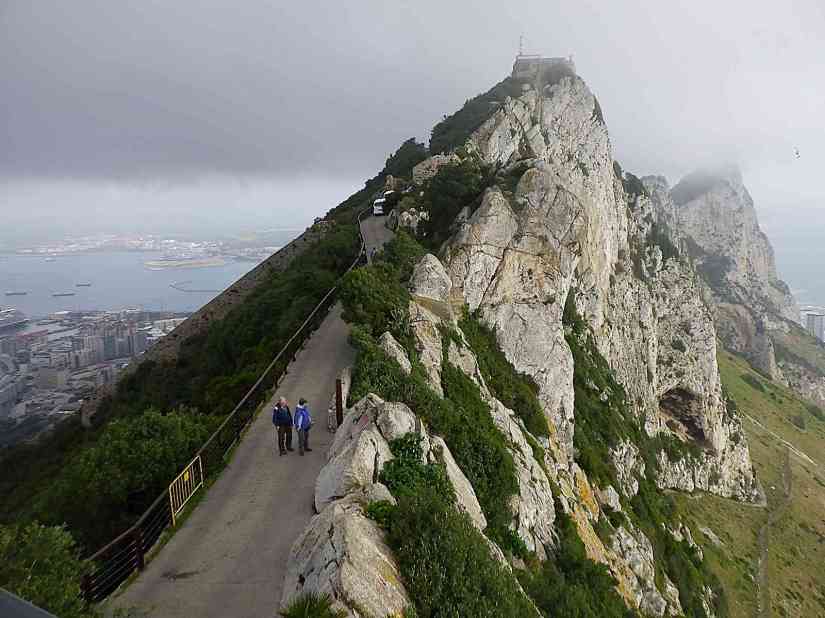
The Upper Rock Nature Reserve rises 1,397 feet above sea level. We crept out on the overhanging platform of the “Skywalk”, which featured a clear (well, opaque) floor. If you dare to look down or over the edge, the 1,115 feet of sheer rock face plummets straight into the foaming sea beneath. Photos simply didn’t do it justice.

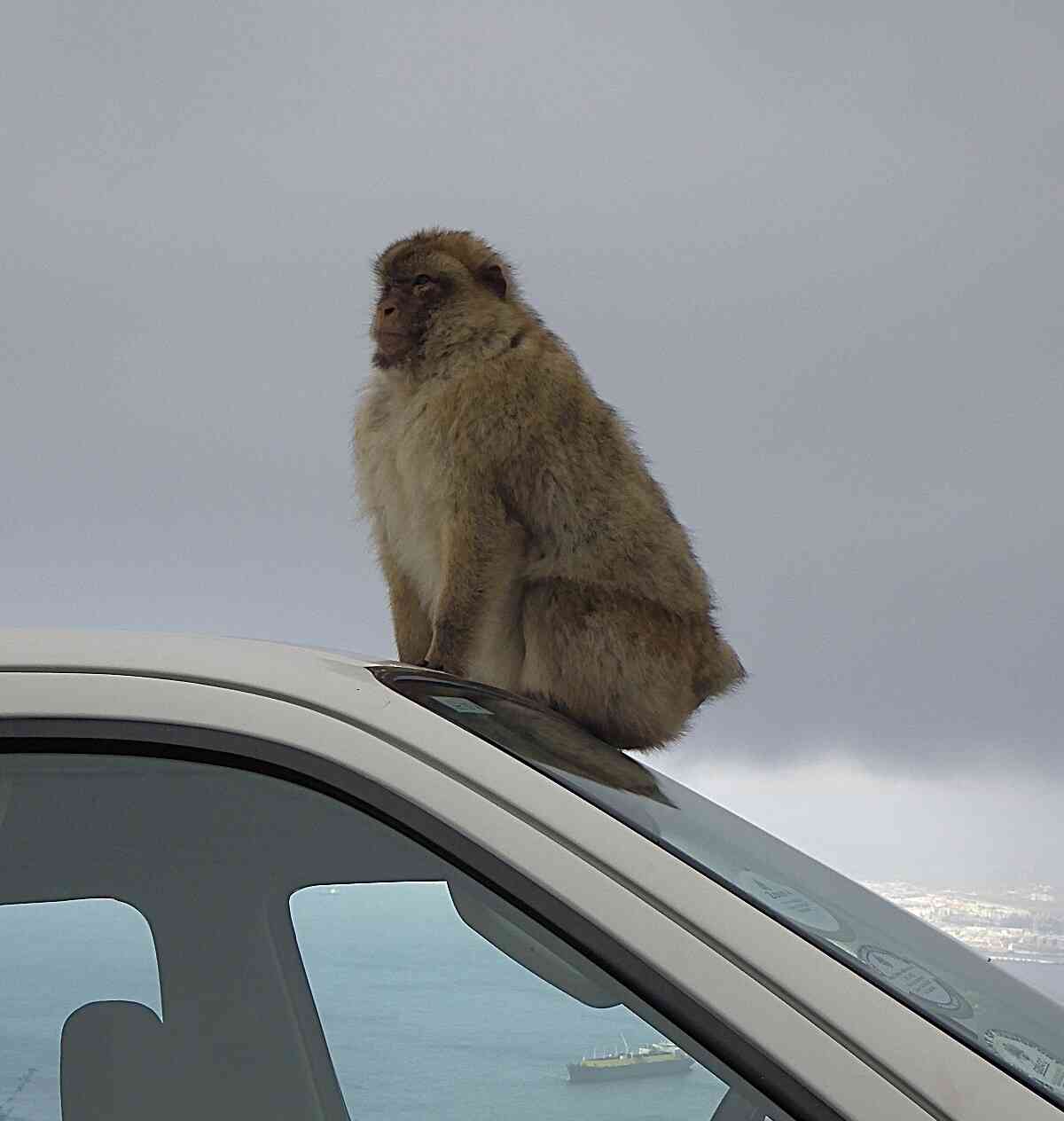
Unfazed by heights are the population of the Barbary Macaque ‘apes’ that rule the roost here. Assertive, clever and curious, they are quick to grab anything of yours that is not attached!

Both the Great Siege Tunnels of the 1700’s and the WWII Tunnels of the 1940’s are historic defense systems as well as feats of engineering. For instance, peak tunnelling speed for the WWII tunnels was 177 feet per week. There were over 27 miles of tunnels carved out by 1945. The legacy of and about these tunnels goes well beyond the scope of this blog, but worth looking up if you’re a war history buff.

Another historical site was The Moorish Castle. The plaque above the small entryway reads: “When the Moors recaptured Gibraltar from the Spaniards in 1333 they rebuilt an earlier tower ruined in the fighting, into this solid tower of homage, which has since withstood ten sieges.” 

A unique feature about Gibraltar’s airport is that a city road goes right across the runway! Naturally, the road is temporarily closed for the 3 daily flights. In 2023, they’ve finally built a tunnel, but for pedestrians only.  

With all Gibraltar’s eons of expertise in tunnels, one would think…!?

The small geographic space of this island also results in densely populated streets with diverse cuisines and a wide variety of shopping; everything from luxury brands to artisan wares.  Glassworks and ceramics are popular here. Gibraltar even makes its own gin!

The Grand Casemates Square is where we finally took a break and snacked on a delicious thin crust pizza. However, the massive portions of fish & chips were popular at many eateries as well.

Grand Casemates Square

Honestly, there was so much to see in our short time there, that I’m including this link for more information as well as aerial photos that I could never capture! https://gibraltar.com/en/about-gibraltar/welcome-to-gibraltar.php

Farewell to Gibraltar

Cartegena, Spain – Did you know that there are more than thirty Cartagena’s in the world?  Today, we visited the oldest one!  Located on the southeastern region of Spain, this ancient town was founded around 227 B.C. 

A group of us got together for a ‘Walking & Tapas” tour within the historical center to learn about the history and foods of Cartagena. The Roman Theater was certainly a highlight, as was wandering the narrow, pedestrian-only streets of Old Town. 

The Roman Theater

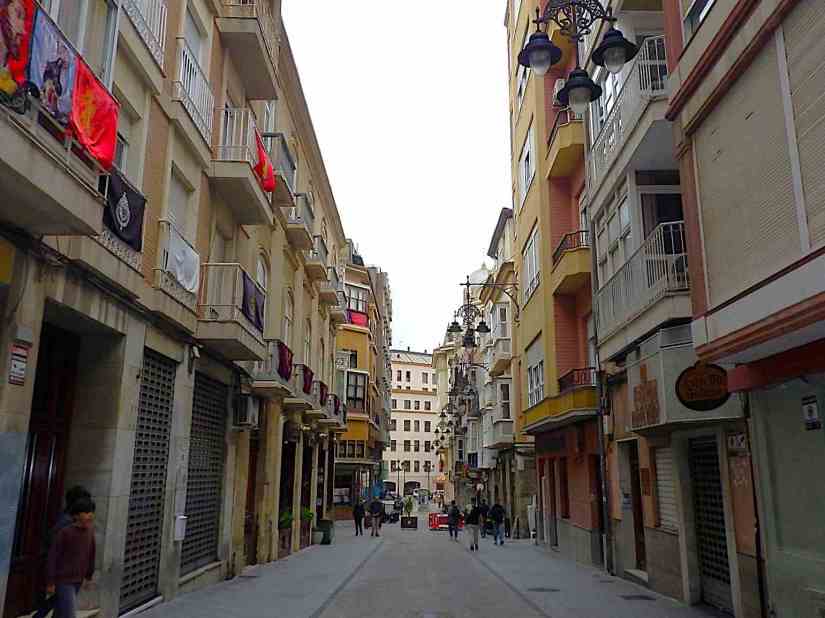
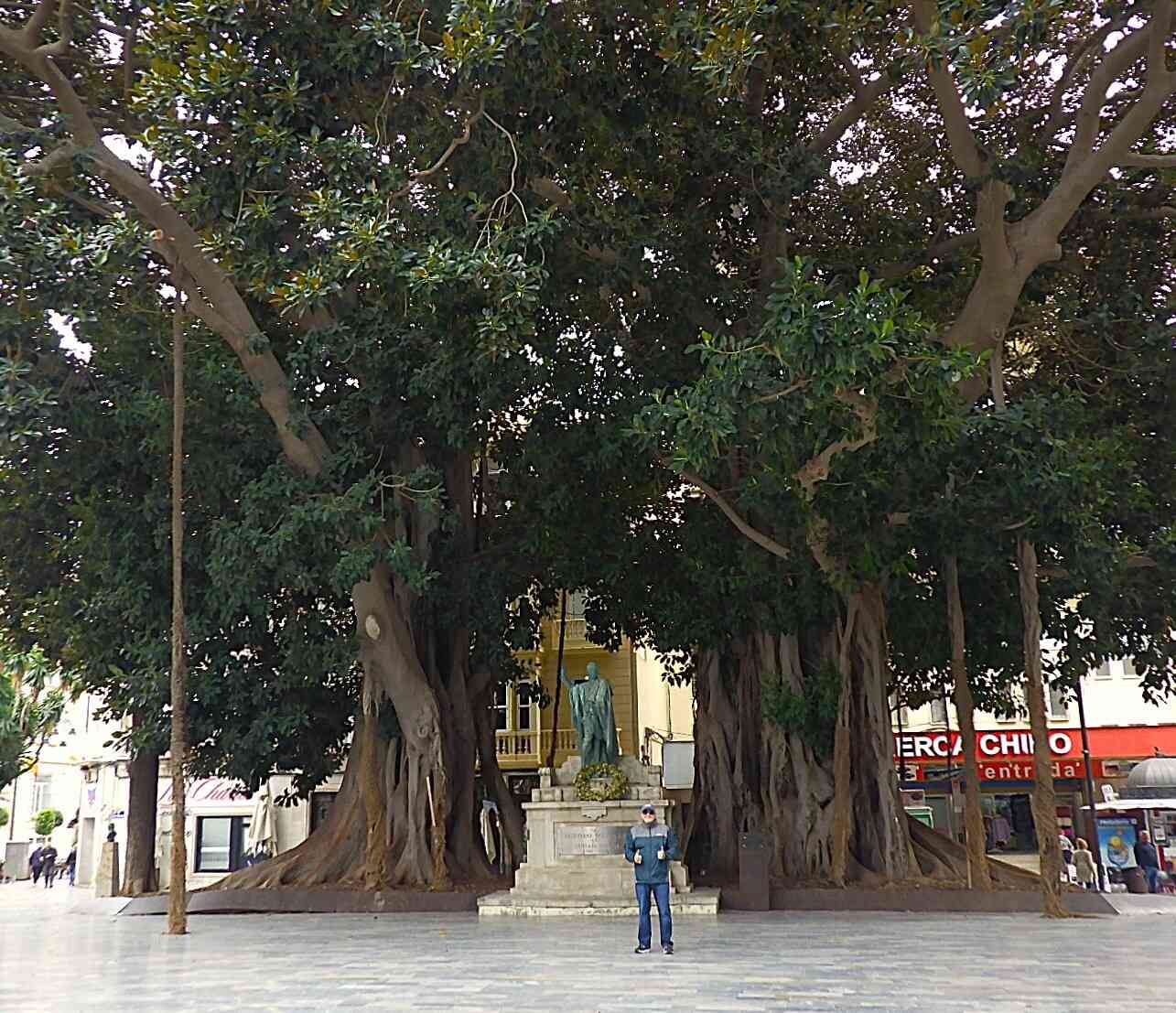
On the banyan-shaded and marbled Plaza San Francisco, we stopped at Al Diablo Tapas to taste their Magra con Tomate, a hearty pork stew with tomato and peppers. 

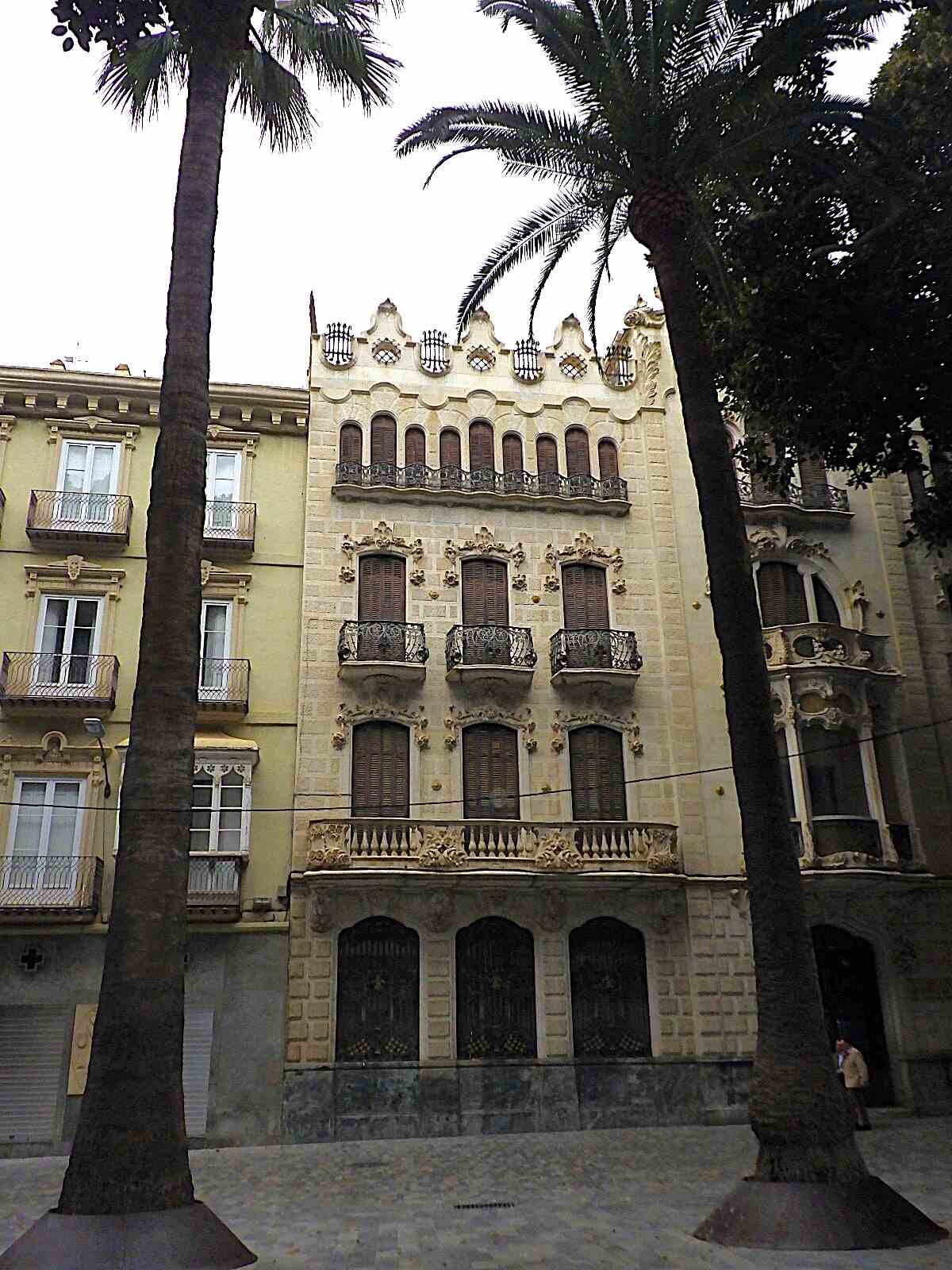
As we strolled, we asked about the reason for the number of abandoned facades we were seeing.  Our guide explained that the city’s construction codes require that a building must preserve and use its original, historical architecture.  But the hidden structural problems and preservation costs are typically more than an owner can afford, and therefore many have fallen into even further disrepair.  However, efforts are being made to preserve and restore these historic structures, as they are an integral part of Cartagena’s cultural identity and charm.

Our next stop was at La Fuente, one of the oldest café’s for a traditional snack of “Marinera”.  Similar to what we may know as tuna salad, Cartagena’s version is made with a mixture of tuna, potato, egg and mayo, topped with an entire fresh anchovy filet and served on a crispy bread stick.  Asiatico coffee was our accompaniment. 

Fileting the anchovies for our tapa “Marinera”.
Tapa “Marinera” and Asiatico Coffee

Along the way, our guide shared history, short stories, and spoke of daily life in Cartagena. We also had to step out of the way for a few Holy Week processions that were taking place in the narrow streets. 

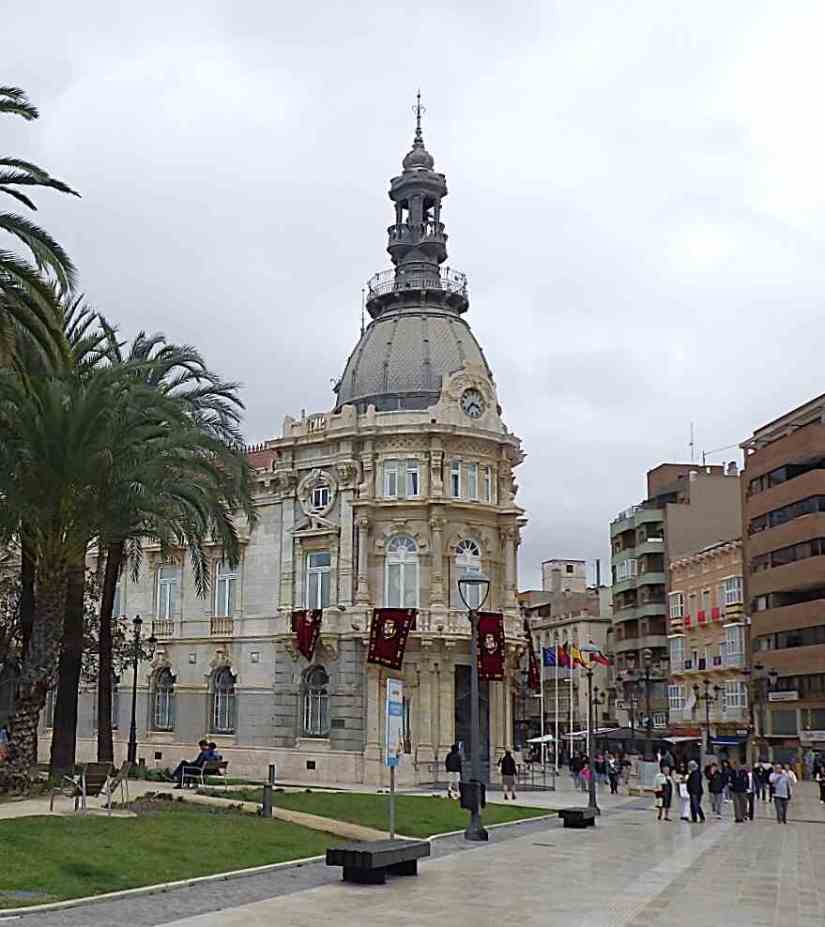
Cartagena Town Hall

Our last tapas stop was at the vegan Chef Momo café for Arancini, Spanish-style.   Rice, couscous and cheese topped with a cheese sauce. 

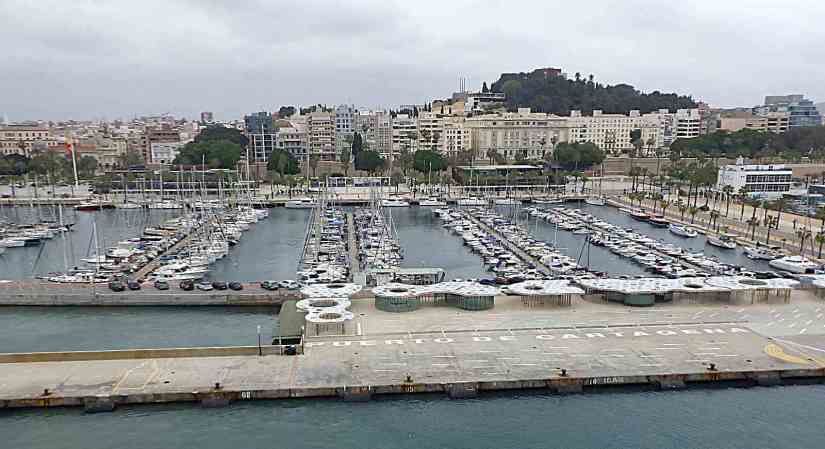
We all waddled back to the harbor and marina promenade with full bellies and a better understanding of Cartagena’s social life and gastronomy.  

Cartagena Harbor Marina

During the sea day after leaving Cartagena, I was still reflecting on its age, trying to get my head around 227 B.C.!   In the United States, when we think of “old” we consider our histories as around 200 years old.  But now that we’re traveling in the Mediterranean, it seems wherever you wander here, “old” means “ancient”!   Most of our next ports will all offer rich histories of empires, pharos and past civilizations, so please forgive any overuse of words used to describe millennia!    

Case in point is our next port of call, Valletta, Malta, which may be one of the oldest continuously inhabited spots in Europe, since around 5900 B.C.!  And per Wikipedia, Malta’s been ruled by all kinds of powers: the Phoenicians, Romans, Byzantines, Arabs, Normans, the Knights of St. John, the French under Napoleon, and then the British. It finally became independent in 1964 and a republic in 1974.

Zuiderdam makes her entrance into the inner harbor of Valletta before noon, with plenty of locals and tourists ashore waving a warm welcome.  The stunning ancient city surrounds the harbor, making for a spectacular sail-in.  Every angle of Malta seems to present a grand photo op!

Valletta, Malta

Not knowing too much about Malta, we were eager to explore and discover this small island of 122 square miles.  We found the best means to cover the most ground in a few hours was a Hop On Hop Off bus.   We began by heading out of town first and would save exploring Valletta for the afternoon. 

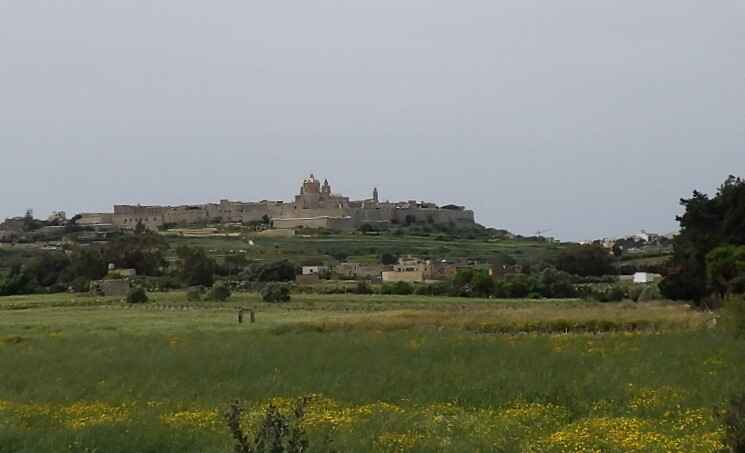
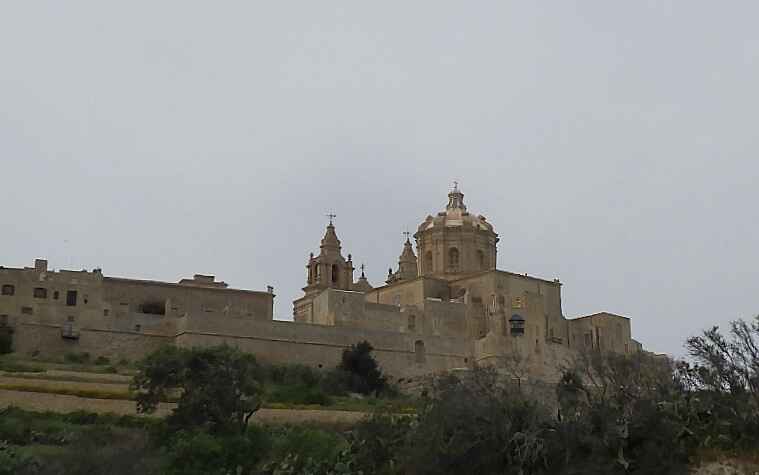
Despite the cool wind, the panoramic views from the open-top bus were breathtaking on our way to the medieval walled city of Mdina.  Sitting atop a hill, Game of Thrones fans might recognize it as the filming location for King’s Landing in Season 1.

Mdina in the distance

We leave the bus and walk through the thick, golden stone walls of the main gate and follow the labyrinth of narrow passages to wherever they may lead.  It’s as if we’ve passed through a time machine. 

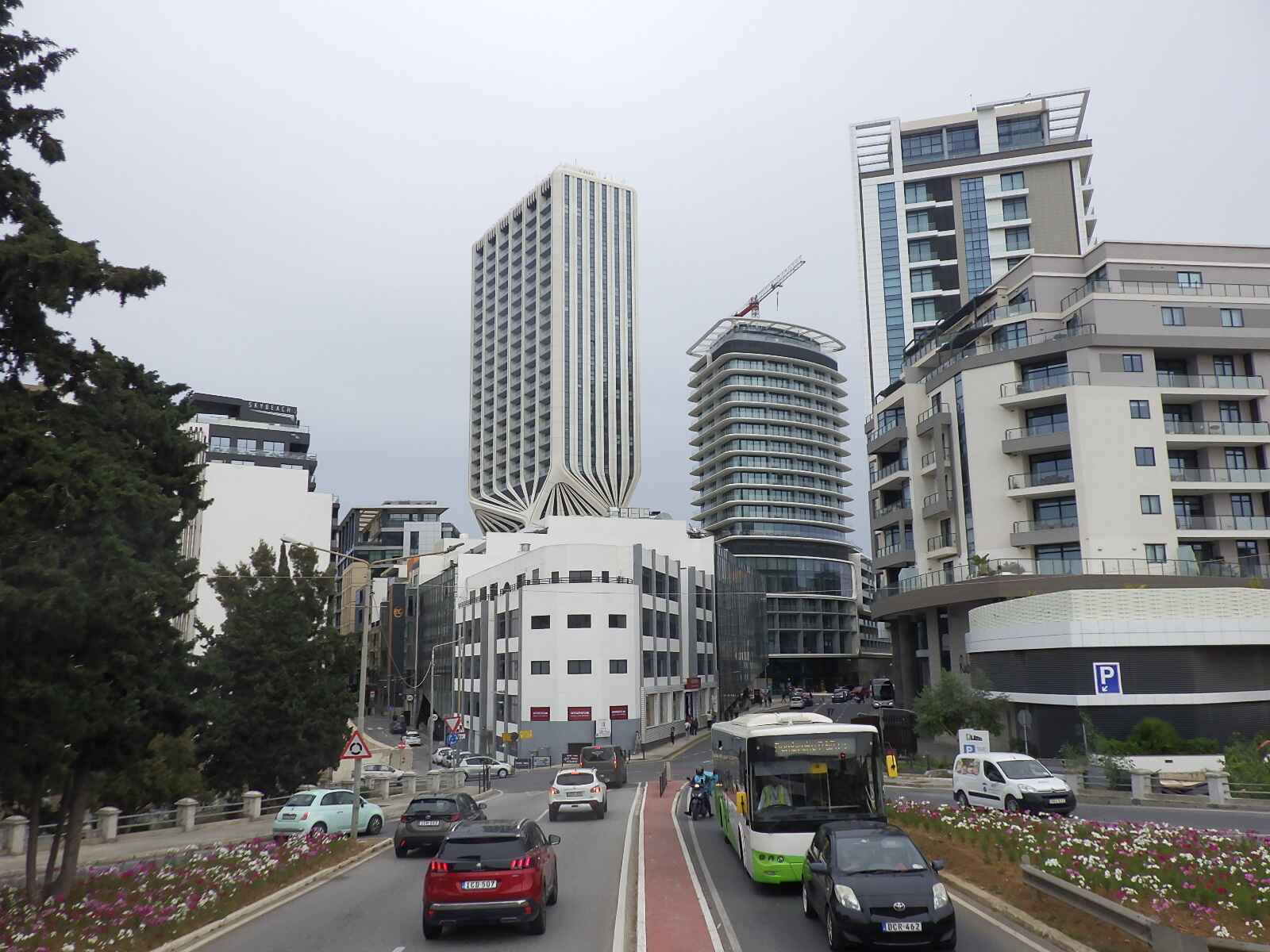
An hour later, we reboard the bus and make stops at landmarks like Golden Bay and the Mosta Dome, as well as pass through their agricultural belt, blending natural splendor with cultural heritage. It was a whirlwind tour that showed us Malta’s diverse landscapes, chic coastal towns, and rich history in just a few hours.

Lots of planted fields

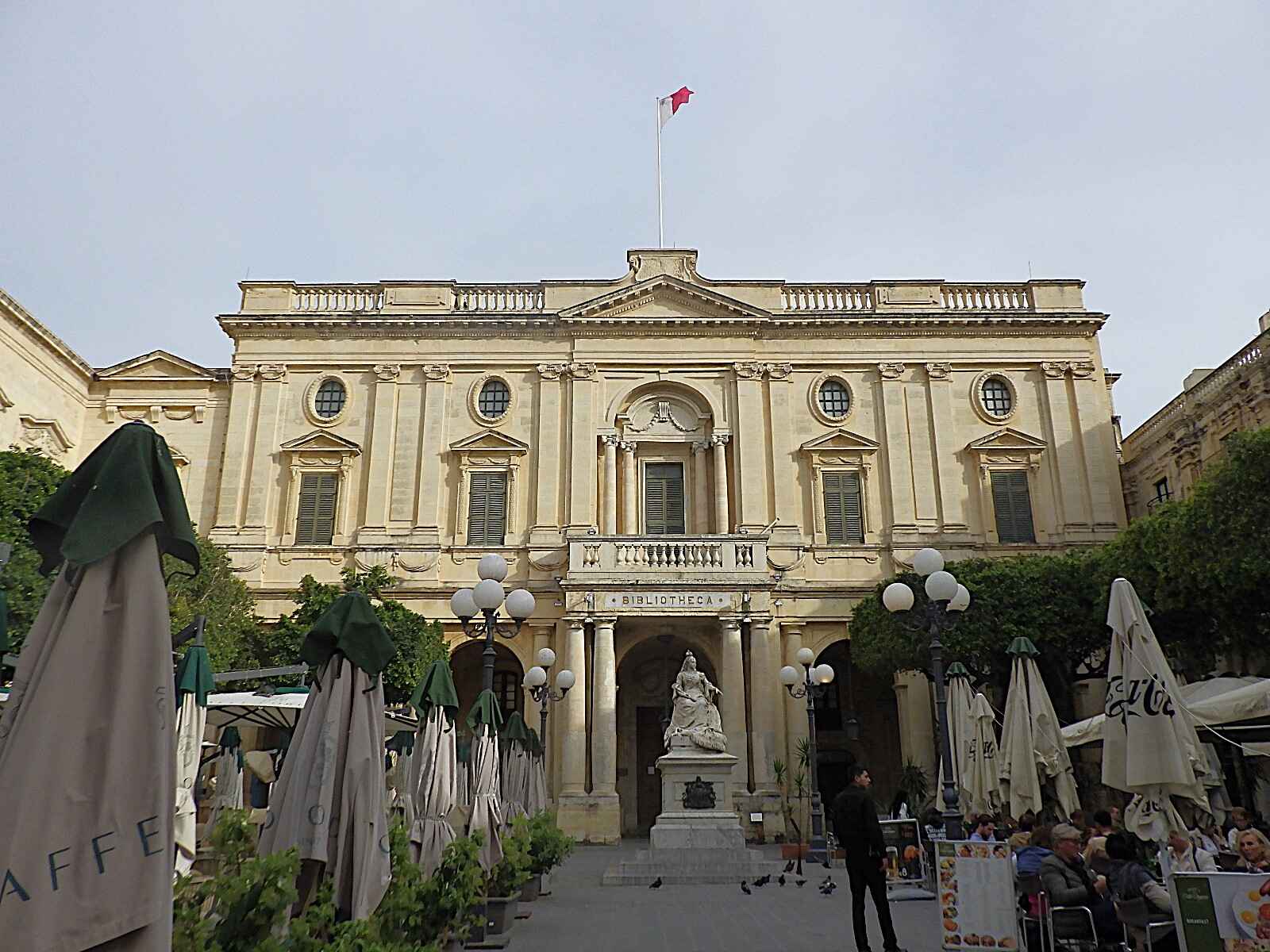
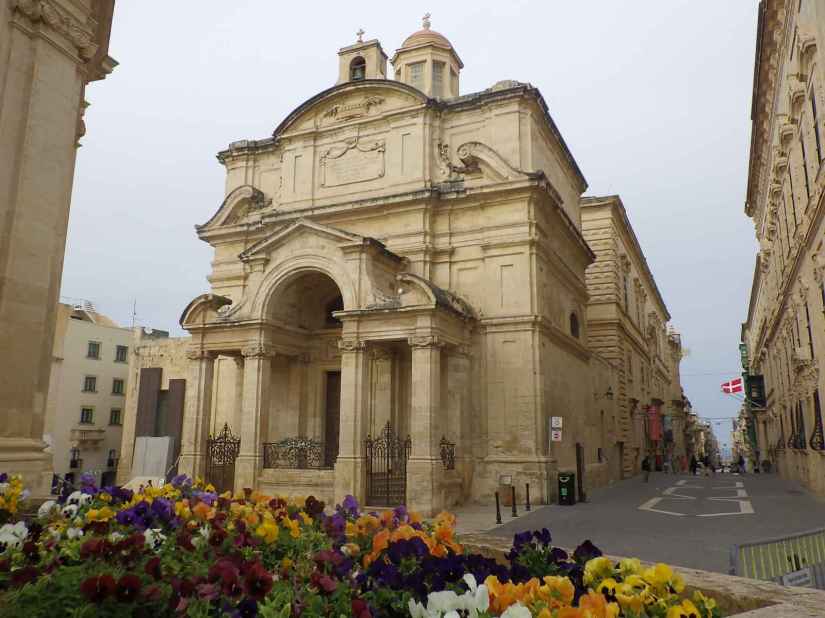
But maybe saving the best for last, we crisscross the Baroque streets of Valletta, finding monuments and impressive architecture at every turn, including the Library and St. John’s Co-Cathedral.

St. John’s Co-Cathedral
The Prime Minister’s Building

Tuckered out, hungry and thirsty, we sat at an outdoor café to people-watch while eating.  I ordered their traditional rabbit stew and while Tom had local goat cheese ravioli.   With dusk came cooler temperatures, so we headed back to the ship. 

Later, Tom and I watched from our portside cabin veranda as Zuiderdam slipped her Malta dock lines at 10:30pm.   It was gorgeous sail-away, with golden lights illuminating the ancient walls of Valletta.  The tugboat and pilot boat escorted her until the breakwater, where she turned to starboard into the darkness.    Malta is truly a hidden gem of the Mediterranean!

Our eastward course over 860 nautical miles will bring us to the Port of Alexandria, Egypt.  The mysteries of the pyramids await …….

2025 World Cruise, Cruising, Travelogues

Leg 7: Africa

The first sea day after leaving Reunion Island was a bit rough.  Remnant winds from Cyclone Jude were still churning the Indian Ocean and Zuiderdam pitched and rolled in 12-foot seas, enough to keep many within their cabins.  The staff drained the 2 swimming pools and 5 hot tubs, all of which had water breaching their sides.  The access doors to the outside promenade on Deck 3 were also closed off.  Yep, Day 74 had finally brought about some motion that a small group of us aboard actually enjoyed, albeit short-lived. The two days that followed were calmer but rainy, and after 1,352 nautical miles, we reached the southeast coast of Africa. 

Zuiderdam made her way into the length of the buoyed entrance of Richards Bay, South Africa.  The scent of pine trees that border this natural and deep harbor was a welcome change from the briny air of the Indian Ocean.  

Seven of us were excited to disembark the ship for an overnight excursion to find wild animals.  We would depart the ship in Richards Bay and rejoin her the following day in Durban. 

Tour guide Jacqui met us at the pier for a 2-hour drive to our first animal experience:  hippos!  We boarded a river boat to venture into the iSimangaliso Wetlands and the St. Lucia Estuary, home to the largest hippo population in South Africa…over 800.  

We came upon dozens of these behemoth mammals cooling themselves in the muddy waters. Males can reach lengths of 10-16 feet, and weigh up to 9,500 pounds, while females weigh up to 3,000 pounds. Hippos are often lazy during the heat of the day, but we’re told that it’s not unusual for them to wander through the town of St. Lucia at night, nibbling on lawns or gardens. My frustrations with deer damage in my Wisconsin garden seem petty now.   

From there, we drove another 2 hours northwest to arrive at the Hluhluwe IMfolozi Game Reserve located in the Zululand. Day Safaris in and Around Zululand – Hluhluwe Game Reserve            

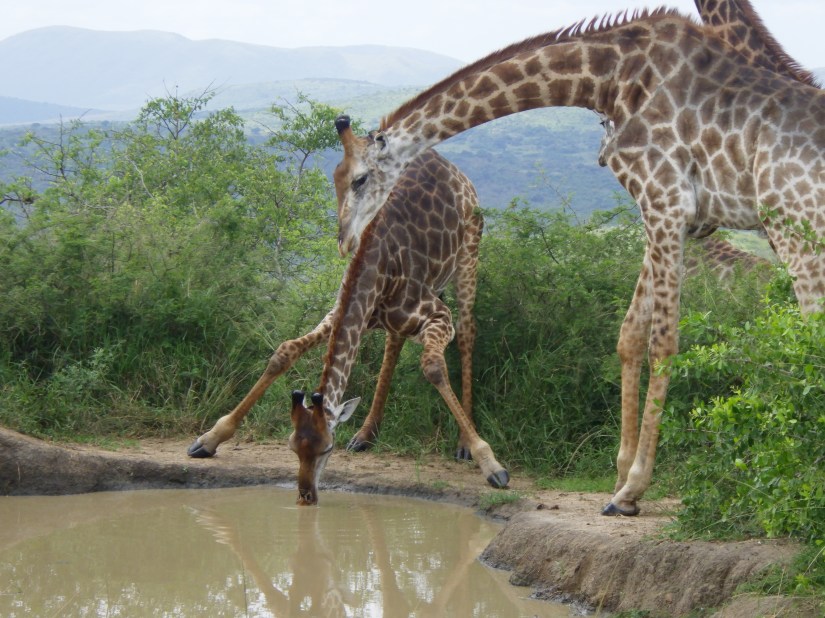
This massive swath of 240,000 acres is home to the free-roaming Big 5, known as Lions, Leopards, Rhinos, Elephants, Water Buffalo.  As well as springbok, nyala and kudu, impala, red duiker, wildebeest, warthogs, zebra, giraffe, wild dogs, hyenas, countless birds, reptiles and amphibians.       

The Big 5 are named so not for their size, but for the level of difficulty and danger to hunt them on foot.

We arrived at Hilltop Camp in the afternoon for a quick check-in and deposited our backpacks for our overnight stay.

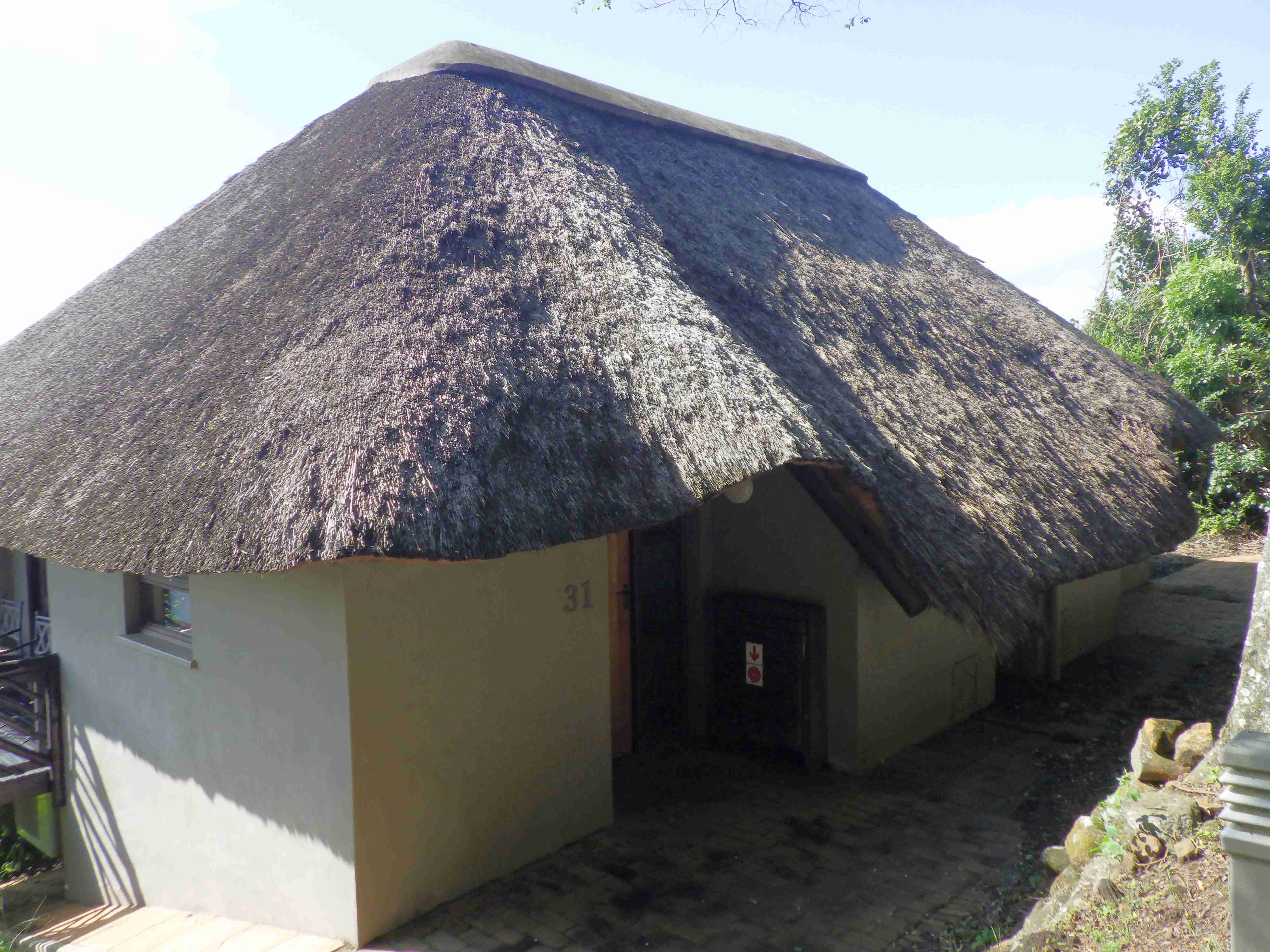
Each thatch roofed building housed two deluxe accommodations.  The spartan yet clean rooms featured original fixtures, woodwork and homemade cabinets.  Air conditioning units have been recently added. 

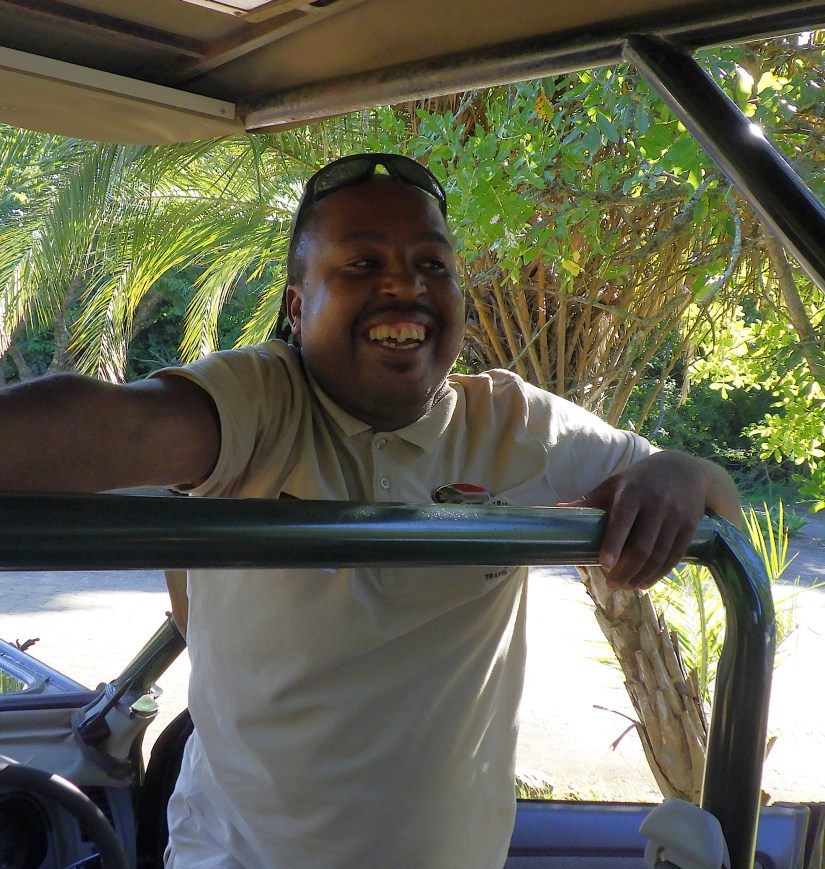
Minutes later, we met our local Zulu safari guide, who goes by “Happy Man”, a fitting moniker.  We boarded his sturdy open-air vehicle, leaving the camp pavement behind for the bush trails that wound through valleys and hills. 

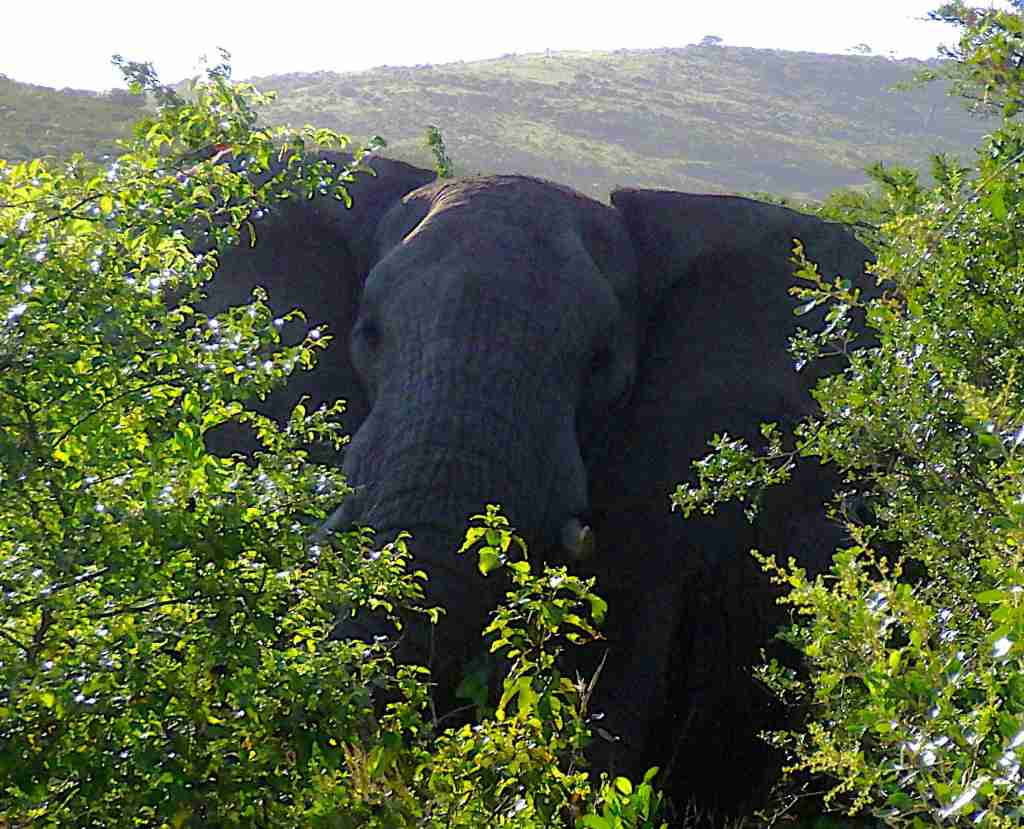
We never knew what might be lurking around the next corner or crest.  We were often surprised by elephants or rhinos, grazing just off the trail.  We were close enough to smell their musk and hear them chewing.  Our guide shared that because of his year’s extended wet season, it had resulted in more babies, and we saw many young ones across the breeds. 

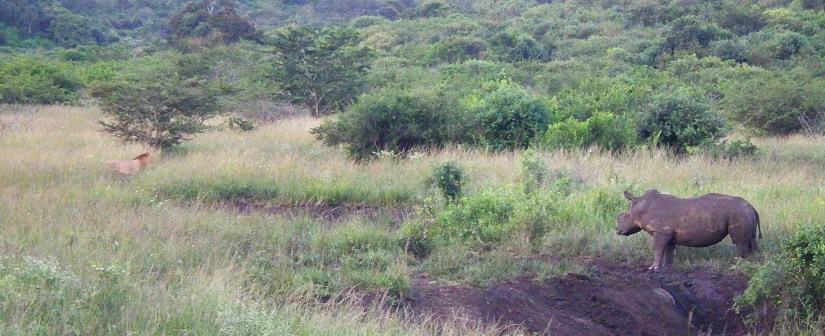
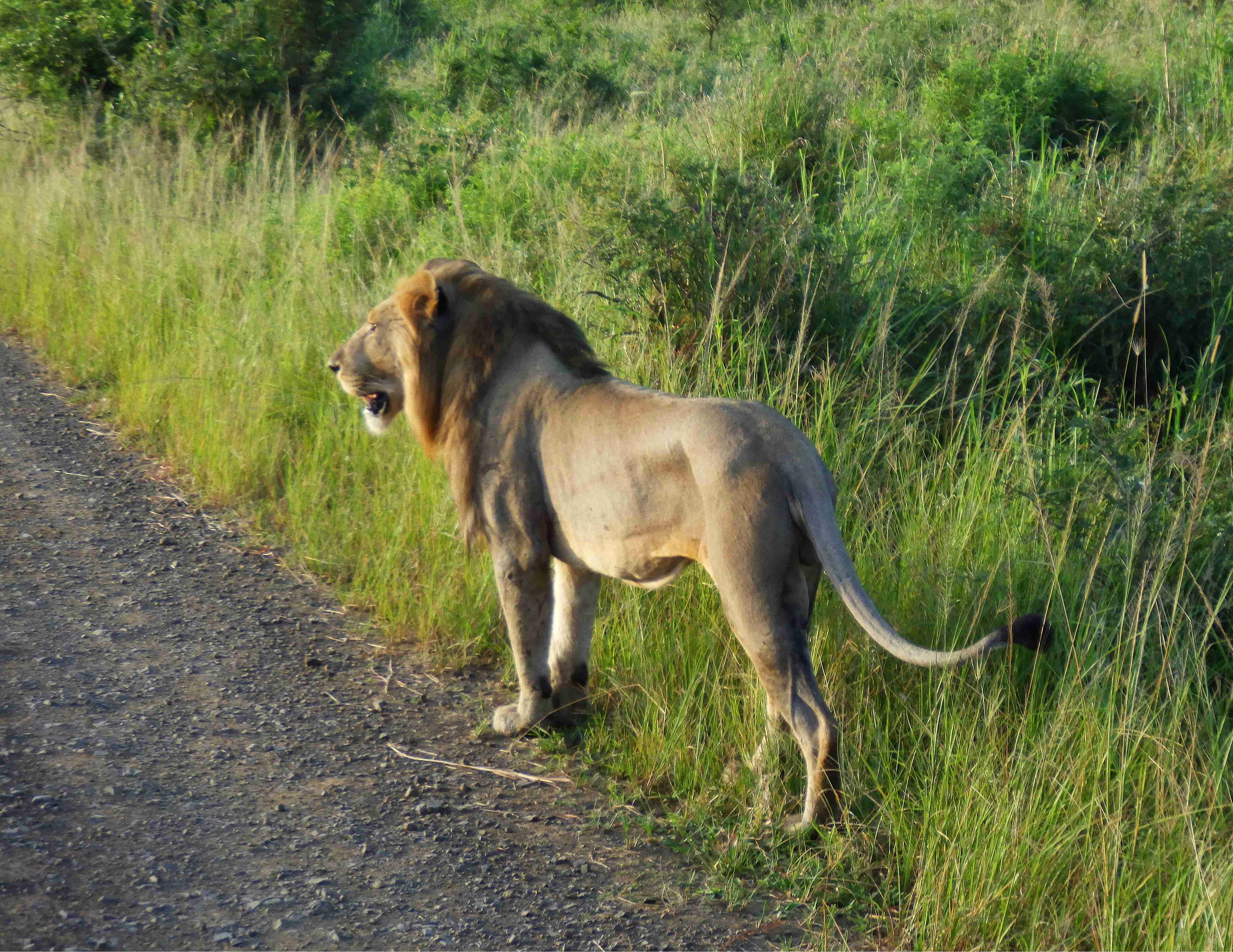
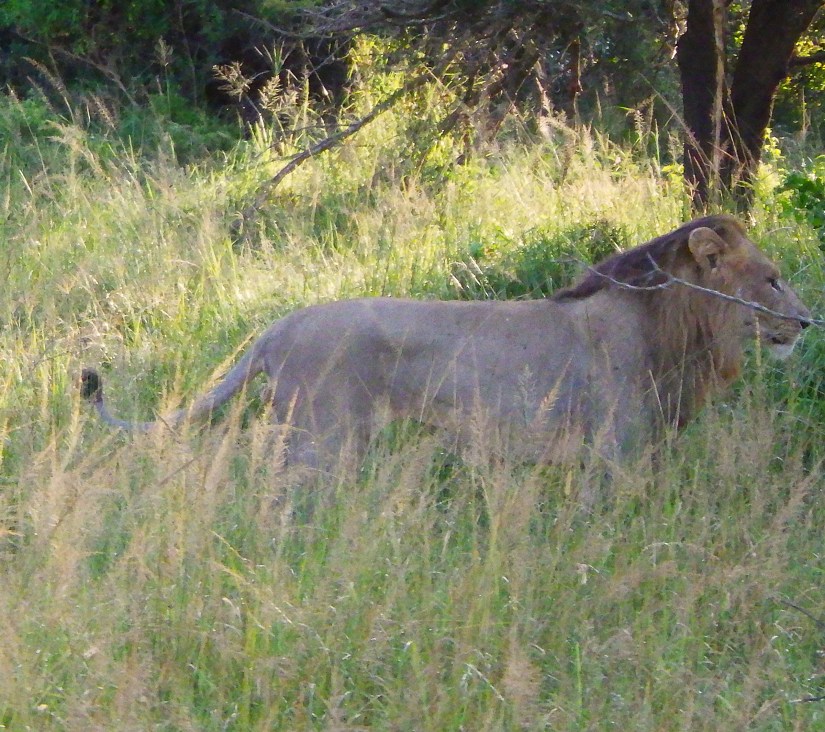
Catching the slight movements of grass, we watched as two male lions crept slowly across the field.  A resting rhino alerted and shifted position from prone to standing, eyes and ears tuned towards the approaching pair.  Our guide whispered that the lions would likely not attack the lone rhino. Not only are the males generally lazy (he said there are plenty of parallels in the human and animal kingdom!), but it’s typically the female lion who does the hunting, allowing the males priority to eat before dining herself.

During our four-hour game drive, we observed the transition from afternoon light to dusk to darkness. The shift revealed a fascinating change in animal behavior, from lethargic siestas to intense hunting or cautious evasion as predator and prey became more active. 

The darkness also brought a chill to the air as our vehicle bounced us back towards the lodge.  The constellations of the Southern Cross and Orion revealed themselves in the dark sanctuary sky.  Nearing almost 8pm, we opted for dinner immediately upon our return to Camp, saving showers for afterwards.   Local braii game meat platters and curries were offered, which we all ate hungrily.  I think we all may have been asleep before our heads hit the pillows.  

The Camp was chilly and shrouded in darkness as we climbed into the safari truck at 4:45 am.   We set off on our 4-hour morning drive, foregoing breakfast and coffee until later, with anticipation propelling us.  

Sunrise

The darkness seemed to make you more aware of the pre-dawn stillness. But at the first sign of dim light on the horizon, a nearby bird pierced the silence with its morning call, followed by others.  Nature’s alarm clock.  A new day begins in the wild.

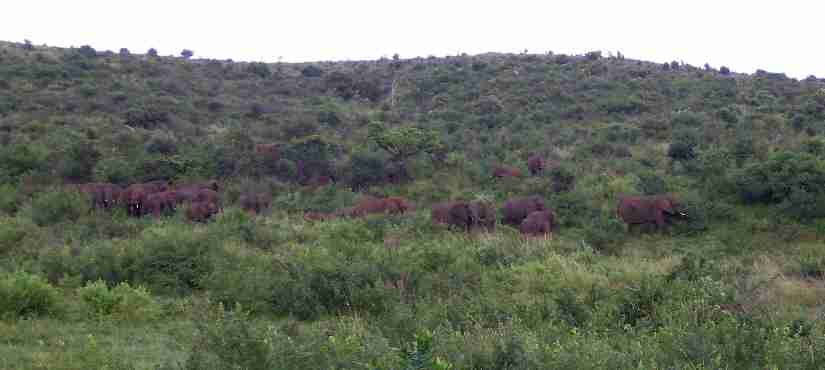
Leaving the nighttime safety of the high hills, a herd of elephants began their slow migration down to the watering hole.  Mostly females and babies, followed by the males who tussled over who would dominate today.

We came upon a male and female lion sauntering down the dirt road for several hundred yards before turning into the bush.  Happy Man continues to keep pace with them, 50 yards in the bush.  Suddenly, the lioness rockets after a warthog, with the lion sprinting behind.  The short burst is over in less than a minute.  The lioness missed and the warthog lives another day.   

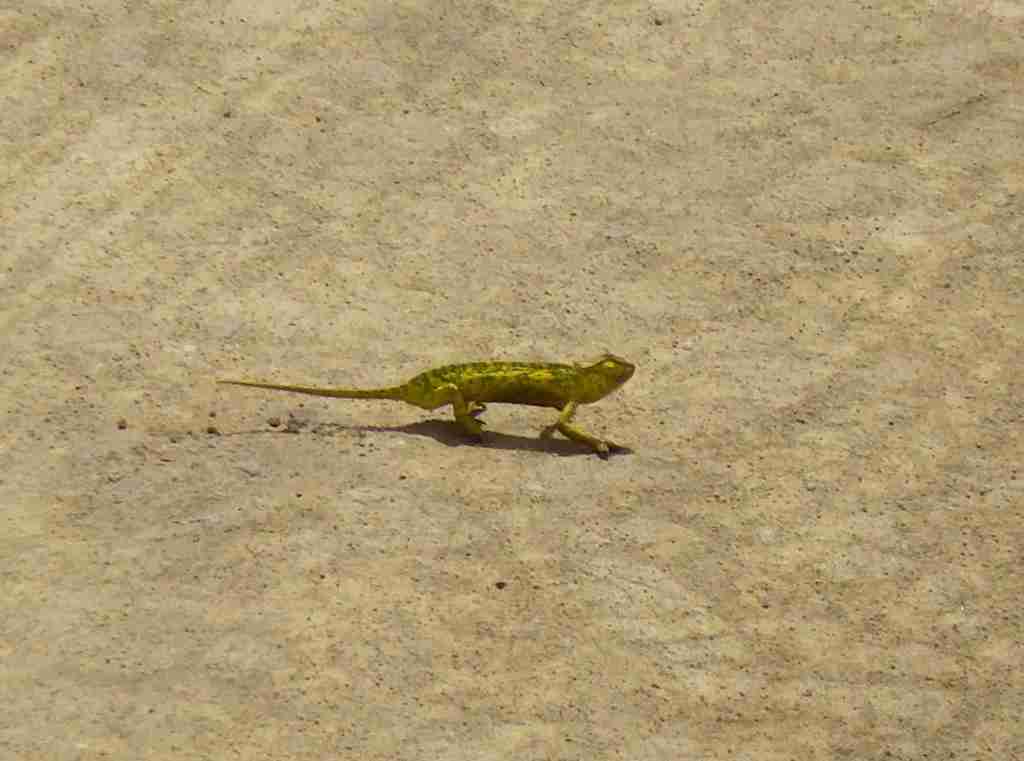
Our relatively short safari was long on experiences and sights of so many beautiful animals.  During the four-hour drive to Durban, we collectively recalled and listed the various species and breeds observed, which amounted to a total of 32 animals, birds, or reptiles (even a chameleon!). 

Our merry band of travelers were content to return to Zuiderdam for welcomed long, hot showers. And I was grateful to have two sea days to cull through the too-many photos I took!

Table Mountain was shrouded in the low hanging clouds and rain fell on our decks as we entered the Port of Cape Town, South Africa. Zuiderdam found her pier where she’d stay for 2 days, bringing on reprovisions, supplies and fuel, while the rest of us played ashore. 

Table Mountain

Only an hour from the port, the mountainous and scenic Stellenbosch is home to award-winning vineyards and orchards.   Visit Stellenbosch – Official Stellenbosch Tourist and Information Centre   Our group of six met Cedric, a private guide, who was impressively knowledgeable in viticulture and winemaking, and supplemented our drive with his expertise.

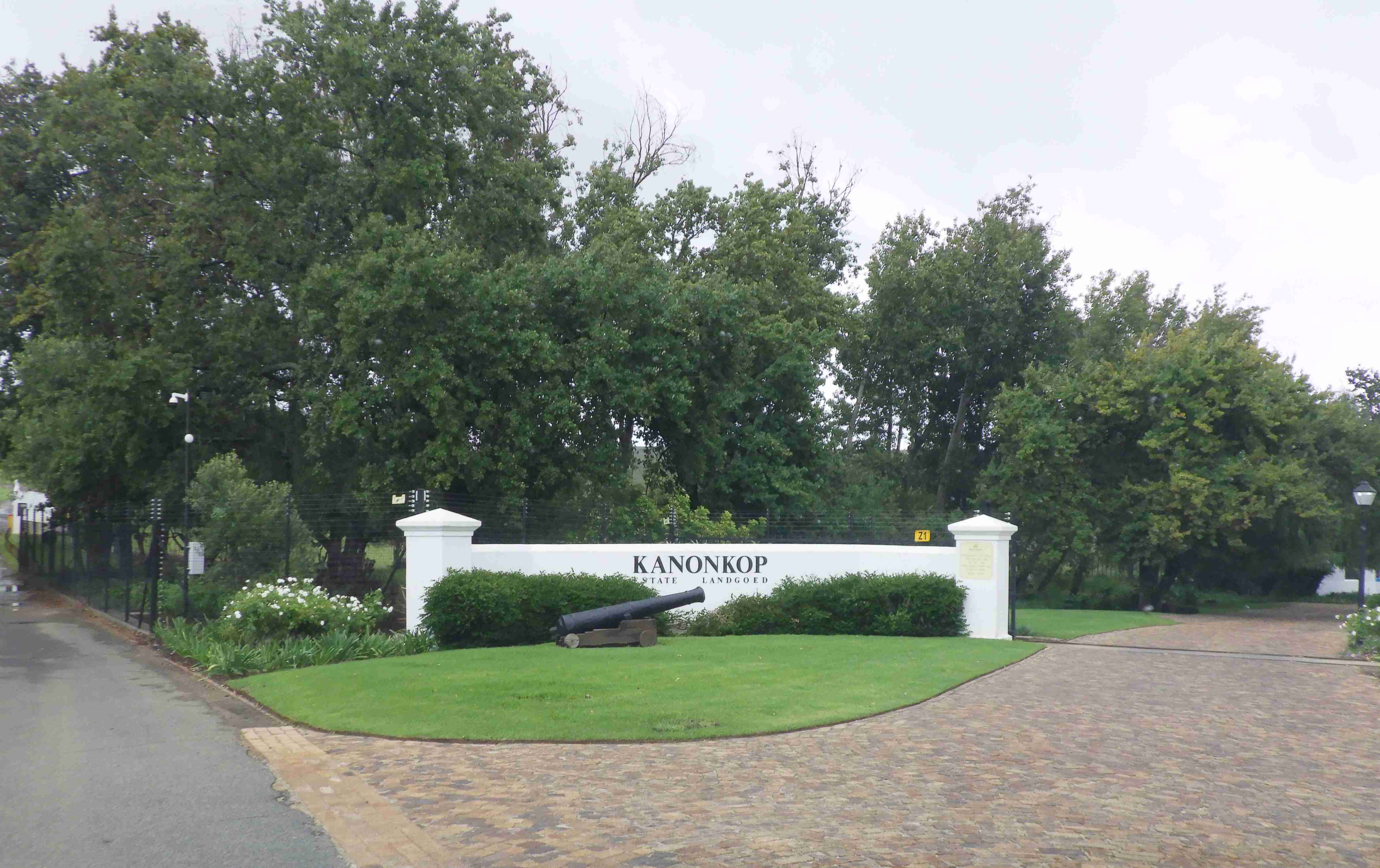
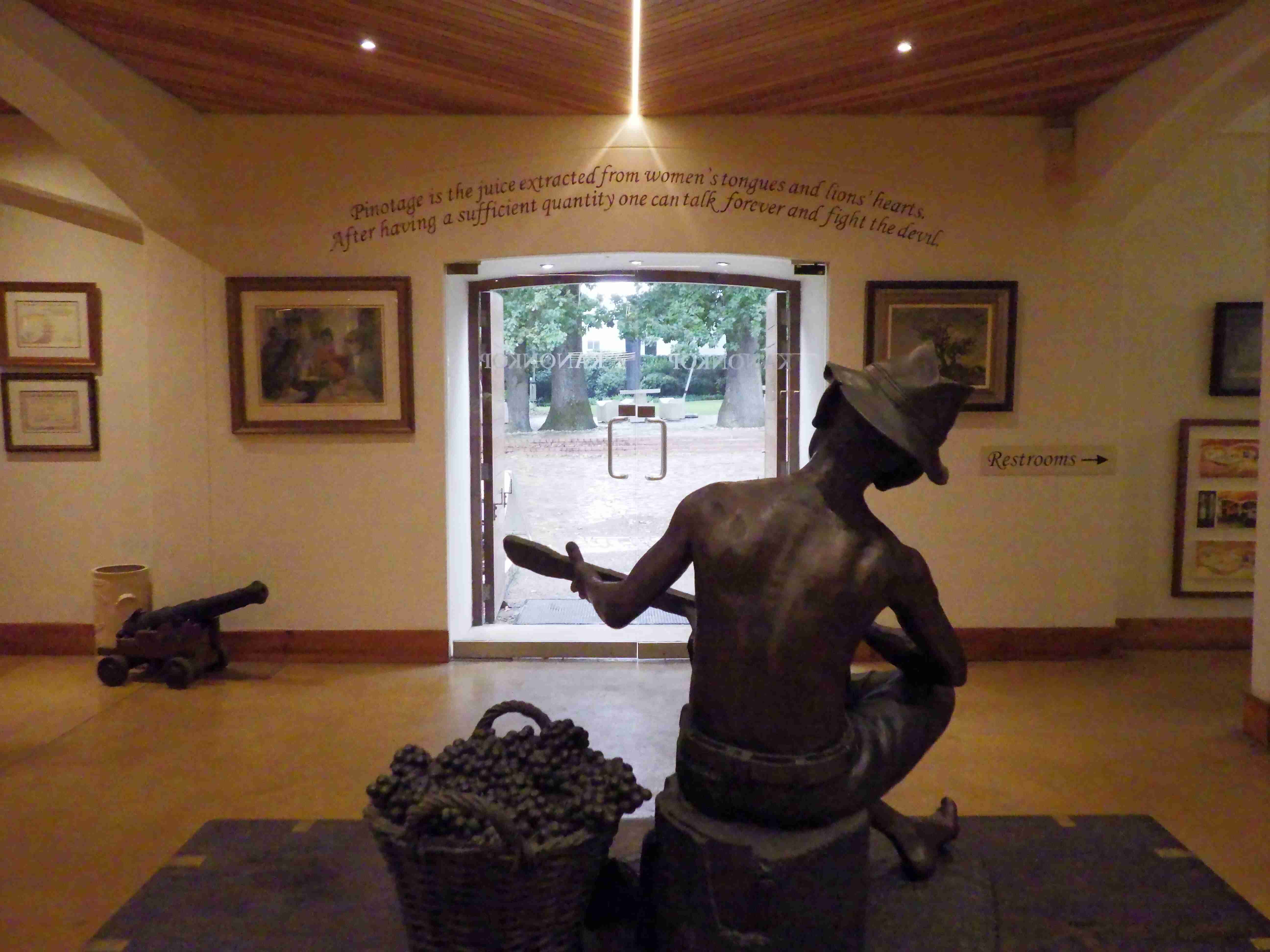
Our first visit was to Kanonkop, a 4th generation family owned wine estate.  We watched their classic approach to wine making, including yeast inoculation with manual punch-downs every two hours during fermentation to ensure optimum tannin and color extraction. 

Manual punch downs are done with long poled tools to circulate the ‘mash’

Further afield, Cedric’s van climbed the muddy track leading to Rainbow’s End Wine Estate with its stunning views.  The rain had begun to abate, and the clearing clouds afforded us a peek at majestic Jonkershoek Mountain. 

Rainbow’s End Wine Estate beneath Jonkershoek Mountain

For lunch, we enjoyed a South African favorite of “Bobotie” at the Stark-Conde Winery.  Reminiscent of Shepherd’s Pie, it is a baked dish of curried minced beef and turmeric rice topped with a bay leaf infused custard on top.  It was served with tomato and onion salad and homemade chutney.  Delicious! 

Bobotie…what’s left of it!
The beautiful landscape of Stark-Conde Wine Estate

For dessert, the Waterford Estate offered us chocolate and wine pairings. 

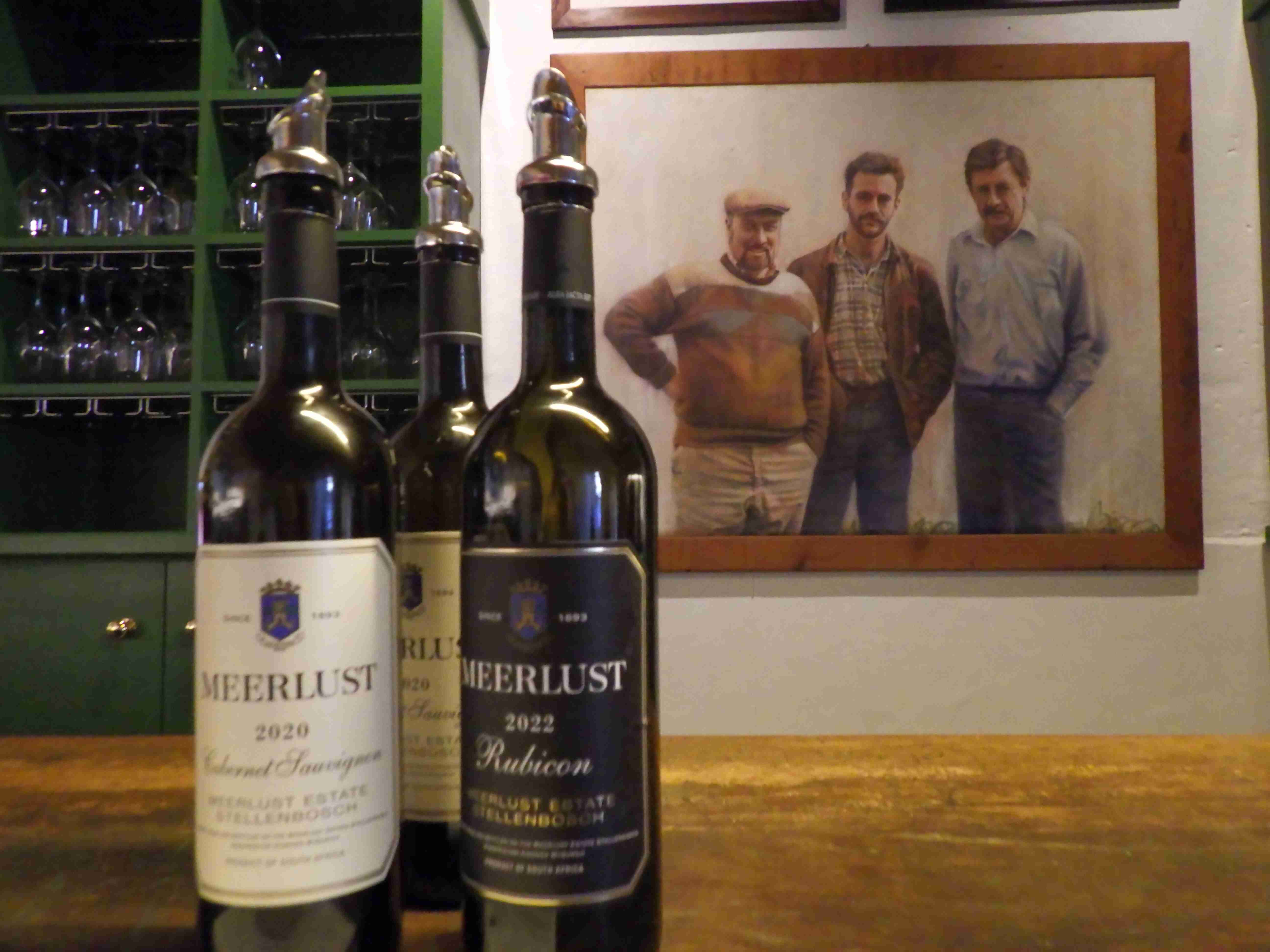
Maybe saving the best for last, the Meerlust Wine Estate established in 1756, gave us a taste of their renowned Rubicon Wine. 

The lovely, historic Manor House of Meerlust Wine Estate

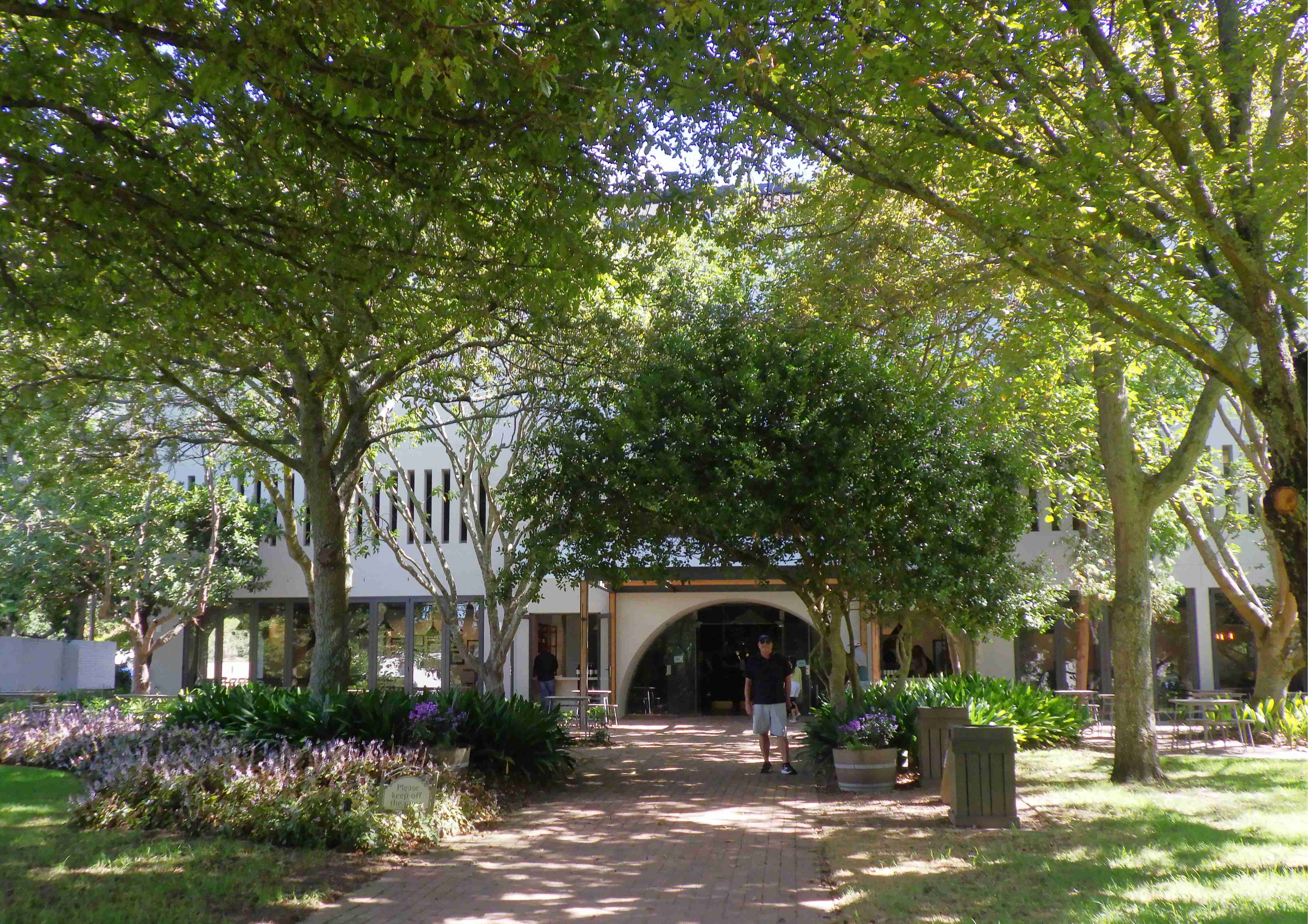
Back to the port, we strolled around the lively at V & A Waterfront, finding local tribe dancers, shopping, art galleries and restaurants along the marina.  The perfect place to people watch as the sun set.

Performing tribal dancers with Table Mountain in the distance

We awoke to our second day in Cape Town filled with sunshine and temperatures in the mid 70’s.  A perfect day to tour the vast area via Hop On Hop Off Sightseeing bus. Our morning route took us through downtown’s Long Street, the convention center, the historic Mount Nelson Hotel, District 6, gorgeous views of Devil’s Peak, the Kirstenbosch Botanical Gardens, and the University of Cape Town.  

Devil’s Peak
The University of Cape Town

For lunch, we had a delicious outdoor lunch overlooking the picturesque landscape of Groot Constantia; my favorite King Klip fish and mussels for Tom. 

The scenic afternoon route encircled Table Mountain and the Twelve Apostles, giving every angle imaginable of this prominent landmark. 

The Twelve Apostles

The coastal beauty and upscale neighborhoods of Hout Bay and Camps Bay are great places to linger, so we found a café overlooking the beach to soak it all in.

Continuing onward were residential areas of Clifton, Bantry Bay, Sea Point, Three Anchor Bay, Mouille Point, past the Cape Town stadium and finally, back to the port.   

We were glad to have two days in Cape Town, and yet still there is so much more to see for next time!

Fifty miles offshore of Walvis Bay, Namibia, we awoke to thick fog surrounding Zuiderdam and hear  her bellowing horn every 3 minutes.   Playful seals escorted our ship for remaining miles as we neared the harbor entrance for our 11am expected arrival.  By the time we docked, the fog had lifted, and spotty areas of blue sky were peeking through. 

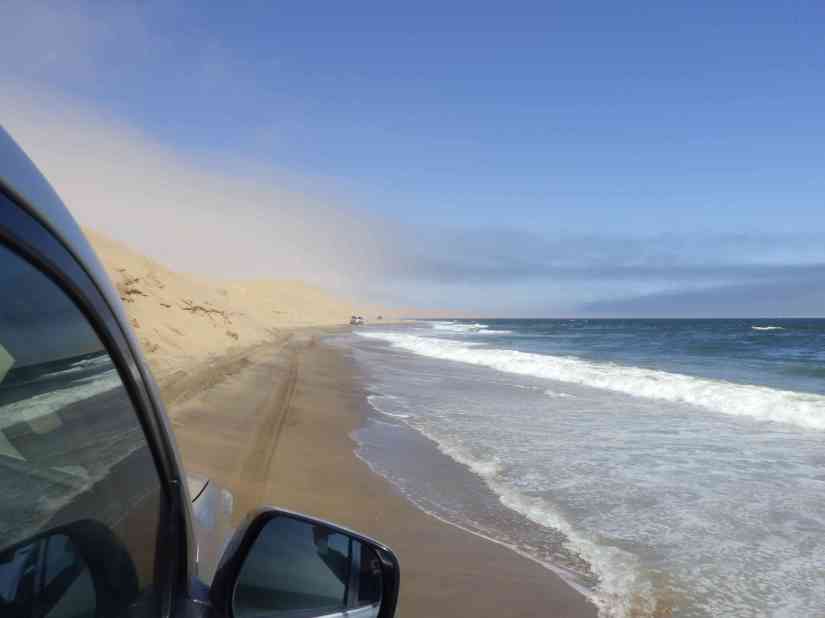
We had such a great time here last year, that we couldn’t wait to contact John “Robby” Robinson once again for another Sandwich Harbour dune experience in the Namib Naukluft Park.  Nine of us met him and fellow drivers Glenn and Hennie to follow the shoreline 50 miles to the sweeping dunescapes of Namibia.

It is the only place on Earth where towering dunes plummet straight into the ocean.  At low tide, the exposed beach area in front of the dunes is just wide enough for a vehicle. The perfect place to celebrate Tom’s birthday today!

Leaving the suburban neighborhoods of Walvis Bay behind, we transit through the vast, pink salt lakes and flats. Walvis Bay alone produces over 900,000 tons of salt annually. 

South of the salt flats, the coastal shore is a marine sanctuary teeming with flamingos, cormorants and grebes.  An occasional seal rests on the beach.

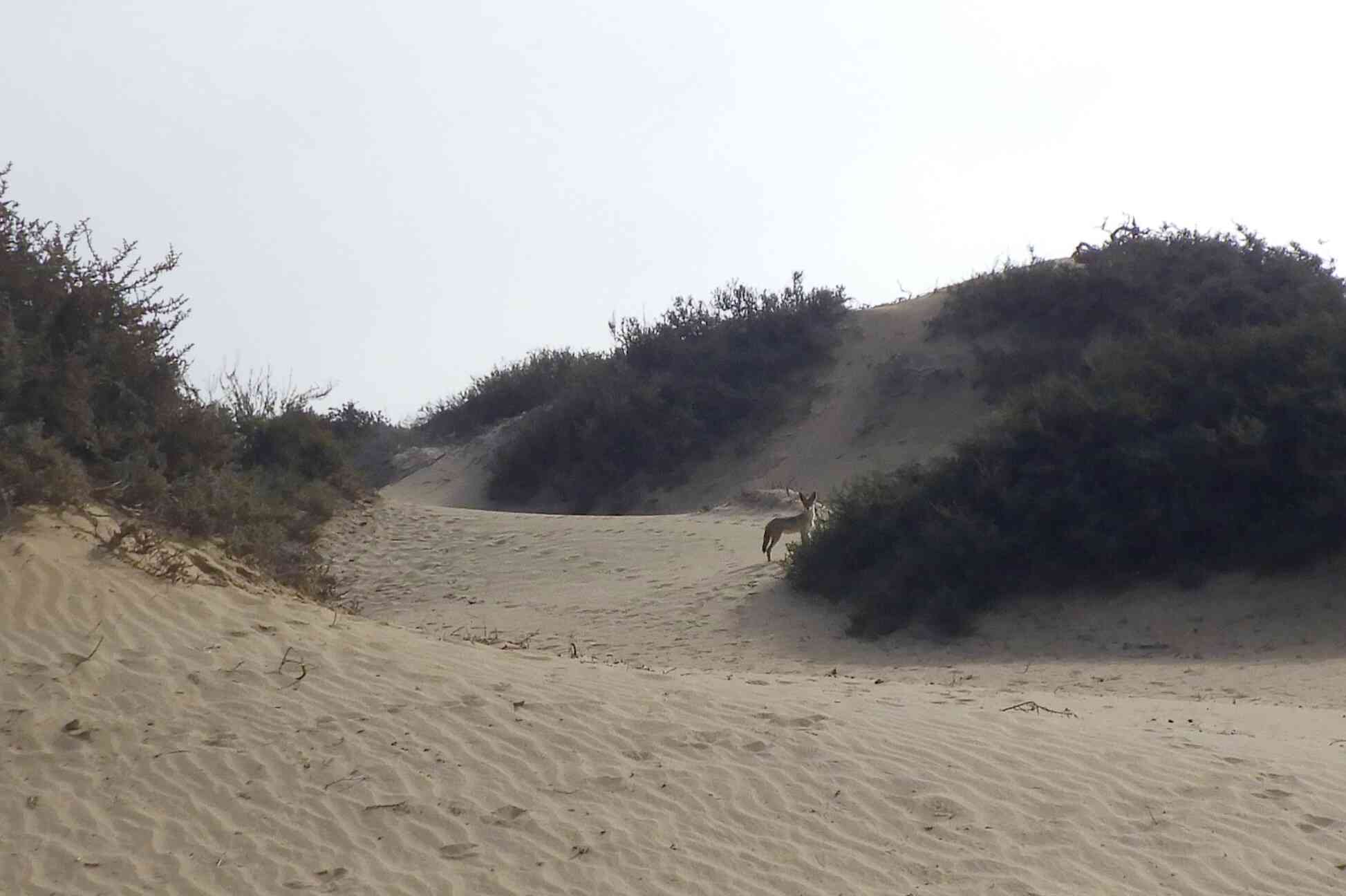
From there, the topography begins to change.  Small mound dunes and scrub vegetation provide home to our sightings of oryx, springbok, jackal and even a shovel-snouted lizard. 

If you’re wondering (like us) how this vegetation grows in the desert, Hennie shared that there is actually fresh water beneath these sand dunes from natural underground aquifers.  Water seeps through the dunes creating a unique wetland ecosystem, despite the arid desert surroundings and supports vegetation and wildlife in the area.

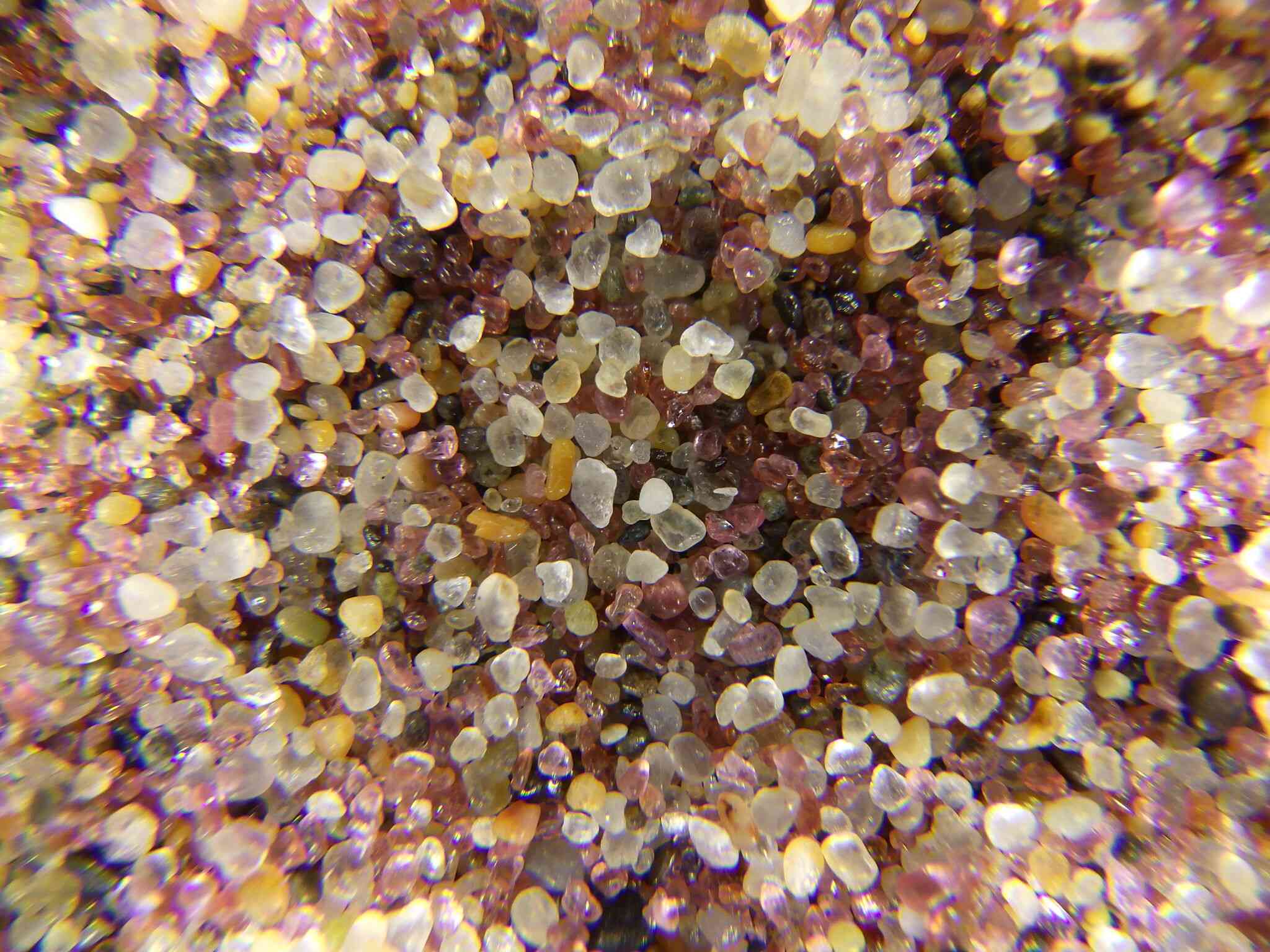
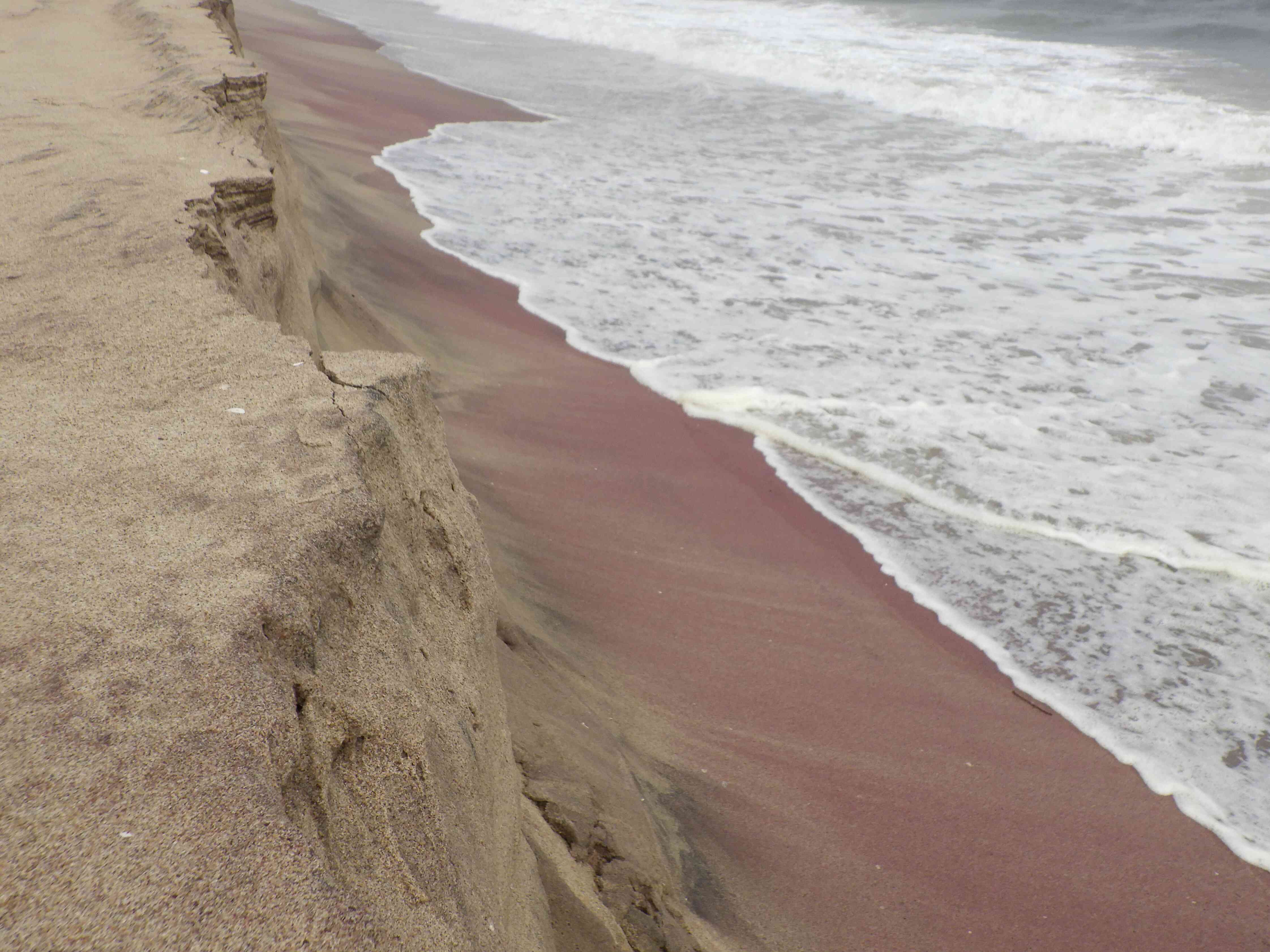
And taking a closer look at the sand in Sandwich Harbour (macro photo below), we found that it reveals a kaleidoscope of colors!   Minerals like dolomite, sodalite, quartz, feldspar and mica, as well as iron oxide, which gives the sand its reddish hues.   The heavier iron oxide remains settled in and near the shoreline, and the dune becomes more golden in height.

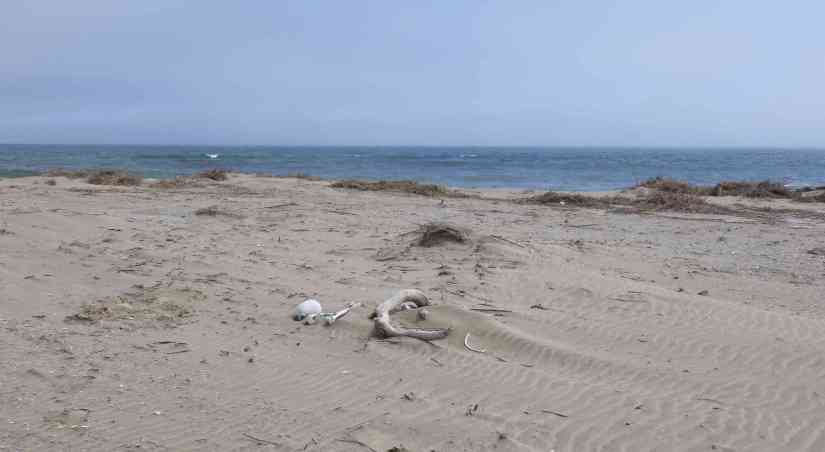
Maybe the biggest surprise was coming across a human skull and bones being uncovered by the wind.  Hennie explained that they were from old burial grounds. The Park had been contacted to ask whether they should be reburied, but the reply was no, that they would allow nature to take its course.    

Human skull and bones

But all that science aside, the most thrilling thing about the dunes is riding them like a roller coaster! 

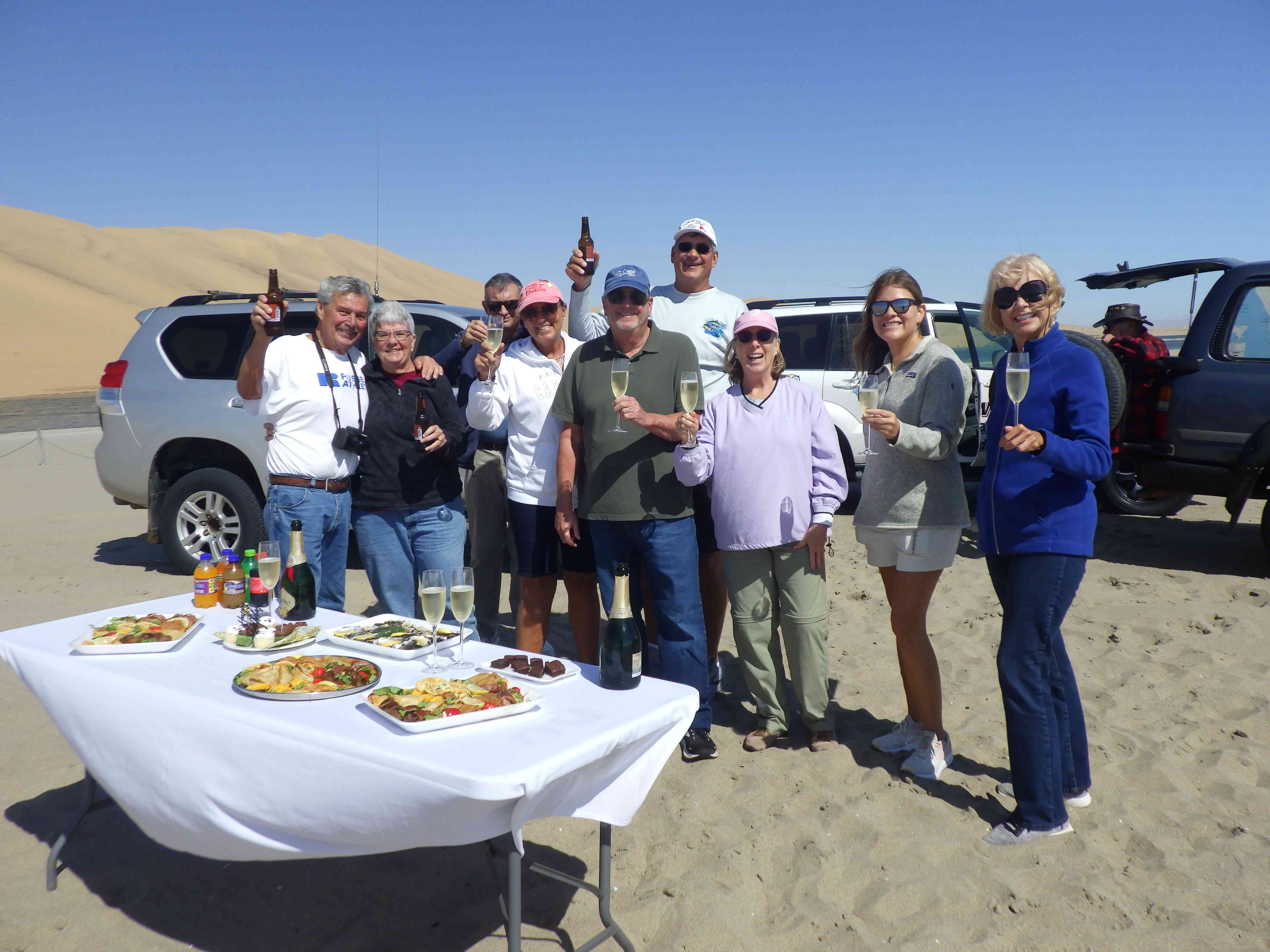
Back down on the windswept beach, our guides quickly set up an ‘elegant’ lunch complete with oysters on the half-shell, grilled fish, chicken, quiche, oryx kabobs, sausages, spring rolls, sweets and champagne.  They even brought Tom birthday cupcakes!  –what a birthday celebration it was!

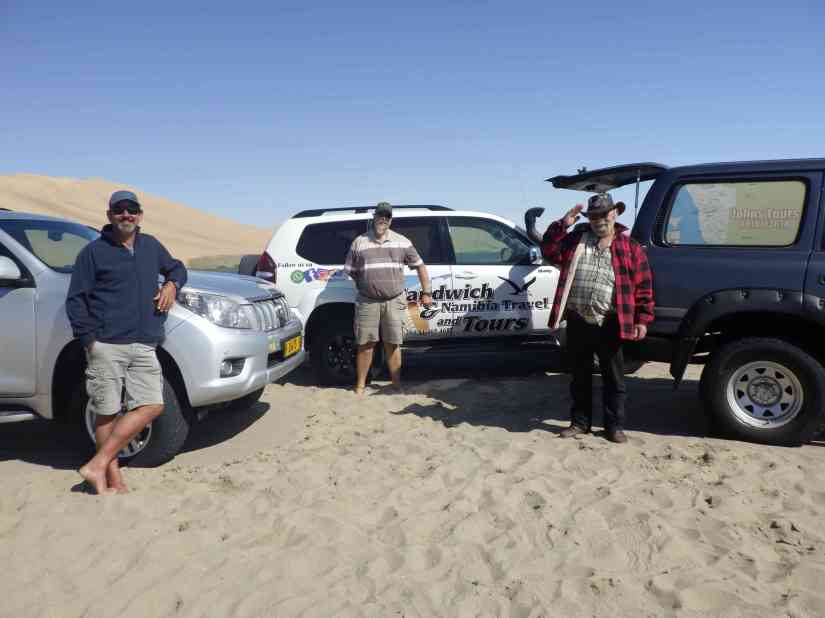
Robby, Glen and Hennie expertly navigated the shifting sands, knew when to accelerate and kept an eye on tides to allow our safe return.  We thoroughly enjoyed the beauty, adventure and Tom’s birthday celebration in Namibia! 

Our skilled drivers Hennie, Glen and Robby

For spectacular aerial photos and more information on the dunes:  https://www.sandwich-harbour.com/

From here, Zuiderdam will navigate 3,100 miles over the next six days at sea to reach the Cape Verde and Canary Islands before turning inland at Gibraltar to explore the Mediterranean.  Stay tuned!
2025 World Cruise, Cruising, Travelogues

Leg 6: Sri Lanka & Islands of the Indian Ocean

Sri Lanka, once known as Ceylon, is an island nation of 22 million people located off the southeast coast of India.  Zuiderdam docks in Colombo, the capital and largest city, for our days visit. 

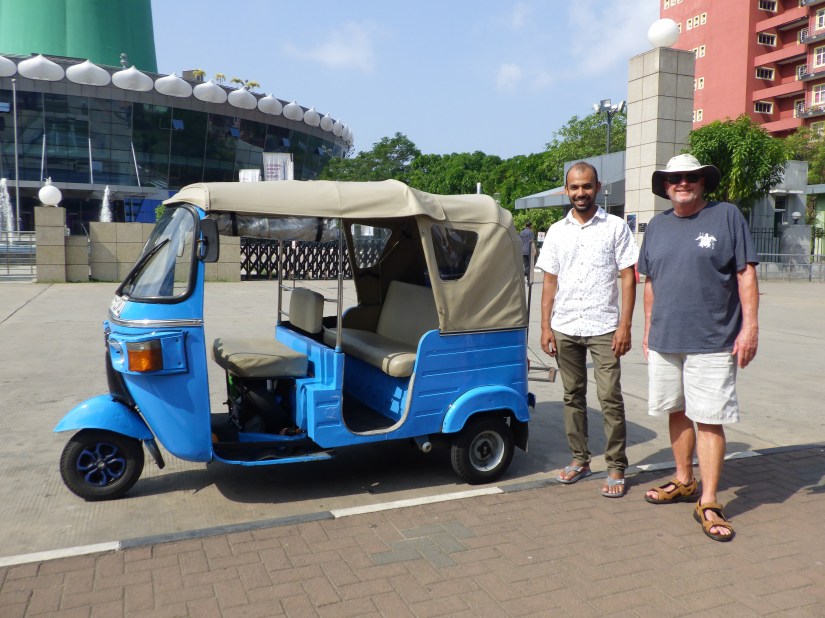
We pushed through the barrage of taxi and Tuk Tuk drivers at the port gate, who were tenaciously offering tours.  Anticipating this from previous visits here, we had pre-arranged a private, 4-hour Tuk Tuk tour via Viator.com. Our driver, Obama, was waiting for us at the Kingsbury Hotel at 9am and took us around the entire city; old and new. 

Tuk Tuks are a primary mode of transportation in this part of the world

A Tuk Tuk ride is a wonderful experience; adventurous, stinky, noisy, and exhilarating, especially amongst the tight quarters of trucks, motorcycles carrying 4 people, scooters carrying cages of chickens, etc.  What better way to soak in the sights, sounds and smells of this boisterous city.

This video will give you a glimpse of our navigation through the marketplace:

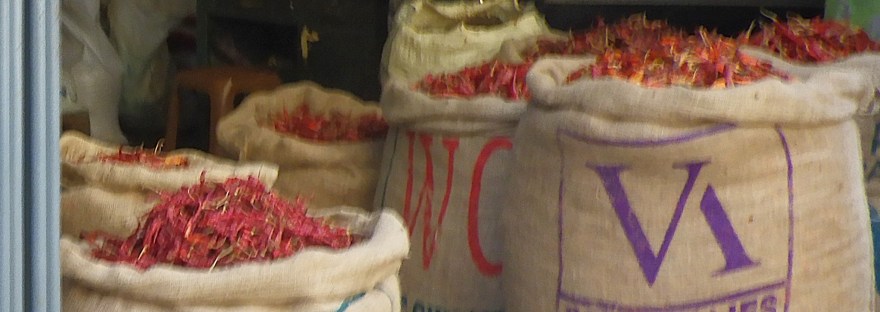
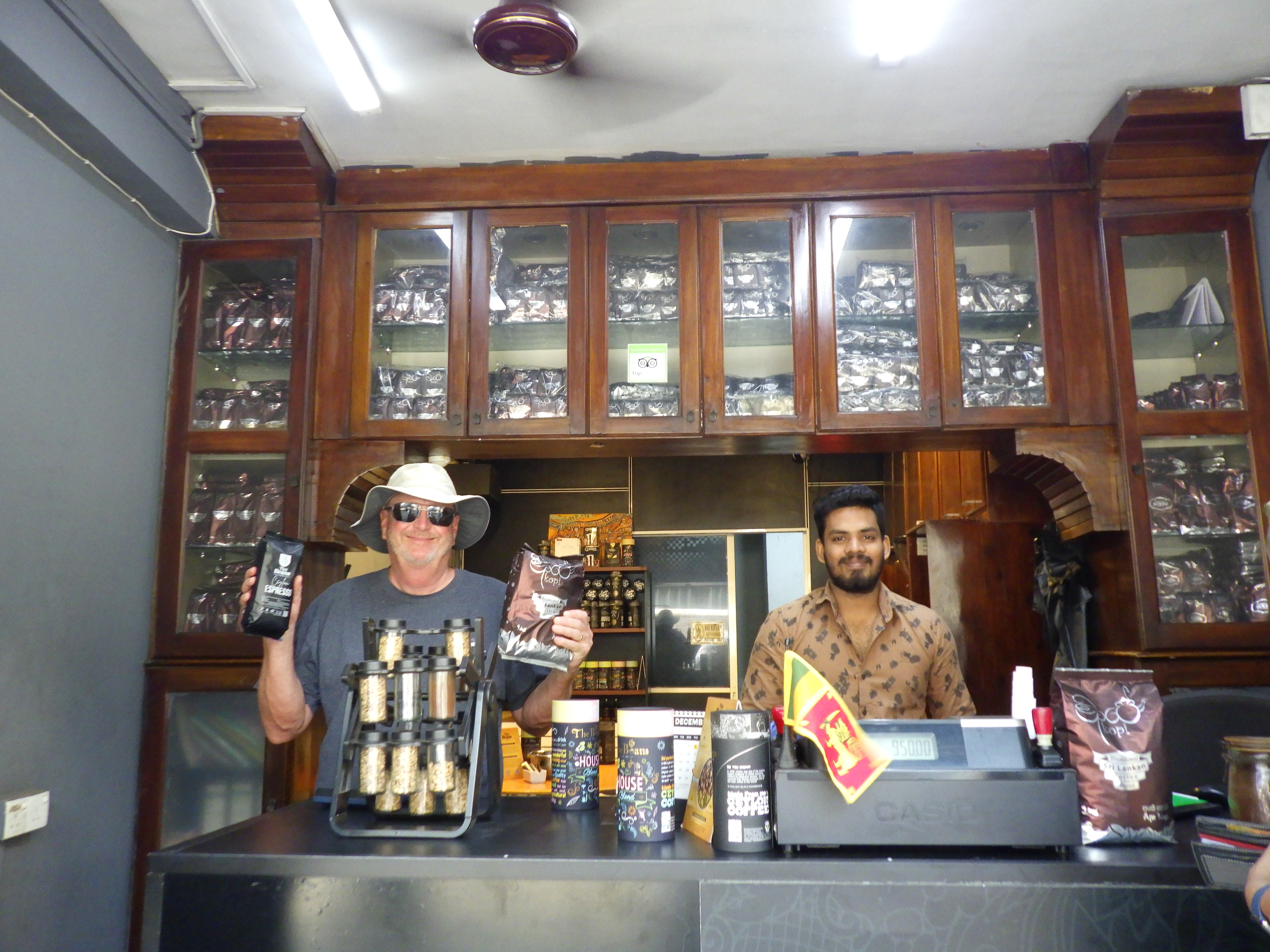
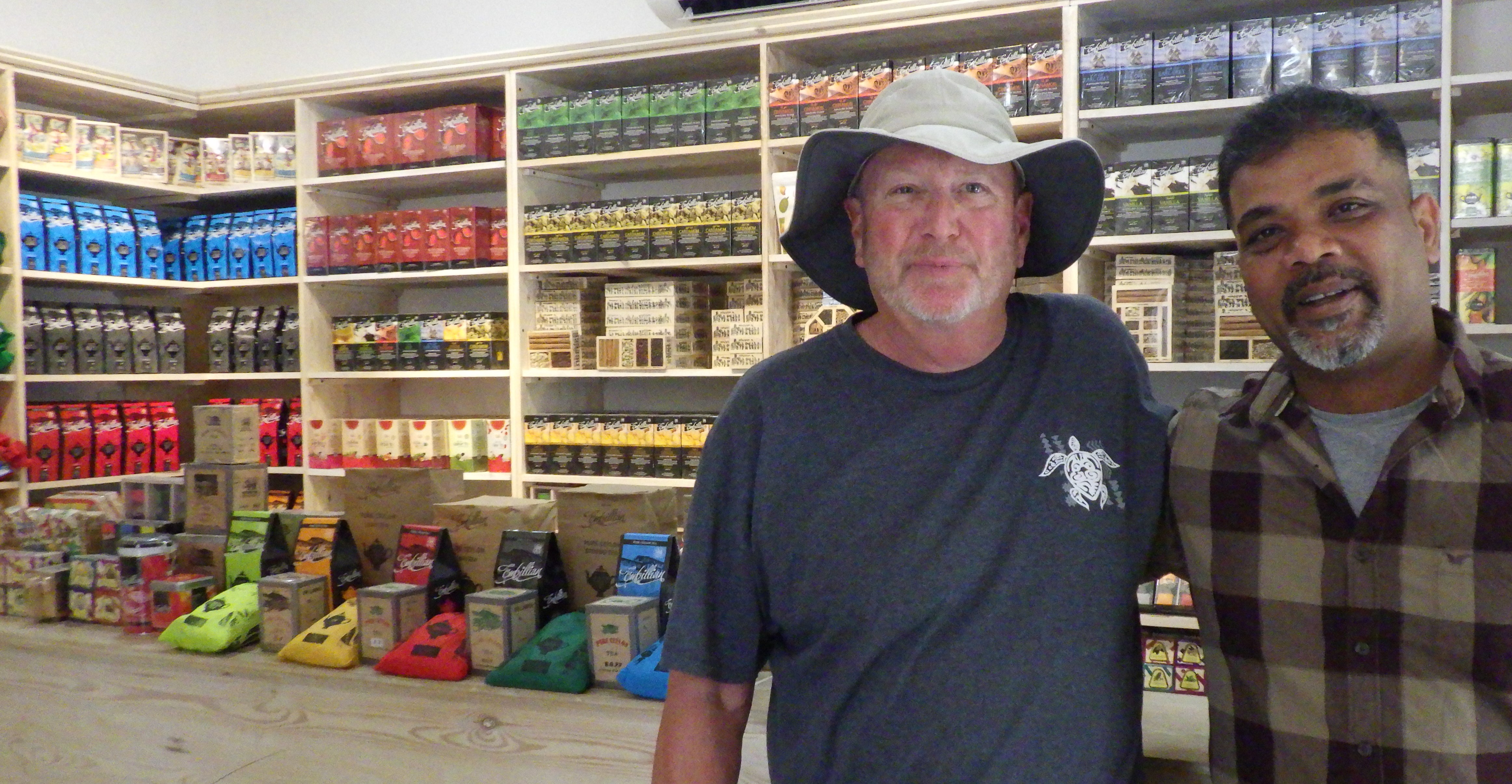
Along the way, we drank fresh coconuts, enjoyed coffee tastings (Arabica, Robusto, and a local favorite, ginger coffee) as well as Ceylon tea tastings (white, golden red, soursop, mango and spice).  And no market visit would be complete without a stop at a spice vendor.  Cinnamon is native to Sri Lanka, and one of the many spice exports. 

Locals with monkeys on a leash, snake charmers…yes, they are a real thing at tourist spots here.  

The smog of the city hangs in the morning air, as the temperatures reach almost 90.  Traffic lanes are merely a suggestion to the wide variety of moving vehicles and horns are tooted liberally and often.

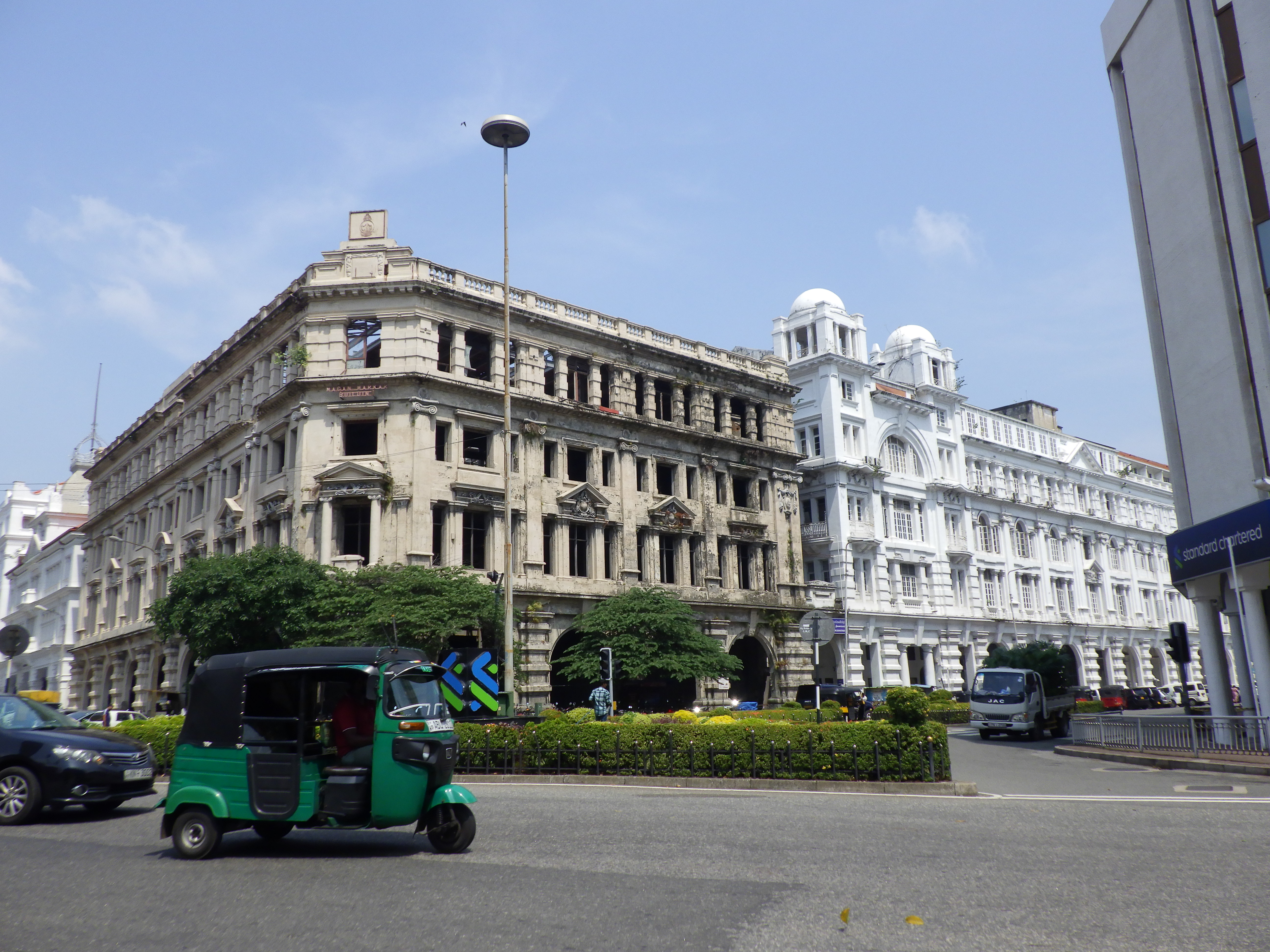
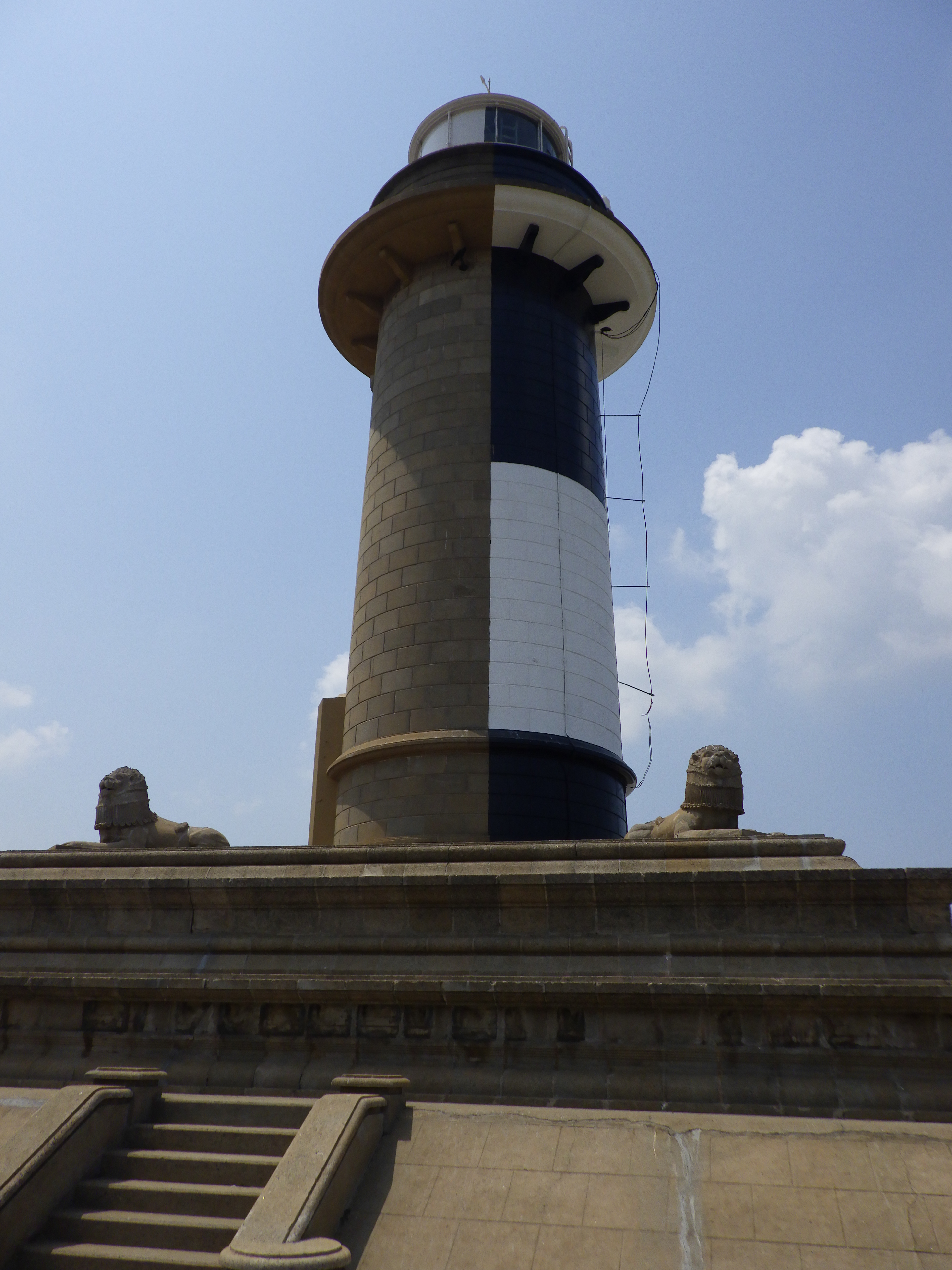
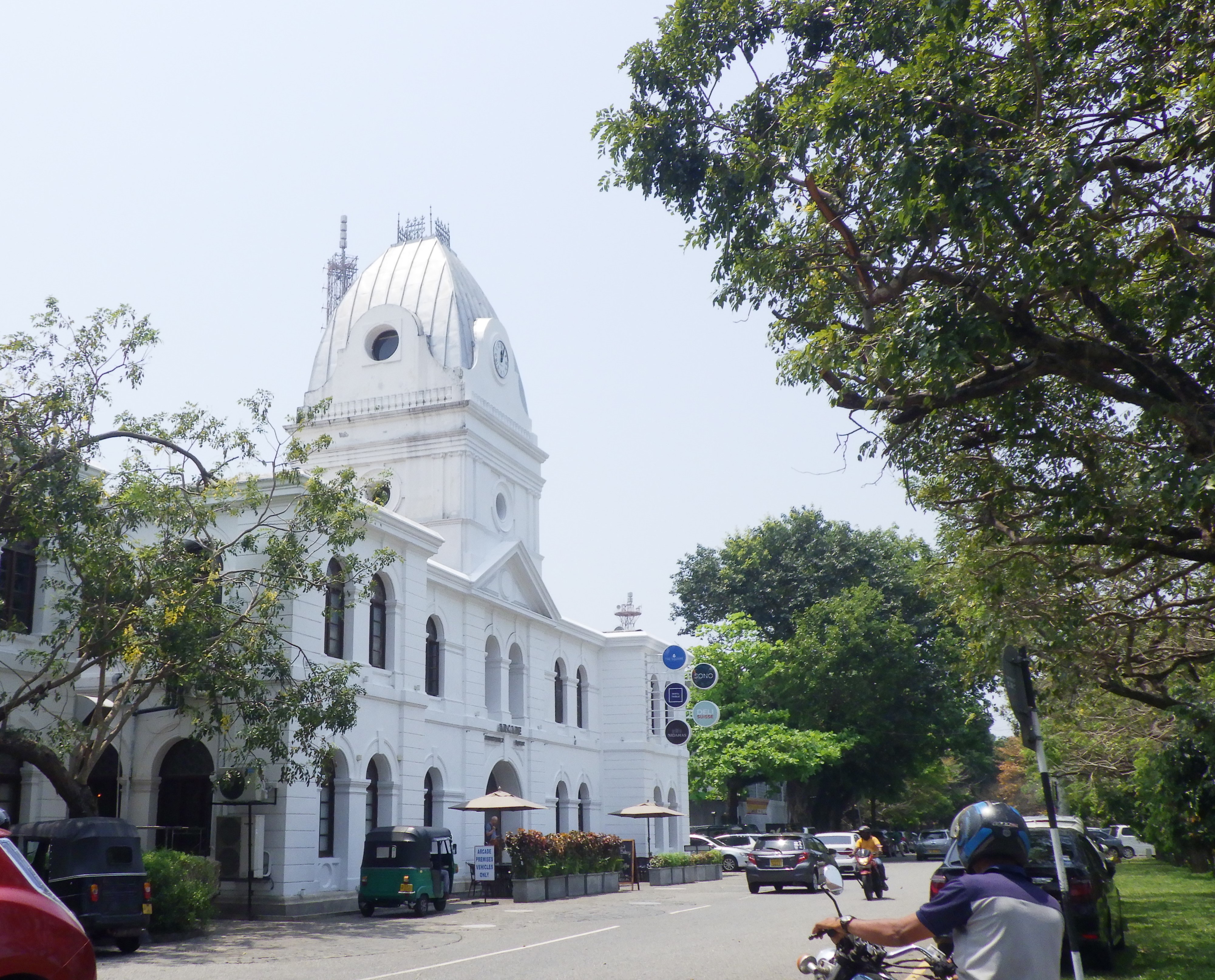
Popular sites on our route included the Old Parliament Building, Independence Square, Viharamahadevi Park, Clock Tower, the floating Pettah Market, the Lotus Tower, Beira Lake, the Manning Market, the lighthouse, the maritime museum and many more.  

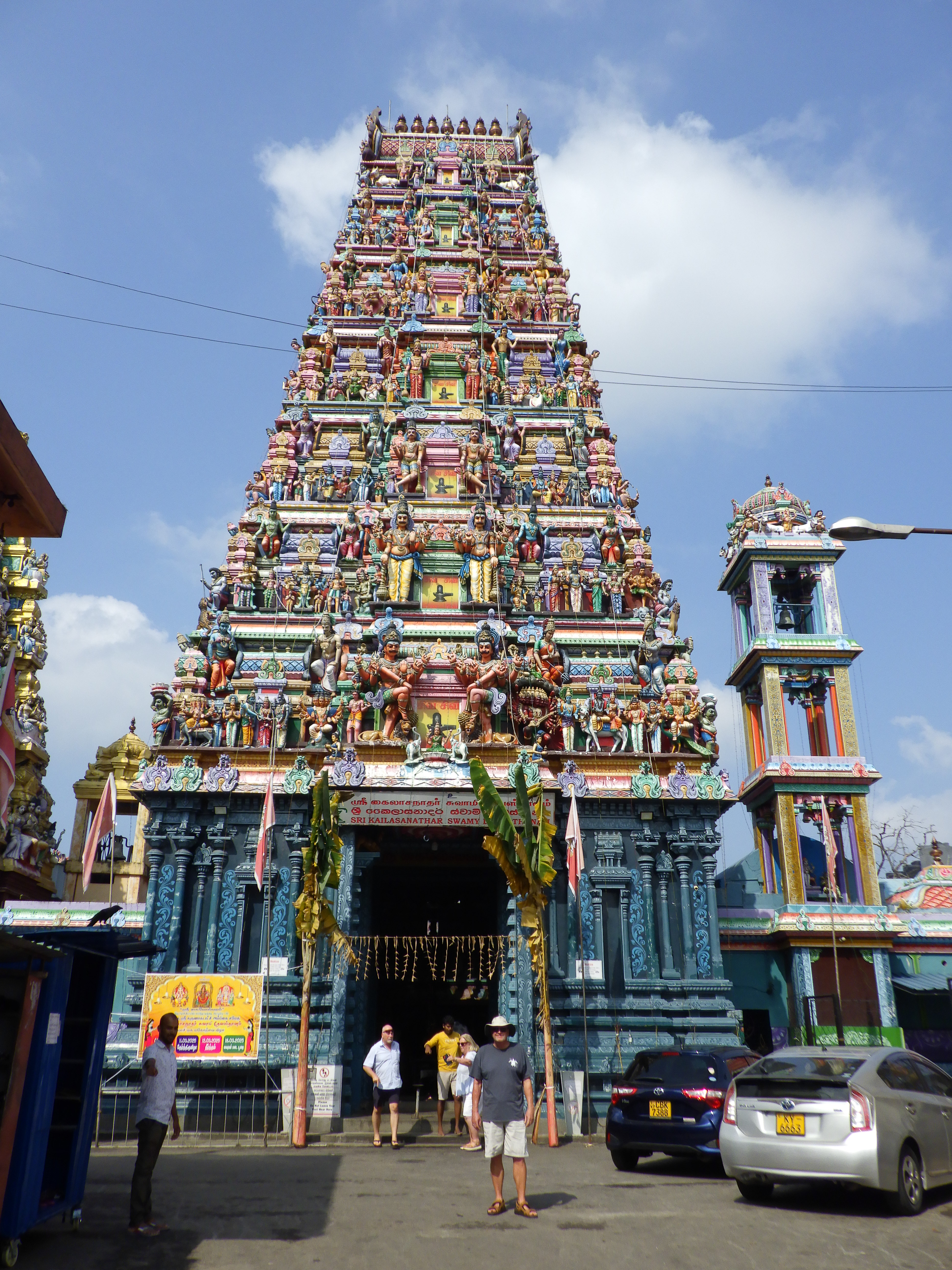
There are many temples, shrines and mosques throughout the city, providing sanctuary in this bustling city.  Buddhists form the majority here, but Muslims, Christians and Hindus also call Colombo their home. Below, is the Sri Kaileswaram Temple, the oldest Hindu temple in Colombo:

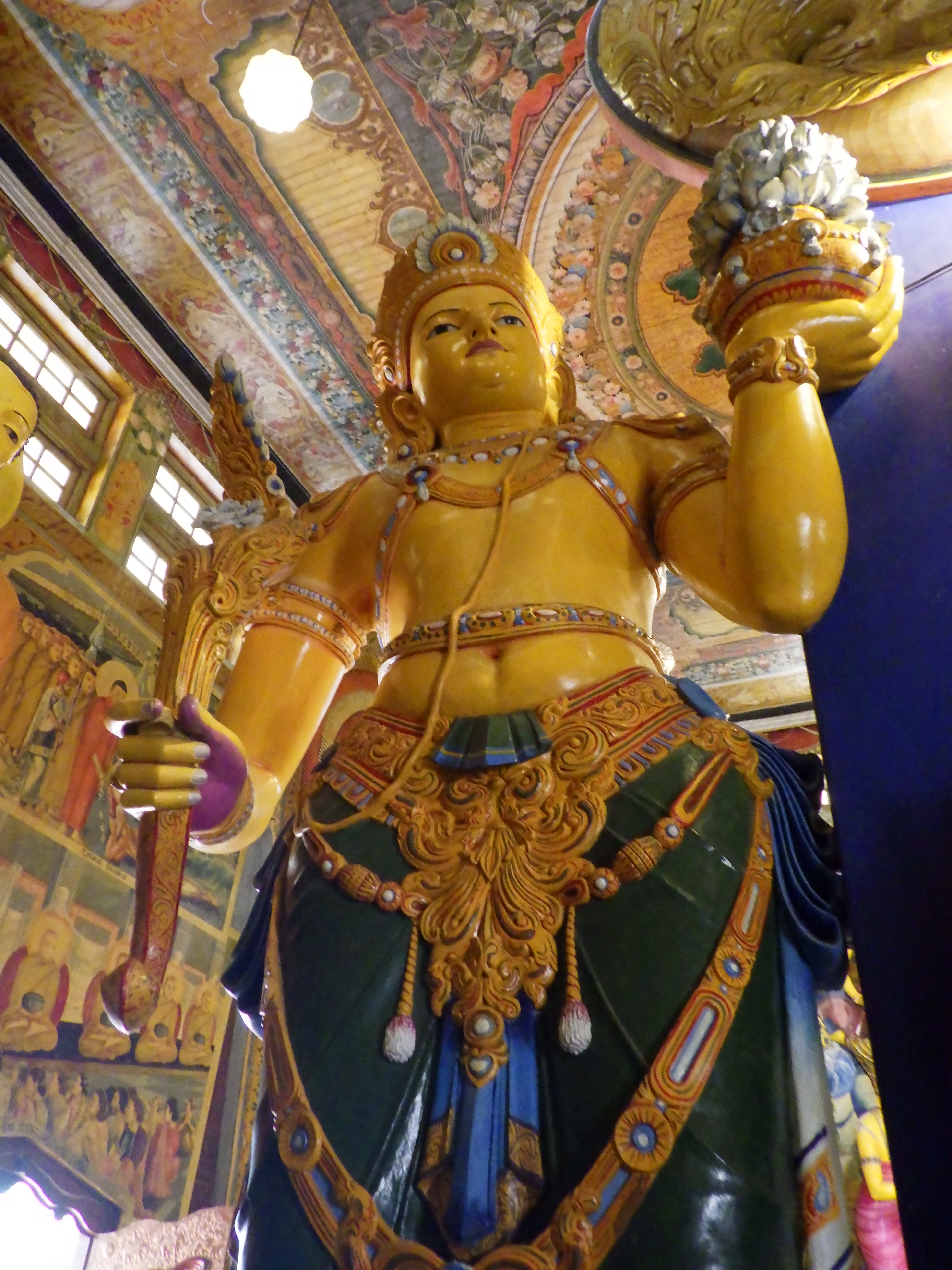
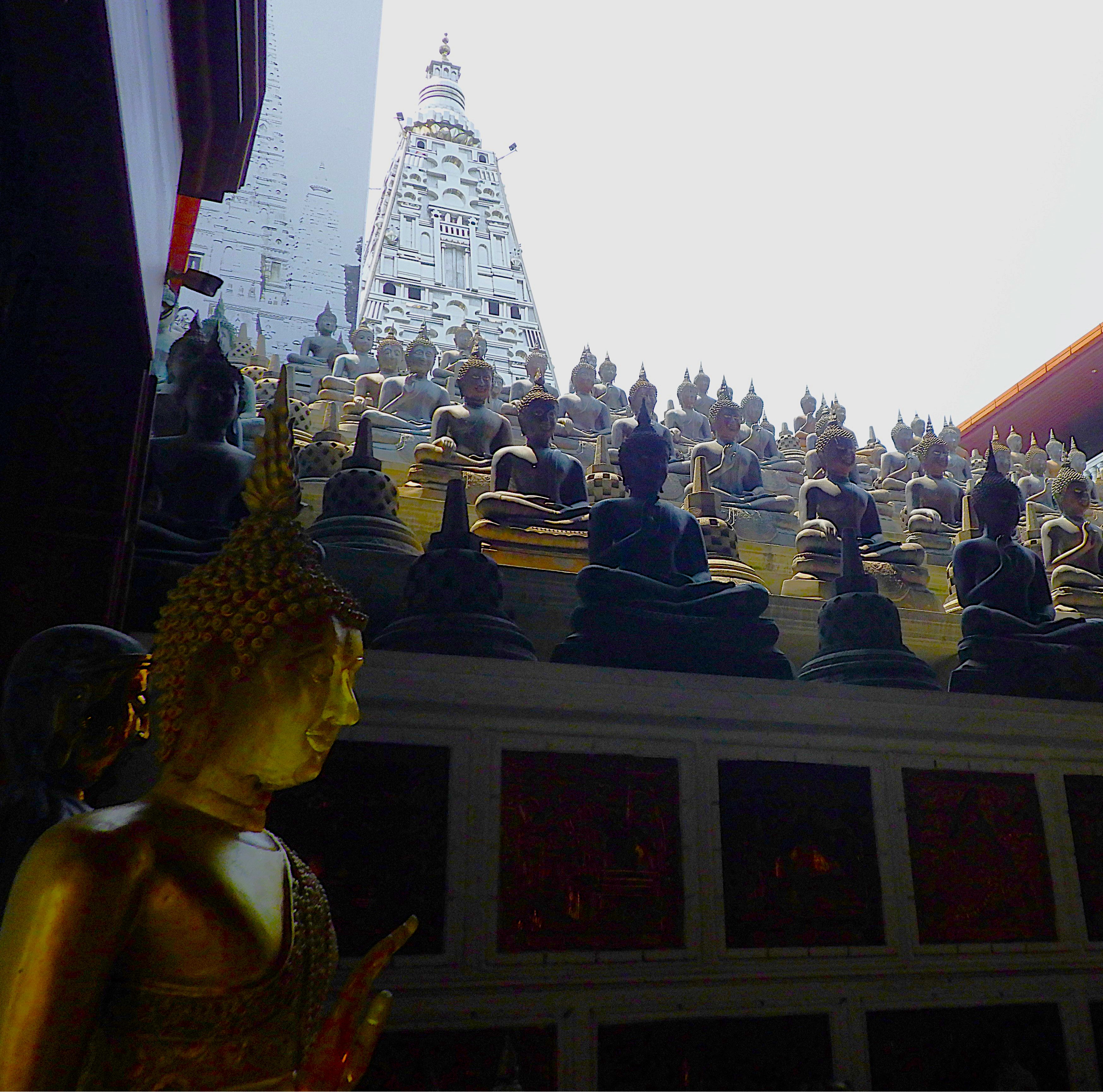
The Gangaramaya Temple contains the most eclectic museum collections within.  Our guide explained that the treasure trove of antique items are gifts and offerings sent from all over the world.  Innumerable numbers of Buddha statues, old watches, coins, cameras, china, furniture, elephant tusks and even old cars are on display.

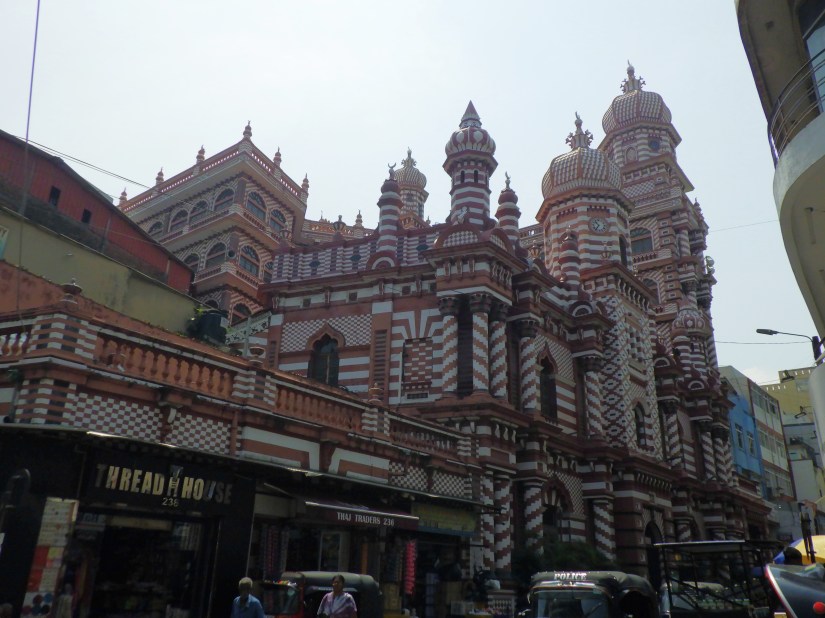
The Jami Ul-Alfar Mosque, built in 1909, is a stunning architectural spectacle:

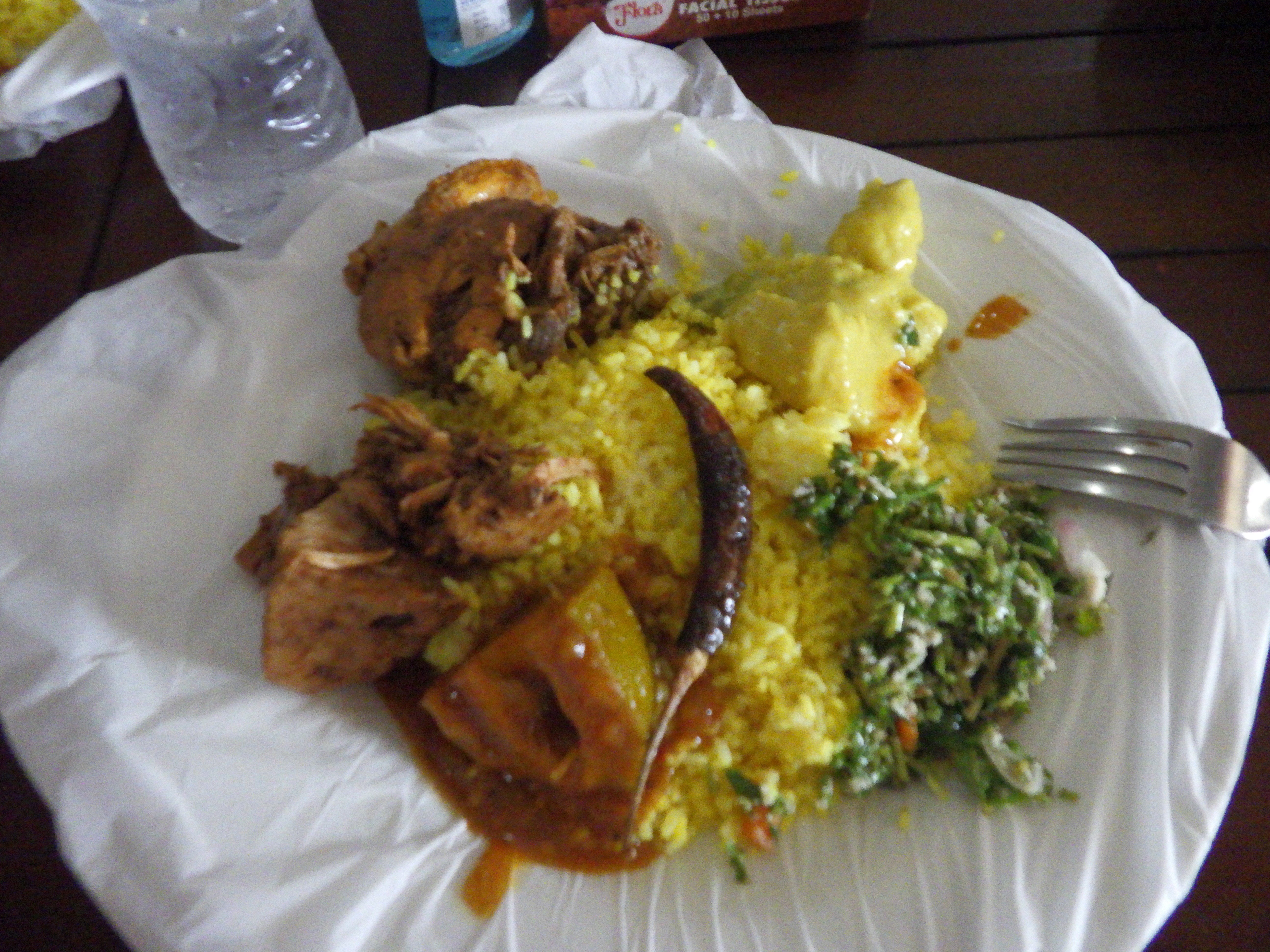
Obama took us to a local restaurant called the Curry Pot for an authentic Sri Lankan lunch of rice, curry chicken, Chinese potatoes, a cilantro/coconut/lime salad and cooked mango.  Silverware was optional and had to be requested, as locals commonly eat with their right hands.  Obama was fasting for Ramadan, so he waited outside. 

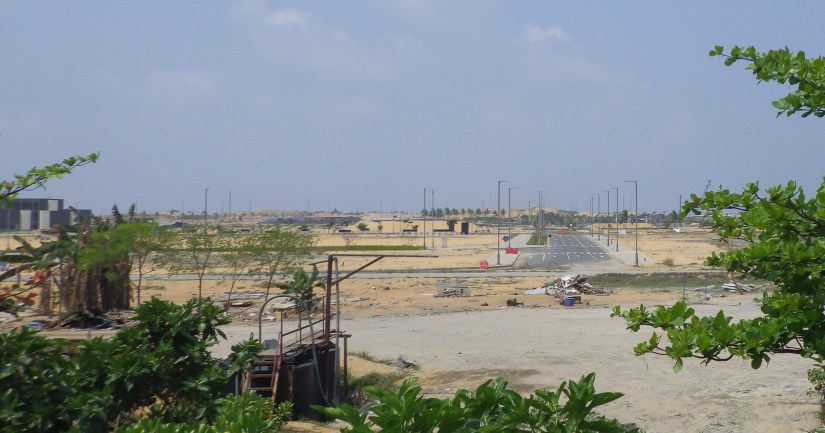
In 2019, a land reclamation project was completed on the shores of Colombo, funded by the Chinese.  Since then, the continuation of The Port City Colombo Project has been underway since and continues to take shape.  A series of new facilities are planned, including a central park, an artificial beach, a sports training center, a marina and a footbridge.

Reclamation and Port City Colombo Project under construction

We asked Obama to drop us off at the Ministry of Crab Restaurant, where we enjoyed a coconut crème brulee and refreshments before heading back to the commercial port gate on foot. 

Zuiderdam sails just over 400 miles to reach The Maldives island group, consisting of 1,192 low-lying coral islands grouped in a double chain of 26 atolls.  It spans a territory of roughly 35,000 square miles, but a land area of only 115 square miles.   Our ship will anchor just off of Malé, which is the largest island and its capital.

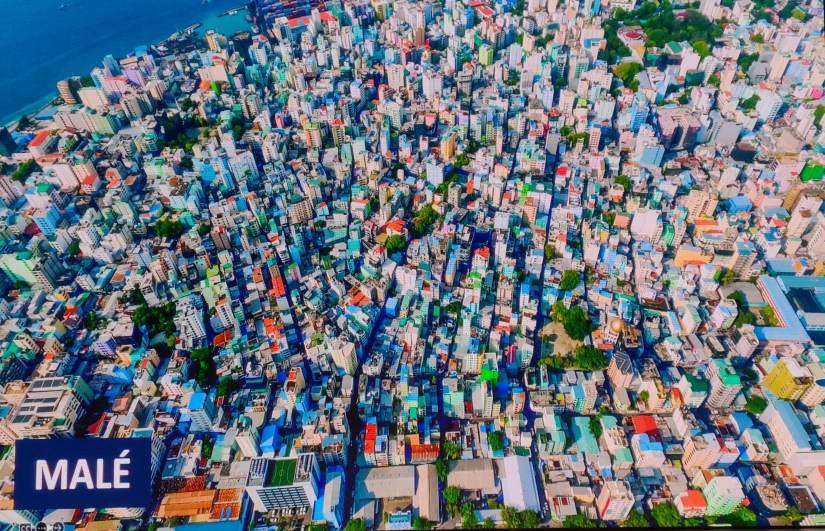
Malé skyline

First-time visitors are surprised to learn that the urban density in Malé is greater than 60,000 people per square mile!  And therefore, most tourists head to one of the many nearby atolls for the idyllic island serenity they seek.   

Aerial view of Malé
Fishing boats in harbor

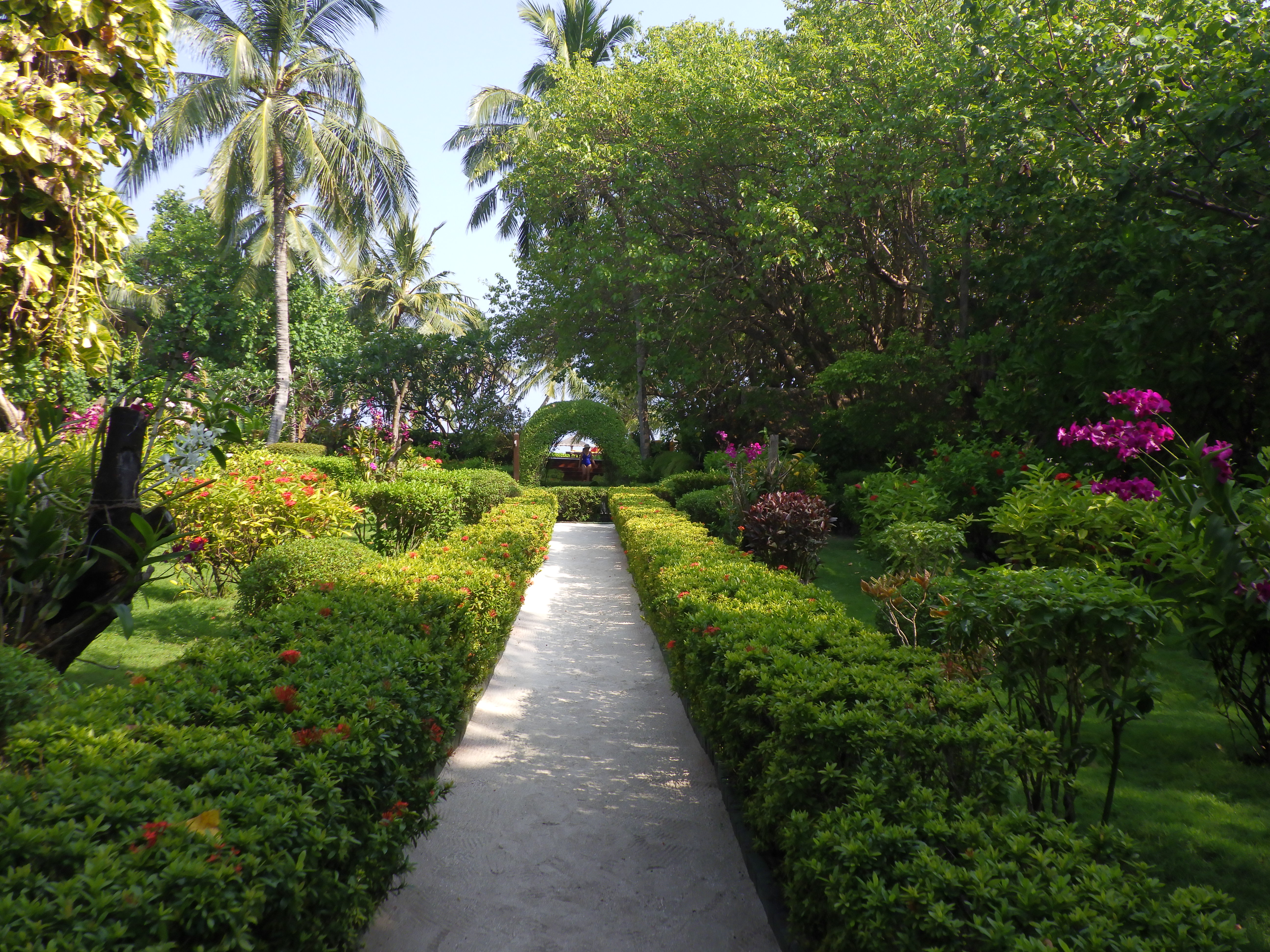
A group of us took a 15-minute speedboat ride to the Adaaran Prestige Vadoo Resort Island, complete with blinding-white sandy beaches, turquoise lagoons, overwater bungalows and manicured grounds.

Our day pass provided us with several hours of exploring, swimming in their pool, snorkeling their reef and lounging in the shade. It was an indulgent day of luxury and an all-inclusive experience.

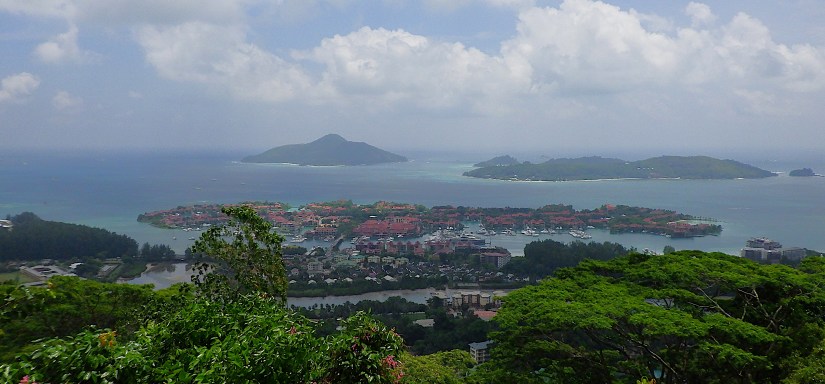
Another 1,260 miles south brings us across the equator and to Mahé, the largest island in the Seychelles.   Unlike the low-lying coral atolls of the Maldives, many of the 115 Seychelle islands are made of granite, with towering peaks and lush forests.  

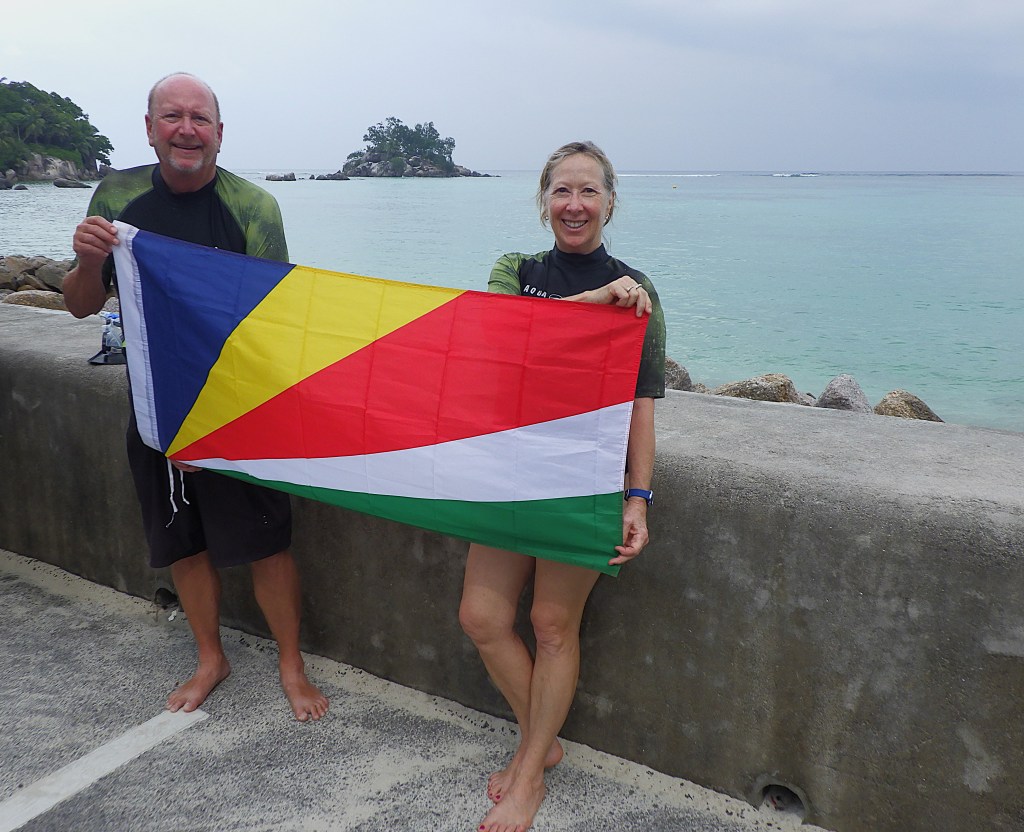
The town of Victoria has charming markets and colonial style buildings.  Adding to the ambience are the languages of French, Creole and English heard everywhere we go. 

We joined a group of fellow snorkelers to tour the island, it’s beaches and waters. 

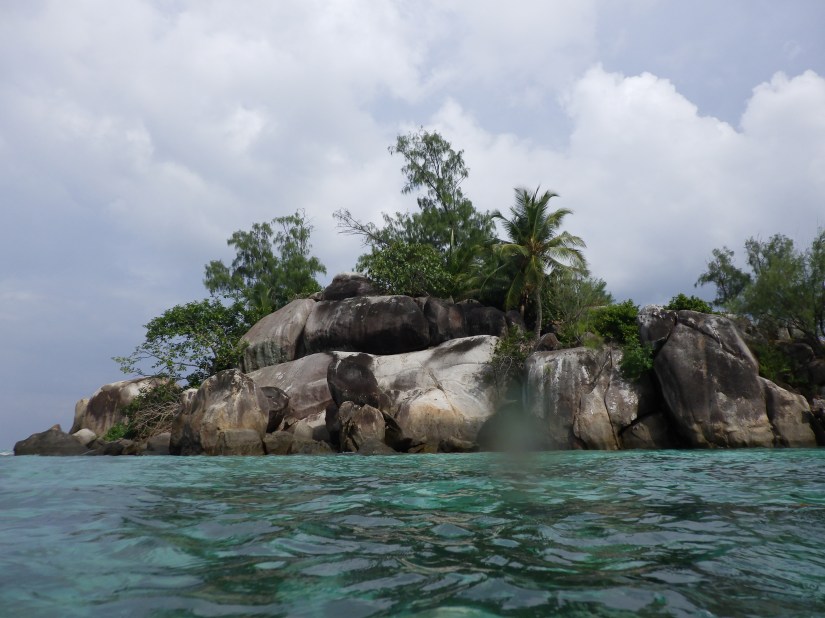
Granite boulders frequent the shoreline and remind us of The Baths in the British Virgin Islands

Unfortunately, a recent cyclone had left the waters pretty murky for snorkeling, but we sure enjoyed the drive, learning more about this laid-back island nation.

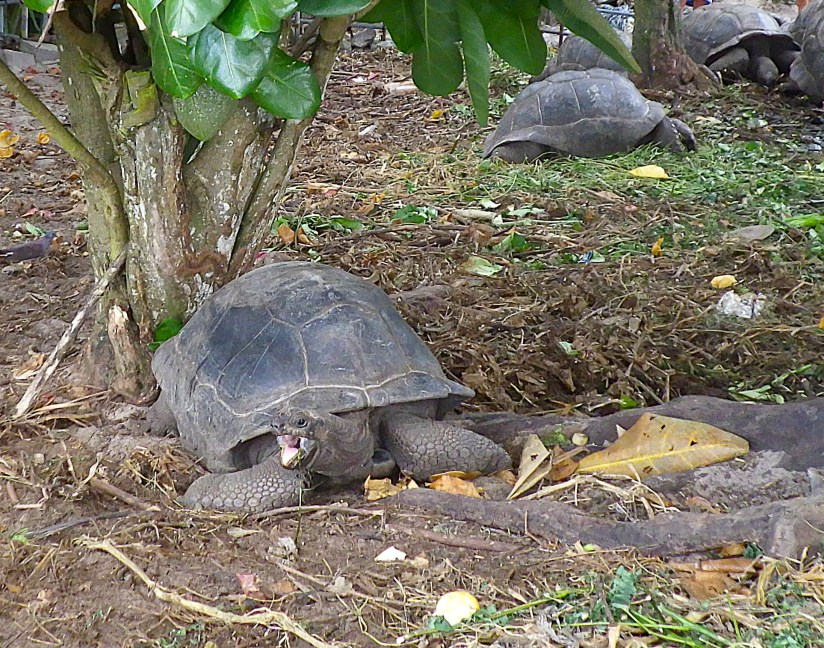
As well as it’s laid-back tortoises!

Au revoir, Seychelles! Hope to see you again someday-

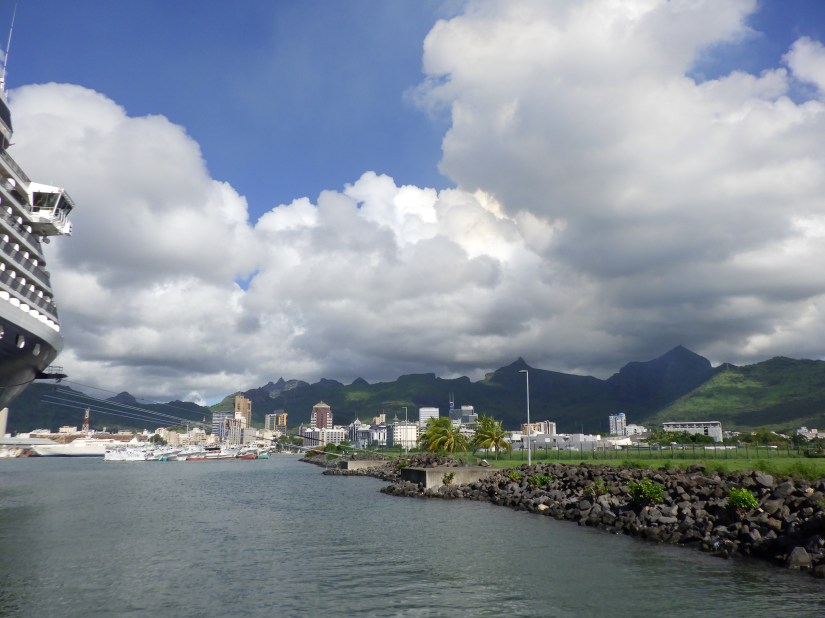
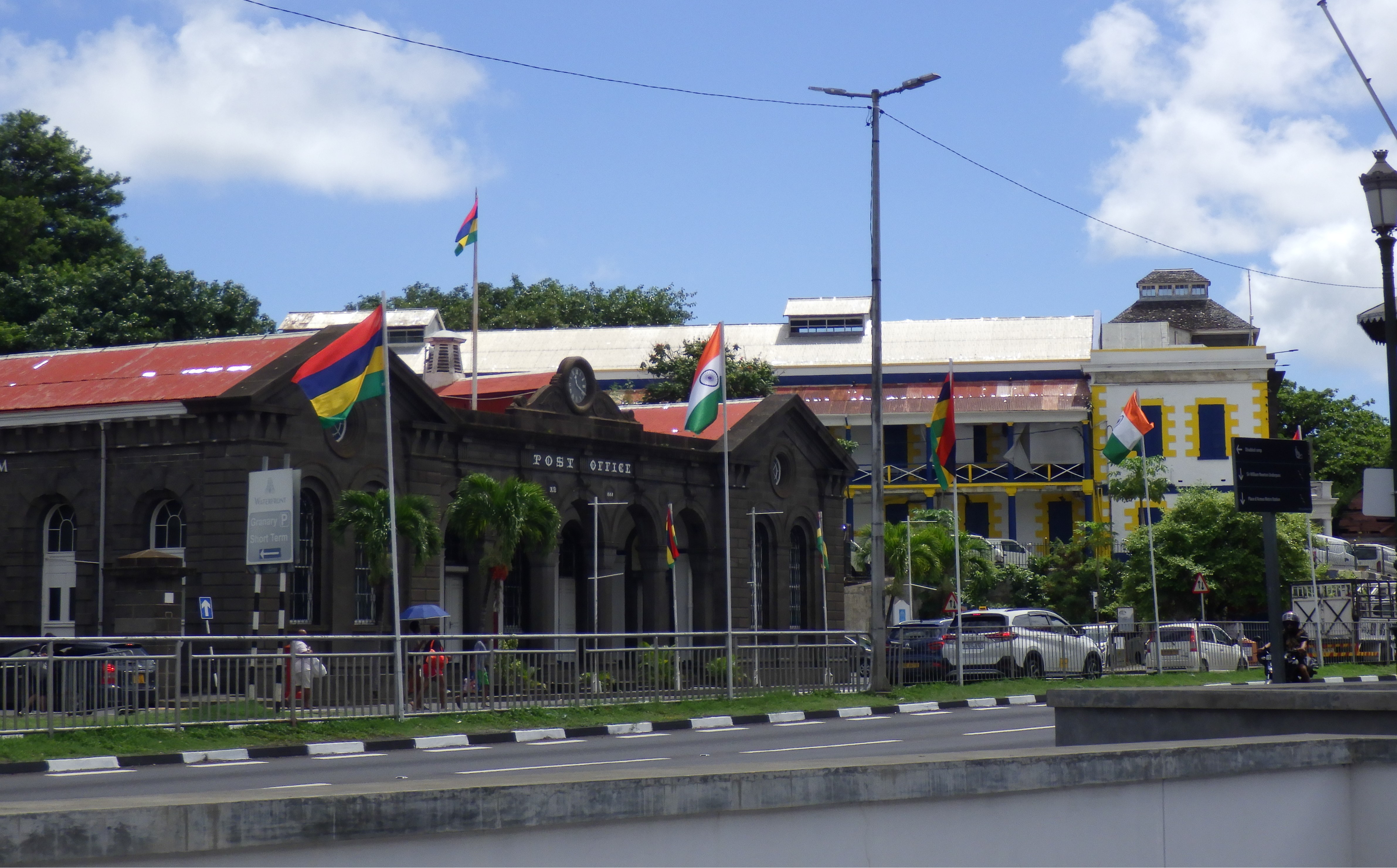
Two days at sea gains Zuiderdam another 1,000 nautical miles to Port Louis, Mauritius.  Home to 147,000 people, it’s a melting pot of Indian, African, Chinese and French influences, reflected in its cuisine, architecture and culture. Mauritius was also home to the now extinct Dodo bird, and whose image appears on everything from the national flag to their locally brewed beer label.

Located on the islands’ northwest side, Port Louis is the capital and largest city but appeared to be a deserted town on a Sunday morning. 

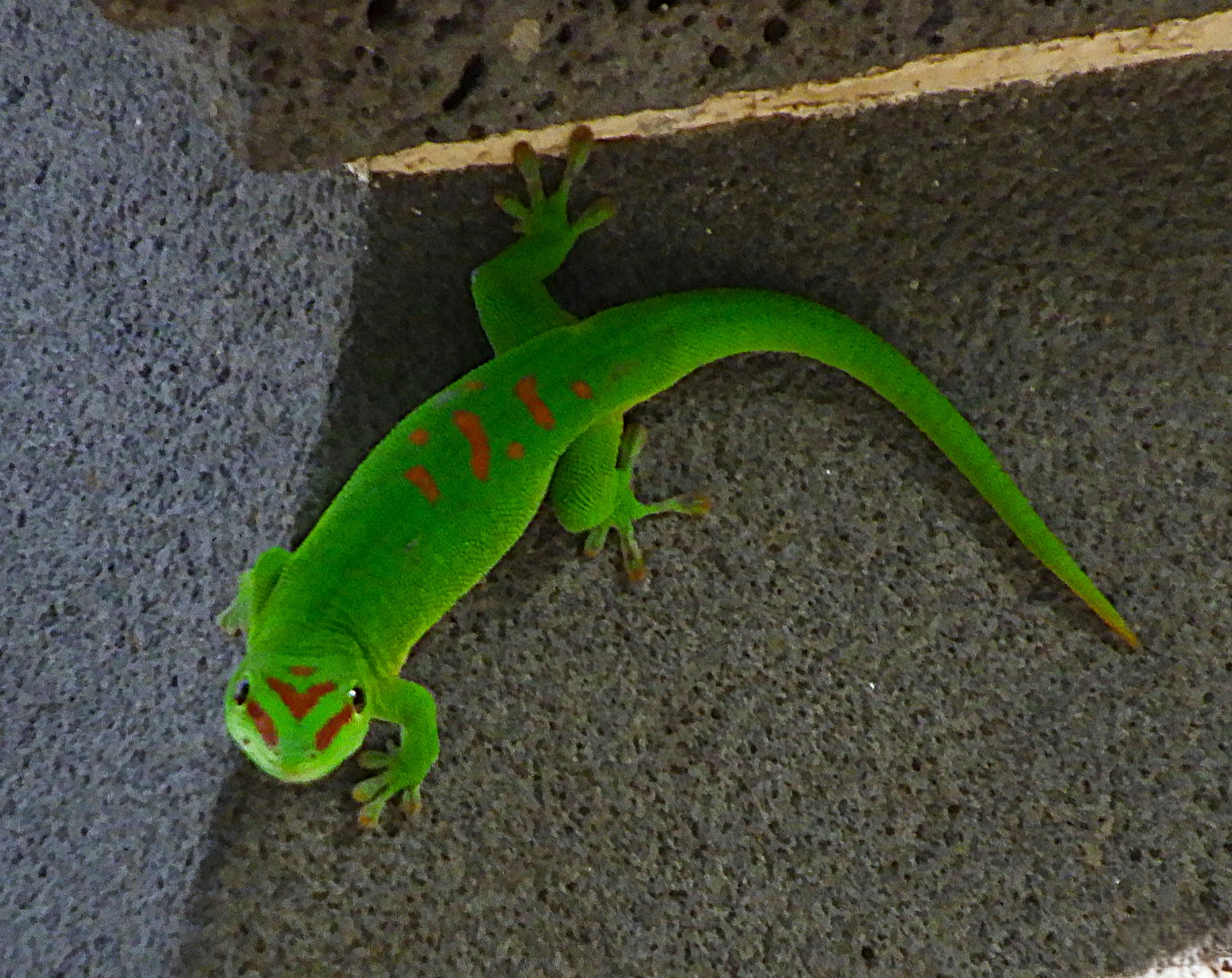
Even the local park was void of people, except for a curious green gecko and the entire tree canopy was filled with fruit bats and squawking birds.

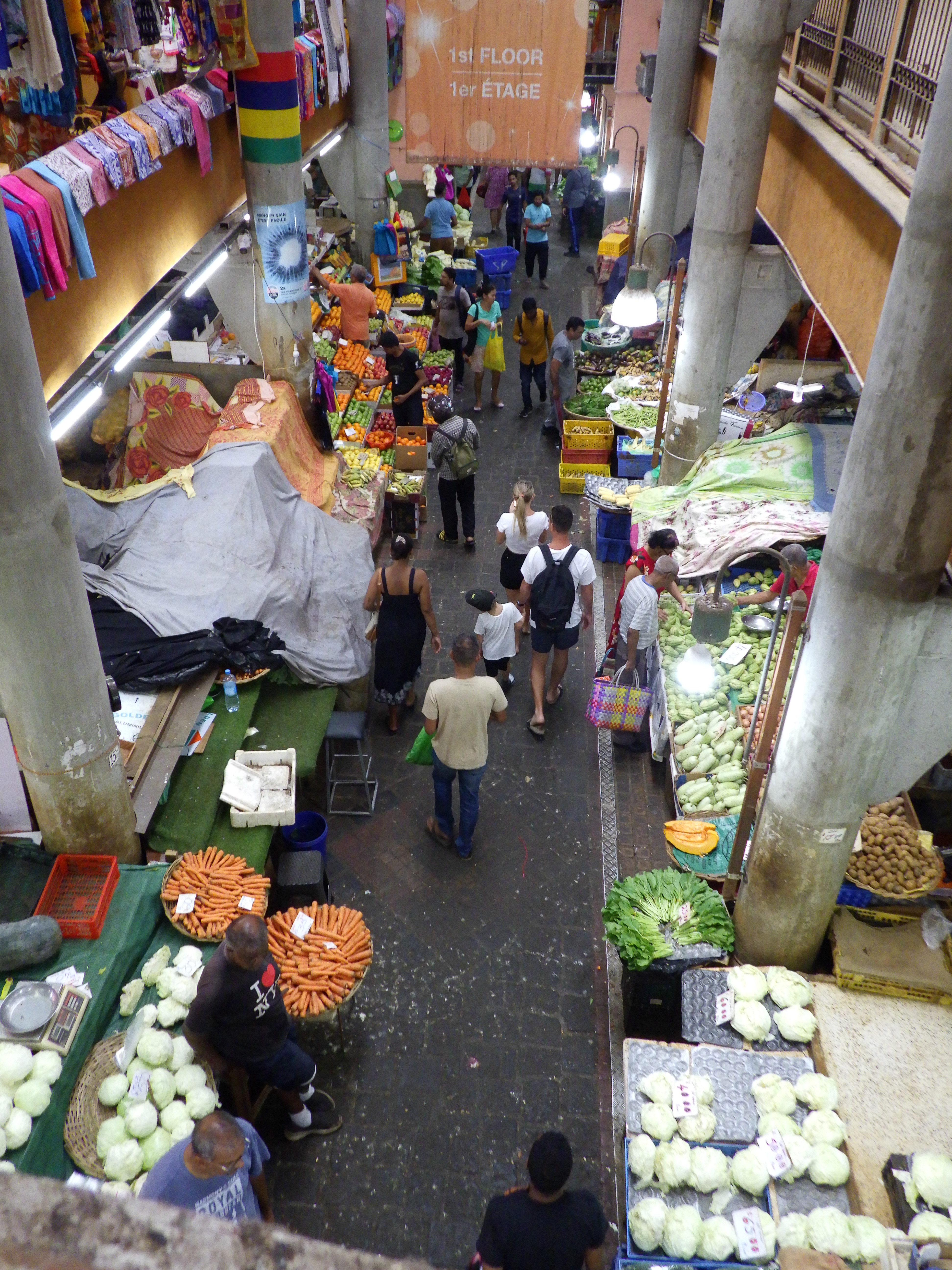
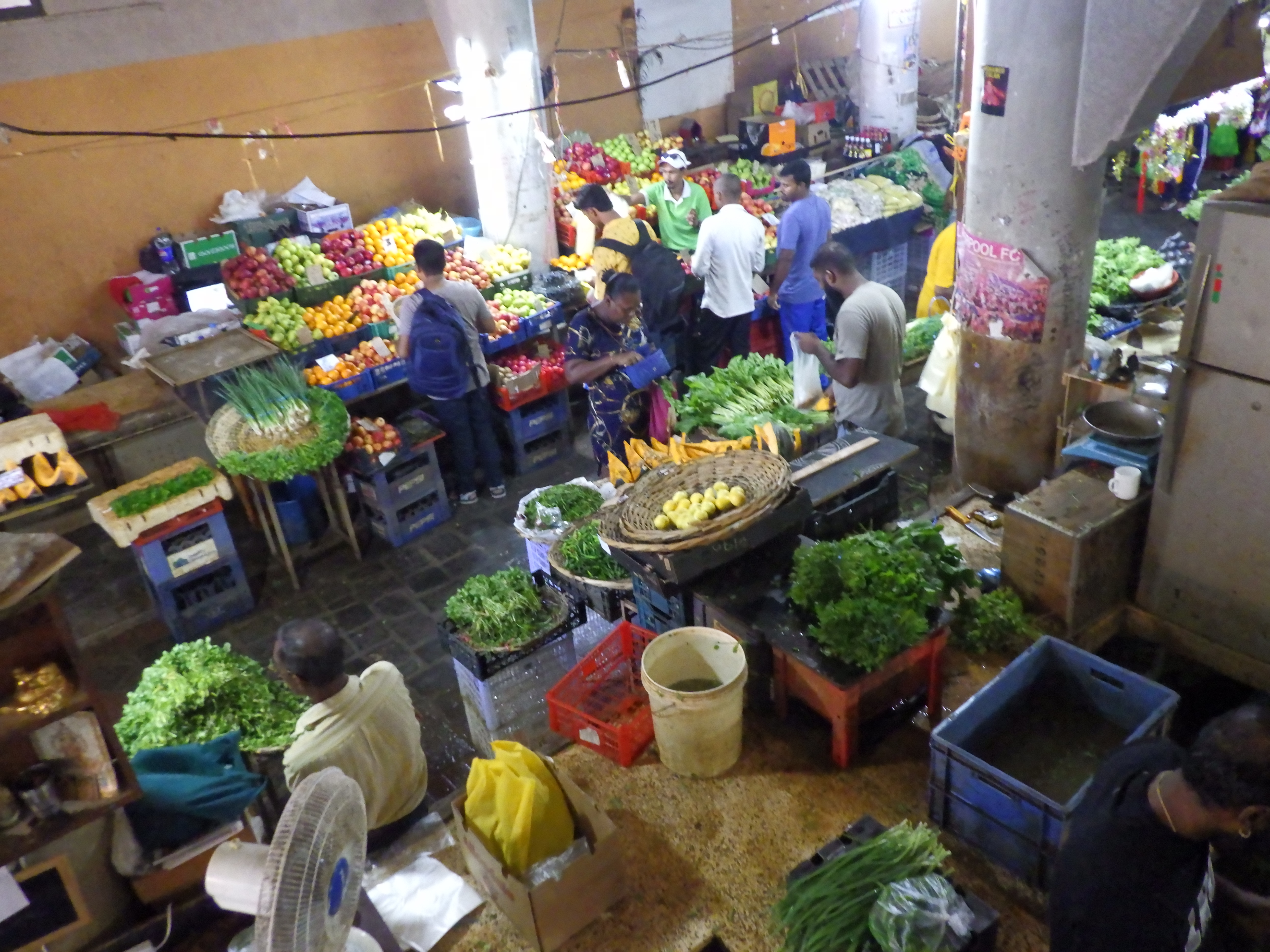
Until we came upon the din of the Central Market, where an old two-story building housing hundreds of vendors sold everything from linens, woven baskets, housewares upstairs; produce and spices downstairs.  

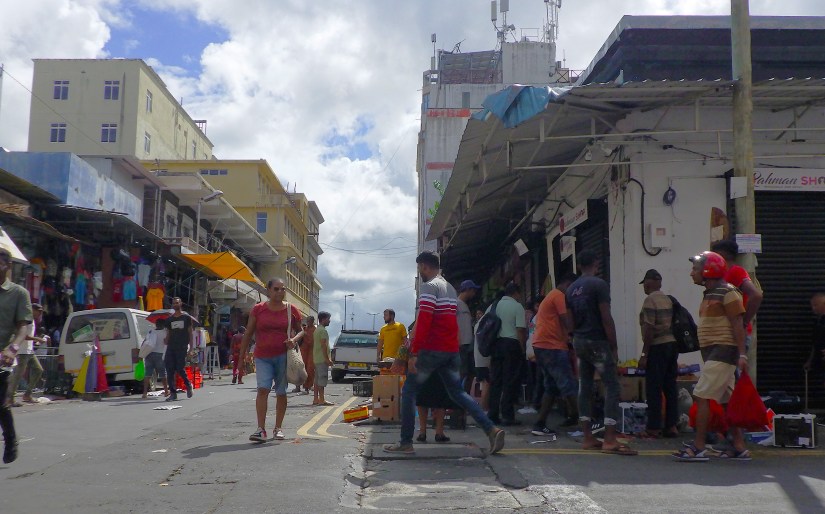
If you couldn’t find what you were looking for there, the next 4 blocks of storefronts in any direction would fill in the gaps.  Shoes, apparel, appliances, textiles, etc.   Authentic local shopping in full force. 

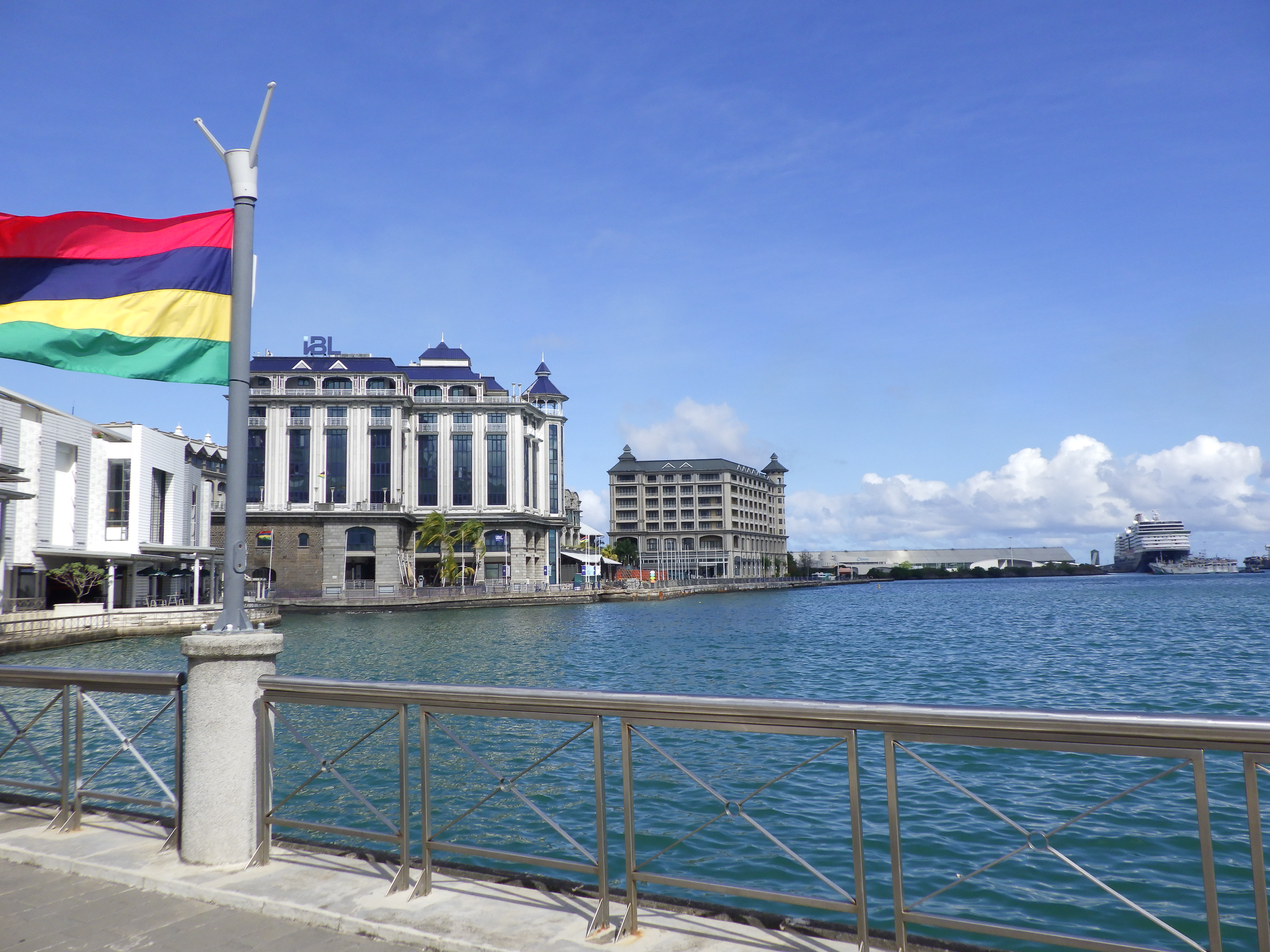
By afternoon, the Caudan Waterfront, a modern shopping plaza with hotels, boutiques and eateries had become the hotspot.  Locals and Zuiderdam passengers alike milled about. 

Mauritius was a short, but pleasant stop!

La Possession, Reunion Island     While only 134 miles separate Mauritius and Reunion Islands, they have vastly different personalities. 

This French overseas territory is 39 miles long by 28 miles wide.  Within are beaches on the west coast, an active volcano in the south and rugged mountains and forests in the middle. 

Nine of us piled into 2 vehicles for a 5-hour outing to see its dramatic landscapes and rugged terrain, dodging the intermittent rain.  Last week’s cyclone here washed out some of the roads to our north, so we headed south. 

Quaint beach towns were quiet on this wet day, but that didn’t curb our enthusiasm as we strolled the boardwalks, poked into shops and took photos of the dramatic coastline. 

Just as the rain went from drizzle to pouring, we pulled into Ete Indien Restaurant for a nice meal.  Most ordered the specialty of the house, “Bol Renversé”,  a local favorite that is a unique fusion of Chinese and Creole cuisine. Bol Renversé translates to “Upside-Down Bowl,” is a delicious combination of stir-fried vegetables, meat or seafood, and rice, served in an inverted bowl presentation, topped with a fried egg.

Despite the rain, we made one more stop before returning to the port, Le Zinc Pub.   It was St. Patrick’s Day after all!   

Erin go Bragh!

Zuiderdam now pushes on towards the African coastline… Stay tuned!
2025 World Cruise, Cruising, Travelogues

Leg 5: Indonesia & Malaysia

We left Australia’s modern civilization to find ourselves stepping back in time into the secluded and untamed Komodo Island.   The raw beauty of its landscapes has largely remained untouched, except by the island’s ancient guardians, the Komodo dragons. 

Komodo Island

Komodo Island, 112 square miles, is just one of the 17,508 islands that comprise the Republic of Indonesia.  As we enter the tranquil harbor, the panoramic view is breathtaking with its jagged emerald peaks illuminated by the morning sun.

The only community on the island builds their primitive homes elevated on stilts to keep inhabitants safe from the wandering dragons.  With 1,700 Komodo dragons, they nearly outnumber the villagers.

The largest lizard on Earth, males can grow to 10 feet and weigh over 300 pounds.  Their vicious nature doesn’t discern; they will eat nearly anything including their young or each other, or villagers.  But their primary diet are wild pigs and Timor deer which are plentiful on the island.

Our visit in 2019

We had an upclose and personal experience (!) with these free roaming creatures during our visit here in 2019 (above). So instead, we joined a passenger-organized tour of 13 of us that would head to adjacent Pink Beach.  Our transport is an Indonesia style boat made of heavy local timbers, typically ironwood or bangkirai. 

Wikipedia claims that Komodo’s Pink Beach is one of only seven in the world. The sand appears pink because it is a mixture of white sand and red sand, formed from pieces of Foraminifera. 

As we wade into the water from the beach, we snorkel over healthy reefs, teeming with fish. We found clown fish playing in anemones, colorful sea squirts, flamboyant crinoids, sea clams with their psychedelic mantles, and an occasional turtle.

Gorgeous crinoids!

We emerged from the water after a few hours fully pruned.   A local vendor, Dodie, had a few items for sale on the beach.  The simple bracelet I bought from him will always remind me of his warm smile and gentle demeanor. 

While we were snorkeling, our Indonesian boat crew prepared lunch.  We knew we’d be having lunch aboard, but what we didn’t realize was the incredible feast it would be:  platters of grilled shrimp, tuna, fried chicken, vegetables, noodles, rice, dragon fruit, watermelon, honeydew, sausage and tofu. And if that weren’t enough, they gave us parting gifts of t-shirts and postcards.

We bid farewell to the Komodo Dragons and set an overnight course for Bali.

Excitement had been building aboard about our visit to Bali.   And not just from passengers, but also our beloved crew!   A lot of our crew are Balinese and were very anxious to see their loved ones.  While we passengers were sightseeing ashore, more than 800 family members would be coming aboard Zuiderdam to visit crew.

As our ship navigated the precarious narrow channel into the Port of Benoa, our arranged driver, Mr. Agung, awaited our arrival.   Today’s plans are to sightsee on our way to Ubud for lunch.  Our friend Sheryl joined us.  

We began at a Silver & Gold factory in Denpasar, Bali’s capitol.  It was as interesting from the outside as the inside.  Eccentric figures adored the exterior everywhere you looked. The huge interior expanse is filled with glass jewelry cases each displaying artistic designs that brought together precious stones and metals in ways I’ve never seen before.  Unfortunately, no photos were allowed indoors.

Nearing noon, we arrived at the Bebek Joni Restaurant in Ubud.  A restful atmosphere greeted us in the open-air setting, complete with wonderful gardens, water lilies flowering in reflection pools, individual gazebos and umbrella tables, all overlooking rice fields.  It was inviting and lovely, despite the darkening clouds that threatened rain at any minute.

Spring rolls with satay or sweet/sour sauce, chicken curry and shrimp curry fill our bellies.  And just as we finished, the rain began.  Serious rain.  Big, fat drops and so heavy, it limited visibility to anything beyond 50 feet.  We retreated to our waiting vehicle.

The downpour turned roads into streams, as we passed a never-ending string of temples and store fronts each specializing in wood carvings, kites, straw baskets, concrete statues of every size Buddha or Shrine imaginable.  

Our next stop was a tea and coffee tasting locale.  Their covered veranda overlooking a deep ravine was the perfect place to wait out the deluge.  In fact, the rain pounded on the bamboo roof, creating an astounding dB level of 90, according to our phone app!  

Out of the 15 tastings, our top 3 tea favorites were red ginger, lemongrass and mangosteen.  And favorite coffees included coconut coffee, and the renowned Luwak Coffee.  Yep! Find all the sorted details here:  https://en.wikipedia.org/wiki/Kopi_luwak

The relentless rain altered our intended plans of viewing the terraced rice fields further north.  Radar showed clearing to the south, so we returned to the beach community of Sanur.  Clearing skies there allowed us to walk along the promenade and settle into a beachside café to watch the fishermen and families enjoying the shore. 

Back aboard, our Balinese crew glowed with happiness of spending the day with family. 

Zuiderdam makes her 1,000 nautical mile passage from Bali to Singapore in two days.  This modern, clean city of 6 million people has so much to offer: 120 miles of coastline, lots of green spaces, and wonderful architecture.  Their MRT subway system is inexpensive, easy to navigate and spotless to ride.  For less than $6, we covered many of the sites across town.  And yet still managed to walk 15 miles over our two-day stay.  

The Singapore Skyline

We visited some of our favorite places, like Chinatown, Riverside Point and Clarke’s Quay. But no matter how many times you come to Singapore, there are always new things to discover. 

Chinatown

The Singapore Flyer, Asia’s tallest observation wheel gave us a whole new experience and view from the 541-foot elevation.  It features 28 cars, each the size of a bus, with one rotation every 30 minutes. On a clear day, it’s said you can see about 25 miles.

Back on the ground, we crossed the mind-boggling, 918-foot-long Helix Pedestrian Bridge.  It was built in 2010 out of a special duplex stainless steel at an estimated cost of $51 million. 

The Helix Bridge, with Marina Bay Sands looming beyond

If its design and fabrication isn’t enough to wow you, it connects you from Marina Centre to Marina South, home to the most stunning shopping complex you may ever see. 

We were lucky that the forecasted rain never materialized, but the humidity sure did, as thermometers soared to the 90’s. After a wonderful day in the city, we retreated to showers and naps back aboard. 

The iconic Marina Bay Sands can be seen nearly anywhere you are in Singapore

It’s early morning when Zuiderdam pulls into Port Klang located along the Strait of Malacca. This main commercial port of Malaysia is also the gateway to Kuala Lumpur, 14 miles inland.   The air is already thick with heat as we board our air-conditioned coach bus for an 8-hour Holland America excursion.  Whether it’s Sunday, or because it is the first day of Ramadan, traffic is light as we approach the city of 34 million, largely Muslim population. 

We strolled Independence Square, home to the Sultan Abul Samad Building, Royal Selangor Club, the National History Museum, a 312-foot flagpole and adjacent municipal building, police station library and park.

A few blocks away, the art-deco designed Central Market, also known as Pasar Seni, contained booths full of artisan crafts from pewter, wood carvings, batik textile wares, and typical souvenirs.  And of course, food!

Ever hear of durian? We have always wanted to taste it. Today was the day!  In Malaysia, they call it the King of Fruit.  It was uniquely tasty, creamy, and not so smelly as its reputation claims (but then, our tolerances are high… we also love Limberger Cheese!)   

The River of Life is the convergence of the Klang and Gombak Rivers, where the oldest mosque is located

Downtown is clustered with soaring skyscrapers of innovative architecture, including the KL Tower (1,381 feet) and iconic Petronas Towers, featured in the 1999 movie, “Entrapment” starring Sean Connery and Catherine Zeta Jones.  The 88-story twin towers feature a connecting skybridge, perfect for movie thrills. 

After a buffet lunch at the Ibis Hotel, we visited the Royal Selangor Pewter factory whose history here reminds us of Kuala Lumpur’s humble beginnings as a small mining town.    Not only did we learn about the composition, history and making of pewter, we viewed magnificent works in their showroom.  

Beyond the ornate gates, the gardens and sweeping lawn lead up to the Royal Palace.  This is the official residence of Malaysia’s King.  Only photos were permitted from a distance, but maybe the best photos were of the friendly guard who didn’t mind including him.

Enroute from Kuala Lumpur to Langkawi

We sail 253 miles NNW to Langkawi, a vacation island destination just 19 miles from mainland Malaysia.  Beautiful beaches, hotels, restaurants, Malaysia’s largest aquarium, and a cable car that rises near the top of Mount Machinchang. 

But after the previous day’s long excursion in Kuala Lumpur, we opted for an easy exploration of this beachside town.  A narrow, brick boardwalk connects the many eateries, watersport huts, hotels and resorts along Chenang Beach. 

An hour stroll brings us to the Pelangi Resort, where we rested and rehydrated in the near 100-degree heat and humidity.  

The adjacent Laman Padi Langkawi rice museum featured rice fields, gardens, and galleries; everything involved with the cultivation of rice, Malaysia’s primary export.   

Before heading back to the ship, we found a relaxing, 40-minute foot massage for the equivalent of $9. Our afternoon departure leads Zuiderdam 155 miles northwest in the Andaman Sea towards Phuket, Thailand.

As the moon rises, we pass countless fishing vessels who use green lights in the darkness to attract their catch.

Our last visit to Thailand was an immersive trip in 2001 when we explored Chang Mai in the north, the capital city of Bangkok, Phuket in the south, as well as its offshore islands.  It’s a fascinating country with so many wonderful things to see and experience.  But as Zuiderdam pulls into Phuket with only a short daytime visit, we decided to revisit the gorgeous limestone islands of Phi Phi Don, Phi Phi Le and Khai Islands.  

We were curious to see how the islands may have recovered from the devastating tsunami in 2004. Sadly, we discovered that the resort we had stayed at in 2001 had been completely swept away and not rebuilt.  But others have, and Phi Phi Don is once again a thriving tourist destination, with pristine beaches and vibrant marine life.

The island’s transformation is a testament to the culture, spirit and hard work of the Thai people who refused to let the disaster define its future.

These non-volcanic islands are largely made of limestone cliffs, large caves and stunning long white sand beaches. No wonder Hollywood chose this area for the 2000 movie, “The Beach”.

Phi Phi Islands are as exotic underwater as above, and we found a few rare treasures while snorkeling.  Particularly the venomous and ominous-looking Crown of Thorns. Found in Indo-Pacific Oceans, it’s the largest starfish growing to 14” and can have up to 21 arms.  They prey on hard corals and can consume up to 65 square feet of living coral reef per year. Also venomous, the Yellow-lipped Sea Krait, spends much of its time underwater to hunt eels and small fish, but returns to land to digest, rest, and reproduce. Because of its affinity to land, it often encounters humans, but the snake is not aggressive and only attacks when feeling threatened. Hopefully.

In contrast to the dramatic high peaks of Phi Phi Islands, our last stop is the sandy, low-lying Khai Island. Dozens of eateries and vendors create an umbrella pavilion atop its white beach, surrounded by clear, shallow turquoise water. Toes in the water, cool beer in my hand!

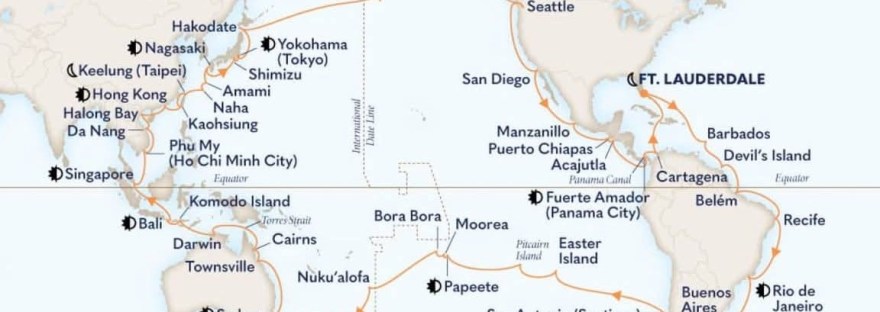
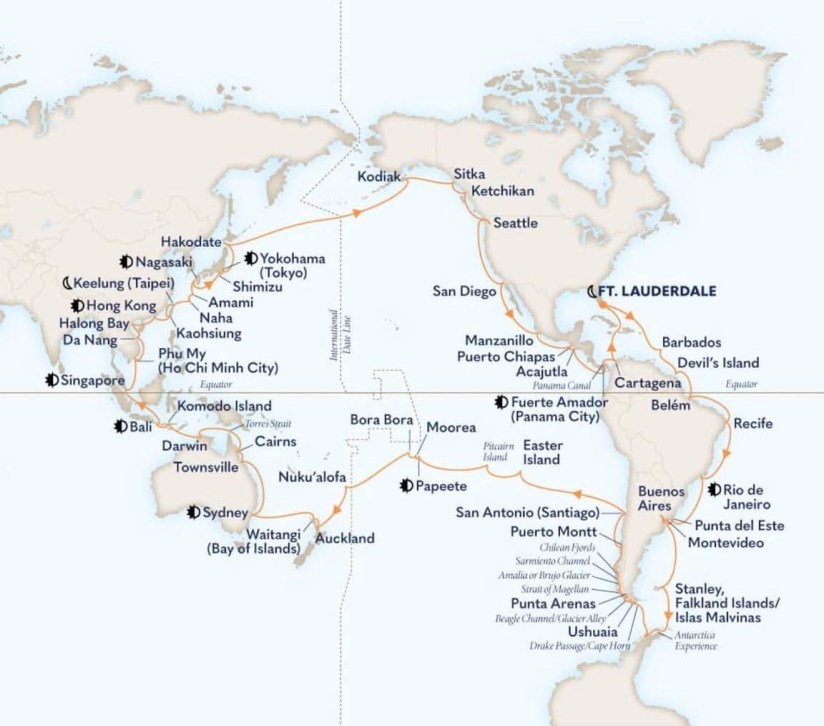
Our journey so far….Fort Lauderdale to Phuket, Thailand

I’ll indulge you with one last update…in case you missed it, our friend Jo, was featured in a recently aired CBS spotlight on how Americans are spending their retirements at sea. We had a cameo appearance in the piece:

We’ve enjoyed Jo’s company on the last 3 World Cruises.  In December, she emailed us that CBS wanted to interview her and invited us to join in the lunchtime filming once we were aboard. That was 2 months ago, and we practically forgot about it!  We were surprised we didn’t end up on “the cutting room floor”!     

You may also read Jo’s backstory to this piece in her blog:  Months Of Preparation For 15 Minutes Of Cruise Retirement Fame – Writer on Deck

Meanwhile, Sri Lanka and the islands of the Indian Ocean lie ahead. Stay tuned!
2025 World Cruise, Cruising, Travelogues

Leg 4: Australia

The glittering skyline of Sydney greets us as we sail under the bridge in predawn darkness.  At 4:45am, the city still sleeps, but the Zuiderdam is buzzing with the excitement for this port arrival.  After a wonderous and relaxing 8,238 miles of the South Pacific and its idyllic islands, we are all anxious to trade beaches for boulevards.  Among one of the most beautiful cities worldwide, Sydney is the gateway to the next five ports that we will visit over the next 12 days in Australia.

With so many things to do and see in Sydney, we are thrilled to have 2 days here.  Exploring is easy, given the wide variety of public transportation that are clean, efficient and cheap. Having explored many of the city’s popular sites on previous visits, we took a ferry to the north suburb of Manly.  The 7-mile, 30-minute journey takes us across scenic Sydney Harbor, beneath the Harbour Bridge, past the Opera House, and a gorgeous coastline of high-end neighborhoods and marinas. 

Passing beneath the Sydney Harbour Bridge. Opera House off to the left.
Arriving at Manly Wharf

We stepped off the ferry and into a quaint seaside town with pedestrian streets lined with shops and eateries. 

Just a few blocks beyond, the wide, golden beach is rimmed with a Norfolk Island pine-lined promenade, connecting the Manly and Shelley Beaches.

Manly Beach

Many eateries offered the standard Fish & Chips, but we tried the local favorite, Fish Pie. A comforting hot dish of local Barramundi fish, Salmon, a hard-boiled egg, white sauce, topped with mashed potatoes, baked in a ramekin and served with a side salad.  Outstanding!

Fish Pie

Overnight, Zuiderdam repositions from our arrival berth in White Bay, to the premier berth in Circular Quay, putting us in the heart of it all for our second day in Sydney.   

Sunset in White Bay – Sydney, Day 1
Sunrise over the Opera House – Sydney, Day 2

Our second day in Sydney began at the Opera House and adjacent Royal Botanical Gardens.  

The Royal Botanical Gardens has 74 acres on prime harbor shores.

On Macquarie Street, we passed the State Library, New South Wales Parliament House, Hospital, and The Mint, before taking a coffee break at a Hyde Park café. 

Marching on, we view the Sydney Tower before turning back towards the Sydney Observatory and The Rocks district.   

Two of our favorite historic places of character are The Hero of Waterloo and The Glenmore Hotel, serving since 1837.

It is easy to “get your daily steps” in Sydney, as we walked 15 miles during our 2-day visit!  Back to the ship for a very festive Sail Away Celebration, as we set a course northward.

Farewell, Sydney… Thanks for two great days!

We leave Australia’s New South Wales region, and enter the waters of the Queensland region. Lying just 30 miles off the coast of Brisbane, Moreton Island is an Aussie’s weekend destination.  

An afternoon view of Moreton Island

Moreton Island is the third largest sand island in the world and formerly a whaling station.  

A bent whaling harpoon

Unfortunately, the morning rain is so thick that we’ve lost sight of the island from our anchorage.  It was not until almost noon that the weather lifted, and we finally tendered to shore. 

Waiting out the rain on our veranda

The sprawling Tangalooma Island Resort has it all:  hotel, watersports of every kind, helicopter rides, ATV quad bikes, tennis, massage, and 15 deliberately sunken wrecks to snorkel.  And weather permitting, tobogganing down a sand dune. But the morning’s rain postponement of activities left the afternoon offerings mostly booked. 

We were more than satisfied to join the Bush Stone Curlews (below) strolling the strand and dodging the raindrops.  

Not-so-shy Bush Stone Curlews ….adorable!

The rain left the beautiful beach mostly deserted.

Moreton Island in the Coral Sea, part of Queensland, Australia

As we continue skirting between Australia’s east coast and the Great Barrier Reef,  the temperature and humidity pipe up significantly.  Heading north towards the equator, the “feels-like” temperature is 110 degrees Fahrenheit.  

Due to the shallows, Zuiderdam anchors 3 miles off Airlie Beach, a small resort locale of 1,300 people, and the gateway to the Whitsunday Islands.   Some passengers opted for an 8-hour boat excursion out to the Islands.  But given the deadly jellyfish (Portuguese Man O War, Box Jelly and Irukandj Jelly) season that runs from October through April, tourists are provided “stinger suits”. However, they are no more than a rash guard thickness (and still leaves hands, face and ankles exposed), so we decided to not submerge.  There are other plenty of ways to be in or near the water.

It’s a long and slow tender ride to shore, where the Whitsunday Jet Ski van transport 6 of us to their marina pier office and fleet.   

Whitsunday Jet Ski fleet awaits us

Briefing and training was thorough and efficient. The jet skis were nice and big, so Tom and I opted for a tandem ride. 

We scooted along the coastal waters, paralleling the rugged shoreline.   Our guide did a great job describing some of the names and history of the adjacent islands. 

The coastline is heavily wooded and the shoreline sparse of structures.  The teal green water is opaque, and the entire area is an ideal turtle breeding ground.  

An hour and a half later, we returned to the marina.  Their van gave us a short lift to Main Street; a mere hundred yards of shops, eateries and pubs. 

Main Street in Airlie Beach

Other than the small number of cruise ship passengers who braved the heat, it was a quiet Sunday afternoon.  A few locals were having picnics in the adjacent parks by the beach. 

This was our view from a cafe where we grabbed a snack of bruschetta and sodas before heading back to the ship for well-earned showers and air conditioning!

Airlie Beach was a delightful spot to visit!

Zuiderdam brings on two compulsory pilots that will journey with us, navigating the narrow and twisting channels that lead us to Cairns and the Great Barrier Reef passage beyond, all the way through the Torres Strait.

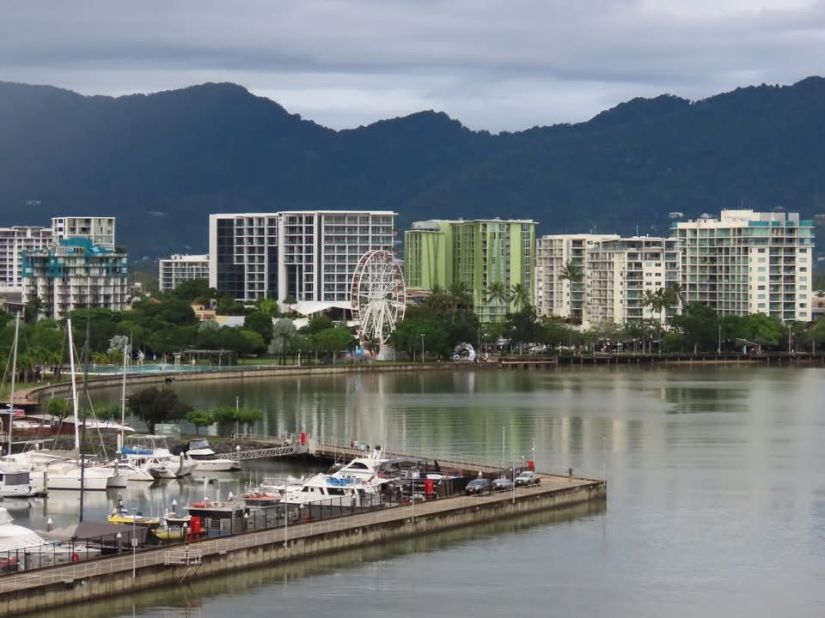
The city of Cairns

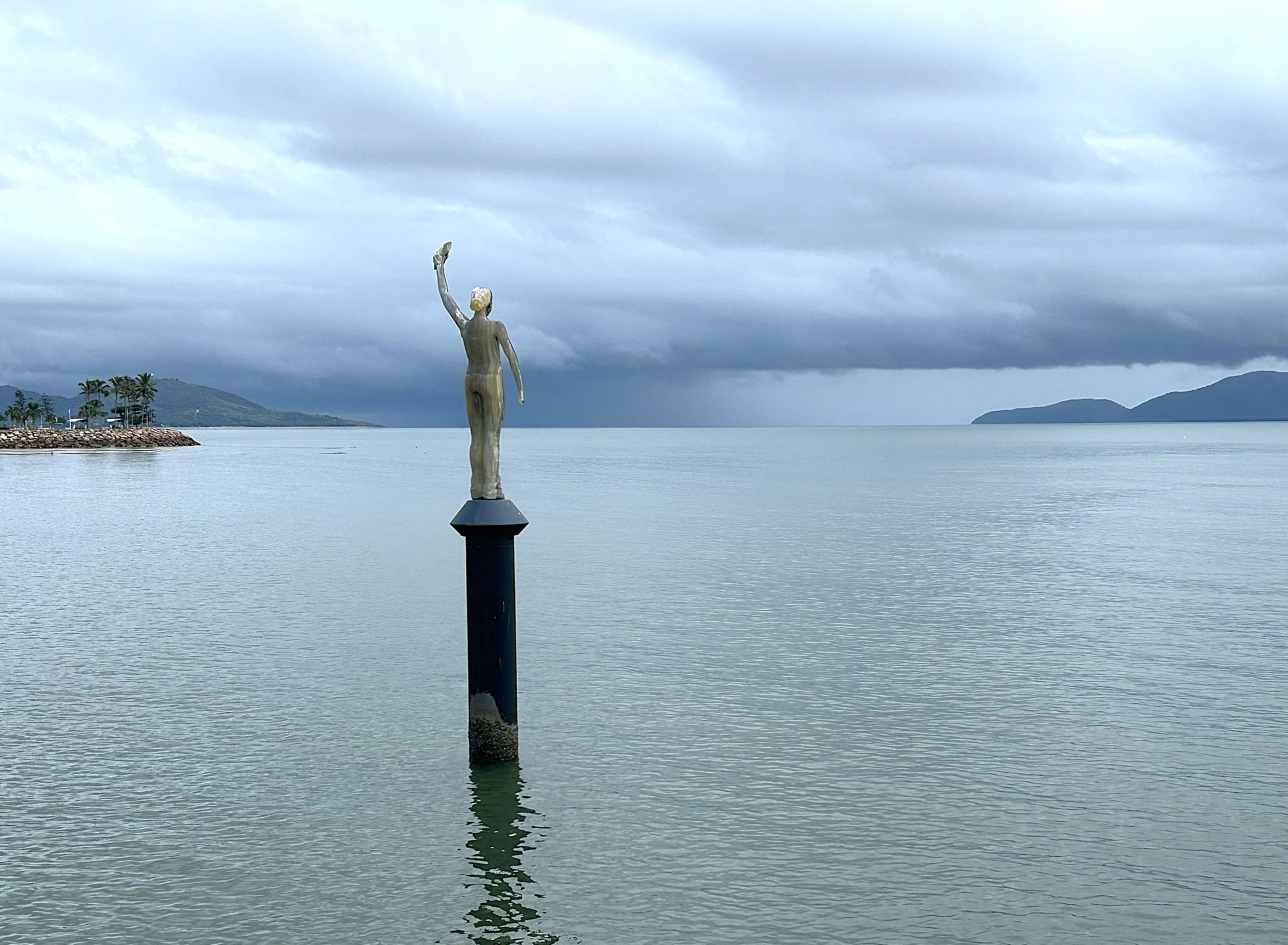
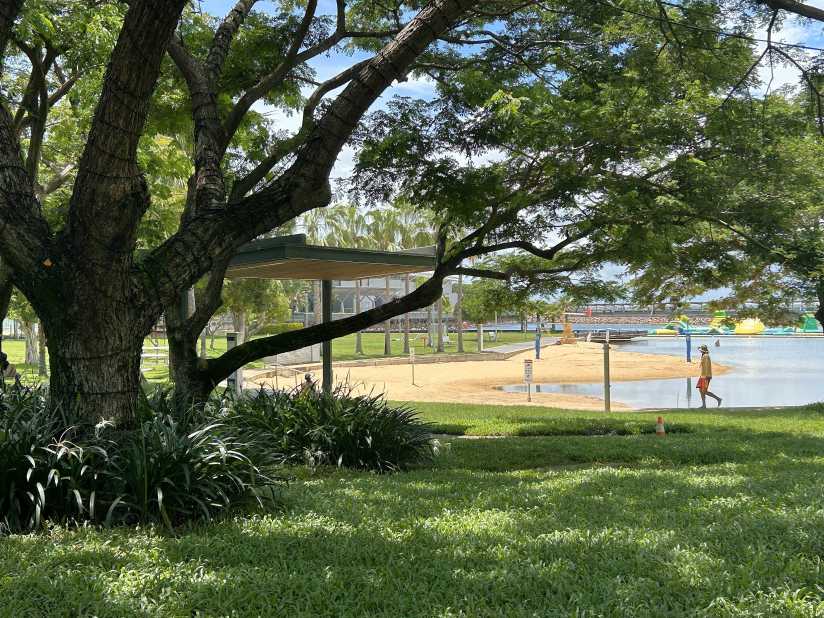
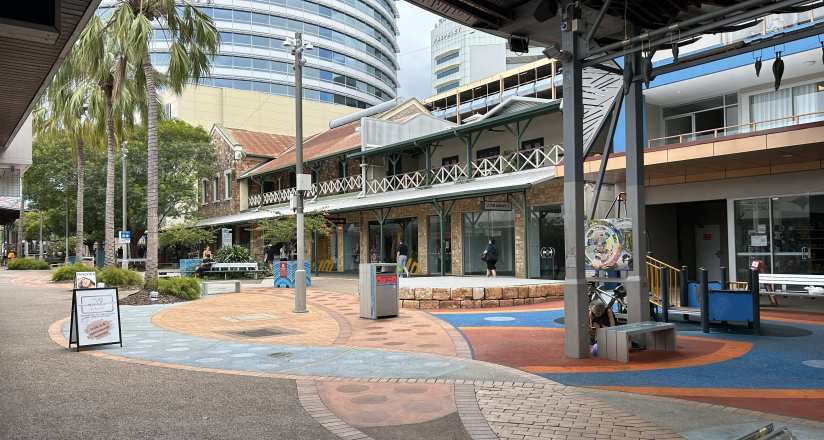
The wonderfully green city of Cairns on the northeast coast is a is filled with parks, promenades and esplanades.  The tropical climate breeds enormous banyan trees, glorious flowers and bamboo stands.

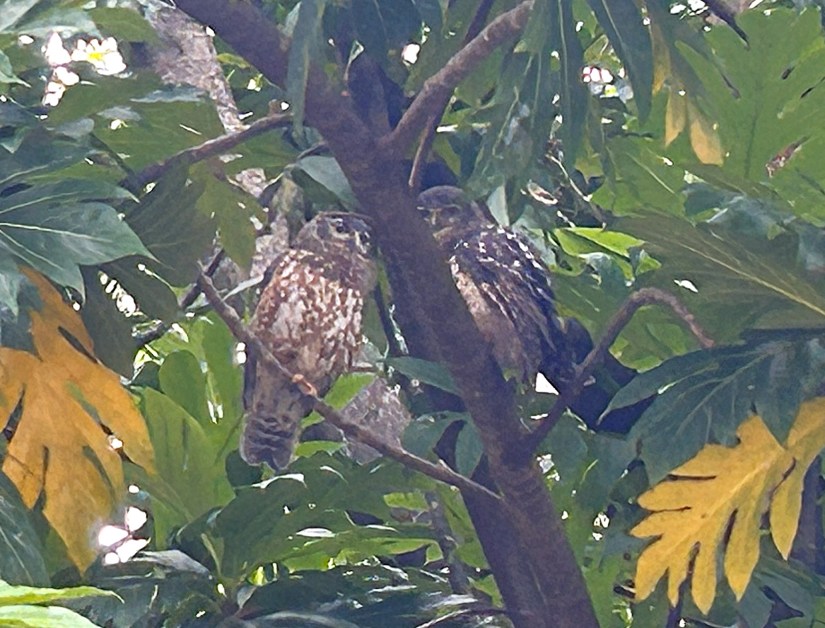
Red-tailed black cockatoos squawk noisily in the park trees, a stray cassowary meanders, and pelicans are fishing the mudflats at low tide. Numerous beaches and a salt-water lagoon round out this laid-back city of 153,000.   

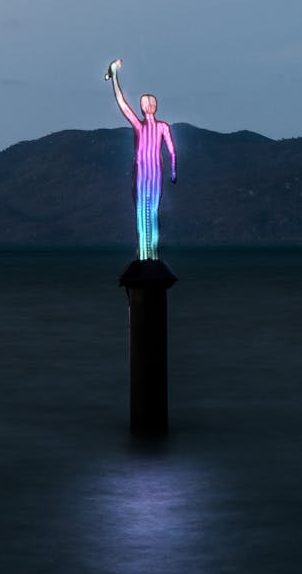
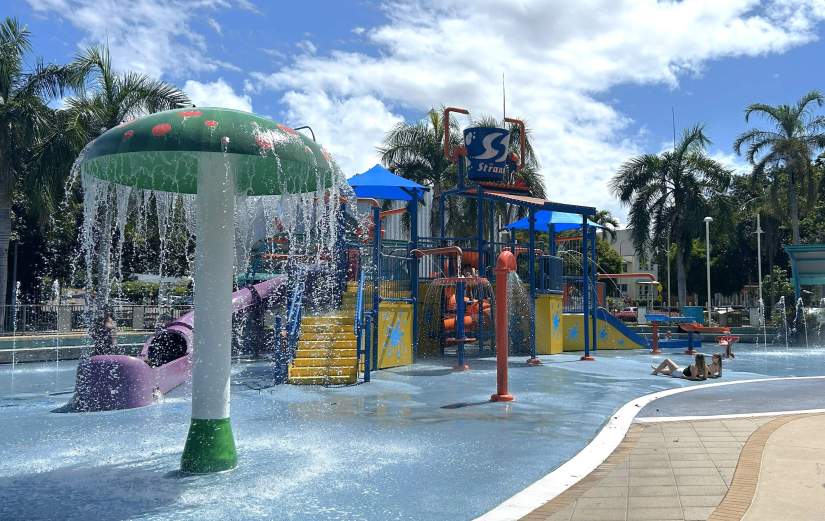
We took advantage of walking in the morning ‘coolness’ of 84 degrees, with the heavy humidity clinging to our skin.  The 1.5-mile shoreline esplanade is dotted with statues, fountains, playgrounds and fitness equipment.  

Reaching its end, we turned inland to explore the city center, past the high school and soccer fields, hospital, library, shopping centers and hotels.  The streets are quiet, with everyone either at work or school.

Cairns waterfront at low tide

For the afternoon hours, we joined an excursion that toured the nearby Cascade Waterfalls and coastal town of Palm Cove, via a stretch Hummer.  Eight of us boarded the luxury vehicle that could have held 16.  Sparkling waters, wine and beer were onboard refreshments as we cruised in style and watched the scenery go by. 

At the Cascades, a few folks opted to take a dip in the cool swimming hole.

The Palm Cove area is an upscale neighborhood with boutiques, fine dining and hotels along its boulevard lined with majestic melaleuca trees.   

The ever-present reminders about the perilous jellyfish were prominent along the shore, including vinegar first aid stations.

These 3 good-natured and free-spirited guys were living in this van, seeing the country and enjoying the spontaneity of travel. It’s an understatement to say they were quite curious and envious of our stretch Hummer!

Adventure Seekers: 3 Aussies, Tom, our friend Sheryl

Leaving Cairns, we push northward for 3 sea days inside the Great Barrier Reef system before transiting the Torres Strait and onward to Darwin.  

Departing Cairns

Speaking of jellyfish, we spotted thousands of them as we continued north. 

Estimated size: King sized bed pillow!

Our 1,200-mile passage brings us to Darwin.   

Not only are the sunrises and sunsets here noteworthy, but Darwin is known for being the Lightening Capitol of the World…91,000 strikes have been recorded within a 24 hour period!

Darwin sunrise as we approach

Surrounded on three sides by the Timor Sea, the Northern Territory’s capital is closer in both distance and temperament to Southeast Asia than it is to most of Australia’s major cities. Darwin has fewer than 140,000 residents, which includes about 50 nationalities, and is also home to the largest aboriginal population.  

The area is rich in history, though there are few old buildings.   Most had not survived the heavy bombing in World War II, or the disastrous Cyclone Tracy in 1974.   Darwin has been largely rebuilt, and it’s modern and well planned.

We hopped aboard a Hop On/Hop Off bus to explore Darwin and its surrounding area. We left behind downtown’s Smith Street popular with shoppers and passed the Crocosaurus Cove and its Cage of Death, where you may swim with crocs while protected in a clear tube.  Croccove | Home Page   Maybe next time. 

Within minutes, we reach the suburb of Cullen Bay, an area of high-end condo and marina complexes. 

The man is real, the croc is a statue!

Following the Fannie Bay coastline, we pass through Mindil and Bundilla Beaches, a casino, art museum, sailing clubs and the Darwin Bowling & Social Club.

The Darwin Bowling & Social Club. Lawn bowling is quite popular here.

From there it’s onto East Point Reserve, a 500-acre green recreational space filled with walking trails, playgrounds, bbq’s and picnic areas, a swimming lake, as well as over 200 free-roaming Wallaby’s.   A Military Museum is also nearby.

The Saturday Parap Market is filled with townsfolk shopping for their produce, fresh breads and pastries, local arts, handicrafts and perhaps the main attraction:  the food trucks. 

We purchased some indigenous art from a Yolngu woman, Christine, who inherited her artistic style from her mother’s ancestors’ knowledge, lore, and stories.  As a side note, Christine illustrated a book, called “The Life of Tree”, a children’s therapeutic picture book that creates a culturally safe space for Aboriginal children to express difficult emotions around their experiences with family violence.

Painting by Christine Burarrwanga

Speaking of artwork, beautiful murals are everywhere you look.

We return to the waterfront complex, with its urban beach, lagoon and wave pool. 

Dozens of eateries lined the promenade, where we found some welcome air conditioning, as well as a local snack of prawns in coconut bisque and flat bread for dipping.  Delicious!

As we leave Australia in our wake, here are a few parting facts and figures:

  • It is the world’s largest island, and smallest continent. 
  • Home to the most species of reptiles in the world. 
  • It is said that everything in Australia is trying to kill you:  jellyfish, octopus, snails, crocodiles, sharks, snakes, insects, birds, dingos… and if these don’t get you, the heat will. 
  • Population comparison: Australia has 27 million people, USA has 345 million
  • Putting it into perspective, here’s a good geographic size overview:
Geographic Comparison

And now we say, “G’Day, mate…Until next time!” Zuiderdam sets a new course for Indonesia.

2025 World Cruise, Cruising, Travelogues

Leg 3: South Pacific Islands

Our ports across Polynesia are highlighted in yellow above.

Two sea days and 2,300 nautical miles in our wake, we left the least-known islands of the South Pacific, to arrive at the heart and epitome of French Polynesia….Tahiti. 

Tahitian Dawn

The largest in a chain of 118 islands and atolls, Tahiti is an island divided into two parts.  The larger portion is known as Tahiti Nui with its three extinct volcanos; the smaller is called Tahiti Iti. 

Papeete is the capital and hub for Tahitian and French Polynesian government, business and medical facilities.  It is a well-developed city of 125,000 people. 

Downtown Papeete
Papeete Town Hall

Our day ashore begins with a 10-minute walk to pick up our Avis rental car.   We leave the city atmosphere behind and drive off to explore the lush scenery of  interior peaks, valleys, waterfalls, grottos, black and white beaches and the neighborhoods that connect them all. 

We found a great place along the shore to have lunch. I enjoyed the national dish of Tahiti, Poisson Cru, a tuna ceviche made with lime and coconut milk, while Tom ordered Curried Tuna Steak.

The intermittent but heavy showers throughout the day provided ample flow for the numerous waterfalls on the island.

The next day, Zuiderdam departs Papeete at 5am, for her short sprint to the neighboring island of Moorea, a mere 119 miles away. 

Our ship deftly enters the narrow channel leading into the breathtaking Bahia d’ Opunoha, where the towering, jagged green peaks command the scene. 

Moorea’s dramatic peaks

We arranged a private snorkel trip that took 8 of us to find turtles, sharks, sting rays and coral reefs.  

The boat ride alone was worth the trip, as we skirted inside the calm, turquoise waters of the lagoon.  The water is so clear, you could almost have ‘snorkeled’ without getting wet!  But the crystal clear, warm water beckoned as we all jumped in. 

Our first location was deep by snorkeling standards but featured a canyon ridge rising up from the blue depths which was popular with dozens of green turtles.  Some wedging themselves into the coral 20 feet below us for a midday nap, others lazily swimming about.  An occasional shark meandered by. 

The second stop was a shallow, sandy area where large sting rays and small sharks circulated. 

At our third location, we did a drift snorkel, letting the current propel us over patches of coral; each its own ecosystem of fish and fauna.

Our snorkel boat dropped us off at their beach headquarters (read, ‘shack’) and use of their shower (hose connected to showerhead mounted on palm tree) and changing room (scuba tank storage room).   Our needs are simple! 

Thereafter, we walked next door for our noon lunch reservation, with open air dining and an incredible view.

Back to the ship for well-earned naps before the late afternoon sail-away social on the aft deck.   We wave goodbye and say, “A hia hou”, which literally means “See you next time”.

A hia hou, Moorea!

Part of the Society Islands, Raiatea is an island 12 miles long with approximately 13,000 people.  The dramatic peak of Mount Tefatoaiti rises to over 3300 feet and keeps vigil over the spectacular lagoon that includes the neighboring island of Tahaa to the north.  The coral barrier reef encircles both like a halo. 

Google Maps aerial shot of Raiatea and Tahaa

An afternoon excursion allows us a morning stroll along Raiatea’s main street of Uturoa. 

As our visit here coincides with the Chinese New Year, we come upon a Dragon Dance.  Celebrated worldwide, these energetic performances accompanied by loud drumming and firecrackers are believed to bring good luck and scare away evil spirits.  Businesses will invite dragon dance troupes to perform to attract prosperity and good fortune.  Shop owners then offer customary red packets (containing money) to the dragon as a gesture of goodwill and blessings for the coming year.

A festive morning leads to an equally enjoyable afternoon. A local boat whisks us through clear, shallow waters inside the lagoon.  Within 40 minutes, we reach our destination, a cut between two motus (small islets) inside the lagoon.   Alongside the beach, we disembark with snorkel, mask and fins. 

Entering the water, we walk out towards the flow of current produced by the incoming tide.   We don our gear and enter the slip stream that sweeps us along the tops of the coral garden, like a magic carpet ride. 

It’s an IMAX cinematic reel as we drift through a colorful underwater display. 

Clownfish hover amongst swaying anemone fingers, schools of iridescent blue fish dart out of our path and clutches of staghorn coral pass inches beneath our bellies. 

Reaching the shoreline again, we nimbly avoid the juvenile sea cucumbers strewn in the sandy shallows as we exit the water to walk up the beach and do it all over again.  

The second run was even better than the first, by manipulating our course to lengthen the experience.  We could have stayed here all day!

Leaving Raiatea

Leaving the Society Islands, we transit another 542 miles west to find the Cook Islands. Made up of 15 islands spread over 849,425 square miles of the Pacific, those living here are considered citizens of New Zealand.  Our destination is the island of Rarotonga.

Isolated columns of rain dot the horizon as we approach Rarotonga at sunrise. 

Once anchored, the rain abated, and we tendered to the town of Avarua, to collect our rental car for the day.  Having rented a car here a few years ago, we know what to expect:  vehicles have their steering wheels positioned on the right side, which places the manual shifter on your left.  If that’s not enough of a brain bender, you will also be driving on the left side of the road.  But never mind the complexities because it’s just one road that encircles the entire island.   Without stops, the entire loop might take you 1.5 hours. 

Our first stop is the Aroa beach, lagoon, and marine preserve for what has become our favorite place on the planet to snorkel.   

The lagoon waters are warm and calm, and the bordering coral reef provides a vibrant playground for us to explore.  We plunge into a world where coral gardens and underwater landscapes are home to schools of fish that flow like underwater rivers. 

Beyond the beautiful tropical fish, turtles and eels, our precious find today was a 10” Spanish Dancer nudibranch.  This flamboyant sea slug typically hides during the day, so it’s a very lucky sighting. 

Islanders use a “pate”, which is a hollowed-out log drum, replacing our ‘Ring for Service’

After a public freshwater shower at the beach and dry clothes, we’re off to find lunch at our next stop, the Rarotonga Sailing Club.  We watch the kids launch their sailing dinghies while waiting for our meal.   

Our drive continues with views of towering peaks, dense jungle, local homes, beachside villages and guest houses.  Mini golf also seems very popular here. 

Flambouyant Trees in bloom

The Saturday market is filled with produce, handicrafts and fresh fish.

Rarotonga has found its way into our hearts and look forward to another visit!

Goodbye Rarotonga!

Zuiderdam continues on her westward track and crosses the International Date Line, resulting in the ship’s clocks ‘theoretically’ being turned forward 24 hours. Therefore, February 3rd did not exist for us, and we jumped right over to February 4th!

Thick clouds and steady rain greet us in Nuku’alofa, The Kingdom of Tonga 

The cruise pier in Nuku’alofa. Interestingly, it was built by the Chinese for the Kingdom of Tonga.

There are two low-pressure weather systems in our area that our captain is monitoring; one of which is Cyclone 15P.   It is westward of us by a few hundred miles, so while we don’t have any wind yet, the rain bands have a long reach.  

Rain on Main Street

Having visited here a few times in the past, we don’t feel like the rain will impinge on our day, other than getting wet. In fact, other than perhaps going snorkeling (again!), our only mission today is to purchase local art.  Special to Tonga are tapa cloth paintings.

The local marketplace for handicrafts and tapa cloth artwork

Tapa cloth is made from strips of bark from the paper mulberry tree. The strips are generally cut about one hand wide and maybe 4-6 feet long.   The bark is then beaten on a wooden anvil using wooden mallets.  The beating process makes the bark thinner which spreads to a width of about 9-10”.  Several strips then beaten together to make a larger sheet, called a tapa cloth.  A knife or sharp shell, named mutu, is used to trim the edges.  The tapa cloth may now be painted using two types of ink made from the tongo, or mangrove.  Both koka and tongo paint are always brown, but the latter is much darker.   Needless to say, a lot of time and effort goes into each of these beautiful works.  We were happy to purchase 2 complimenting pieces for our home:

Leni is the artist of our new tapa cloth paintings

The heavy rain showed no signs of abating.  Our soaked jackets and dysfunctional umbrella were now useless, so we found refuge in The Reload billiard and dart hall.  And so did several other cruise ship friends, creating competitive teams for both sports that occupied us for hours.

Our two-day passage contains higher winds and some rolling seas, lingering effects from Cyclone 15P.  The Captain altered our course further north to avoid the brunt of this low-pressure system, but the rain persists.  Pushing through 1,076 nautical miles, we reach the French territory of New Caledonia, comprising of dozens of islands with a Polynesia flair.  Noumea is its capital city, with just under 100,000 people.

New Caledonia lies east of Australia and north of New Zealand

We board a 12-person Zodiak and zip out of the harbor, past Zuiderdam and into the bays that surround the peninsula and city of Noumea. 

Our 20-minute ride takes us to Duck Island, a coral islet and marine preserve in Anse Vata Bay.   

Stepping ashore, the local host welcomes us by explaining that they had 50mph winds last night from Cyclone 15P, that they were still cleaning up from.  

And the normally clear water for snorkeling was also a bit murky.  Tom jumps in to investigate.  But I awoke this morning with the Zuiderdam head cold that has been circulating around, so I opted for the beach chair and umbrella that kept me dry from the occasional drizzle.  The snorkeling may have been marginal, but the Zodiak ride made up for it. 

We are now underway with another two-day run of 1,044 nautical miles, as we make our way southwest towards Sydney, Australia…. Much more to come!!

2025 World Cruise, Cruising, Travelogues

Leg 2: Easter & Pitcairn Islands

Rising out of a rainy dawn, looms the outline of Easter Island, or Rapa Nui as it is known to the islanders.

After sailing 2,200 nautical miles into the far reaches of the South Pacific, Zuiderdam hovers just offshore of the town of Hanga Roa, awaiting Customs & Immigration Officials to clear the ship.

The harbor waters appear deceptively calm, hiding the notorious ground swell that demand the Captains respect.   As he has warned in the days preceding, it is not wind or waves, but rather the swell that will make or break this port of call.  Without a pier on which to dock, Zuiderdam must tender her passengers to shore. And this island doesn’t offer much in the way of a protected harbor.  The ground swells can be anywhere from 4 feet or more depending on weather systems that push them from hundreds of miles away.  Captain Friso advises that the cutoff point is a rise of about 4 feet.  As we arrive, the swells are just scantily beneath that risk factor.  Despite using every fender and cushioning device available, the tenders slam mercilessly into Zuiderdam’s boarding platform during the slow and careful boarding process.  In years past, there have been injuries, so the boarding team and passengers alike are extremely cautious.

Surviving the tendering process, we step ashore dodging the red earthen puddles while it still drizzles.  We vet out several potential tour guides; most only speak Spanish, or they want a group of six or more.  Tom, Sheryl and I find a couple willing to take the 3 of us for a 6-hour tour.  

L to R: Toroko, Dani and Tom

We begin at Dani and Toroko’s simple home, where he immediately plays ukelele and sings for us.  Then we all pile into their small car; the 3 of us in the back seat with Dani and ‘her man’ in front.  Dani explains that most locals don’t officially marry or divorce.  It’s more of a mutual union and understanding — as long as the happiness lasts.  If not, it’s on to a new mate. 

Originally a lawyer from Germany, Dani, 67, speaks English, German, Spanish and Nui.  Toroko, 59, was born on Rapa Nui and speaks only Nui and Spanish.  They met in 1985 when Dani came to the island for a motorbike vacation with her girlfriend.  They had a whirlwind romance, and a child was born.  She went back to Germany to finish her studies and earn her degree.  But it wasn’t long before she followed her heart back to an isolated island and a man who wanted her to simply stay home and relax.  Their daughter is now 38 and lives in Germany.  She once visited the island for a year to meet and get to know her father but has rarely returned.  Career opportunities are slim on this remote island.

Occasionally, Toroko would provide some entertainment as we toured.

We enjoy listening to their charismatic banter in Nui/Spanish and can see how much they enjoy each other, as well as this special island where they live.

Easter Island is the most intriguing Island I have ever seen. Mostly devoid of trees, except around the village and Anaka Beach.  Otherwise, the grasslands allow for an abundance of free-roaming cows and an estimated 6,000 horses that practically outnumber the inhabitants.  The population of the island is about 8,000 people, most stemming from three original clans. 

But the real spectacle of Easter Island are The Moai.  Over 900 of them!  These volcanic statues were carved between the years 1250 and 1500.  Standing between 10 to 33 feet high and weighing as much as 80 tons, most of these monoliths face inward from the sea to protect villages and their inhabitants.     

Rapa Nui offers a fascinating and sometimes dark history, not to mention the “how, what, why, and the entire engineering process of creating and moving moai;  all of which would be outside the bandwidth of this blog post.  But I do encourage you to look it up; you won’t be disappointed!  Notwithstanding, I can share our photos of today’s awe-inspiring scenes. 
We begin at the sacred place of Ahu Akivi  that features 7 identical moai statues which face exact sunset during the Spring Equinox and have their backs to the sunrise during the Autumn Equinox. This astronomical precision is only found at this location on the island.

We also found a team filming one of two contestants competing for Queen in the Tapati Rapa Nui Festival beginning 10 days from now.  https://www.easterisland.travel/easter-island-facts-and-info/tapati-rapa-nui-festival/

The site of Ahu Te Peu is home to the ruins of this Inca-style settlement which provides insights into the ancient way of life and culture of the Rapa Nui. 

Our next stop, Rano Raraku,is considered to be the volcanic quarry where 400 moai are strewn about, including many unfinished statues. 

Today, many of the 30-foot moai are only visible from 1/3 up, as the rest of the carving is buried due to wind shifting soil and sand.

Not on any other tour operator’s itinerary, is this cave along the coast where Toroko and his grandmother lived for 4 years.  He was about 8 years old at the time….a childhood’s dream playhouse!

An ocean view
Oven & Stove

Our next stop, Ahu Tongariki, is the site of the largest ceremonial platform on the Island, featuring 15 majestic moai statues.  

Ahu Tongariki and the nearby “Traveling Moai” in the foreground.

Pu’o Hiro is the “trumpet stone”  Approximately 4 feet high, it features a hole when blown sounds like a horn.  Its use is not well defined, but Dani calls it, “The Newspaper of the Island”, as locals use it to declare ceremonies, or hail to the Gods asking for good fishing.  

Other artifacts on the island include the Pava Vaka petroglyphs.

Rapa Nui’s coastline is predominantly rocky, which makes Anakena Beach even more alluring.  Nestled at the edge of a coconut grove, its powdery white sand flows into the calm, crystal-clear turquoise water.   Ahu Ature Huki, a single moai who is one of the few to be looking out towards to sea.  

The nearby group of seven moai, Ahu Nau Nau, look inward. 

Taking a refreshment break of pisco sours, we are lucky to be here at the same time as one of the Holland America tours that included a traditional dance performance. 

Hanga Roa Locals

Returning to the village of Hanga Roa, we view the last stands of moai and say goodbye to our wonderful tour guides (and now friends), Dani and Toroko. 

Any number of hours spent on Easter Island would be special enough, so we are ecstatic that Zuiderdam had the rare opportunity to remain overnight and allow an extra day to explore.  That’s truly a gift!   It’s Christmas (er, Easter) in January!!

We had a leisurely second day poking in the shops and cafes of the small village.  Our 5-mile walkabout yielded a couple t-shirts and small moai souvenirs for the crew who weren’t able to come ashore themselves. 

Rapa Nui Cemetary

Back aboard at 3pm for a sunny sail-away social on the aft deck. As the island disappears in our wake, we bid her ‘lorana’….goodbye in Rapa Nui.

South Pacific pineapples; small in size, big in taste!

As we venture further westward in the southern hemisphere, we are hastily making up time. Not in speed, but in clock changes.  We will turn our clocks back one hour for each of the next 5 consecutive days.  The upside to awakening well before sunrise, is that it affords us a spectacular dark sky, including the Southern Cross constellation.  With no ambient light to obscure even the smallest stars, the entire sky is a dome of glitter down to the horizon in every direction.  A breath-taking celestial display of nebulas, star clusters and the Milky Way are all in their splendor.  Being it January 25, the notable planet parade of Mars, Jupiter, Uranus (dim) and Venus also made an appearance. Worth getting up for!

Remote is an understatement!

Pitcairn Island lies another 1,300 miles west of Easter Island. The island is bathed in the morning light as we approach at 6am. 

The captain positions the ship off Adamstown, the only settlement on the island.   Zuiderdam hovers in place via her Azi pods, just 400 yards from shore.  It’s a stunning sight. 

While the ancient Polynesians were the first to discover and abandon Pitcairn Island, it may be best known as the place where the HMS Bounty crashed and burned many years later.  Fletcher Christian led the mutiny that doomed the ship, but he and John Adams founded a community that still remains today.  In fact, all but 8 of the 43 inhabitants are descendants of the mutineers.

With no harbor or dock for the ship’s tenders, about a dozen residents will come aboard Zuiderdam via their longboat.  They will bring aboard their wonderful handicrafts to sell, as well as fresh fish and produce to trade with us for the important stuff: chocolate, wine, ice cream and toilet paper! 

We were previously here in 2019 and 2020, and I had purchased a carved wooden platter from Andrew, who is the 7th generation grandson of Christian Fletcher. This time, I selected a coconut wood server that he brought aboard which his mother had carved.

The Mayor of Pitcairn also gave a slideshow presentation, followed by a Q & A of what it’s like living on a remote island with 42 other people. 

The Mayor of Pitcairn presenting slides and describing life on the island.

Some points of interest: 

  • The oldest resident, Royal, is 96;  the youngest is 14.  There are 3 children in their elementary school at present.  But for higher education, they go to New Zealand. 
  • Their supply boat comes once every 3-4 months, bringing everything from New Zealand.  Of the maybe 12 cruise ships that are scheduled per year, less are met with weather that even allows them to visit.
  • Their infrastructure is supported by the British Overseas Territory for aid (and not much at that).  Property is available for rent from the government, but not actually charged.  However, you must establish need in which to qualify.
  • They’ve had internet for 15 years, and now Starlink has improved their experience.  
  • A transient doctor and nurse will come for 2-3 months at a time.  But dental and major medical treatments require a trip to Tahiti or New Zealand (a minimum of a 2 day boat ride). 

These are indeed a resourceful, resilient and adaptable people! If you are interested in visiting Pitcairn, you may learn more here: https://www.visitpitcairn.pn/

Goodbye, Pitcairn Island!
Easter and Pitcairn Islands may be the best kept secrets in the vastness of the South Pacific, but well worth the journey!
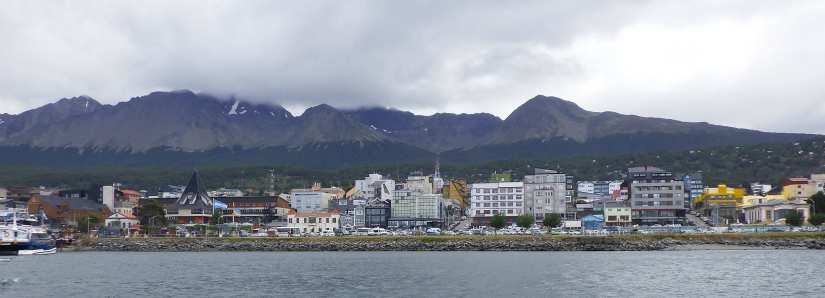
Next stop, Tahiti…..

2025 World Cruise, Cruising, Travelogues

Leg 1: Fort Lauderdale to South America

A beautiful afternoon in Port of Everglades provides for a festive celebration on Zuiderdam’s aft deck, complete with champagne, appetizers and dancing opportunities. And hugs amongst many returning passengers, like us, who seem to have adopted the Holland America Lines “Grand World Voyage” as their winter home. From January through mid-May, it’s perfect timing for a snowbirds escape that will visit 49 ports in 32 countries and 6 continents over 124 days. A traveler’s dream, for which we are grateful and blessed to be aboard.

Departing Fort Lauderdale after sunset, Zuiderdam begins her first passage of 671 nautical miles heading south and west, skirting the coastline of Cuba on her way to The Caymans.   Our itinerary begins with a day at sea, allowing everyone to unpack, settle in and reunite. 

Captain Friso announces that the strong offshore winds of the last 36 hours have calmed down enough to allow our entrance into George Town, Grand Cayman.

Grand Cayman is the largest of its 3 islands, and the vibrant capital city of George Town is home to 41,000 people, 106 nationalities, 500 banks, 800 insurance companies and no tax of any kind.

Cayman’s British influence is felt immediately ashore, with its prim buildings, tidy streets and driving is done on the left.  Many fellow passengers flock to the beaches and crystal-clear water here, but we opted to check out the local culture and lay of the land.

We hopped on a local public bus (a van, really) for a 20-mile loop that would route us past the high-end resorts of 7-Mile Beach, then turn inland through local neighborhoods and eventually back into the bustle of George Town’s downtown.   The round trip for both of us cost $12; a steal considering everything else is quite costly here.  Lunch for two ahi tuna egg rolls and two drinks was $44.00.  Tuna, conch and lobster are the fresh catches here.  Other popular menu items were bull foot soup and goat stew, as well as their world-famous Rum Cake offered at every turn.

George Town was a charming and scenic first stop indeed!
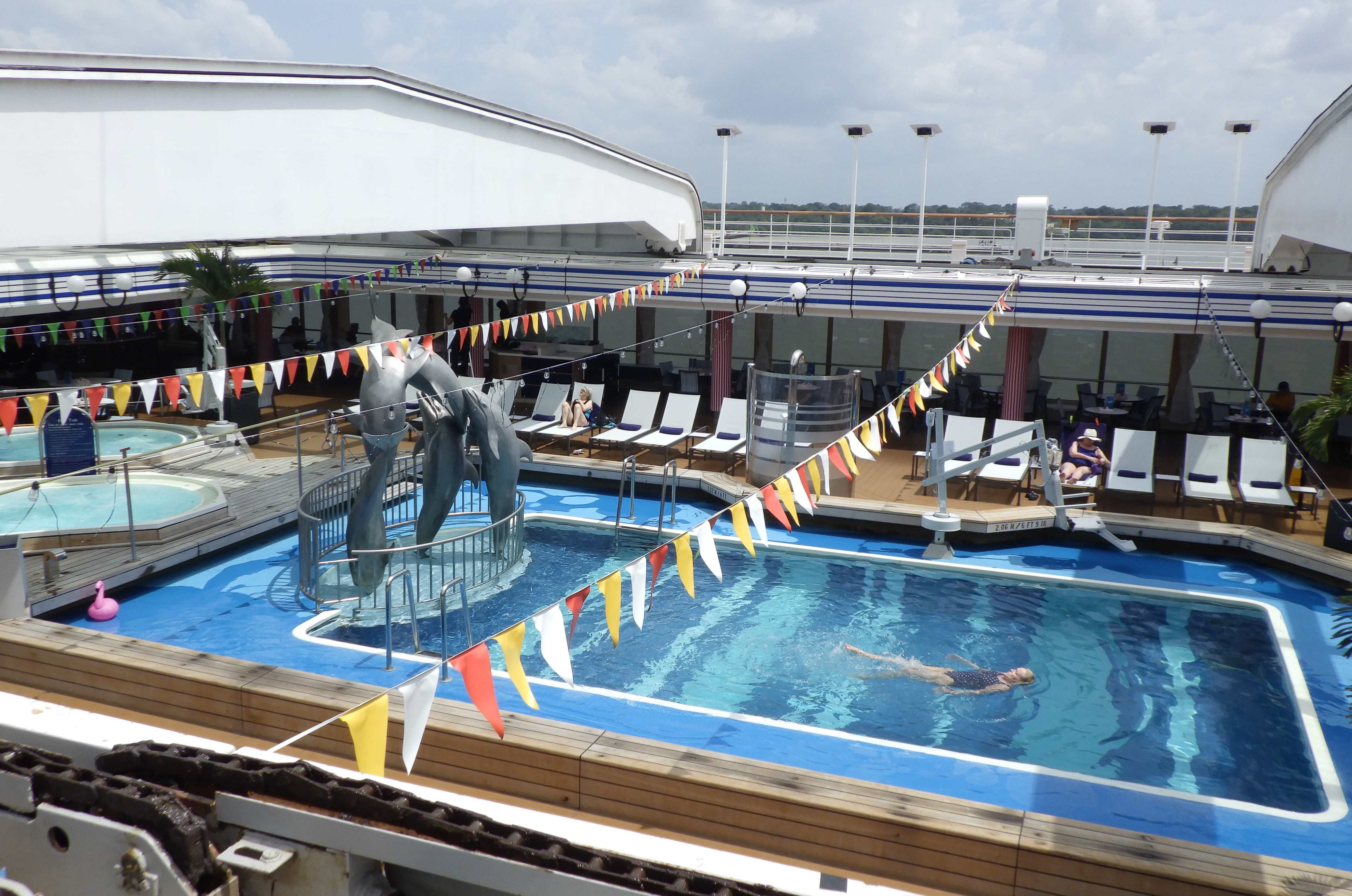
Another 653 miles almost due south, the warm tropical rain finds us as we pull into Puerto Limon.  We previously visited this small coastal town on the Atlantic side of Costa Rica in 2023.   Perhaps it was today’s rain, but mostly because of a sore leg muscle, I opted to remain aboard while Tom went ashore with our friends, Jo and Deb. Their brief and soggy stroll was rewarded with a sloth sighting in the trees of Parque Vargas. My reward was an hour in the hot tub and a leg that felt much better.

Photo Credit: J. Johnston

Leaving Puerto Limon, Zuiderdam continues her southern heading, traveling 260 nautical miles overnight to Cristobal, and the entrance of the Panama Canal. We arrive at daybreak, and I quickly snap this sunrise photo from our veranda.

No matter how many times you may have transited the Panama Canal, it is a fascinating experience! Watching the intricate process of the locks filling and emptying, and seeing massive ships navigate through the narrow passages, never ceases to amaze us.
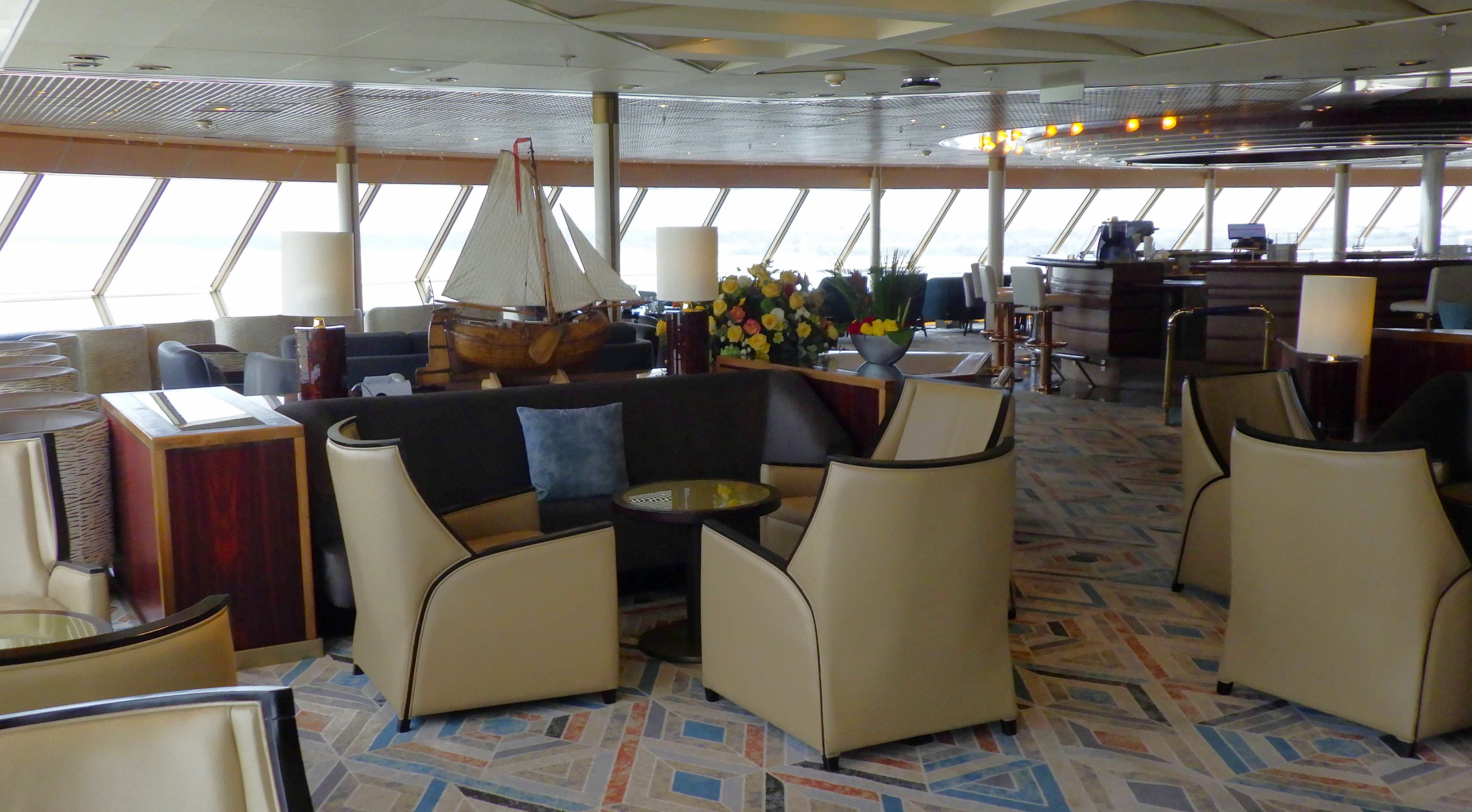
The lush tropical scenery of the surrounding areas and the vast expanse of Gatun Lake provide a breathtaking backdrop to this engineering marvel.

Each journey through the canal offers new sights and moments of awe and is truly a memorable highlight of any voyage. Here’s a timelapse video of the last set of locks:

Thanks to our friend Kathy for the video!

Goodbye Atlantic Ocean! We exit the canal on the Pacific side and set a southerly course for Manta, Ecuador, crossing the equator enroute.

With 1,452 miles of coastline flowing with the Humboldt Current, it’s no wonder that Ecuador and her Galapagos Islands are rich with marine life.  Zuiderdam finds her place alongside a pier in Manta, Ecuador’s largest seaport and tuna capital.  Other top exports include bananas, cocoa and flowers.   

Tom and I step ashore without any other plans than to walk around town and its coastal promenade.  While taking photos, we began chatting with an ex-pat living in Manta, and we ask about what we shouldn’t miss.  She recommends the quaint town of Montecristi, only 11.5 miles away.  She accepts our invitation to join us and was wonderfully adept at negotiating our $8 taxi fare.

Montecristi, Ecuador

Montecristi is renowned for its high-quality, handcrafted Panama hats. The name “Panama Hat” is a bit of a misnomer, as they have always been made in Ecuador.  But they became known as such in 1906, when photos of President Roosevelt were published in the press, while he was overseeing the Panama Canal construction.

Panama hats are woven using toquilla palm

After shopping for hats and placemats, our new friend recommended her favorite place for lunch, Trattoria de Gabriele, and we enjoyed a delicious meal and great conversation.  

As much as we enjoy traveling, it’s the people we meet along the way that enrich the places we explore!  (Thanks Kay, for showing us your wonderful “backyard”!)

Panama Hat Girl statue stands proudly between Manta and Montecristi

Zuiderdam eases into the vast, 116-acre Peruvian seaport of Callao, the gateway to Lima and surrounding cities.  

Map Credit: N. Dolson

To give you a sense of just how large this port is, it is a 20-minute shuttle bus ride from our ship to the exit gates through canyons of containers awaiting to be loaded. 

And because the gritty, impoverished town of Callao that lies beyond the gates is unsafe for travelers, we board a complimentary coach bus to the neighboring city of Miraflores.  It is only 10 miles away, but the commute takes about 75 minutes due to traffic.  Our guide shares that Peruvian drivers are worse than those in Brazil, Thailand and India, a distinction we witnessed to be true!  Fearless and sometimes reckless, they barge into spaces with gusto, unfazed by car horns blaring liberally.  

Miraflores is a contemporary city whose dramatic cliffs plunge into the sea below.  Coastal condominium complexes, modern buildings, ample greenspaces and even a posh downtown tennis club (with clay courts) is home to about 100,000 people.  

But it is also rich in history, and we view the site of Huaca Pucllana, a great adobe and clay pyramid built between 450 and 650 A.D. designed with staggered platforms.

The India Market spans several blocks, made up of hundreds of vendor booths stuffed with Peruvian handicrafts. 

In Kennedy Park, we found flocks of noisy green parrots nibbling on tree berries, as well as the cats who live here and are well provided for by the locals.

Whenever you’re in a new city and unsure of where to eat, it’s always a safe bet to go with a place that has the longest line of locals. To our surprise, this popular place served chicken salad sandwiches with a Peruvian twist. Afterwards, we found a more relaxed ambiance to digest with their national drink, a Pisco Sour.

We were entertained by the numerous paragliders that soared along the scenic coastline before returning to our ship. Tomorrow, five of us will explore Lima.

Peruvian Sunset

The next day, our merry band of friends are met by our Tour Guide, Cesar, and his fearless driver, Julio, for an 8-hour excursion that will include various daytime sights, dinner and a fountain light show. 

L to R: Deb, Tom, Monika, Jo, Deb, Sheryl

We begin at the highest point of the city, the “Morro Solar” located in Chorrillos district, for an outstanding view.  Cesar’s illustrated a history and geography lesson in the dusty earth.

Our next stop was the artistic district of Barranco, with countless murals.   As well as the “Bridge of Signs” where you make a wish and hold your breath until you reach the other side.  

A quick visit to the Republica del Pisco, which was followed by a very lively and hilarious conversation (yes, Pisco Sours will do that!) in our touring van before arriving in the Surquillo district. 

Local markets are always a feast for the senses.  Your ears tune into the native tongues barking their wares, your eyes dart from mounds of produce to featherless chicken carcasses hanging from their feet, and your nose picks up scents of fresh fish mingling with spices.  And today, our taste buds were treated to a wide variety of local fruits and vegetables.   

There are over 4,000 varieties of potatoes in Peru.

As if to whet our appetite, our dinner was hosted right in our tour guides 9th floor suite, complete with private chef.  It turns out they conduct cooking classes here and have two complete on-site kitchens.  While enjoying our generous appetizer of fresh sea bass ceviche, we watched as the chef prepared and flambéed our stir-fried beef and veggie dinner.  Delicious and entertaining!

From dinner, we drove to The Magic Water Circuit, one of the most popular main nighttime attractions in Lima.  

It holds the Guinness record for the largest fountain complex in the world, displaying 13 different fountains illuminated at night.  

Many continuously change color, but the main feature of the evening,  is a colorful laser light show synchronized with classical and Peruvian music, relating historical scenes.

Passing under a water “tunnel”

Our 2.5 day visit in Peru has given us an appreciation for their deep history and culture, flavorful cuisine, friendly locals and beautiful coastal views.  At midday, Zuiderdam releases her dock lines as we say, Hasta luego, Peru! Thanks for your hospitality!

Captain Friso and the Zuiderdam crew now set a new course for Easter Island, a 4-day voyage to one of the most remote islands on the planet.   Stay tuned….