Blog Feed

2023 World Cruise, Cruising, Travelogues

Leg 3: New Zealand

Auckland is New Zealand’s most populous and beautiful city and it’s well known for its white-sand beaches, delicious seafood, and stunning modern architecture. Also nicknamed the City of Sails, this harbor city is brimming with sailboats and ferries that will take you to waterside suburbs and nearby islands.  Specifically, there are over 135,000 registered yachts in Auckland; about one in three households own a boat. The Viaduct Basin, on the western edge of the Central Business District, hosted three America’s Cup challenges (2000 Cup, 2003 Cup and 2021 Cup).  Among sailors, it could be considered Mecca.   And like moths to a flame, Tom and I are helplessly drawn towards the massive marinas to wander and wonder at the forest of masts before us.  

And it’s not just sailboats.  Here we’ve also witnessed some of the largest dry-stack storage sheds for power boats we’ve ever seen.

Dry stack for powerboats. One of many.

Since our previous visit here included the Maritime Museum and other notable downtown sights, we opted to explore the city’s fringe.  Once we reached the Harbor Bridge, our planned walking route takes us up Shelly Beach Road, through hip neighborhoods with tree-lined streets and gorgeous Victorian homes. 

The Ponsonby neighborhood is where we came upon a local gentleman who happened to be crossing the street at the same time with us.  We asked where we could find a good cup of cappuccino and he replied that he was walking to his favorite cafe himself and he’d be delighted if we would join him.  His name was Grant, and he was taking a break from repairing his 100-year-old home that suffered a good bit of damage caused by the deluge of rains this past week.  New Zealand, and Auckland in particular, received as much rain in one day as they get all year.  Grant was grateful for the distraction of meeting fellow boaters and the three of us swapped boat ownership stories for the next hour over coffee.   Back in the 1970’s, he and some of his mates built a ferrocement sailboat, not without many interesting and entertaining challenges.   He was also pleased to share the coincidence that he once owned a small sloop named Monica.  We hated to part, but Tom and I had to start heading back towards the port and Grant reluctantly had to begin removing wet soggy carpet from the lower level of his home.

New Zealander’s are very engaging and friendly

We saw a lot of places carting off wet carpet, soggy sofas, etc., but the downtown area did not reveal too much damage other than muddy street gutters.  

Cutting through Victoria Park we marvel at the enormous London Plane trees which were planted in 1905 for the parks opening. The trunks are easily more than 10 feet in circumference and look like they could still easily outlive us.   

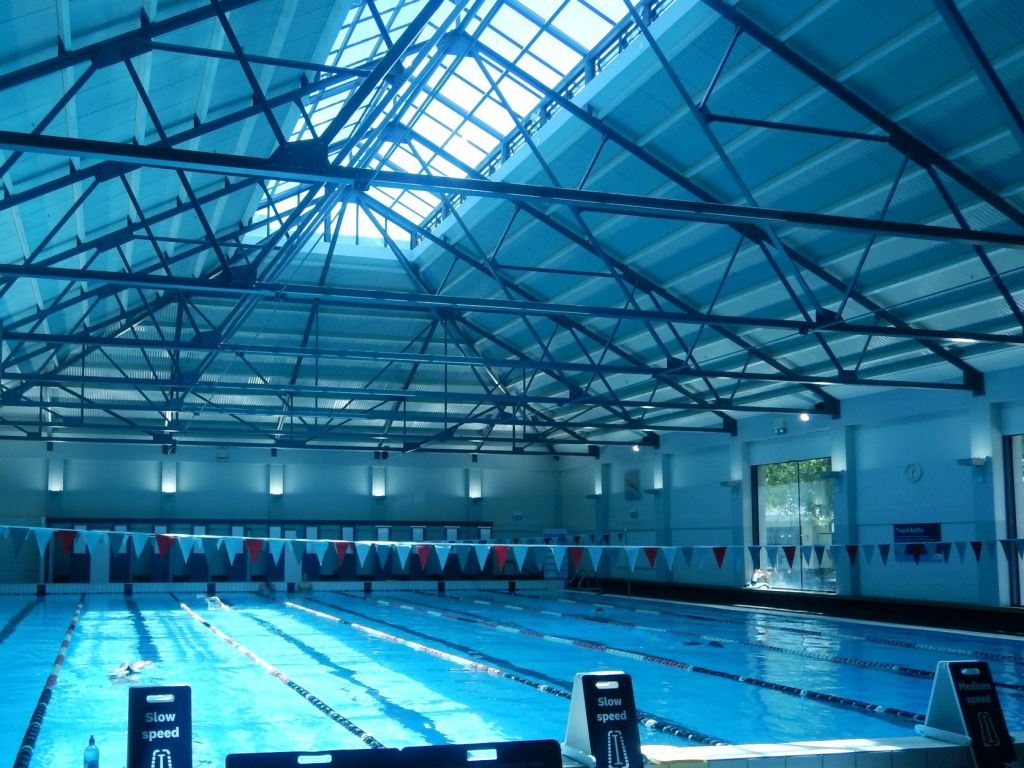
We stumbled upon the “Tepid Baths” building built in 1914, which houses Auckland’s oldest public swimming pools, still in use today.   

Back down to the Viaduct area by the harbor, we rested our tired feet at one of the numerous cafes before heading back to the ship.  Our devices revealed we walked 7.1 miles today.            

The iconic Steinlager 2 champion sailboat

A festive sail-away is enjoyed on Zuiderdam’s aft deck, as we watch Auckland fade astern into the sunset for our overnight passage to Tauranga.

The extremely narrow passage into the shared harbor of Tauranga and its suburb, Mount Maunganui, makes for an exciting dawn arrival. The harbor pilot boards Zuiderdam in the early darkness and deftly guides her around “The Mount” has it’s known to locals.

Mount Maunganui

The occasional drizzle on this breezy, overcast 65 degree morning will eventually give way to sunshine and 75 degrees by afternoon.  With all the rain that the Kiwis have been dealing with over the past week, they’re all out at the first ray of sunshine in this relaxed beach town. We made early morning phone calls to home (now an 18-hour time difference), among the giant palms that line the bay’s boardwalk.  We were startled when one large soggy palm tree plummeted a good portion of its “collar” about 20 yards from where we sat. The mass landed with a thud. 

During our last visit here in 2020, we hiked up The Mount.  The walking tracks to the top of this 760-foot-high extinct volcano provide 360-degree views which span the entire length of the Bay of Plenty.

But this time, we walked the shoreline boardwalk, through a few blocks of beach rentals, then down Maunganui Road towards the many shops and cafés which featured some of the best salmon eggs benedict and green-lipped mussels.  We could easily live here!
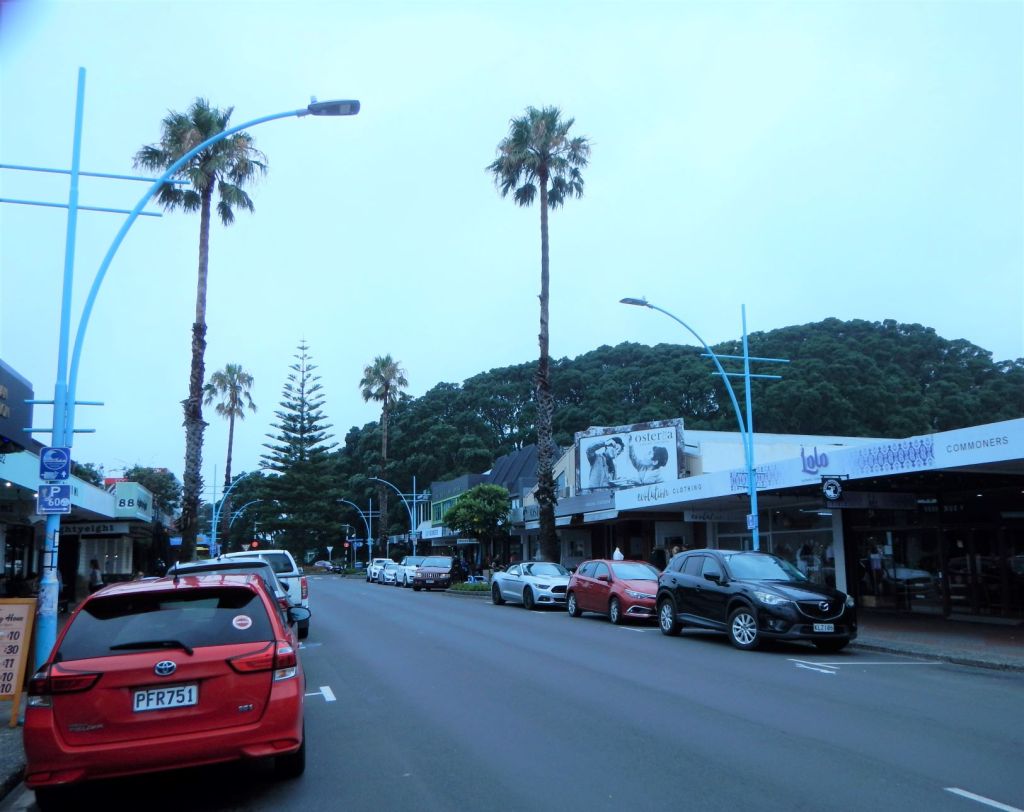
Gisborne, New Zealand is the Easternmost point on the date line and therefore, the first city in the world to see the sun of each new day.   It’s a quaint coastal city, with beautiful beaches, residential neighborhoods and three rivers, where rowing teams are abundant.  The Māori style, outrigger boats which have been prevalent throughout the South Pacific are still popular here.  In fact, some energetic rowers even “draft” our tender boats on the 20 minute tender ride to the town dock. 

One of three rivers in Gisborne
Outriggers outside their rowing club

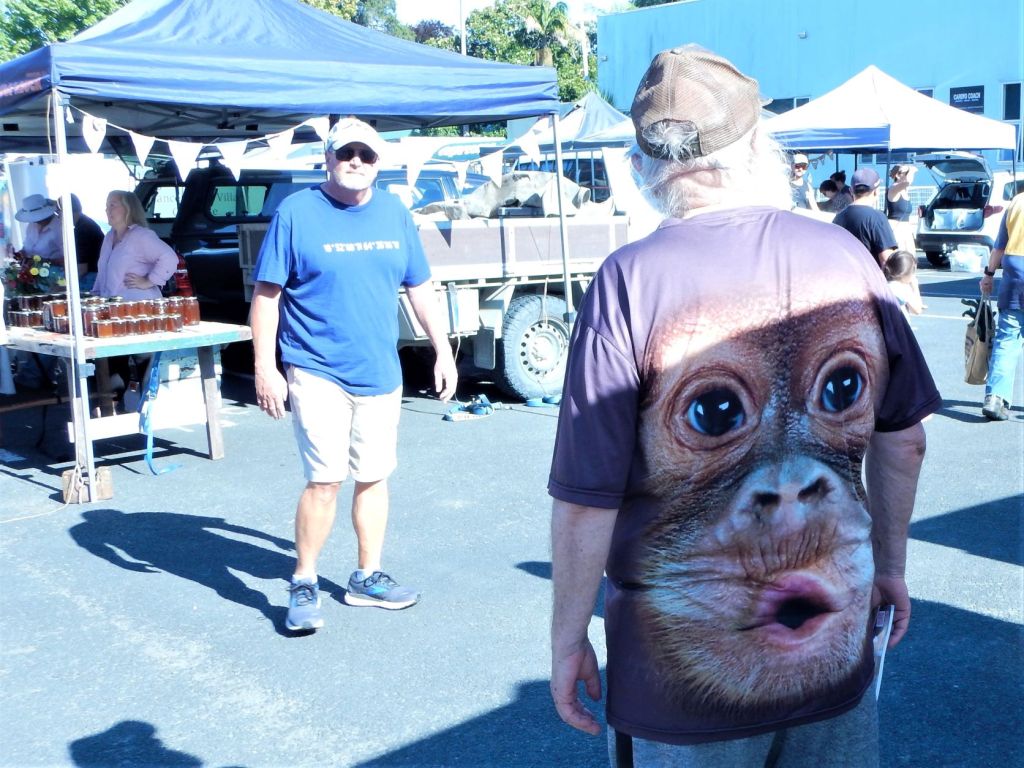
Ashore on an 80-degree Saturday with abundant sunshine, our first find is their well-attended Farmers Market.  The produce, flowers, artisan wares are as colorful as their shoppers. 

From there we wandered through their riverside Botanical Gardens on the way to their very art deco downtown. 
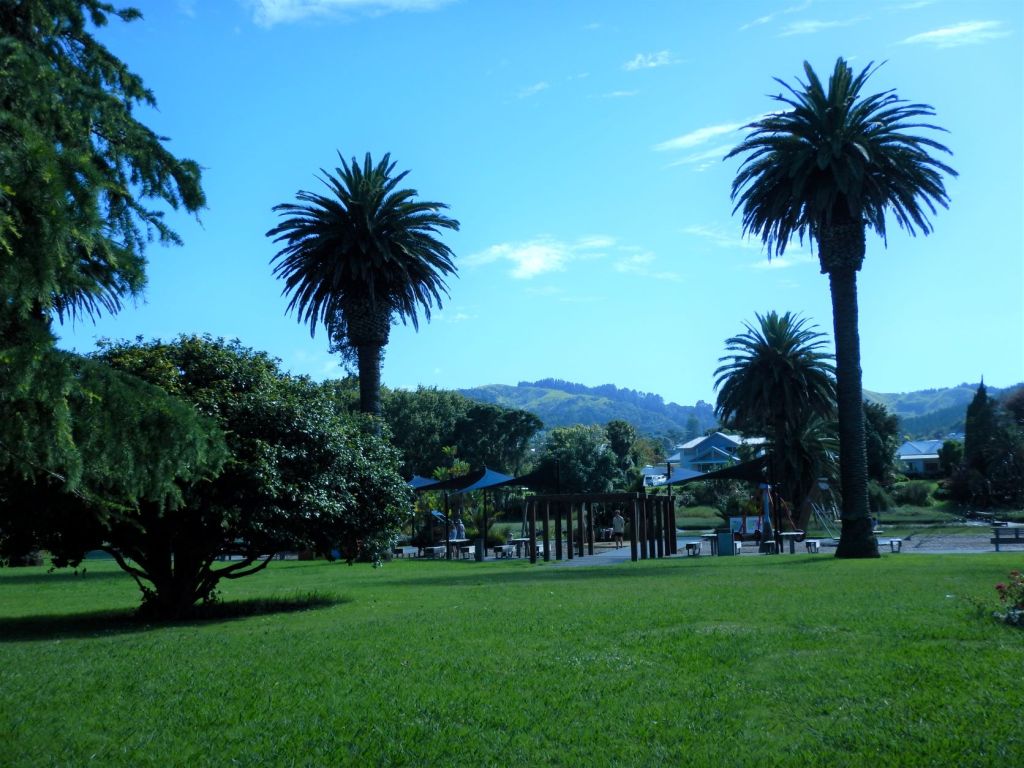
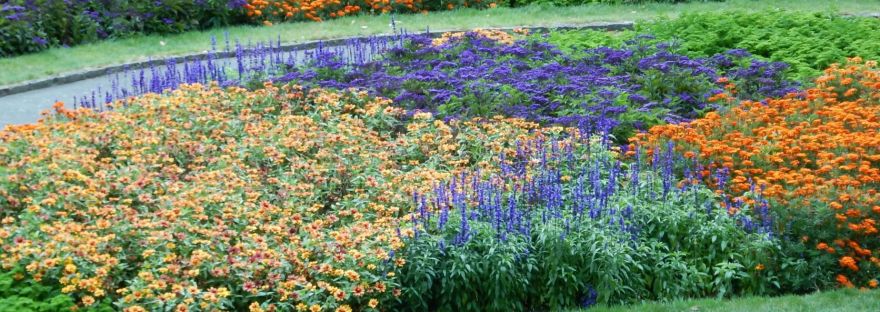
Gisborne Botanical Gardens & Park
Gisborne Mailman

The main boulevard is lined with large palms which were planted 20 years ago for their centennial anniversary. 

We enjoyed a nice cappuccino at a sidewalk café featuring a music duo.   The hilly countryside of Gisborne is also home to about 25 wineries, but we’ll have to save that for another visit.  

All aboard at 3pm for our overnight sail down to Wellington.

Wellington is located in the world’s 2nd largest natural harbor (behind Nova Scotia). It’s the capital of New Zealand and the southernmost city of the north island.  
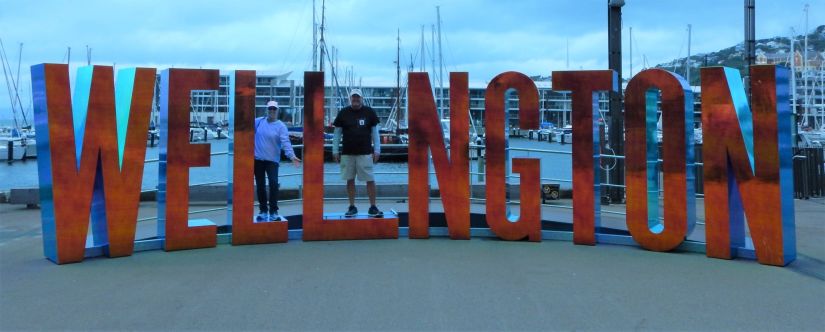
Our pier is next to the Wellington Stadium, home to their fierce rugby team the All Blacks, who perform their famous hacka… an intimidating, physical, full-body war dance performed by all 23 team members.  Worth googling a video!

New Zealand’s Ruby Team, “All Blacks”, performing haka prior to a game

Our visit falls on Waitangi Day, a national holiday celebrating the signing of the Treaty of Waitangi, New Zealand’s founding document.  While some downtown shops and businesses are closed, there is plenty going on with local festivities.  

We begin our morning ashore riding up the Wellington Cable Car  for a beautiful view of the city, cricket and rugby fields below.   A couple of cappuccinos to fortify our 2- hour hike through their massive botanical gardens, which is practically an arboretum. 

Duck pond in Wellington Botanical Gardens

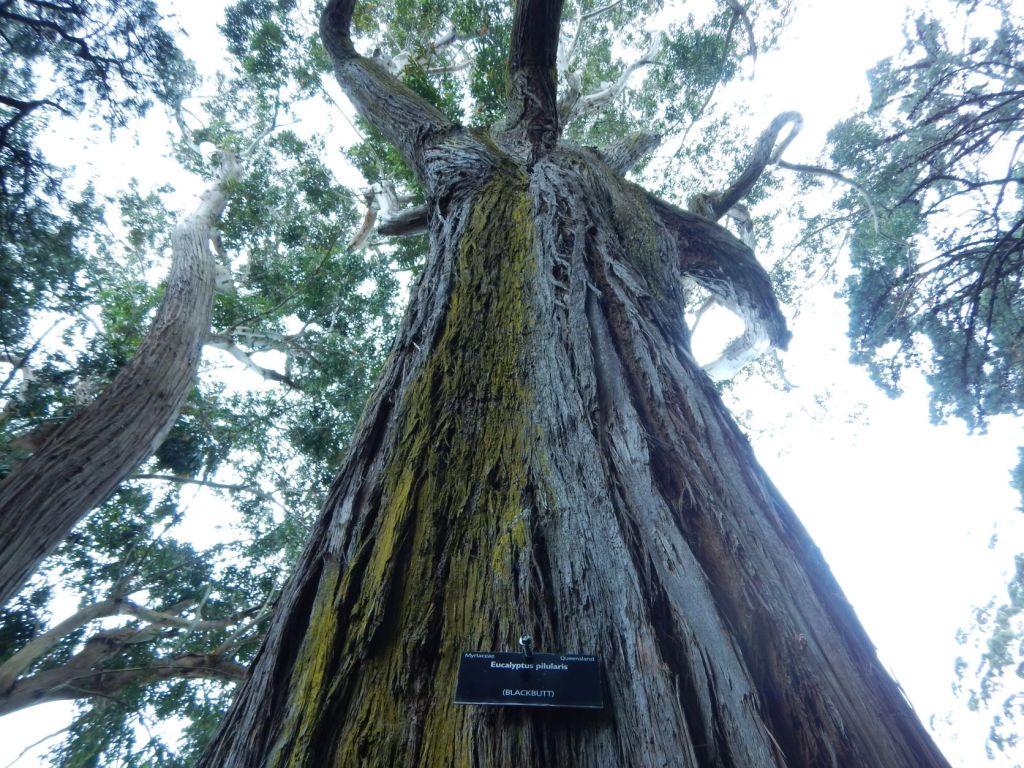
Cloudy, breezy 70 degrees.  Gargantuan eucalyptus trees, roses, exotic tropical flowers of every shape and color.  Back down the hill and instantly back in the city streets and onward to the boardwalk area of the shore, lined with restaurants and pubs, museums, food trucks, art sculptures and the towns public diving platform.  
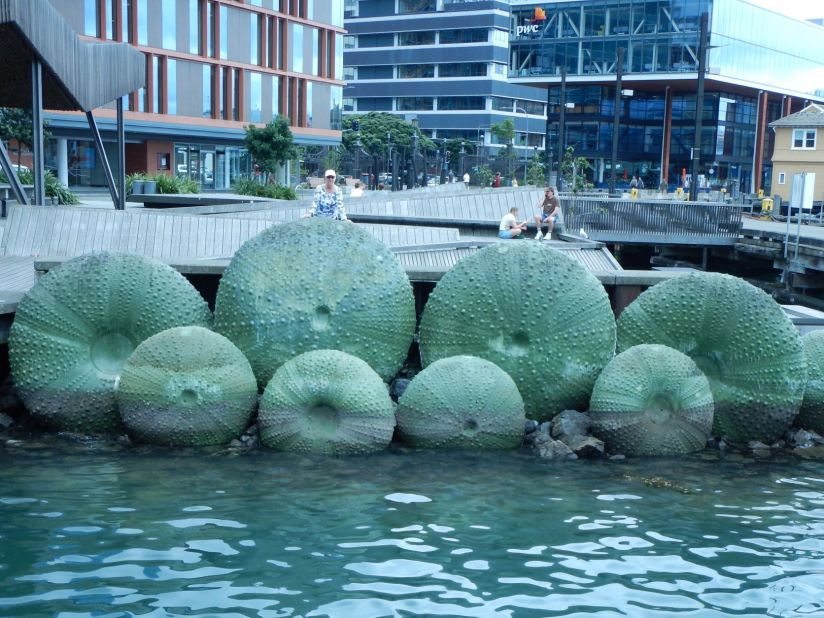
Wellington’s waterfront boardwalk

Lunch by the harbor consists of my favorite, green-lipped mussels, some hearty chowder and crusty bread to mop it all up.  
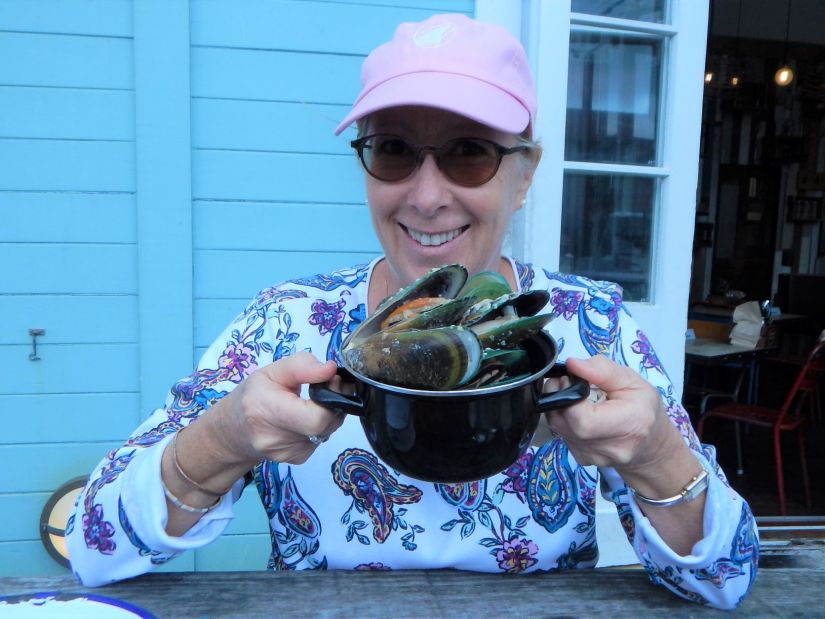
Green Lipped Mussels….YUM!

Local dancers and drum corps begin their performance celebrating the national holiday and it grew into a festive scene.

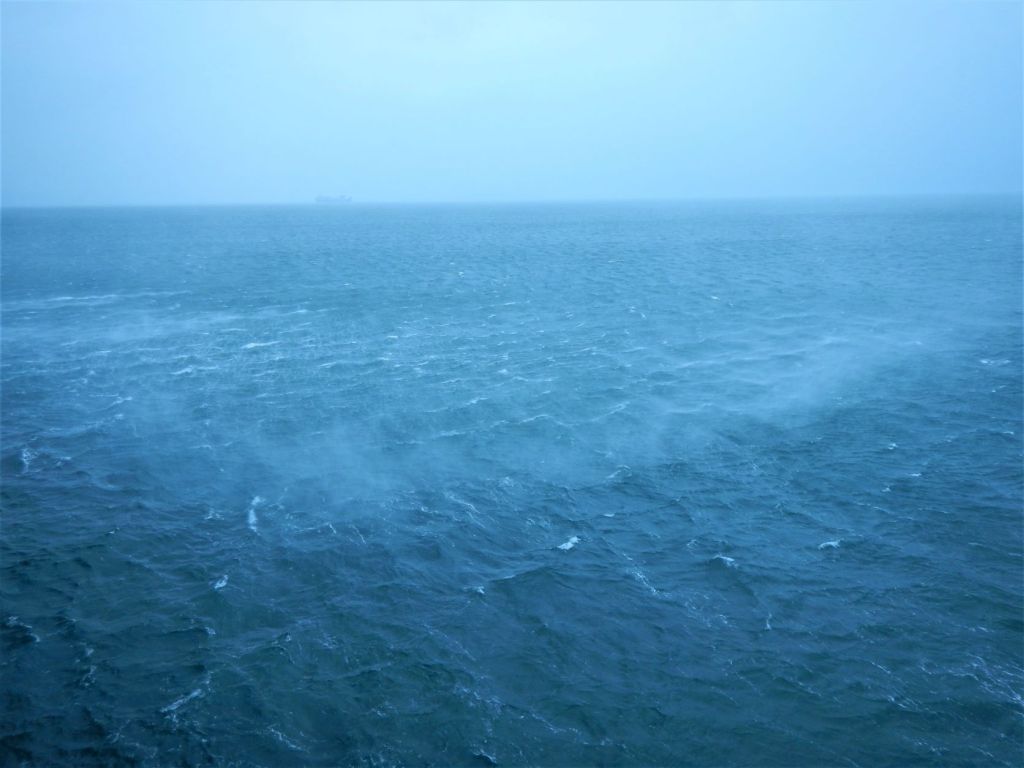
We were lucky that the weather held for our six-mile walkabout today, but a strong cold front had moved in for our departure from the dock.  We watched with interest as the mighty tugboats aided our departure in sideways rain, the wind ripping the tops off waves and frothing the surface.  

Our ship heeled away from the wind as we proceeded out of the harbor and into open sea, enroute to Sydney, some 1,200 nautical miles westward.

2023 World Cruise, Cruising, Travelogues

Leg 2: South Pacific

Life At Sea: Out of the 128-day itinerary, we have 60 sea days.  One of the longest stretches of sea travel we have are the 8 days before our landfall in the Marquesas Islands.  You may wonder, what do we do all day??   Never a dull moment, actually!  Since this long sea passage happens so soon after coming aboard, we use some time for more unpacking and organizing to make our 250 square feet cabin comfy and orderly for the next 4 months. 

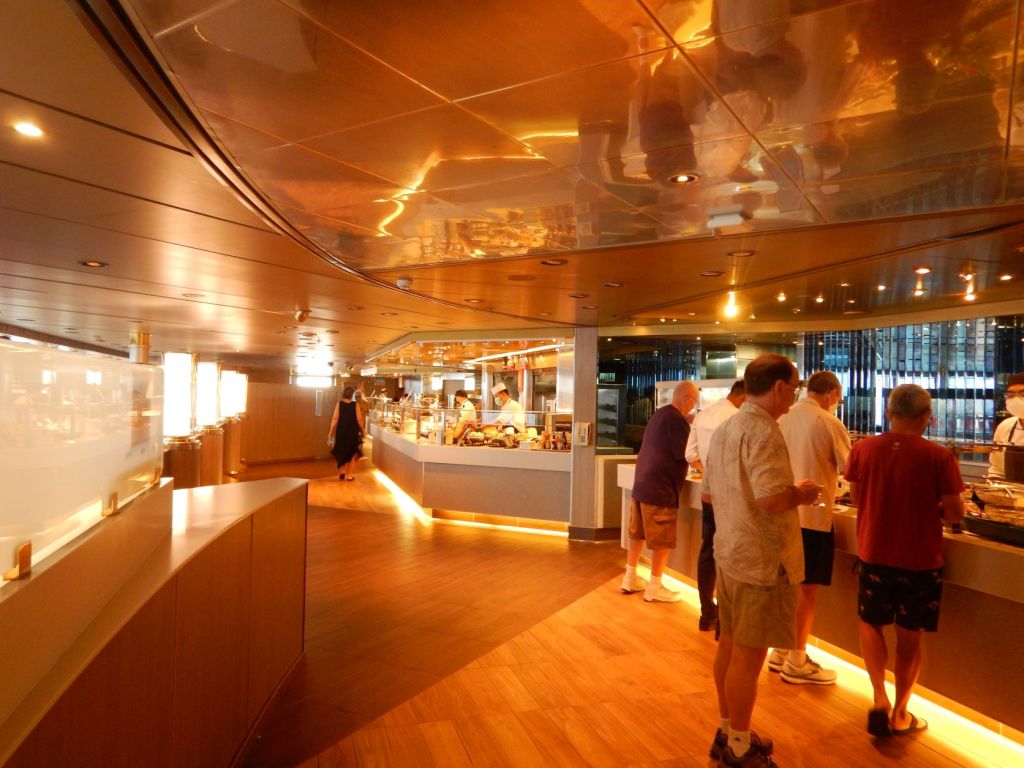
Then there is the fun daytime stuff: pickleball, swimming, watercolor painting, reading, catching up on the computer, walking on the open-air Deck 3, the fitness center, napping and of course, the wonderous three square meals a day.   A wide variety of classes, for instance Ukulele lessons given by the Polynesian Ambassadors who are on board right now.   Also, the fascinating lectures by visiting speakers, including geologists, retired Naval Captains, astronomers, etc., giving talks about the area we are currently traveling through.   Lastly, there is always a rotation of activities on the schedule should one choose to partake:  ping pong, chess, trivia, Mah Jongg, playing bridge, arts & crafts, etc.

Main Stage

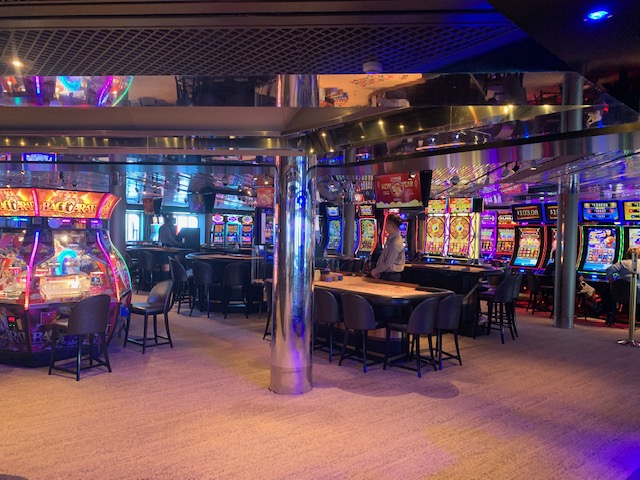
After dinner, we also have many choices for entertainment. Performances on the Mainstage include comedians, magicians, singers/dancers, instrumentalists, movies and ‘What’s In Port’ presentations, etc.    The Rolling Stone Lounge features a seriously talented house band, and the Billboard Lounge offers a dueling piano-style of entertainment.  The Lincoln Center hosts classical musicians. If you are feeling lucky, the Casino is waiting for you. 

But for those nights you just want to chill, movies on-demand are available in your cabin.  And you can’t beat just grabbing a lounge chair on the back deck, gazing up at the stars and listening to the ships wake.    Here in the southern hemisphere, we are viewing lots of different constellations than at home, like the Southern Cross.   It’s no wonder that the Crosby, Stills and Nash song of the same name seems to play in our head as we near the Marquesas Islands.   The Marquesas are a group of volcanic islands in French Polynesia and considered one of the most remote in the world.  The group lies 852 miles northeast of Tahiti and 3,000 miles west of Mexico (the nearest continental land mass).

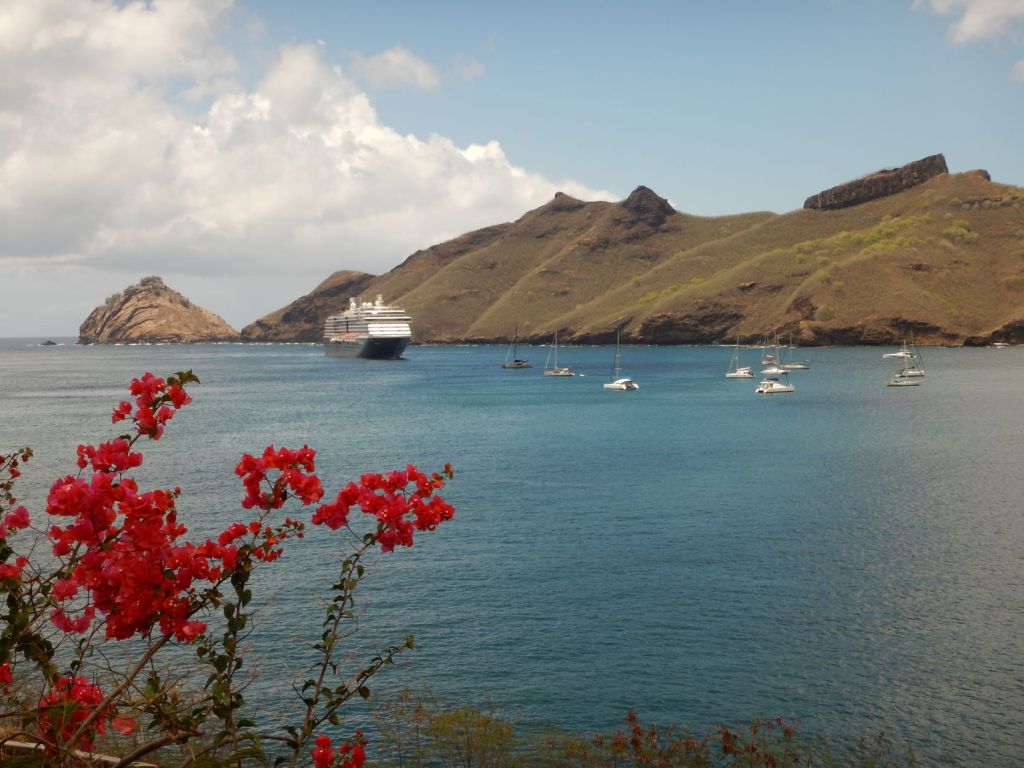
After 8 sea days since leaving the Panama Canal, it seems that the entire ship is awake early with excitement of our landfall.  Dawn is breaking when Nuku Hiva, Marquesas, looms into view and we make our approach.  The passage into the harbor is magnificent, flanked by high ridges of topical vegetation.  A silver thread of a waterfall is to starboard. 
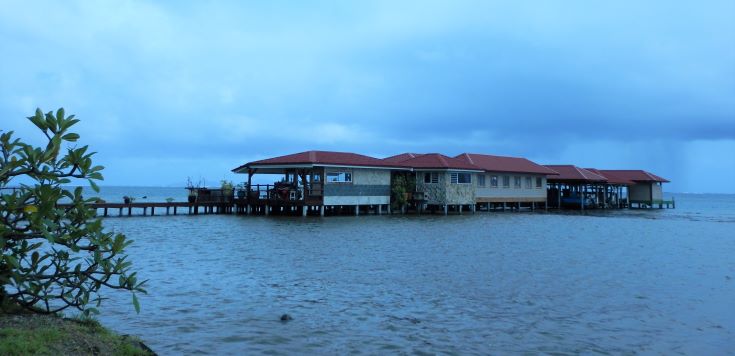
Nuku Hiva, Marquesas – French Polynesia

The Zuiderdam creeps further in until our bow edges into the mooring field.  We practically drop anchor behind a 50 ft catamaran from Copenhagen with a group of divers preparing their gear.  What a sight it must have been for them; being in the shadow of our great overhanging bow along with an imposing bulbous nose protruding at the waterline.  The Zuiderdam backs down on her anchor leaving the catamaran a safe 400 yards away.  Our ships azipods will also keep her in position, away from the nearby rocky shoreline.  (The term “Azipod” combines the words “azimuthing” and “pod.”  They work by having the propeller located on the front of its pod. This allows the cruise ship to be pulled through the water rather than being pushed as in a traditional shaft and propeller system.)

Zuiderdam at anchor in Nuku Hiva

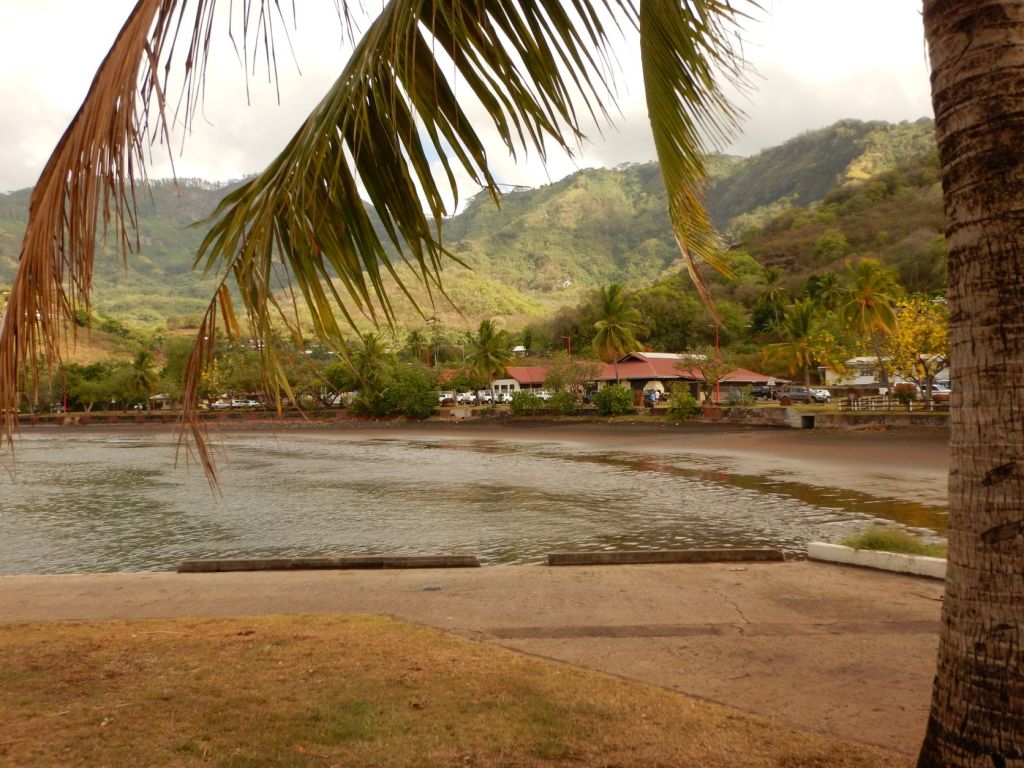
It’s 8am when we ride the second tender to shore, being welcomed by a local, traditionally-tattooed Marquesan playing native drums.   The artisan market vendors were scuttling about, getting their wares set up.  They’re known for their wood carvings, black pearls and tribal art. They seem as excited as we are…while it may be our first landfall in 8 days, we were told that they only receive 4-6 cruise ships a year.

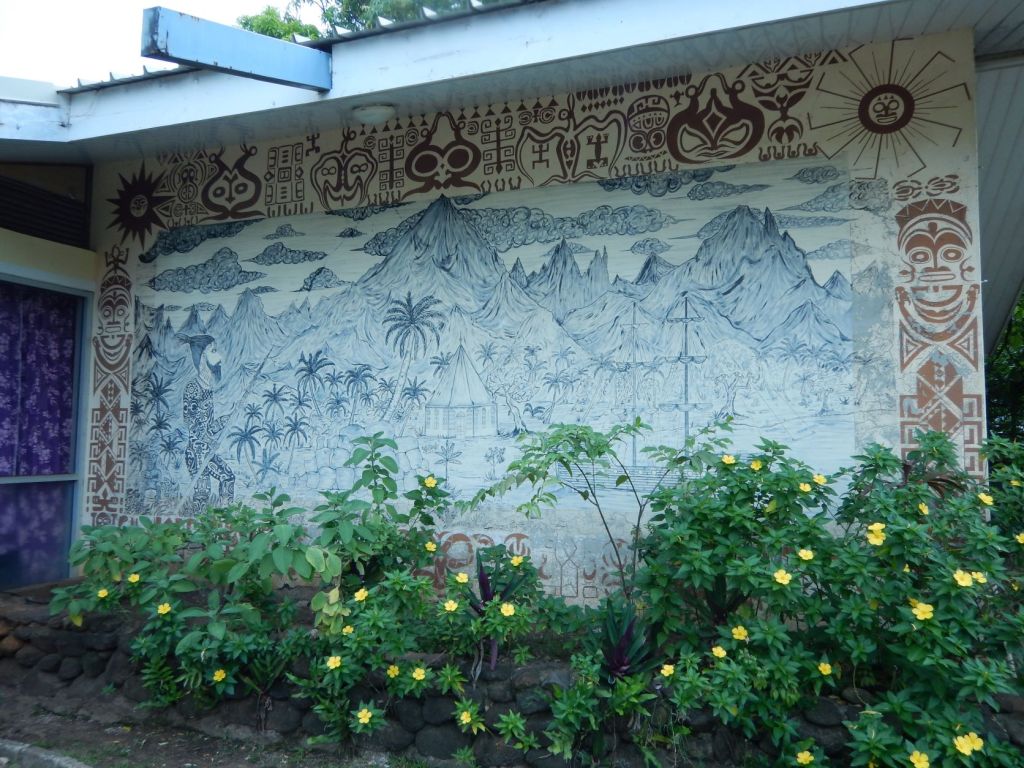
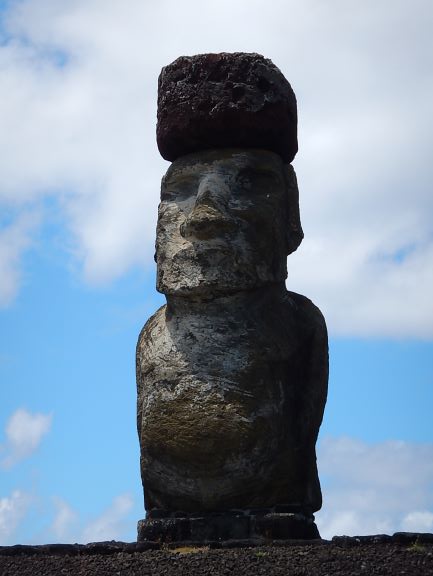
We begin by walking the main street, which is no more than a two lane, sometimes dirt/gravel road.  Schools, churches, homes and one pizza shop.  Ancient stone statues stand sentry to this village, some looking out to sea. 

After 2.5 mile walk in the tropical heat, we arrived at a boutique hotel, quenched our thirst and enjoyed the elevated view of the harbor with Zuiderdam at anchor.  At least our return walk was downhill.  Nuku Hiva is immensely beautiful and a taste of more South Pacific islands to come.  But first, two more sea days.

Trouble in Paradise: That evening, I noticed a new, ‘smudge’ of a floater in my lower left eye before going to bed. Uh-oh. While on deck in the bright sunshine the next morning, the smudge suddenly became dark, spidering streaks and I immediately sought shade and the medical center aboard.   They dilated my eye and could determine that while there was no retinal detachment, their limited equipment couldn’t rule out a hole or tear in the retina.  Torn retinas may become common between ages of 50-70 and being near-sighted (like me) is one of many factors that can increase the risk.
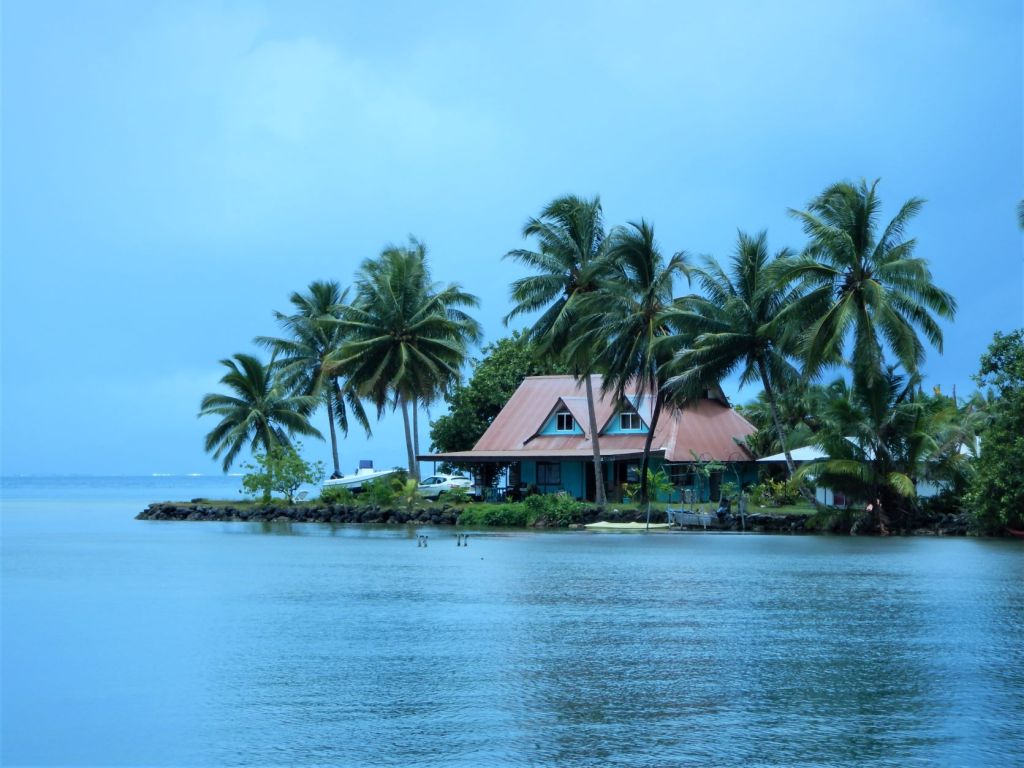
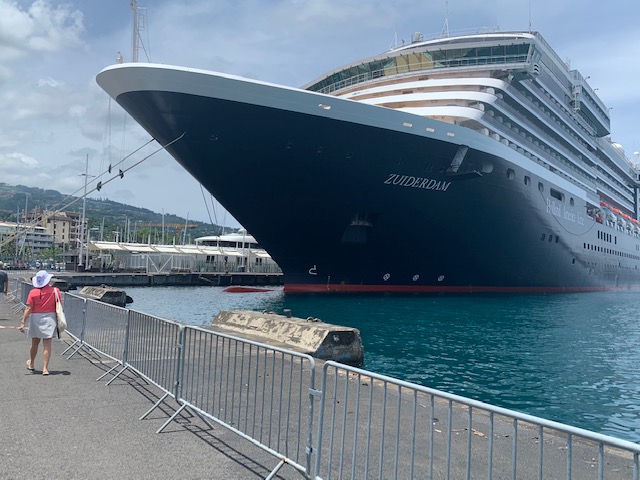
Our landfall in Papeete, Tahiti the next day allowed a visit to an ophthalmologist for full exam. The doctor was French-speaking (naturally, as we are in French Polynesia), but he spoke very good English.  After a thorough dilated exam, he confirmed that I had a ‘hole’ in my left retina.   He also indicated that my lower right retina showed an area of weakness, which by itself was not an emergency but given our extensive and sometimes remote travel and timeframe, he recommended repairing that also.  Gulp. Ok. Naturally, we did grill him on his credentials, how many of these surgeries he’s performed, etc. etc., as it was a bit daunting to suddenly be faced with this remedy without a doctor your familiar with!   He performed laser repair on both eyes. So far, all seems to have gone well.  I will have a follow-up ophthalmologist appointment while in Sydney, in about 3 weeks.  I’m told that the floaters may remain.  Meanwhile, I’m avoiding any jarring activities (pickleball, etc), nor am I snorkeling or anything like that until after the follow up appointment.   The good news is that it is pretty simple to take it easy aboard the Zuiderdam!   And now that the internet availability is becoming better, I especially hope to catch up on my journaling and blogging. 

Docked in Papeete, Tahiti

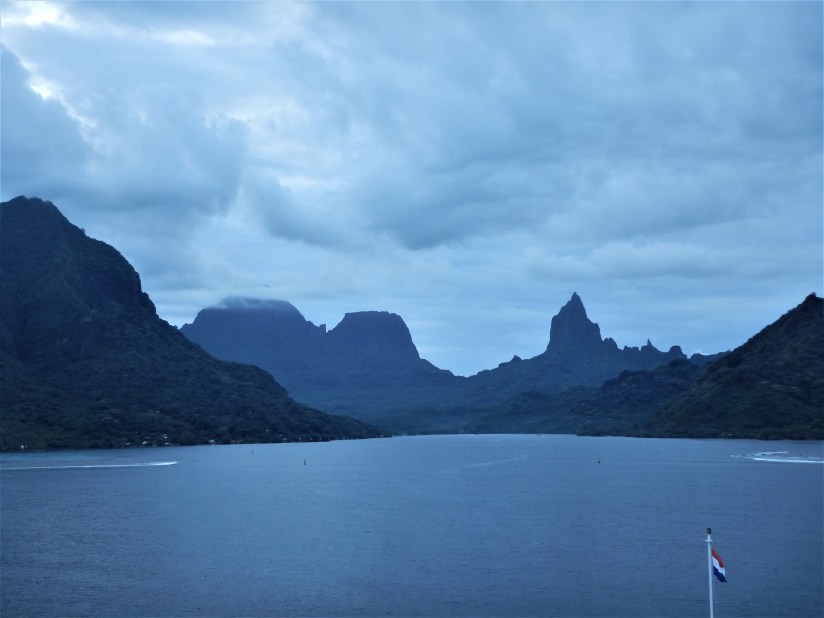
In the 18 days of this voyage so far, we have sailed 6,274 nautical miles. As we travel westward, we have been routinely turning back our clocks one hour at a time.  Waking at 5am has not been unusual, in fact welcomed, as it seems to coincide with viewing our arrival into a new port.  Only a few miles from Tahiti, the silhouette of Moorea reveals itself at first light.  We make our way around the coastline towards Bahia D’Opunoha.  Despite some cloud cover, it’s an absolutely stunning approach with its jagged, emerald peaks.   The famous peak of Mount Tohivea comes into view.  Locals refer to it as Bali Hai. The camera simply cannot do it justice.

Moorea at dawn

Once tendered ashore, we decided to take a tour of the island.  It’s a group of nine of us aboard a bus that would otherwise hold 14.  Our driver, Bryan, takes us on the 40-mile circle route of Moorea, beginning with a fantastic view from atop Belvedere, looking out to sea. 

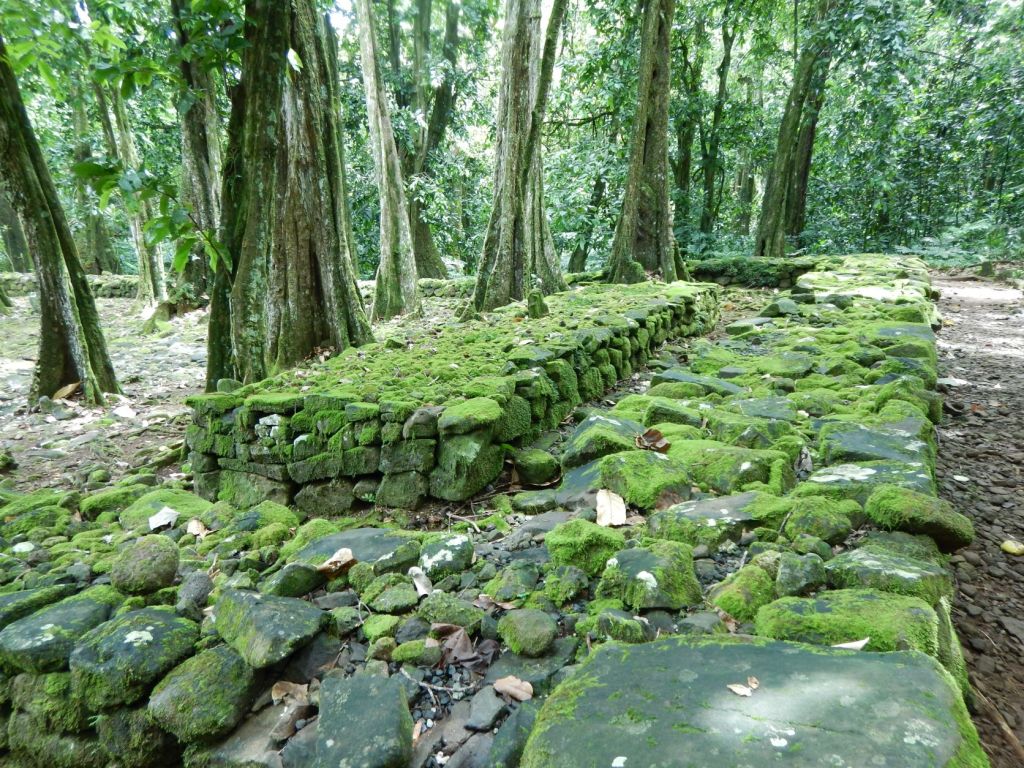
Next, we visit a historical sacred area, where long ago the natives would perform human sacrifices.  The stone platform shown is where the beheading would take place.  It was so long ago that tall trees now stand guard. 

Resuming downhill, we pull over on the side of the road to a pineapple field.   A small, vibrant yellow and incredibly sweet variety.  The surrounding trees offer wild-growing soursop, papaya, breadfruit and coconut, which Bryan cuts open for all of us to enjoy. 

Back down to sea level, we continue our clockwise route as it begins to drizzle.  Passing through numerous villages and settlements; the locals are going about their Sunday activities.  

The lyrical Polynesian chorus rising from each church is heavenly, indeed.  The coconut grove beaches are beautiful but deserted due to today’s rain. 

Regardless, Moorea stands up to its reputation of being the quintessential, idyllic South Pacific island!

We enjoyed a two-day visit in Raiatea on the island of Uturoa, located within French Polynesia’s Society Islands.  

We rented a car and toured Raiatea’s adjacent, smaller sister island of Tahaa.  Despite the rainy morning, the afternoon cleared.  We visited a small black pearl farm and watched them insert a nucleus (made from clam shells found in the Mississippi River) into a young oyster and place it on the ‘farming line’ for submersion later that day.  A fascinating process!

We also saw many vanilla farms, where the beans grow on vines and are hand-cultivated in tent-style greenhouses.   Countless coconut groves here too, and they use every bit of the nut.  They have small, covered racks they use to dry the nut itself for oil extraction later.  Otherwise, breadfruit, papaya, mango, avocado, soursop, pineapple, and several unrecognizable fruits and vegetables are practically growing wild everywhere you look.   The South Pacific islands are abundantly rich.

On the second day, Tom went drift-snorkeling over some gorgeous coral gardens, just inside this motu-ringed island.  Beautiful underwater formations teaming with colorful, tropical fish.  

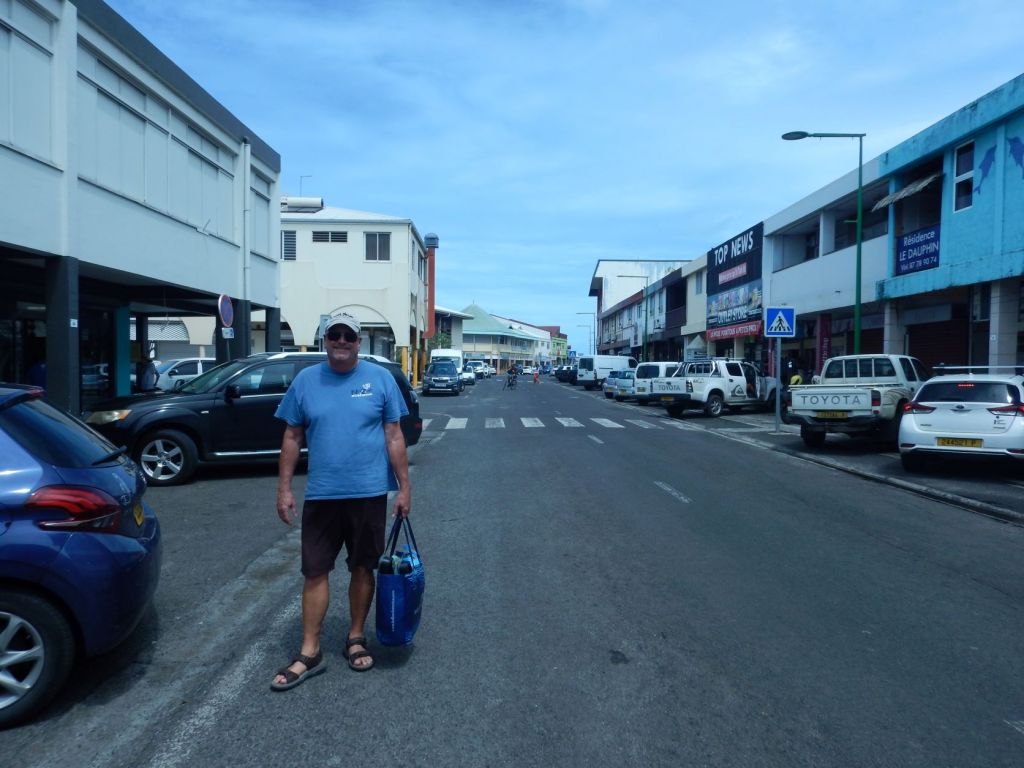
Since I am sidelined from snorkeling because of my recent retina surgery, I went ashore and strolled Raiatea’s main street filled with shops.  For readers familiar with Lansing, Iowa, I discovered that Horsfalls has a second location in Raiatea, as shown by this photo:

Raiatea version of Horsfalls

Leaving Raiatea, we have more sea days….technically five if you look at the calendar, but in actuality we will experience only four due to crossing the International Date Line.   

Transitioning further westward, the contrasts are stark. Unlike the volcanic islands of French Polynesia, the islands of the Kingdom of Tonga, are low-lying coral atolls.  The tradeoff of the verdant green peaks is an entire spectrum of blue in the waters surrounding Tonga.  We dock in Nuku’alofa on a bright, sunny day, and are welcomed by the Tongan Police Marching Band.  After the ukelele musicians of the last few islands, the Sousa-style, “Rock Around The Clock” seems odd, but gleeful given their hearty enthusiasm!

Our first mission today is to revisit Kanokupolu Beach on the western side of the island. Almost one year ago this week, the Kingdom of Tonga suffered an earthquake and its resulting tsunami.  Sadly, the once pristine coral reef we snorkeled in the past, was now reduced to rubble.   Only the foundations of the two beach hotels remain.  Our taxi driver shared that about 200 people were displaced from their sister islands, and the government helped build housing for many families.  The main town of Nuku’alofa was largely spared, but now-empty shipping containers once filled with humanitarian aid were still evident on the pier. 

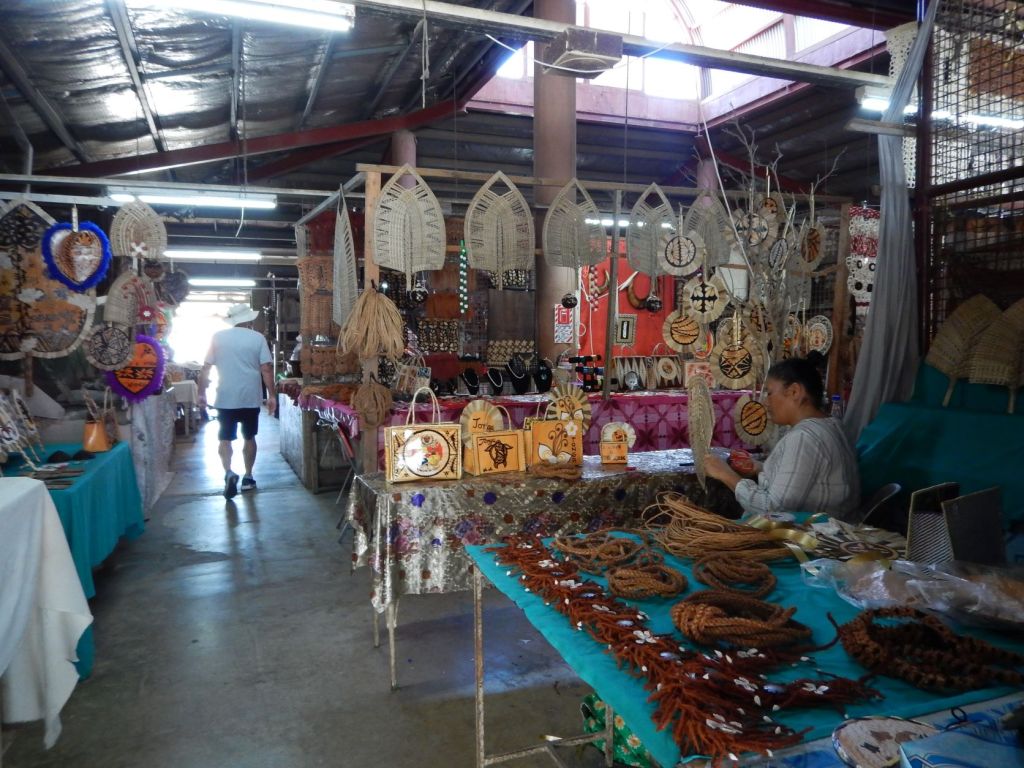
Back in town, we wander the marketplace where tapa-bark artwork and handicrafts are on display.

Taking a break from the extreme humidity, we sit beneath their enormous and famous “Raintree” to cool off. Down the street at the “Reload Bar”, we scored an open window seat facing the street and watch the parade of traffic roll by, most smiling and waving.  The Tonga people are some of the friendliest on Earth.

As we say goodbye to Tonga and its impossibly blue waters, New Zealand awaits on the horizon in two days’ time.  

2023 World Cruise, Cruising, Travelogues

Leg 1: Ft. Lauderdale thru Panama Canal

The bolt of lightning that struck the ship along with the simultaneous clap of thunder sounded like an explosion.  It was a direct hit to the M.S. Zuiderdam.  Within 15 minutes, the Captain and crew announced that the assessed damage was limited to a redundant radio antenna, as well as a shattered windowpane in the roof of the pool lanai.  We had just moored in Fuerte Amador, having completed our day-long, northwestward transit of the Panama Canal.  After a pristine day of scenic cruising, a strong, isolated weather front moved through swiftly, leaving its mark on the Zuiderdam. 

But I should begin from the start of our voyage.  On January 3rd, Tom and I boarded Holland America Line’s ship, the M. S. Zuiderdam, for a 128-day circumnavigation of the world.  The itinerary takes us through the Panama Canal, South Pacific islands, New Zealand and Australia, then follows the South and West African coastline northward to Morocco, into the Mediterranean and European coast before turning east towards the Azores, back across the Atlantic and returning to Ft. Lauderdale May 3rd.   A dizzying itinerary of 30 countries and 61 ports (with 7 overnight ports), traveling almost 35,000 nautical miles before reaching U.S. soil once again. 

Built in 2002, the Zuiderdam is considered one of Holland America’s smaller ships, at 936 feet long, 105.8 feet wide and can carry almost 1,964 guests. The good news for us is that there will only be about 1,400 guests aboard and about 700 crew. 

After departing Fort Lauderdale, our first port of call was Falmouth, Jamaica, which lies on the north coast between Ocho Rios and Montego Bay.   This historical, gritty working port reaches back from the by-gone days of sugar plantations.   This small town was bustling on a Thursday morning, despite the drizzle.  We strolled past the manicured cruise ship pier, past the locals hawking tours on the perimeter and finally, into the streets of the ‘real’ town, where aromas of jerk chicken cooking on wood fires mingled among the ganja smoke in the humid air.   We strolled past simple wooden structures of humble homes, schools and churches.   We noticed a man with bucket up in a tree, picking Jamaican apples.  The woman across the street smoking a joint, offered us one (an apple, not a joint).  We declined her friendly offer. 

One sea day of travel brought us to Puerto Limon, on the east coast of Costa Rica.  It’s the seventh largest city, with a population of 55,000, whose community traces its roots to Italian, Jamaican and Chinese laborers who worked on a late nineteenth-century railroad project that connected San Jose to Puerto Limon. 

Puerto Limon, Costa Rica

Despite the suburban shoreline, we found some wildlife hanging out in the trees in Vargas Park; a mom, dad and baby sloth, as well as a pair of owls. 

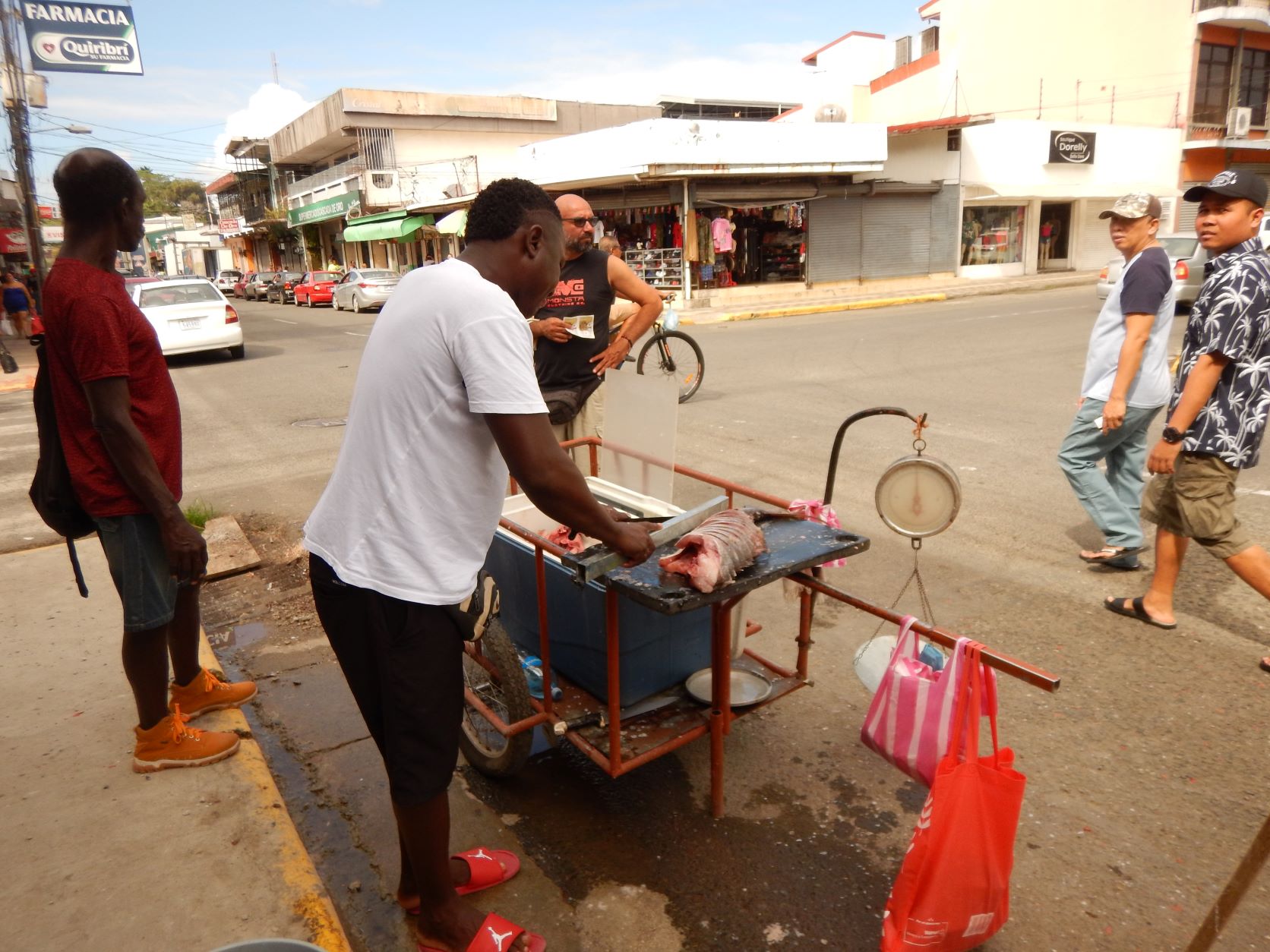
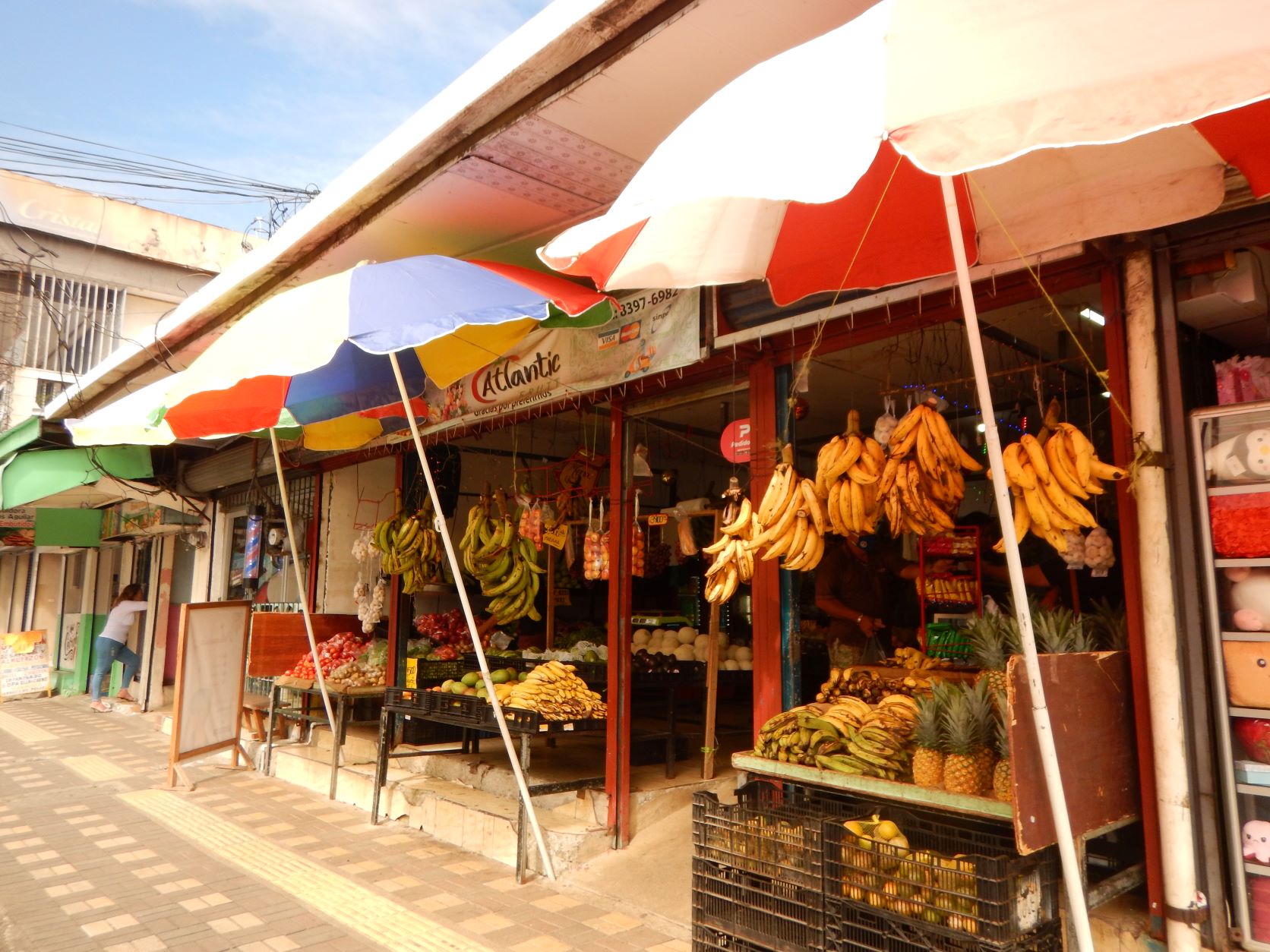
A bit further into town, the Saturday open-air Market was in full force and locals were going about their shopping; fresh fish being cleaned and cut on the street, fruit and vegetable stands (including breadfruit shown below), leather goods, backpack vendors, shoes, etc. 

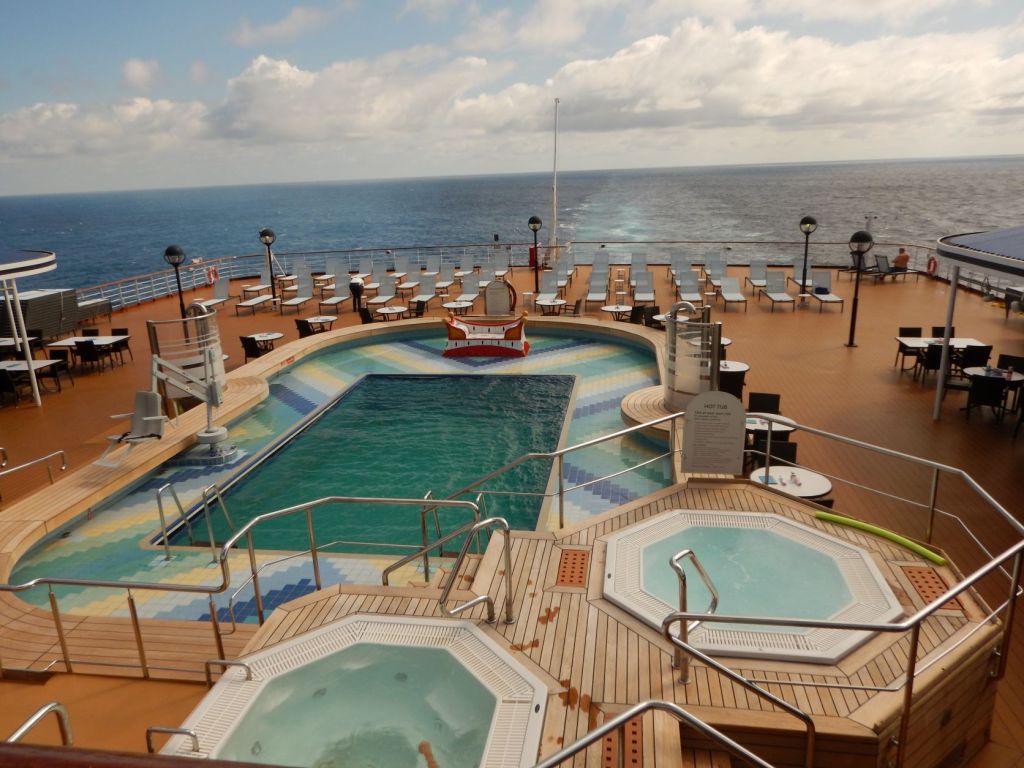
We brushed off our rusty Spanish enough to find a small beach umbrella that would come in handy for the rest of our trip.  It’s always fun to have a treasure hunt in mind when going ashore and it gives us good fodder amongst the locals.  Yes, I have the Google Translator app loaded on my phone, but our Charades and Pictionary talents are much more enjoyable for both sides and leaves us all laughing. Upon our return to the ship, Tom set up his new umbrella by the aft deck pool and was immediately envied by other passengers, who are seeking lounge chair shade.  Apparently, the ship is expecting their shipment of new umbrellas sometime during our voyage, but no one could say when.  Tom being Tom, took matters into his own hands. 

Tom’s new set up

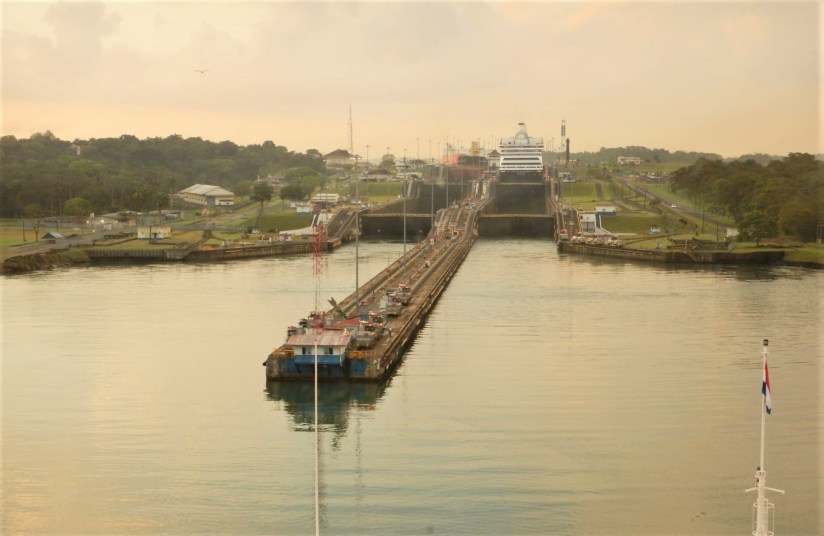
Onward to the Panama Canal transit. We were awake early and stationed ourselves in “The Crows Nest” observation deck for prime viewing of the day-long transit that would take us beneath bridges, through winding channels, locks and lakes of this 50-mile engineering marvel. 

To begin, we pass beneath the Atlantic Bridge (completed in 2019), which spans the Atlantic entrance to the canal.  Then onto the Gatun Locks; three sets of double-lock chambers bring hulking ships almost 100 feet above the water, from the Caribbean Sea into the man-made Gatun Lake.   The lake encompasses 166 square miles and the surface sits at an elevation around 85 feet above sea level. 

From there, it’s through the Culebra Cut, an excavated gorge stretching more than 8 miles across the Continental Divide.  We are then lowered about 30 feet in the Pedro Miguel Locks, transit the small body of Miraflores Lake before descending another 54 feet in the Miraflores Locks. 

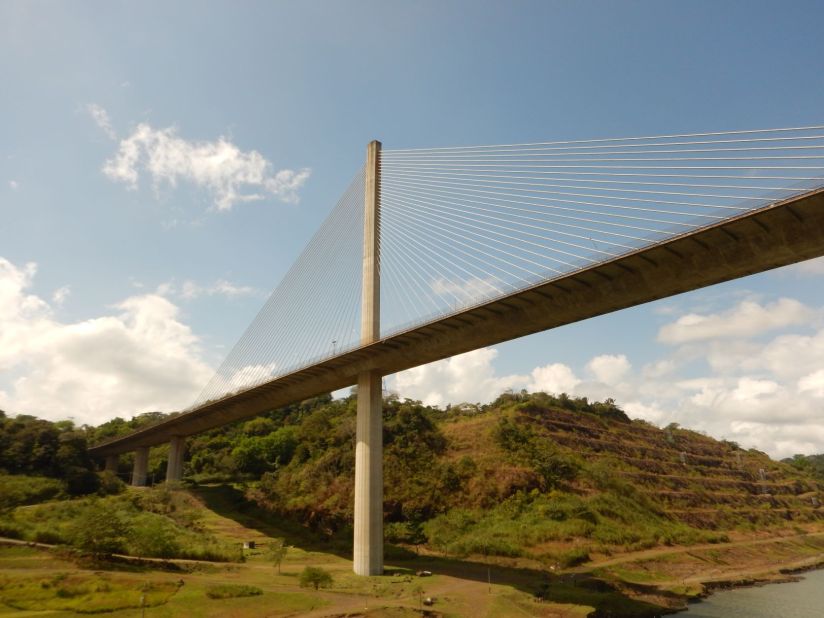
And lastly, we pass beneath the enormous Bridge of the Americas, that was completed in 1962 at a cost of $20 million. At 5,425 feet long (almost a mile), the bridge is a key part of the Pan-American highway. 

It’s late in the afternoon when the Zuiderdam finally moors in Fuerte Amador for the night.  The weather taking a swift turn, and the strong front brings driving rain, thunder and lightning that I described at the beginning of this post.  We’re all content to save exploration of Panama City for morning. 

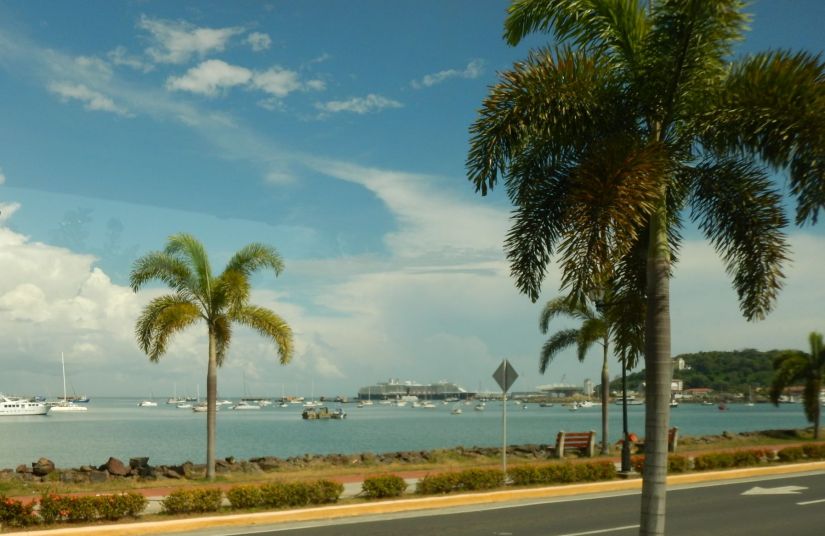
Panama City Skyline from our ship

The Zuiderdam now floats on Pacific waters, and we will set a WSW course for the Marquesas Islands, an 8-day crossing.   Stay tuned. 

Cruising, Travelogues

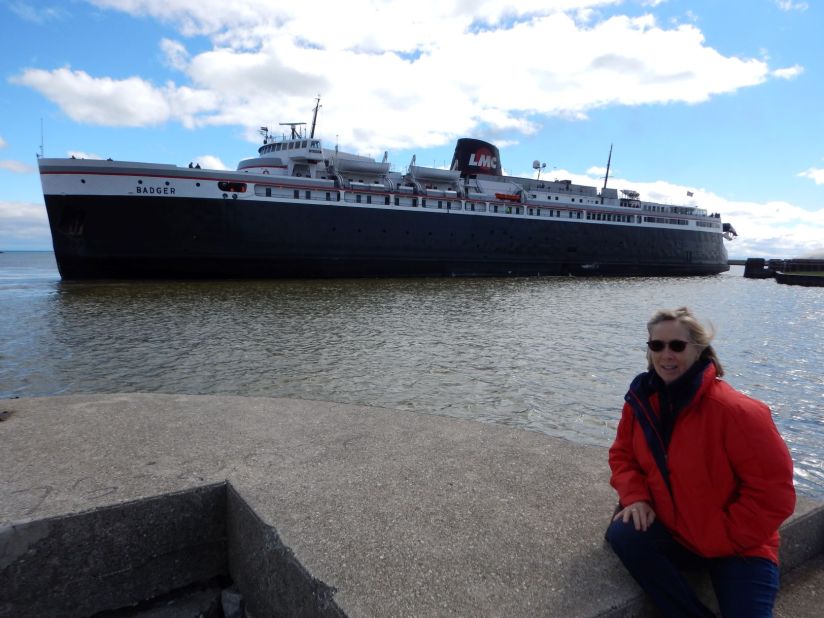
The S. S. Badger

The majestic S. S. Badger

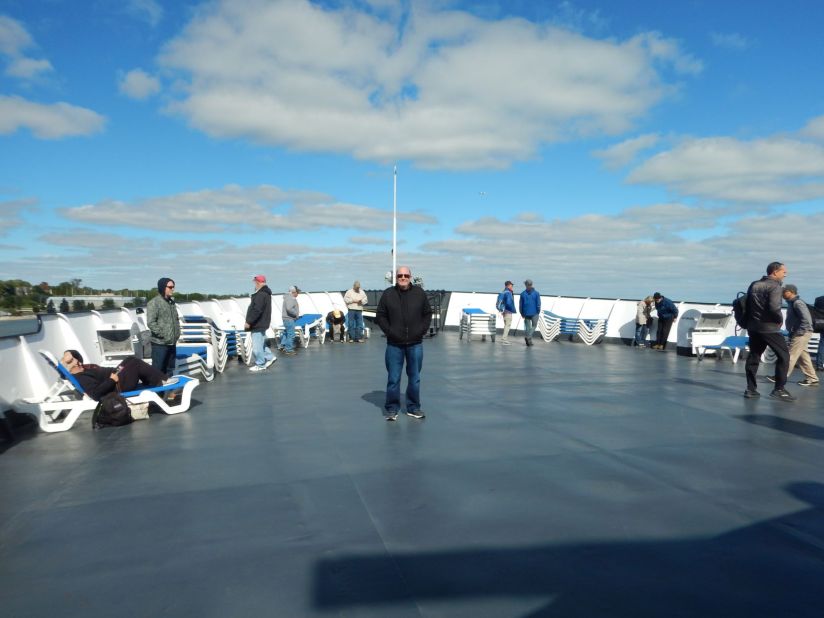
How does one drive from Wisconsin to Ohio while avoiding the traffic of Chicago?   The perfect solution is to take a ferry across Lake Michigan, which is what we did on a recent trip to visit family.  The SS Badger is a 410-ft passenger/ferry ship.  She was built in 1952 and in 1953 she began sailing back and forth between Manitowoc, WI, and Ludington, MI, 60 miles across the width of Lake Michigan. She still sails that route today, but instead of carrying rail cars for which she was originally built, she now carries up to 600 passengers, 180 vehicles and cargo on each crossing.

The SS Badger is the only remaining coal-fired steam ship operating on the Great Lakes and probably the only one on the waters of North America.  According to their website, her uniflow steam engine was designated a mechanical engineering landmark by the Society of Mechanical Engineers, and in 2016 she was designated as a National Historic Landmark (that moves!).  

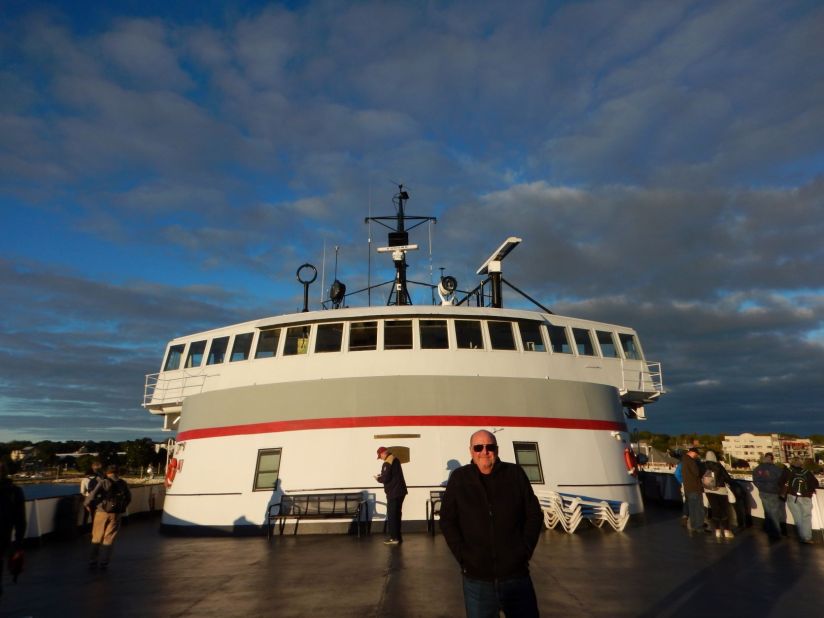
The Navigation Bridge of the S. S. Badger

Manitowoc, Wisconsin was the point of our departure for the four-hour ferry ride across Lake Michigan.  We arrived at 1pm and positioned our car in line with the other vehicles that would be boarded for the crossing.  The weather forecast for the day was not ideal.  In fact, we received an email from The Badger offices the evening before, alerting all passengers that conditions “will be rough” and that if you would prefer, a full refund could be issued for an alternative day.  But we had a schedule to keep and if The Badger was running, we’d be aboard.  We are no strangers to rough water conditions, and given her size and reputation of flawless service, we were confident she’d have no trouble.   

On the bow of the S. S. Badger

Once aboard, we made our way up several flights of stairs and explored the decks which offered snack bars, lounges, theater and TV rooms, chaise lounges on the bow, as well as seating port and starboard that ran the length of the ship.  And inside the main lounge, free bingo, hosted by a very funny female comedian!  Time passed quickly and the ship cut through the waves like a knife through butter. 

Approaching the port of Ludington, Michigan

The SS Badger arrived just after 7 pm, and we stayed in a Ludington motel. After getting checked in, we walked down the street to find a bite to eat.   Refreshed the next morning, we continued eastward without the concern of what the morning rush hour would be like in Chicago.  If you ever get a chance to travel aboard this national treasure, take it.  You won’t be disappointed.

Interested in knowing more about the S. S. Badger? Go to http://www.ssbadger.com

Underwater

Underwater Photo Gallery

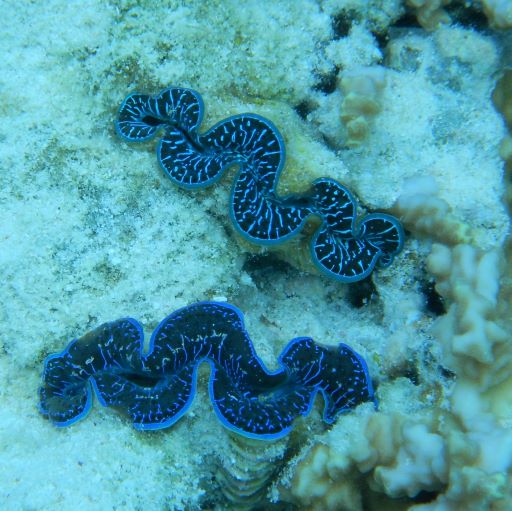
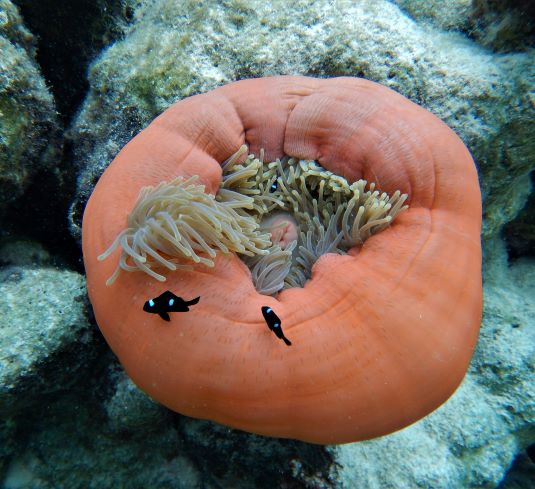
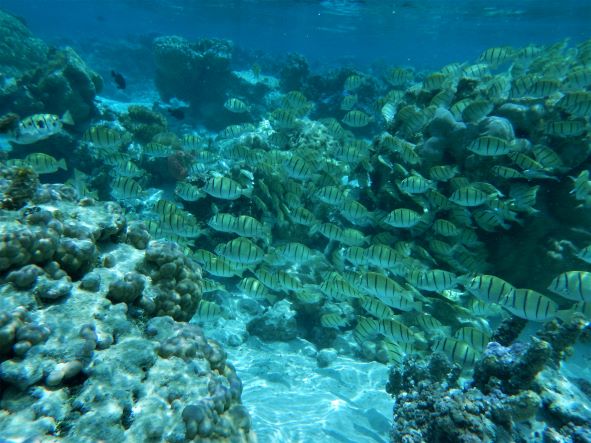
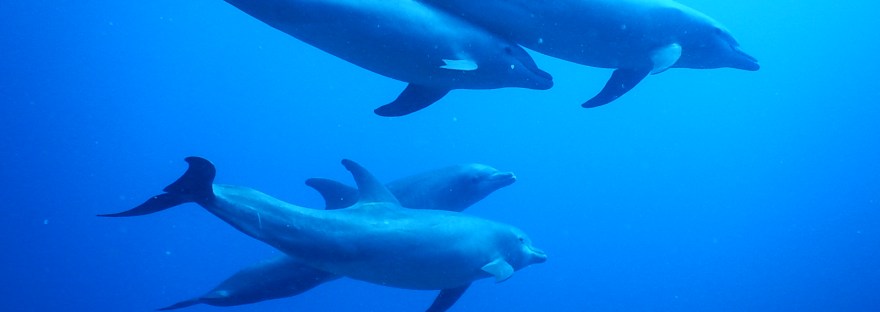
Exploring the world by water includes seeing it from beneath the surface.   Another whole world exists there and we are passionate about it!  This collection of photos includes giant ocean clams and manta rays in Palau, mandarin fish in Thailand, seals and penguins in Galapagos, sea horses in Honduras, crystal clear canyons in Iceland, and the many adored critters of the Caribbean.

Boats

Our boating progression

Just like anything, you start out small and progress as your skills, confidence and budget continues to build.  I actually began sailing in the 70’s with my brother on Hinckley Lake (Ohio) on small laser style boats, which eventually progressed to 16 foot Hobie catamarans on Lake Erie.  Which is where Tom and I met in 1982.  He had a 16 foot Prindle.  And so it began.  Below is the chronology of the boats we loved and learned from.  Each one with her own huge personality.
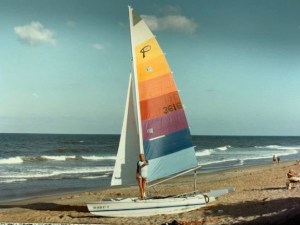
Our early sailing years were spent on 16 foot Hobie and Prindle catamarans that were exhilarating to sail, and “fly a hull”.  Our local sailing club was a very active, friendly fraternity on the Rocky River shores of Lake Erie.  Occasionally, we also ventured to compete in regional regattas, such as the one pictured here.
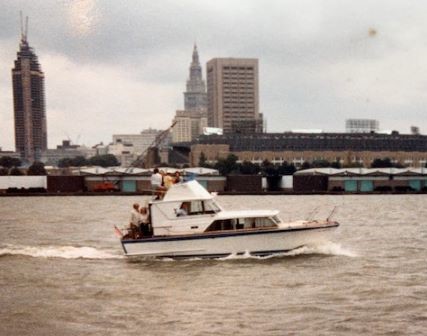
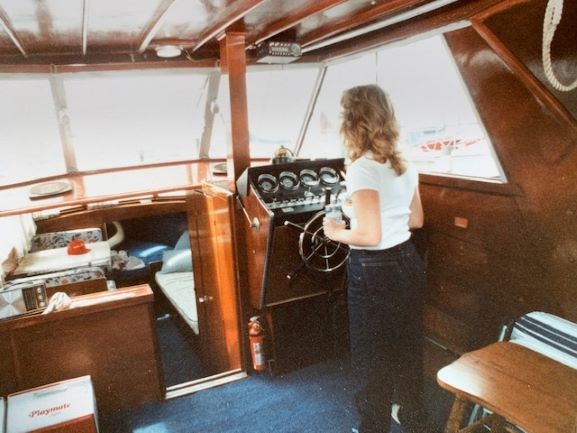
Tom’s father was enthusiastic of our love of the water, but was apprehensive of small catamarans and tossed out the idea that we may want to give a motorboat a try.  Perhaps he was looking for a more comfortable ride when receiving our weekend boating invitations!  For a couple seasons, we had a great time with this Owens 30 foot motorboat, but our hearts were with sailing and eventually, it was time to get back to the wind. In the meantime, we also moved from Ohio to Indiana for work in the late 80’s. And we were introduced to Lake Michigan.

Owens 30-foot MotorboatOwens Interior

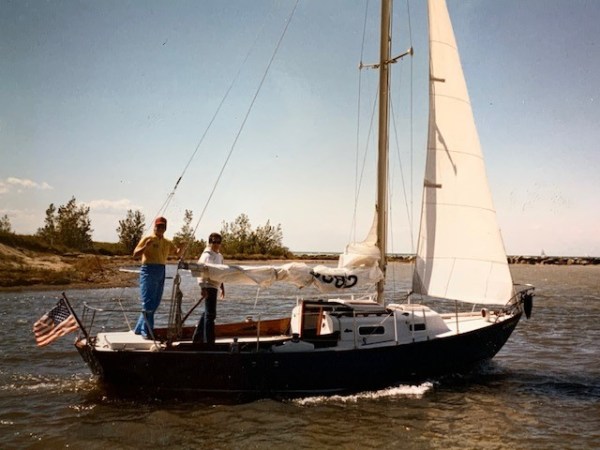
.25WindsweptWe bought an O’Day 26 sloop and sailed her on Lake Michigan, our new cruising waters.  She had lovely lines, a modified full keel, plenty of sail and tiller to steer her by.  She, and Lake Michigan, taught us a great deal, including heavy-weather sailing tactics.  She also gave us the itch to wander further afar.
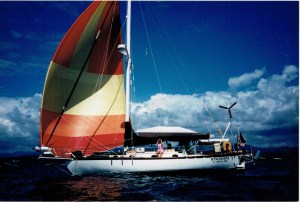
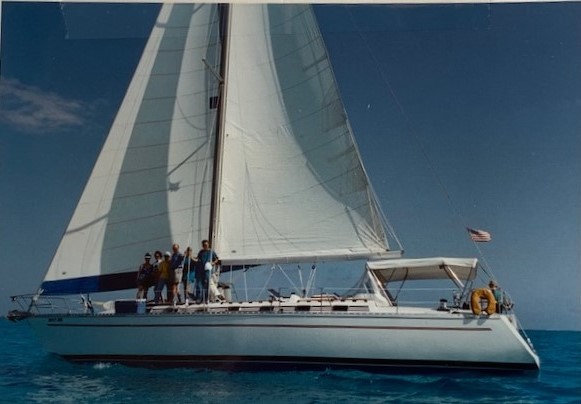
Having decided to take the big leap as sailing liveaboards, we needed a capable ocean passage maker, and found it in this stout Alajuela 38′ cutter rig.  She was a robust double-ender, heavy-displacement with a full keel.  Between 1991-95, she was our home and magic carpet;  from Rhode Island to Venezuela and nearly every island in between.  Read more on that here: Living Aboard A Sailboat

.25DoylesDare (2)During our liveaboard years in the Caribbean, we were offered Captain positions at The Moorings Charter Boat Company in the British Virgin Islands.  We had previously rented sailboats almost annually in the BVI’s, so we were already very familiar with these favorite islands.  For 9 months, we were employed by their crewed yacht division, hosting weekly (and longer) charters aboard a 50 foot Morgan sailboat.   It was a lot of work, and an absolute blast!
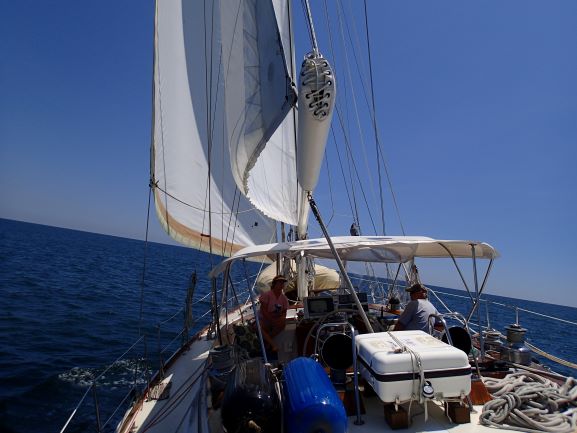
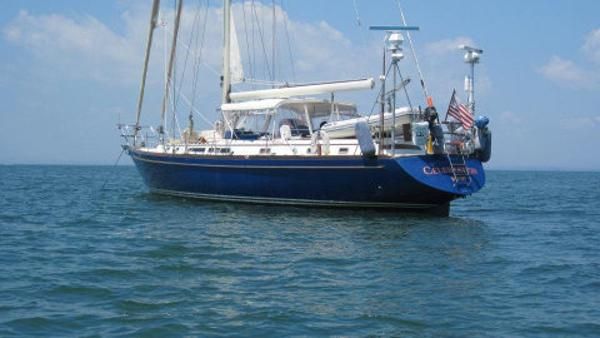
Our four-year sailing sabbatical came to an end in 1995.  After all, we were too young to retire and actually still loved our careers.  We were ready to get back to work for a while, grateful to have ‘scratched the itch’ until we could return to cruising yet again once retired someday.  But, one shouldn’t throw out the baby with the bathwater! Even though we were working full time, and my elderly mother was nearby, we still needed some ‘boat time’ to carry us through. We bought a Gulfstar 60 that we kept in St. Simons Island, Georgia, and spent long weekends and vacation time aboard.

Gulfstar 60 sailing

Gulfstar 60 at anchor

We sold her in 2016 and had hopes of finding a new boat during the 2016-17 Winter. But then two Category 5 hurricanes spoiled the inventory we had hoped to shop.

Now we’re retired and the song of the sea continues to beckon us.  We continue to explore the world by sea aboard Holland America Line ships.  See Travelogues/Cruising for complete stories on our extensive journeys aboard.

2020 Half-World Cruise, Cruising, Travelogues

Leg 4: Australia and Homeward

Leg 4:  Australia and homeward bound

We experienced some rough seas for the first of two sea days as we made our way west to Sydney, Australia. Fortunately for passengers, the worst of it was overnight while everyone was in their bunks asleep. Improved weather filled in by daybreak of day two.

Sydney, Australia – At dawn on March 7, the Amsterdam rounds The Heads, the imposing rock cliffs that guard the entrance from sea to harbor. As we continue up the channel, we pass the spectacular Sydney Opera House on our port side, and then beneath the iconic Harbor Bridge, with scant clearance above us. Morning walkers on the bridge wave and cheer our arrival as they look straight down the few feet onto our decks. A thrilling experience from either perspective! The rising sun peeks through the broken morning clouds, sending a ray of light upward seemingly from the bridge’s massive pylons. Quite a glorious ‘Down Under’ welcome. Continue reading “Leg 4: Australia and Homeward”