

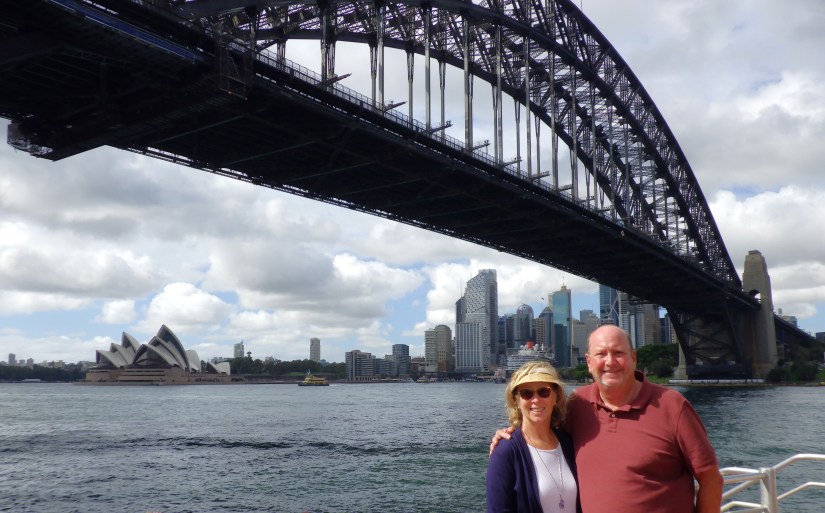
The glittering skyline of Sydney greets us as we sail under the bridge in predawn darkness. At 4:45am, the city still sleeps, but the Zuiderdam is buzzing with the excitement for this port arrival. After a wonderous and relaxing 8,238 miles of the South Pacific and its idyllic islands, we are all anxious to trade beaches for boulevards. Among one of the most beautiful cities worldwide, Sydney is the gateway to the next five ports that we will visit over the next 12 days in Australia.

With so many things to do and see in Sydney, we are thrilled to have 2 days here. Exploring is easy, given the wide variety of public transportation that are clean, efficient and cheap. Having explored many of the city’s popular sites on previous visits, we took a ferry to the north suburb of Manly. The 7-mile, 30-minute journey takes us across scenic Sydney Harbor, beneath the Harbour Bridge, past the Opera House, and a gorgeous coastline of high-end neighborhoods and marinas.

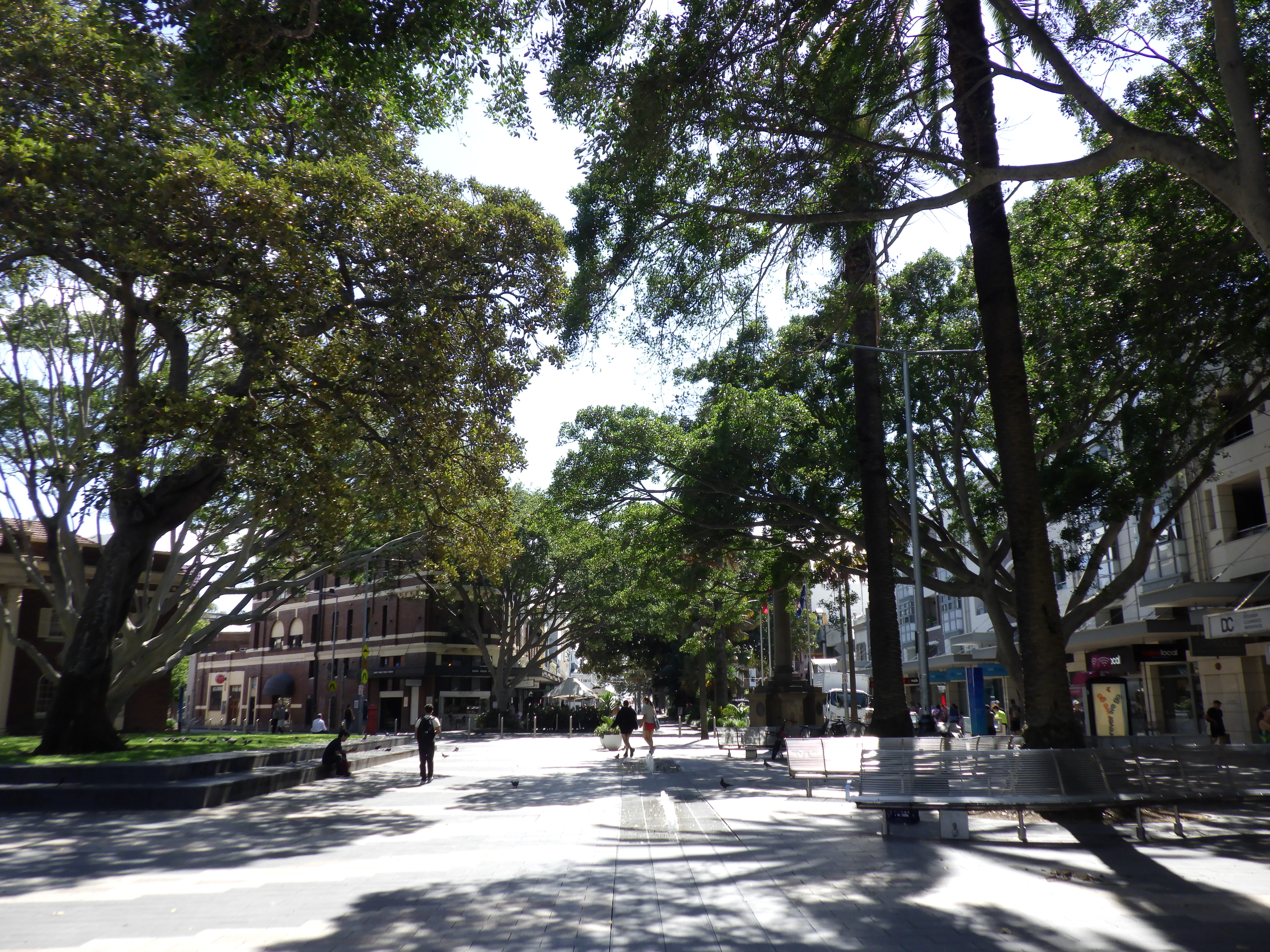
We stepped off the ferry and into a quaint seaside town with pedestrian streets lined with shops and eateries.


Just a few blocks beyond, the wide, golden beach is rimmed with a Norfolk Island pine-lined promenade, connecting the Manly and Shelley Beaches.


Many eateries offered the standard Fish & Chips, but we tried the local favorite, Fish Pie. A comforting hot dish of local Barramundi fish, Salmon, a hard-boiled egg, white sauce, topped with mashed potatoes, baked in a ramekin and served with a side salad. Outstanding!

Overnight, Zuiderdam repositions from our arrival berth in White Bay, to the premier berth in Circular Quay, putting us in the heart of it all for our second day in Sydney.
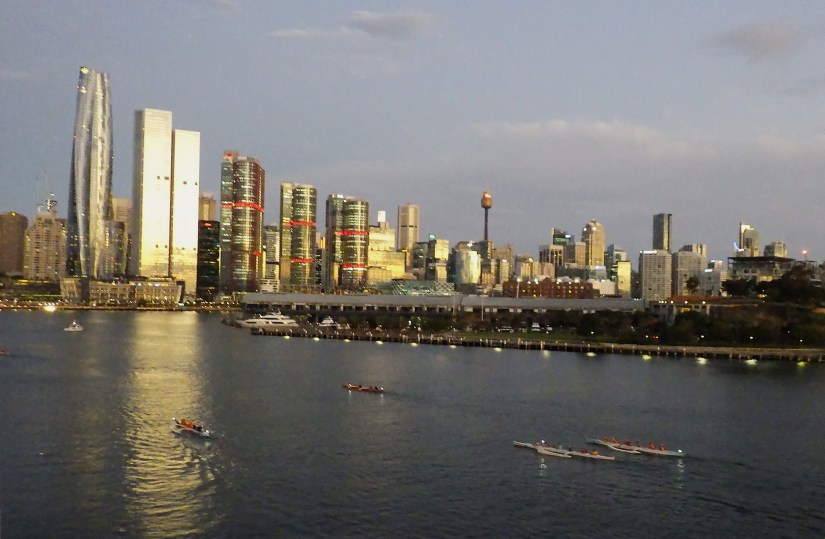
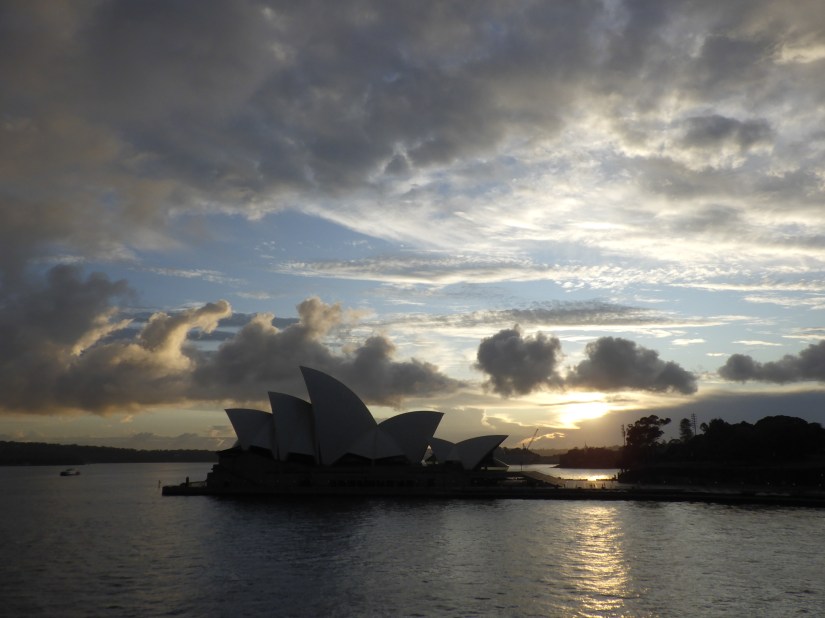
Our second day in Sydney began at the Opera House and adjacent Royal Botanical Gardens.

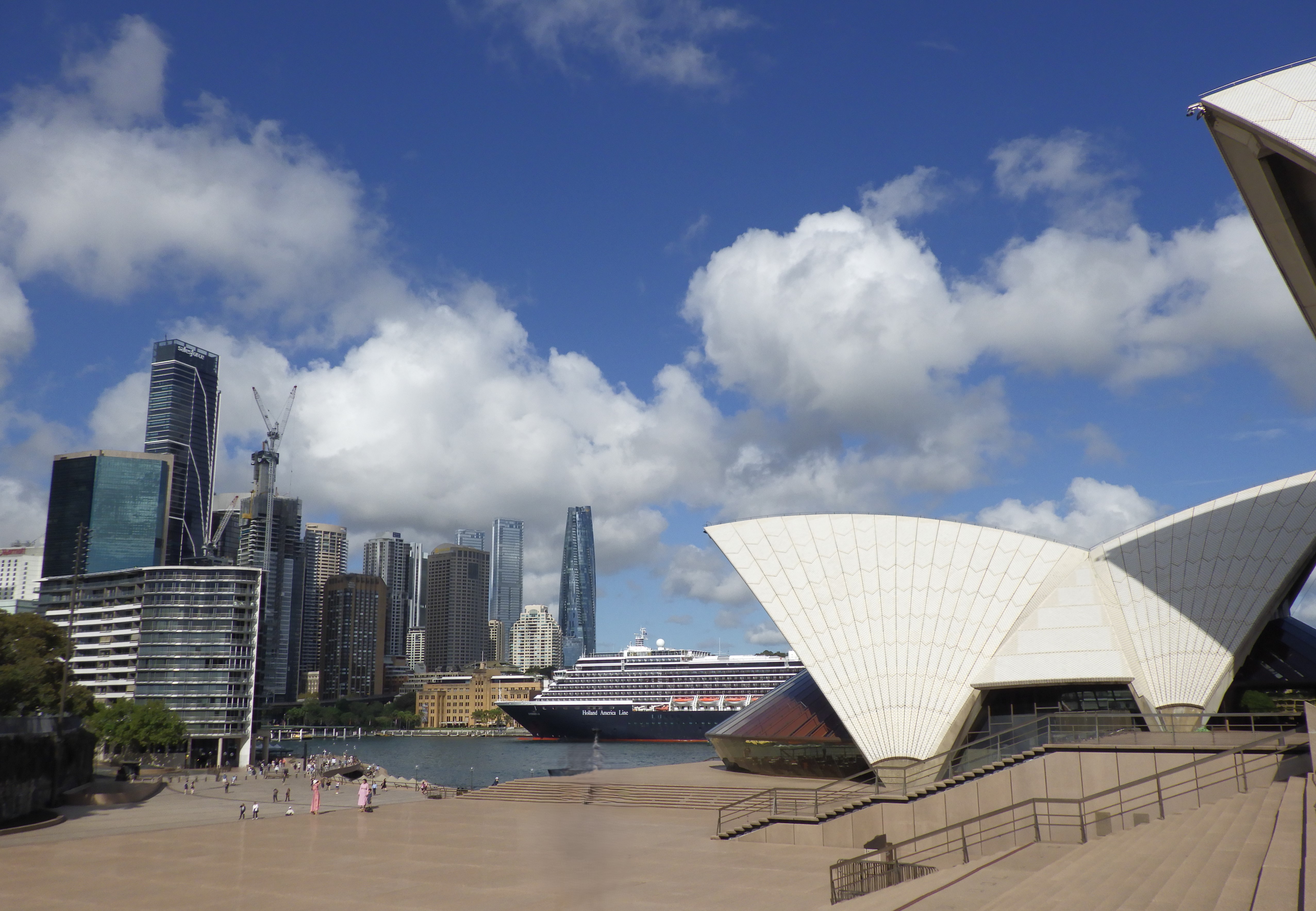


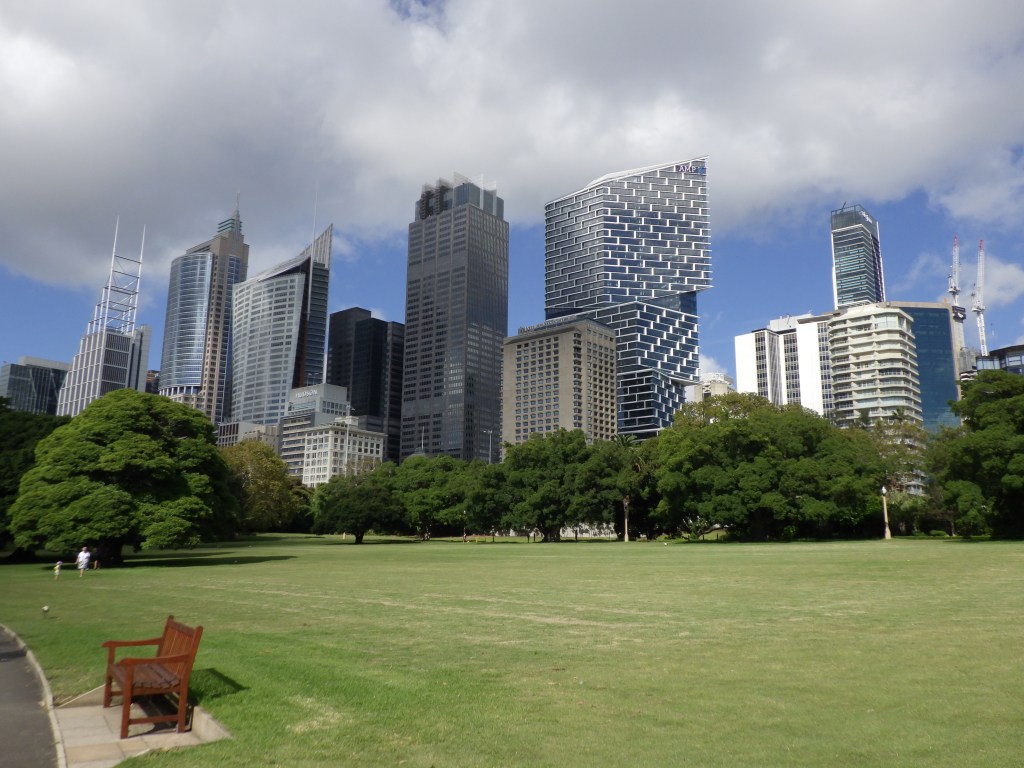

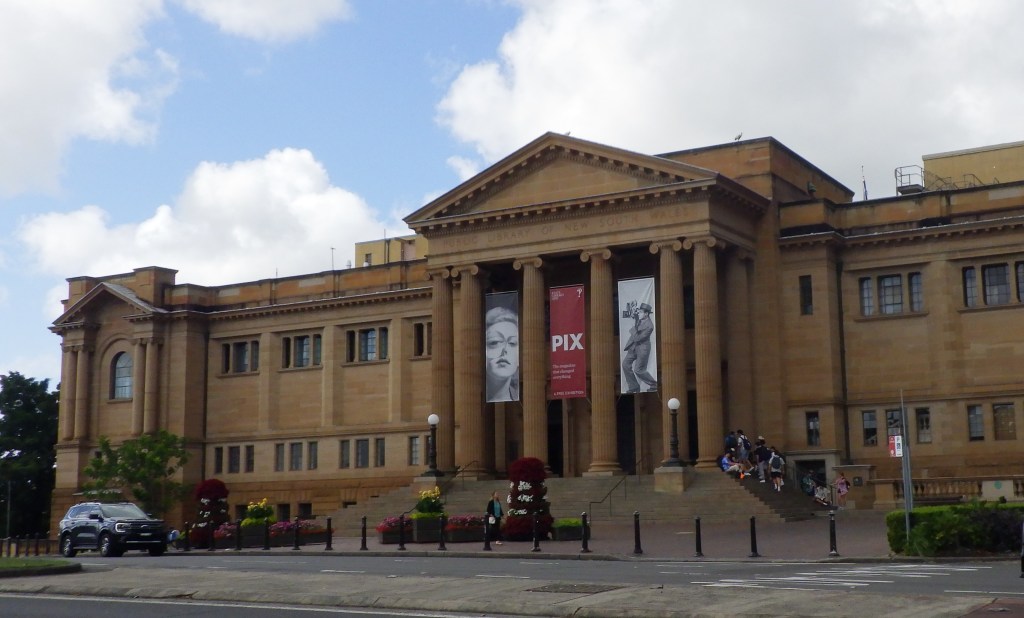
On Macquarie Street, we passed the State Library, New South Wales Parliament House, Hospital, and The Mint, before taking a coffee break at a Hyde Park café.

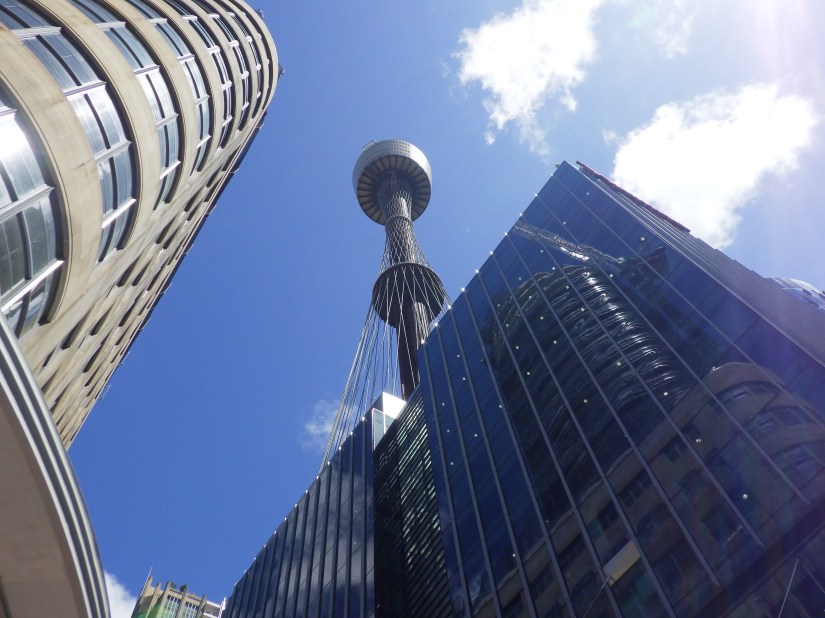
Marching on, we view the Sydney Tower before turning back towards the Sydney Observatory and The Rocks district.
Two of our favorite historic places of character are The Hero of Waterloo and The Glenmore Hotel, serving since 1837.

It is easy to “get your daily steps” in Sydney, as we walked 15 miles during our 2-day visit! Back to the ship for a very festive Sail Away Celebration, as we set a course northward.


We leave Australia’s New South Wales region, and enter the waters of the Queensland region. Lying just 30 miles off the coast of Brisbane, Moreton Island is an Aussie’s weekend destination.
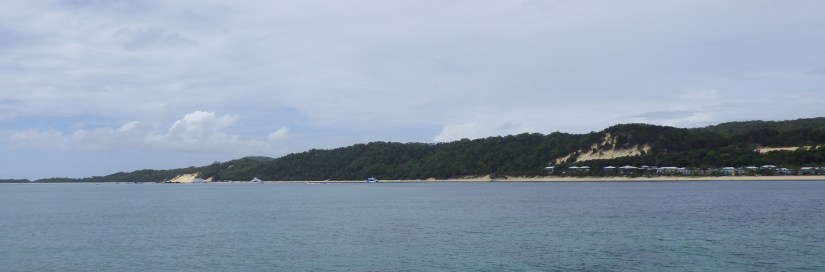
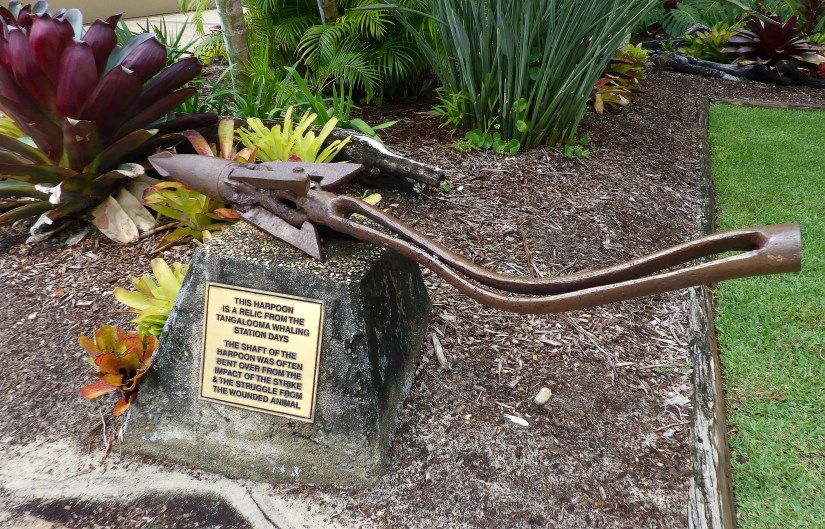
Moreton Island is the third largest sand island in the world and formerly a whaling station.
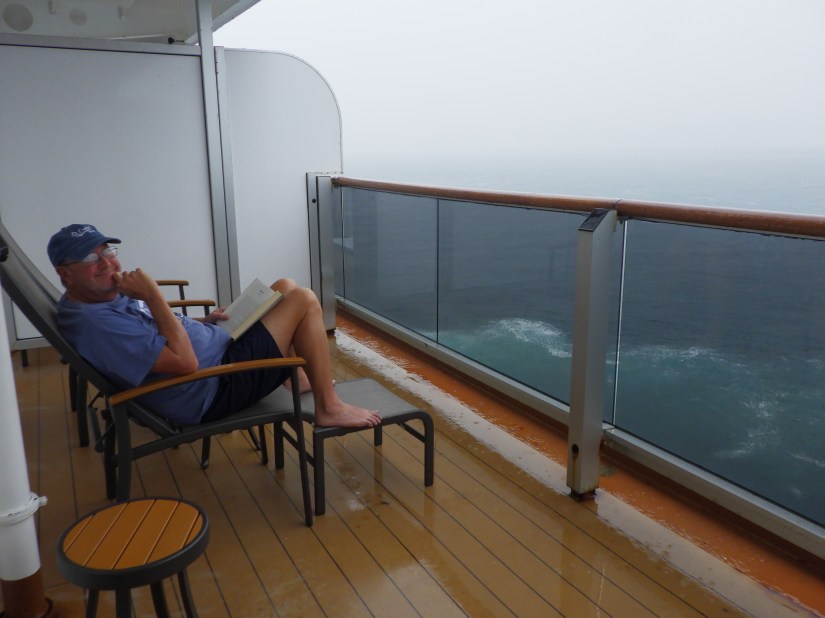
Unfortunately, the morning rain is so thick that we’ve lost sight of the island from our anchorage. It was not until almost noon that the weather lifted, and we finally tendered to shore.
The sprawling Tangalooma Island Resort has it all: hotel, watersports of every kind, helicopter rides, ATV quad bikes, tennis, massage, and 15 deliberately sunken wrecks to snorkel. And weather permitting, tobogganing down a sand dune. But the morning’s rain postponement of activities left the afternoon offerings mostly booked.


We were more than satisfied to join the Bush Stone Curlews (below) strolling the strand and dodging the raindrops.

The rain left the beautiful beach mostly deserted.

As we continue skirting between Australia’s east coast and the Great Barrier Reef, the temperature and humidity pipe up significantly. Heading north towards the equator, the “feels-like” temperature is 110 degrees Fahrenheit.

Due to the shallows, Zuiderdam anchors 3 miles off Airlie Beach, a small resort locale of 1,300 people, and the gateway to the Whitsunday Islands. Some passengers opted for an 8-hour boat excursion out to the Islands. But given the deadly jellyfish (Portuguese Man O War, Box Jelly and Irukandj Jelly) season that runs from October through April, tourists are provided “stinger suits”. However, they are no more than a rash guard thickness (and still leaves hands, face and ankles exposed), so we decided to not submerge. There are other plenty of ways to be in or near the water.

It’s a long and slow tender ride to shore, where the Whitsunday Jet Ski van transport 6 of us to their marina pier office and fleet.

Briefing and training was thorough and efficient. The jet skis were nice and big, so Tom and I opted for a tandem ride.
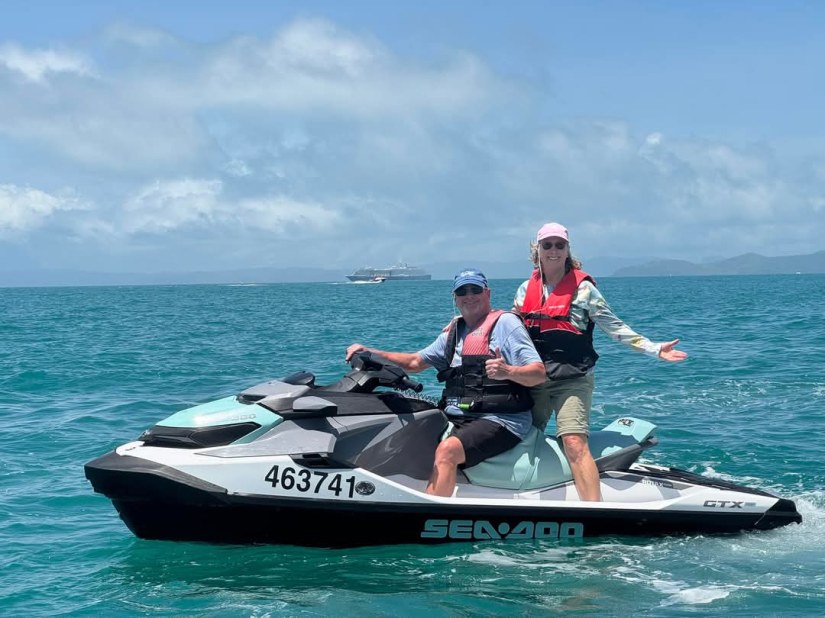
We scooted along the coastal waters, paralleling the rugged shoreline. Our guide did a great job describing some of the names and history of the adjacent islands.


The coastline is heavily wooded and the shoreline sparse of structures. The teal green water is opaque, and the entire area is an ideal turtle breeding ground.
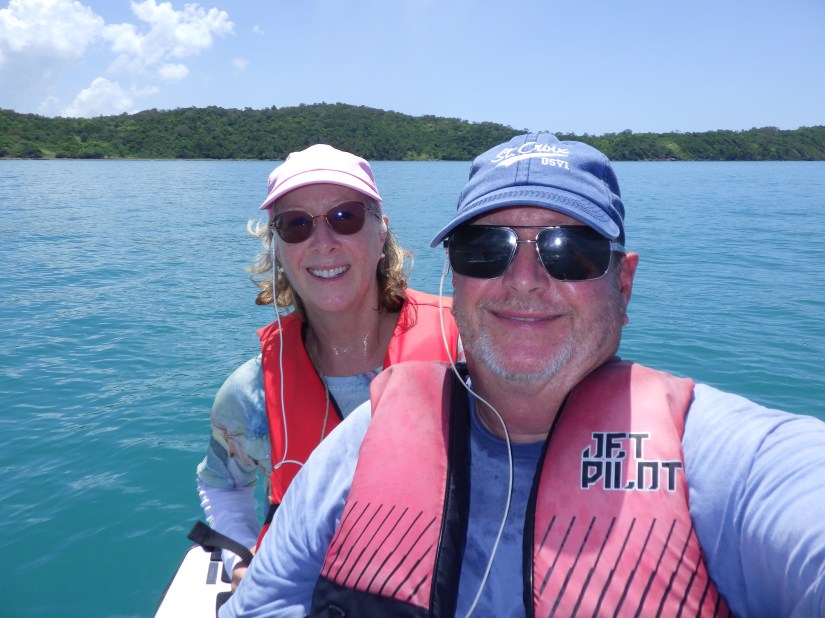
An hour and a half later, we returned to the marina. Their van gave us a short lift to Main Street; a mere hundred yards of shops, eateries and pubs.
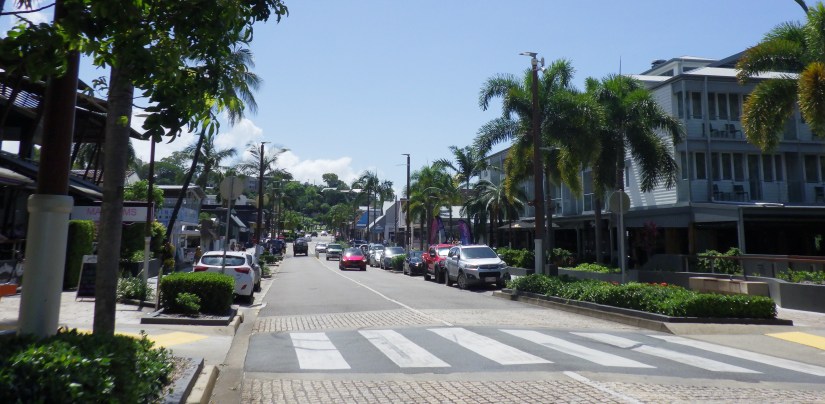
Other than the small number of cruise ship passengers who braved the heat, it was a quiet Sunday afternoon. A few locals were having picnics in the adjacent parks by the beach.

This was our view from a cafe where we grabbed a snack of bruschetta and sodas before heading back to the ship for well-earned showers and air conditioning!
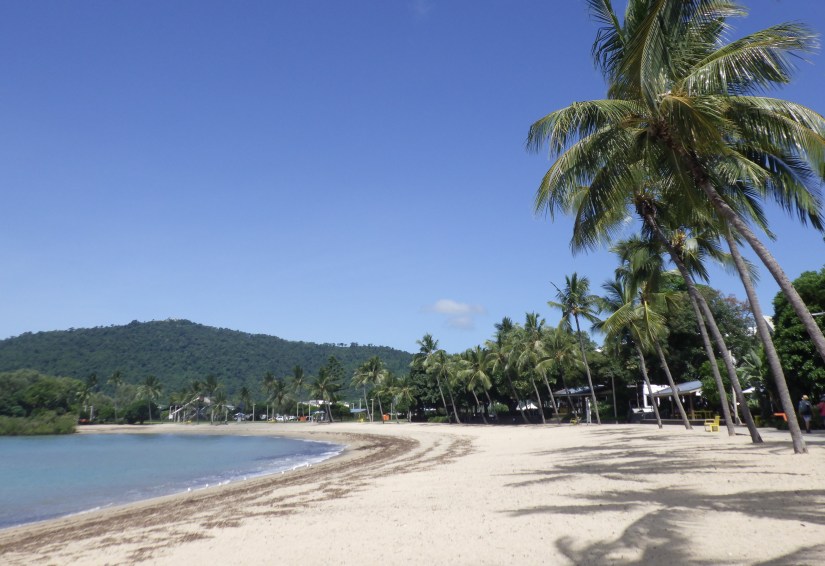
Airlie Beach was a delightful spot to visit!
Zuiderdam brings on two compulsory pilots that will journey with us, navigating the narrow and twisting channels that lead us to Cairns and the Great Barrier Reef passage beyond, all the way through the Torres Strait.
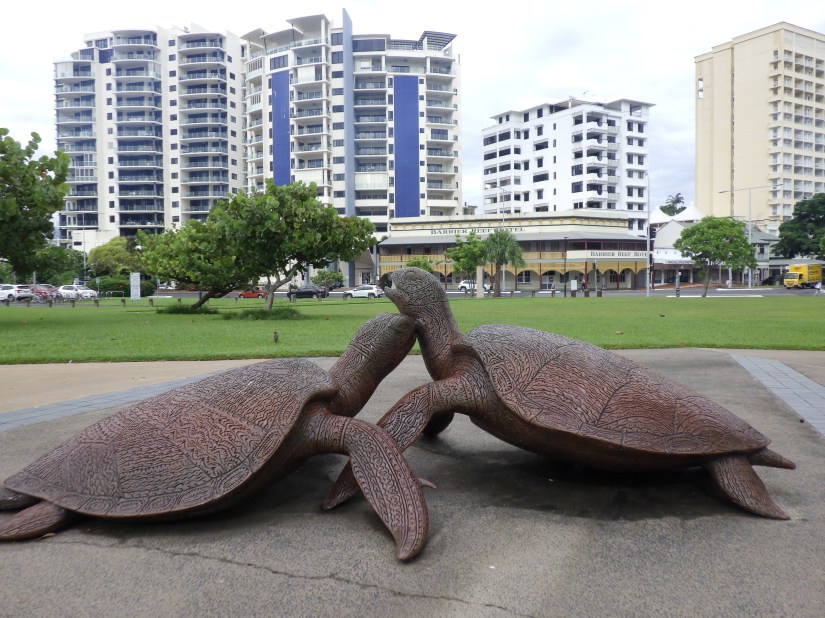
The wonderfully green city of Cairns on the northeast coast is a is filled with parks, promenades and esplanades. The tropical climate breeds enormous banyan trees, glorious flowers and bamboo stands.

Red-tailed black cockatoos squawk noisily in the park trees, a stray cassowary meanders, and pelicans are fishing the mudflats at low tide. Numerous beaches and a salt-water lagoon round out this laid-back city of 153,000.
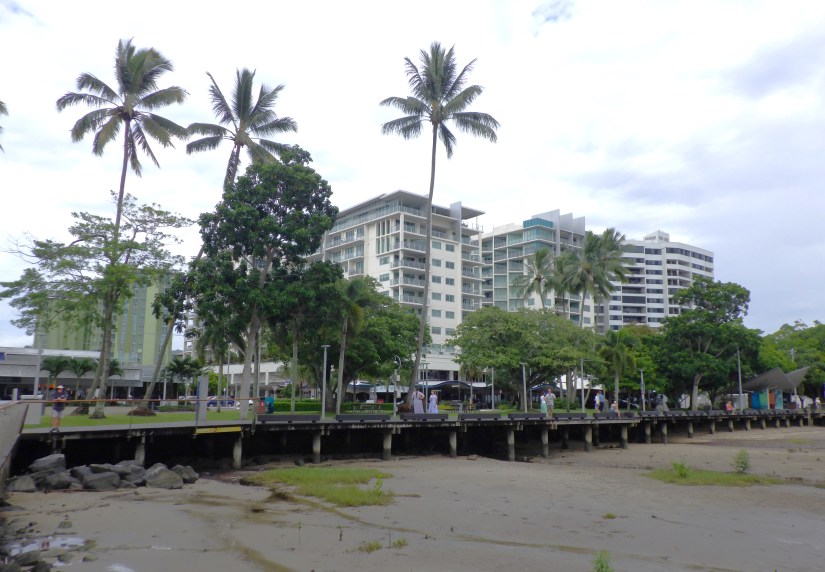
We took advantage of walking in the morning ‘coolness’ of 84 degrees, with the heavy humidity clinging to our skin. The 1.5-mile shoreline esplanade is dotted with statues, fountains, playgrounds and fitness equipment.
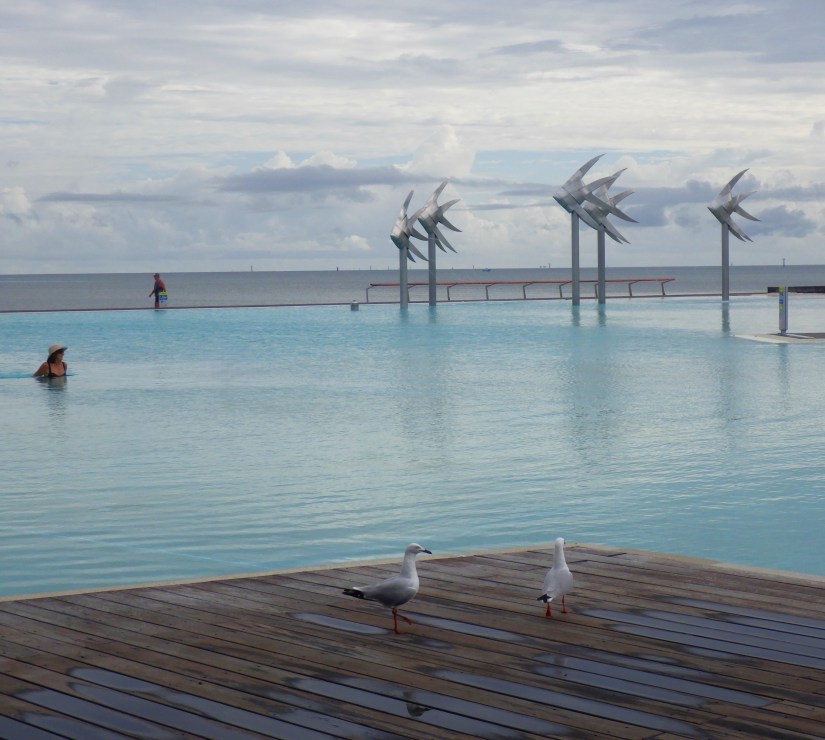
Reaching its end, we turned inland to explore the city center, past the high school and soccer fields, hospital, library, shopping centers and hotels. The streets are quiet, with everyone either at work or school.
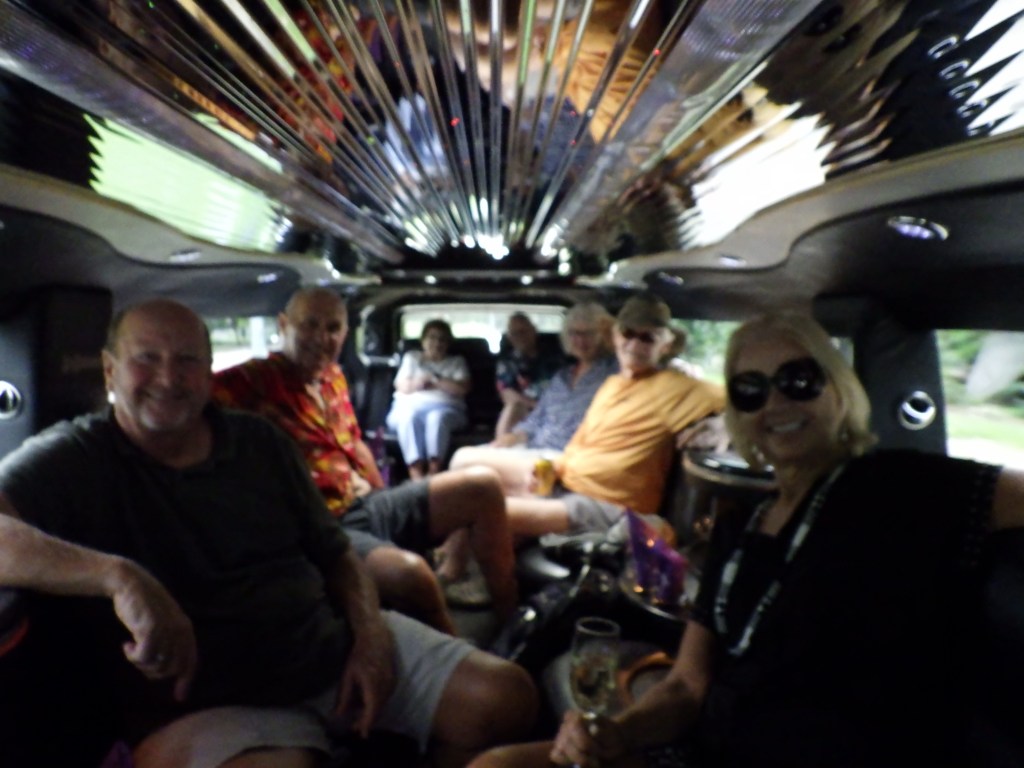
For the afternoon hours, we joined an excursion that toured the nearby Cascade Waterfalls and coastal town of Palm Cove, via a stretch Hummer. Eight of us boarded the luxury vehicle that could have held 16. Sparkling waters, wine and beer were onboard refreshments as we cruised in style and watched the scenery go by.


At the Cascades, a few folks opted to take a dip in the cool swimming hole.

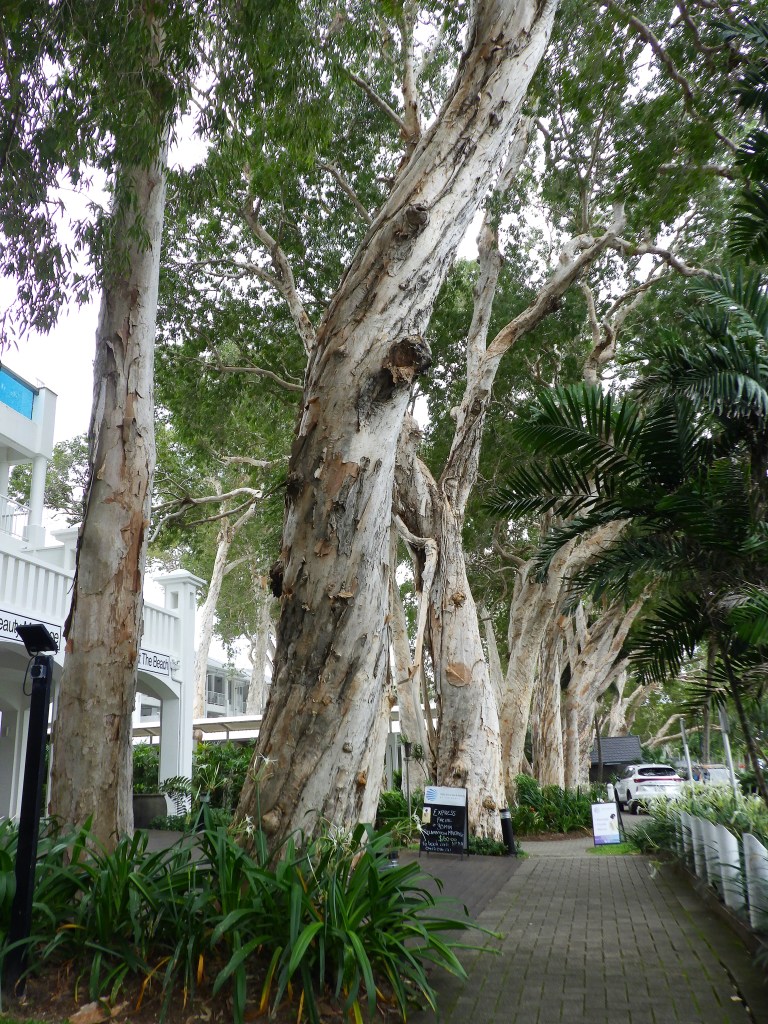
The Palm Cove area is an upscale neighborhood with boutiques, fine dining and hotels along its boulevard lined with majestic melaleuca trees.
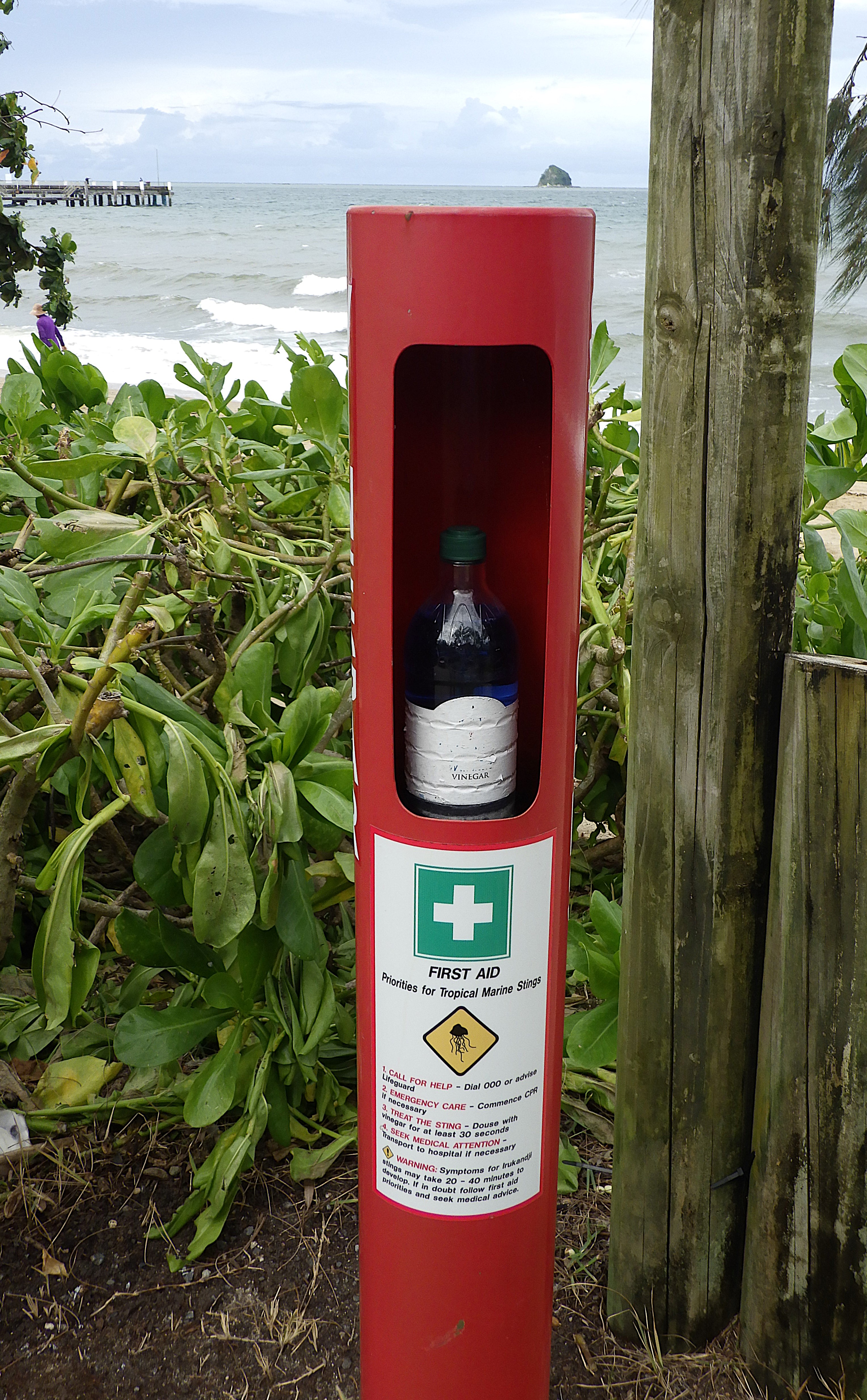
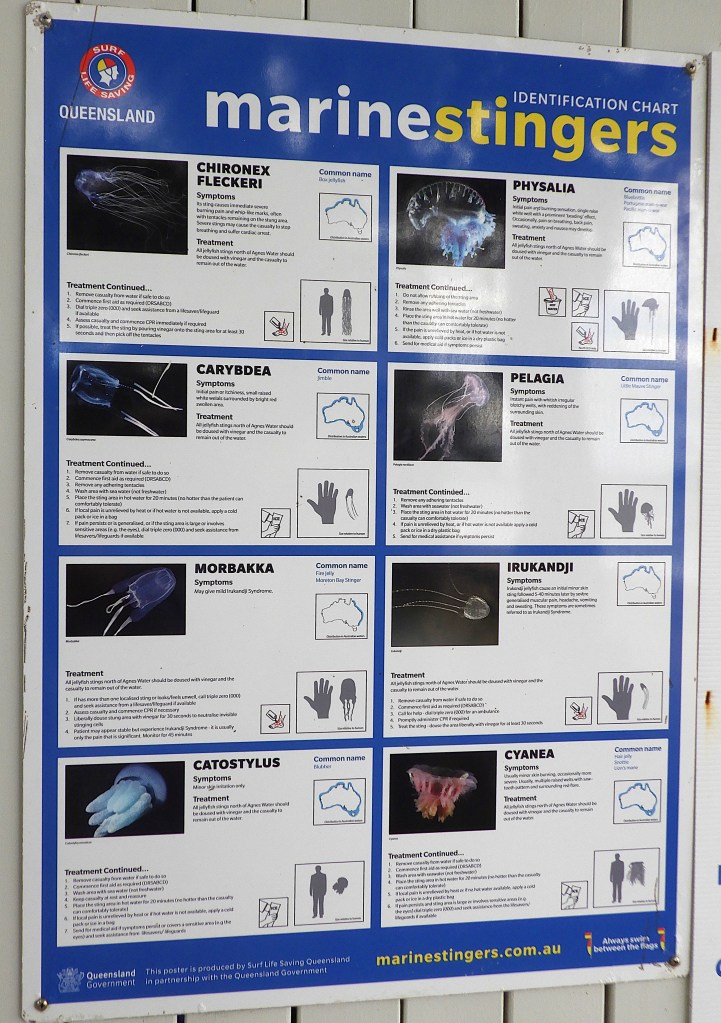
The ever-present reminders about the perilous jellyfish were prominent along the shore, including vinegar first aid stations.


These 3 good-natured and free-spirited guys were living in this van, seeing the country and enjoying the spontaneity of travel. It’s an understatement to say they were quite curious and envious of our stretch Hummer!

Leaving Cairns, we push northward for 3 sea days inside the Great Barrier Reef system before transiting the Torres Strait and onward to Darwin.
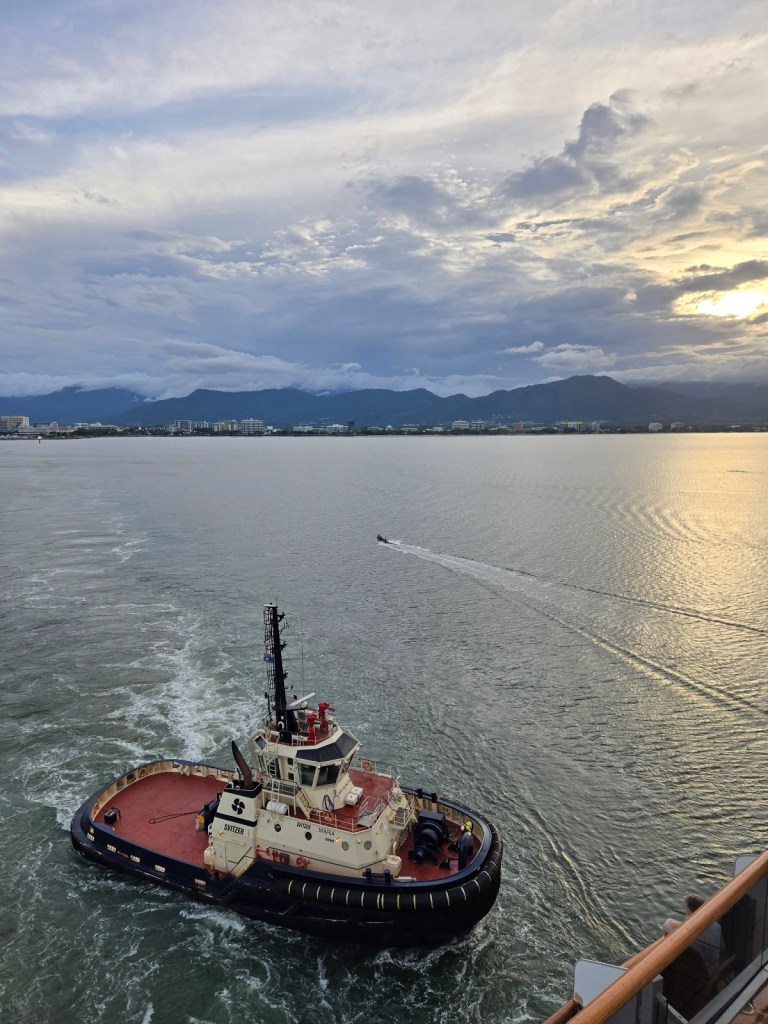
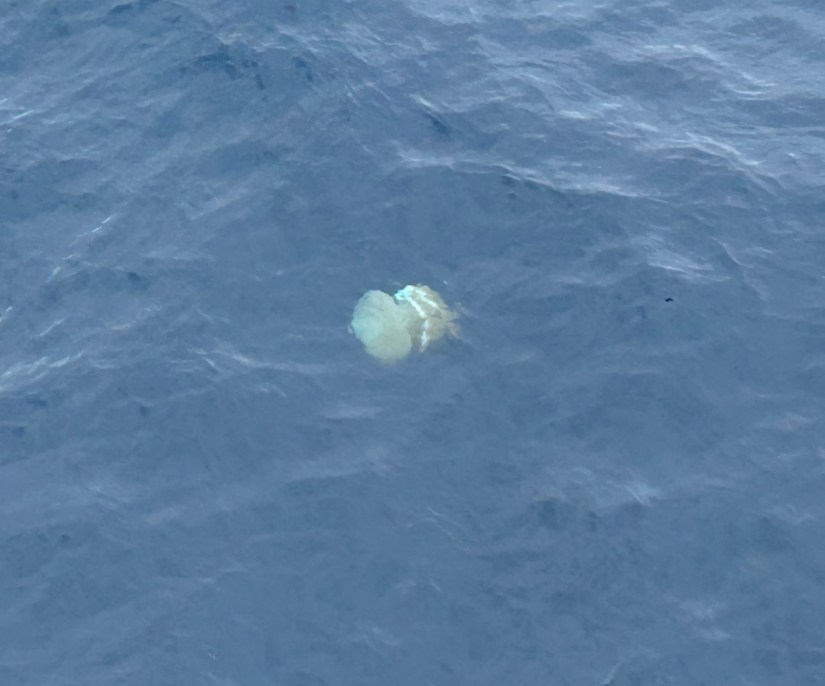
Speaking of jellyfish, we spotted thousands of them as we continued north.
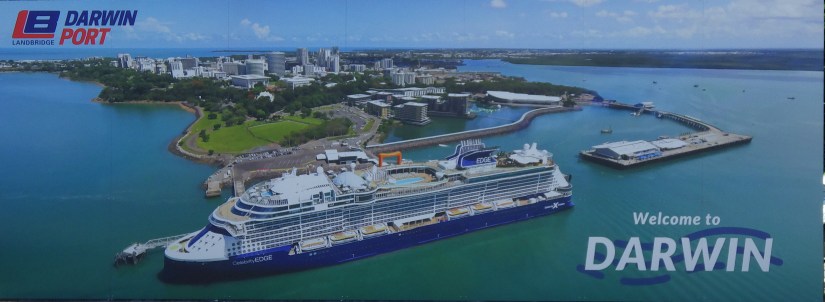
Our 1,200-mile passage brings us to Darwin.
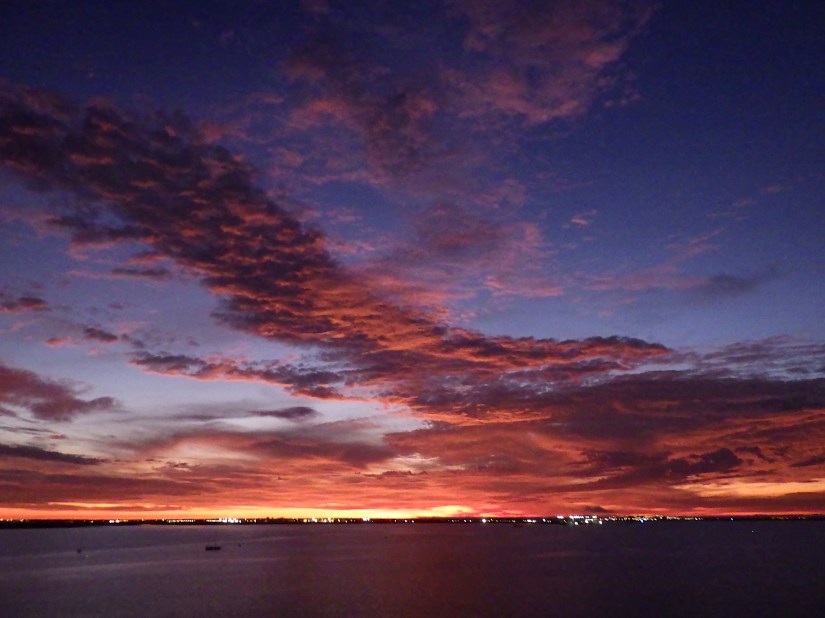
Not only are the sunrises and sunsets here noteworthy, but Darwin is known for being the Lightening Capitol of the World…91,000 strikes have been recorded within a 24 hour period!
Surrounded on three sides by the Timor Sea, the Northern Territory’s capital is closer in both distance and temperament to Southeast Asia than it is to most of Australia’s major cities. Darwin has fewer than 140,000 residents, which includes about 50 nationalities, and is also home to the largest aboriginal population.
The area is rich in history, though there are few old buildings. Most had not survived the heavy bombing in World War II, or the disastrous Cyclone Tracy in 1974. Darwin has been largely rebuilt, and it’s modern and well planned.
We hopped aboard a Hop On/Hop Off bus to explore Darwin and its surrounding area. We left behind downtown’s Smith Street popular with shoppers and passed the Crocosaurus Cove and its Cage of Death, where you may swim with crocs while protected in a clear tube. Croccove | Home Page Maybe next time.
Within minutes, we reach the suburb of Cullen Bay, an area of high-end condo and marina complexes.
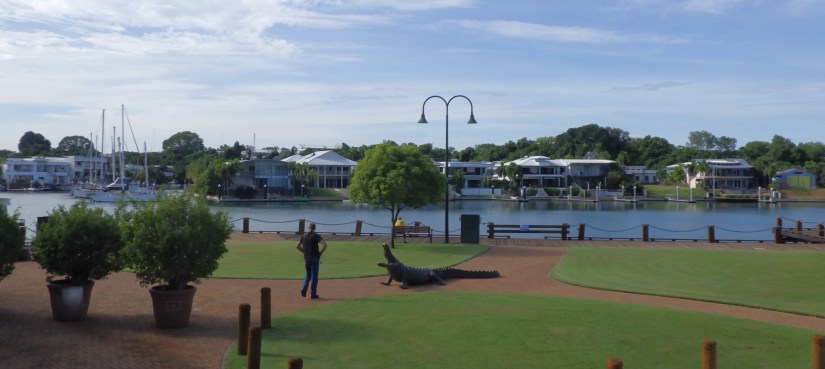
Following the Fannie Bay coastline, we pass through Mindil and Bundilla Beaches, a casino, art museum, sailing clubs and the Darwin Bowling & Social Club.


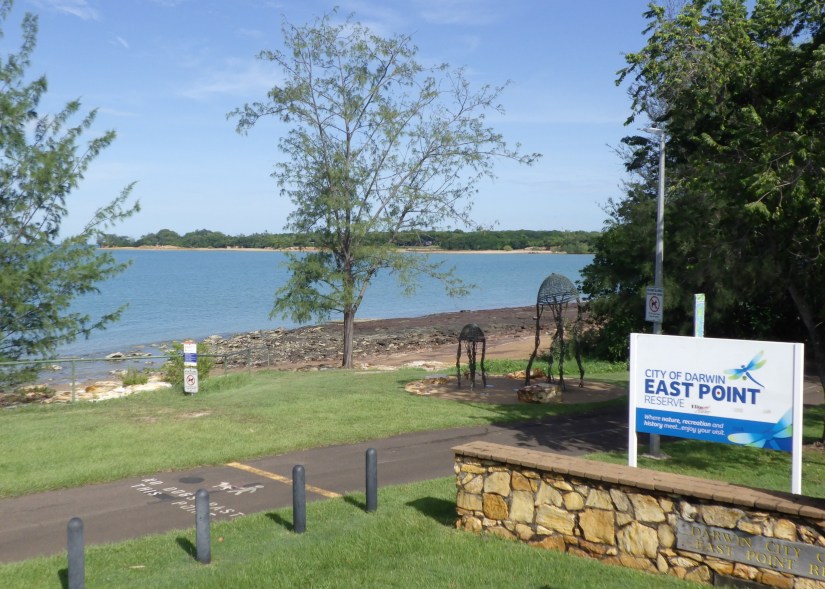
From there it’s onto East Point Reserve, a 500-acre green recreational space filled with walking trails, playgrounds, bbq’s and picnic areas, a swimming lake, as well as over 200 free-roaming Wallaby’s. A Military Museum is also nearby.
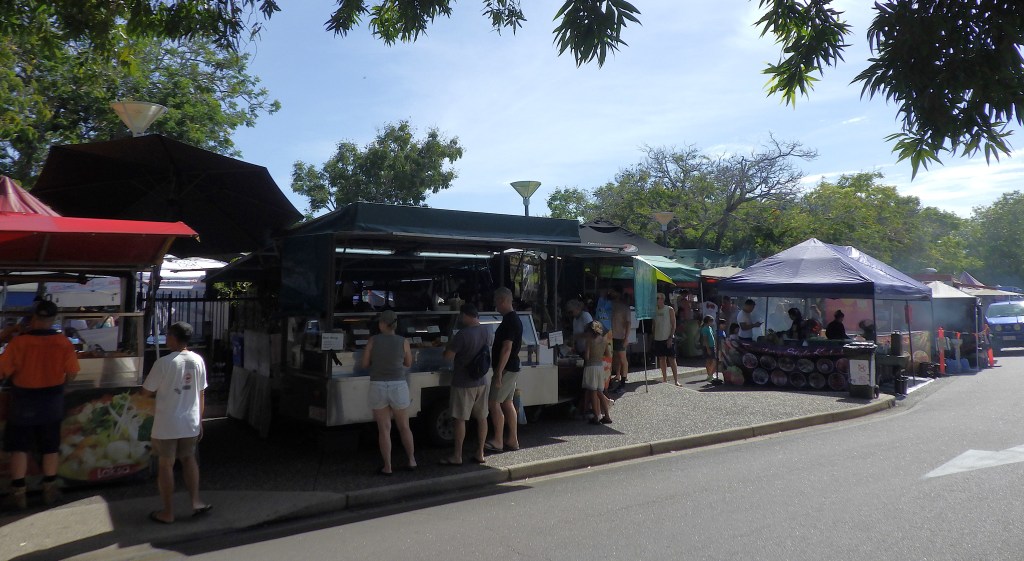
The Saturday Parap Market is filled with townsfolk shopping for their produce, fresh breads and pastries, local arts, handicrafts and perhaps the main attraction: the food trucks.

We purchased some indigenous art from a Yolngu woman, Christine, who inherited her artistic style from her mother’s ancestors’ knowledge, lore, and stories. As a side note, Christine illustrated a book, called “The Life of Tree”, a children’s therapeutic picture book that creates a culturally safe space for Aboriginal children to express difficult emotions around their experiences with family violence.
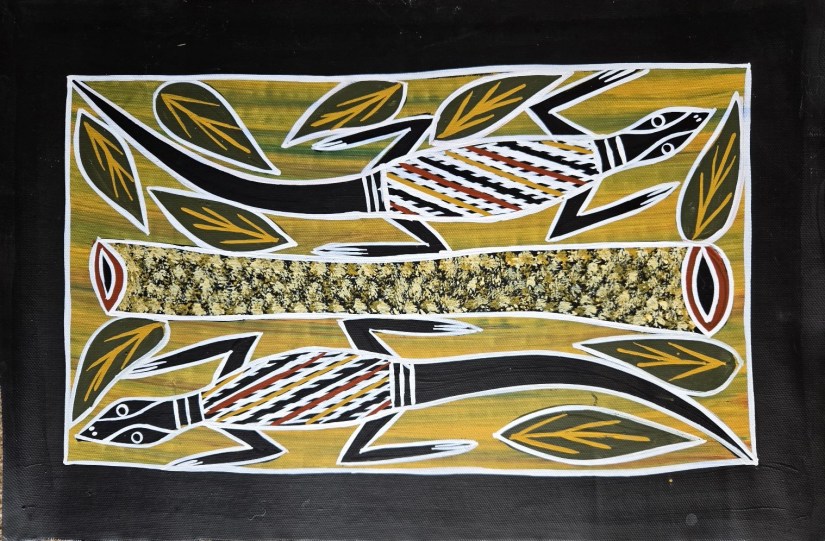
Speaking of artwork, beautiful murals are everywhere you look.
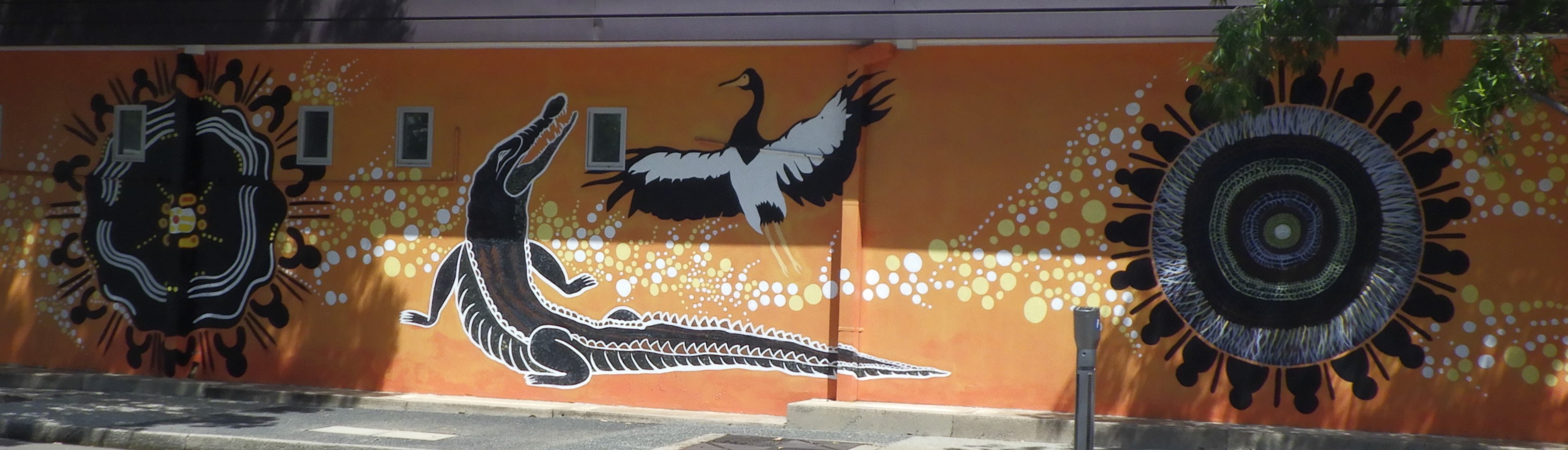


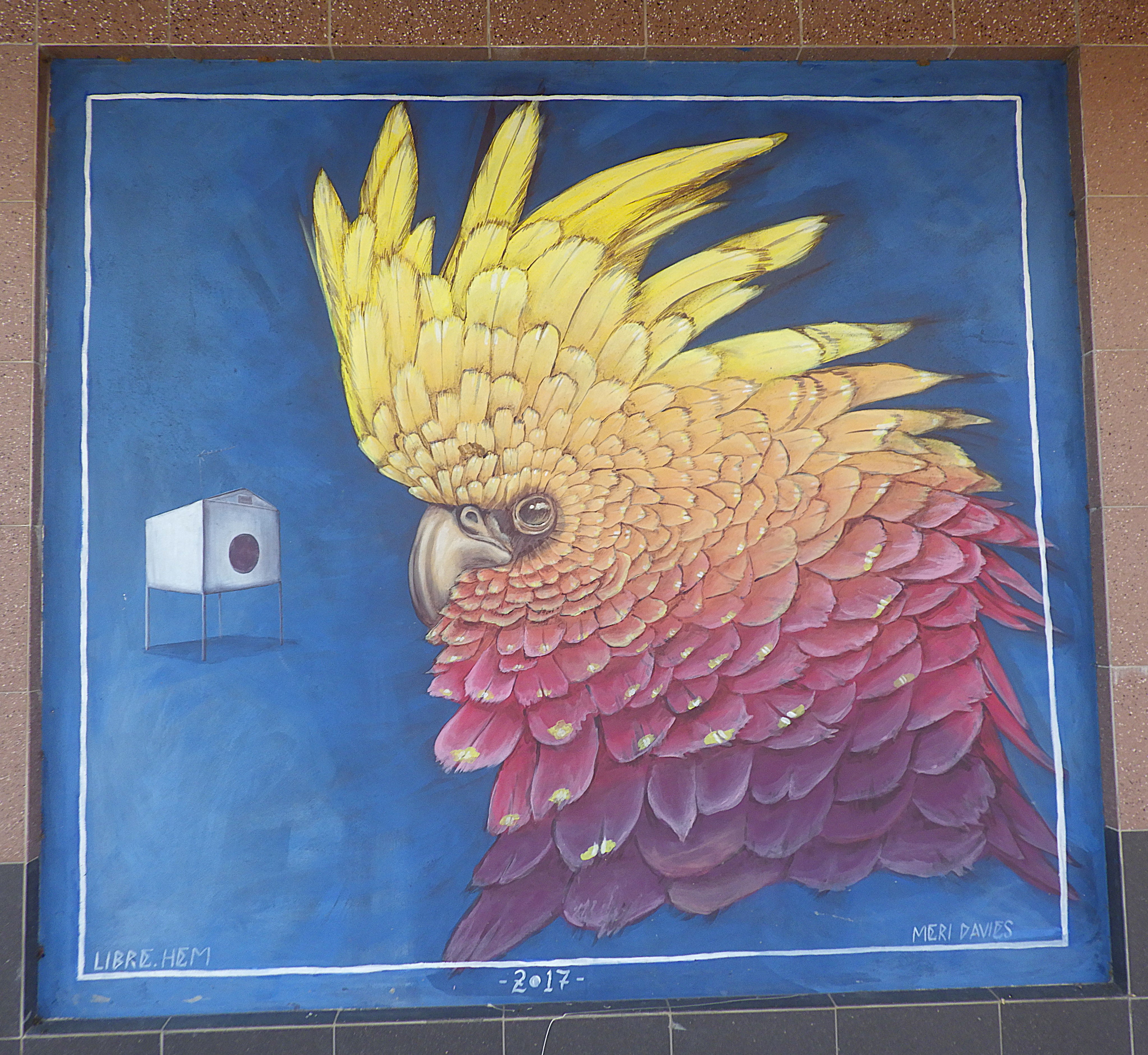
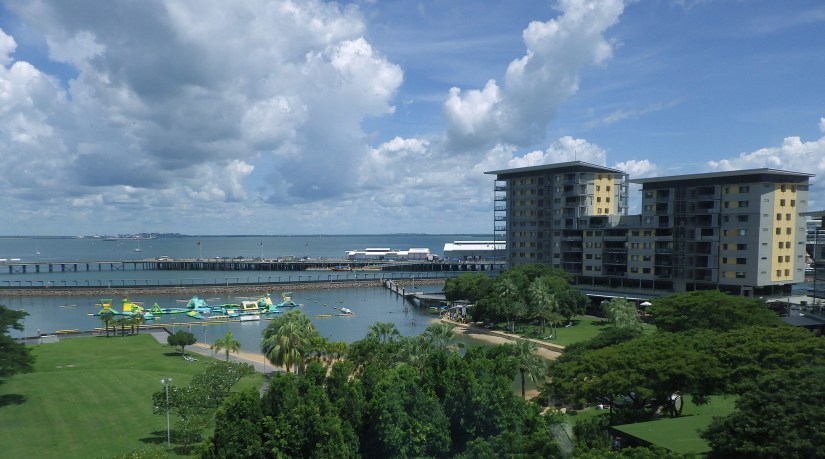
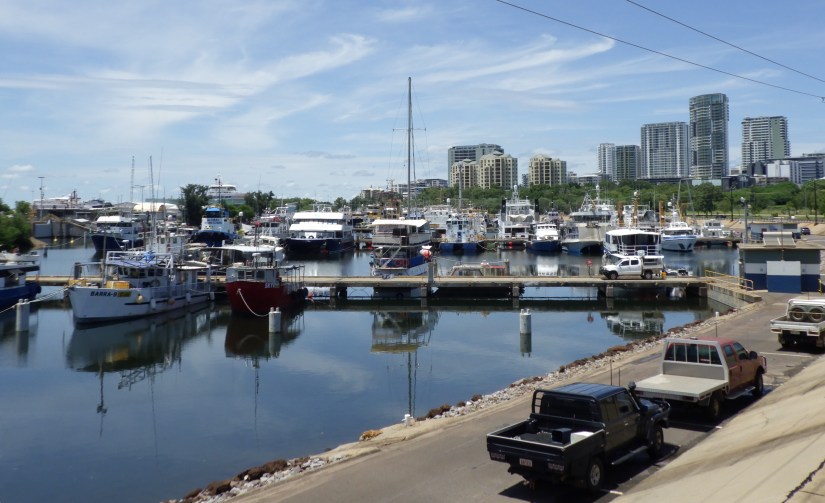
We return to the waterfront complex, with its urban beach, lagoon and wave pool.


Dozens of eateries lined the promenade, where we found some welcome air conditioning, as well as a local snack of prawns in coconut bisque and flat bread for dipping. Delicious!
As we leave Australia in our wake, here are a few parting facts and figures:
- It is the world’s largest island, and smallest continent.
- Home to the most species of reptiles in the world.
- It is said that everything in Australia is trying to kill you: jellyfish, octopus, snails, crocodiles, sharks, snakes, insects, birds, dingos… and if these don’t get you, the heat will.
- Population comparison: Australia has 27 million people, USA has 345 million
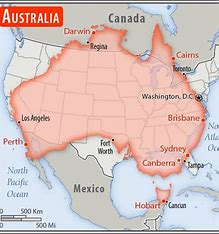
- Putting it into perspective, here’s a good geographic size overview:
And now we say, “G’Day, mate…Until next time!” Zuiderdam sets a new course for Indonesia.
Discover more from Life in Nautical Miles
Subscribe to get the latest posts sent to your email.
 Life in Nautical Miles
Once again I’m in awe of everything …it sounds like while the people might be welcoming, the creatures aren’t. Thanks for sharing your fascinating journeys!
Lynne
LikeLiked by 1 person
Hi Guys, Great read, as always, Monica. Sounds like this trip to Aussie-land was better than a previous one !! Did you find any of my “relatives’ In DARWIN ? I heard I would be eligible for an award from there. Travel safe…. see ya when you get back. Jon
LikeLiked by 1 person
LOL, Jon! The Darwin Awards are certainly entertaining! 🙂
LikeLike
Wonderful! Looks like you and Tom are having a fantastic time! Question – I enjoyed your previous snorkeling/underwater photos. What camera do you use? Mine gives everything a blue tint! Thanks
LikeLike
Hi Leisa! Our camera is a Ricoh WG-6, waterproof to 65 feet. It’s a great little point-and-shoot camera, very durable and takes decent underwater pictures. Our only complaint is that it doesn’t do so well in indoor low-light conditions. But otherwise, it’s a champ!
LikeLike
Thanks, Monika!
LikeLike